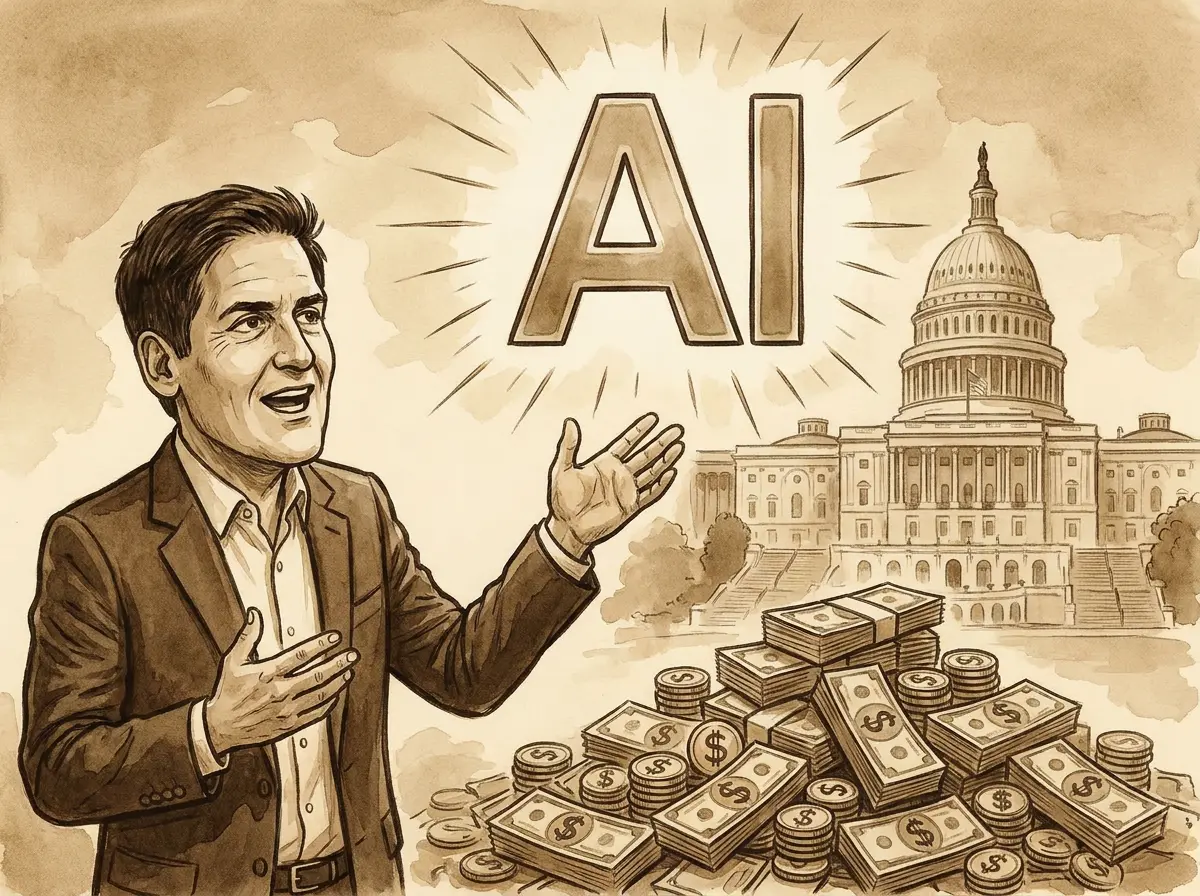
Dallas Mavericks owner and software billionaire Mark Cuban proposed on May 18 to impose a federal tax on AI tokens, with a rate of less than 50 cents per million tokens. The tax would apply to providers of commercial AI models; open-source models and local inference are excluded. Cuban estimates initial annual revenue of about $10 billion and said the tax could be used to repay federal debt or address challenges brought by AI.
Confirmed Details of Cuban’s Proposal
According to the key points Cuban confirmed in his public post:
Tax rate: less than 50 cents per million tokens
Applies to: commercial AI model providers
Exclusions: open-source models and local inference
Tax nature: Cuban described it as a fee imposed on commercial providers similar to a sales tax
Initial estimated annual revenue: about $10 billion
Intended use of tax revenue: to repay federal debt or address challenges brought by AI
Energy policy logic: encourage data centers to improve efficiency to offset the tax expense
Cuban’s Confirming Quote: Analogy to Cryptocurrency Regulation
In his public post, Cuban wrote: “This is how everyone feels about cryptocurrencies. Any regulation is bad. I was strongly criticized before for saying that this industry needs regulation so ordinary people can participate.”
Cuban said that early cryptocurrency supporters believed any rules were unacceptable, but as the industry developed it needed a clear legal framework, and later the crypto industry shifted toward political action committees (PACs) and organized advocacy efforts—linking that shift to the AI regulation debate. Crypto companies’ lobbying activities in recent years have also increased by three times.
Opposition Position: Palmer Luckey’s Confirming Criticism
Palmer Luckey, the founder of Anduril, publicly opposed the proposal, saying: this measure would tax U.S. companies while forcing customers to shift to foreign AI models that are not subject to this tax. As a result, the federal government would build new infrastructure to track AI usage, thereby expanding the scope of government oversight. Other critics, including founders and AI developers with a pro-libertarian lean, also warned that this tax would harm U.S. competitiveness.
FAQ
How would Mark Cuban’s AI token tax be calculated, and what situations would it apply to?
Under Cuban’s proposal, the tax rate would be less than 50 cents per million AI tokens, applying to commercial AI model providers. Open-source models and local inference would not be taxed. Cuban compares this tax to a sales tax rather than directly taxing corporate profits.
What is the core objection Palmer Luckey has to this proposal?
Luckey said the measure would tax U.S. companies, potentially push customers toward foreign AI models not subject to the tax, and prompt the federal government to establish new infrastructure to track AI usage—expanding the scope of government regulation.
What is the current status of this proposal on the legislative front?
According to existing reports, without congressional support the proposal cannot move forward, and currently momentum in Congress is not strong. Cuban’s proposal has not yet entered formal legislative process.


