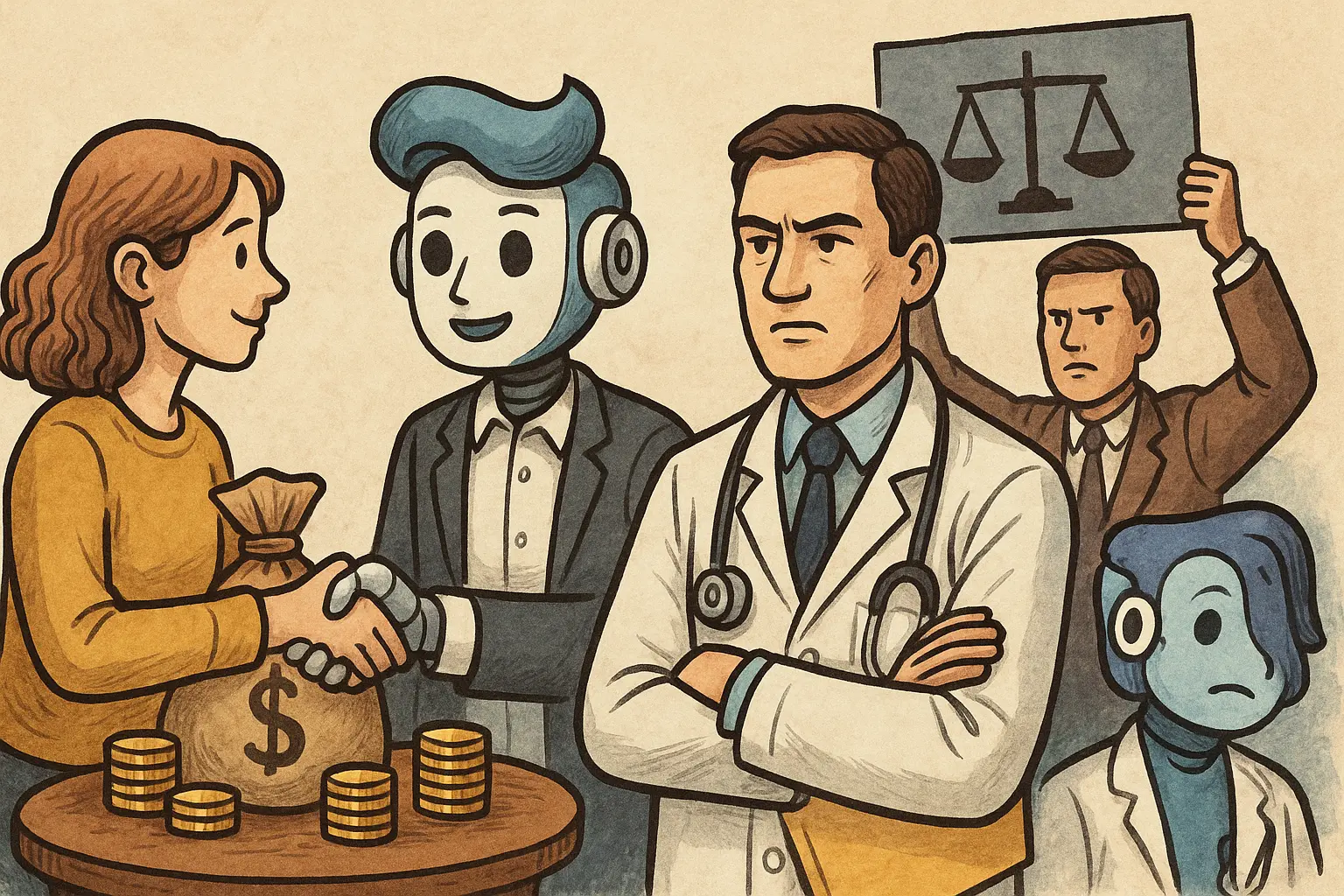
There is divergence in the AI role-playing domain: on May 12, Charms Interactive, Inc. announced the completion of a $1.5 million seed pre-funding round and officially launched the Charms.ai platform centered on creator-owned rights and an independent economic system for characters; on May 1, the Pennsylvania Department of State filed a lawsuit over Character.ai bots impersonating medical professionals.
Charms.ai: Core mechanisms of creator ownership and a character-independent economy
Differences from existing AI companion platforms: Existing platforms operate on a model where users pay for subscriptions and, after a character goes viral, the revenues go to the platform. Charms’ model is that each public character has its own independent economic system, and creators hold ownership of the characters.
Technical features: Characters use “reasoning memory” to understand conversations, relationship background, and emotional patterns, rather than resetting after every dialogue.
Economic allocation mechanism: As engagement increases, fees are allocated among creators, the Charms platform, referrers, and the characters themselves; the character’s share goes into a treasury used to fund ongoing operations (including AI computation costs).
Co-founder Gonzalo Recio said: “The next iconic characters won’t all come from studios; they’ll come from creators with taste, communities with conviction, and characters people are happy to revisit again and again.”
Pennsylvania sues Character.ai: Specific allegations of illegal medical practice
Investigators with the Pennsylvania AI Task Force, while interacting with chatbot character roles on Character.ai, found that the character claimed to hold a Pennsylvania medical license and provided an invalid license number. On May 1, Pennsylvania formally filed a lawsuit accusing some of the AI characters on Character.ai of claiming to be medical professionals and engaging in illegal medical practice, making it the first state to bring an illegal medical practice lawsuit against an AI platform in the United States. The State Board of Medicine stated that this case may not be the last action taken against an AI system.
Utah took a different approach: earlier this year, it approved a pilot program allowing AI to independently issue routine prescriptions within the state, the first such program announced by a governor.
Federal and state divergence in U.S. AI medical regulation
The FDA should theoretically regulate medical chatbots intended to diagnose, treat, or prevent disease, but it has not yet issued clear guidance on such tools, nor has there been specific enforcement action. The current Clinical Decision Support (CDS) software exemption applies only to functions used by medical professionals, not to patients or the general public. This means that if a chatbot engages in medical practice as defined by state law, it may fall under software devices requiring FDA approval. Multiple states have passed their own AI-related regulations, covering prohibitions on AI using medical professional titles, restrictions on AI mental-health chatbot use, and requirements for information disclosure.
Frequently asked questions
How does Charms.ai’s character ownership model work?
According to the Charms announcement, the characters creators publish on the platform remain owned by the creators. When a character generates economic activity, fees are distributed proportionally among the creators, the Charms platform, referrers, and the characters’ own operations treasury (used to pay AI computation costs). This directly contrasts with existing platforms’ model, where after a character goes viral, most of the revenue primarily goes to the platform.
What is the strategic significance of Coinbase Ventures investing in Charms?
Coinbase Ventures participated in this funding round via the Base Ecosystem Fund; Base is an Ethereum Layer 2 network launched by Coinbase. Charms.ai’s character ownership of AI roles and its economic distribution mechanism have synergy potential at the technical architecture level with Web3’s verifiable ownership and smart-contract based distribution model.
What broad impact does Pennsylvania’s lawsuit against Character.ai have on the AI industry?
This case is the first state-level lawsuit in the United States alleging illegal medical practice by an AI platform. Since the FDA has not issued clear enforcement guidance for medical AI, states are filling regulatory gaps on their own, resulting in a rapidly changing and fragmented regulatory landscape that creates legal uncertainty for developers and service providers of AI platforms.


