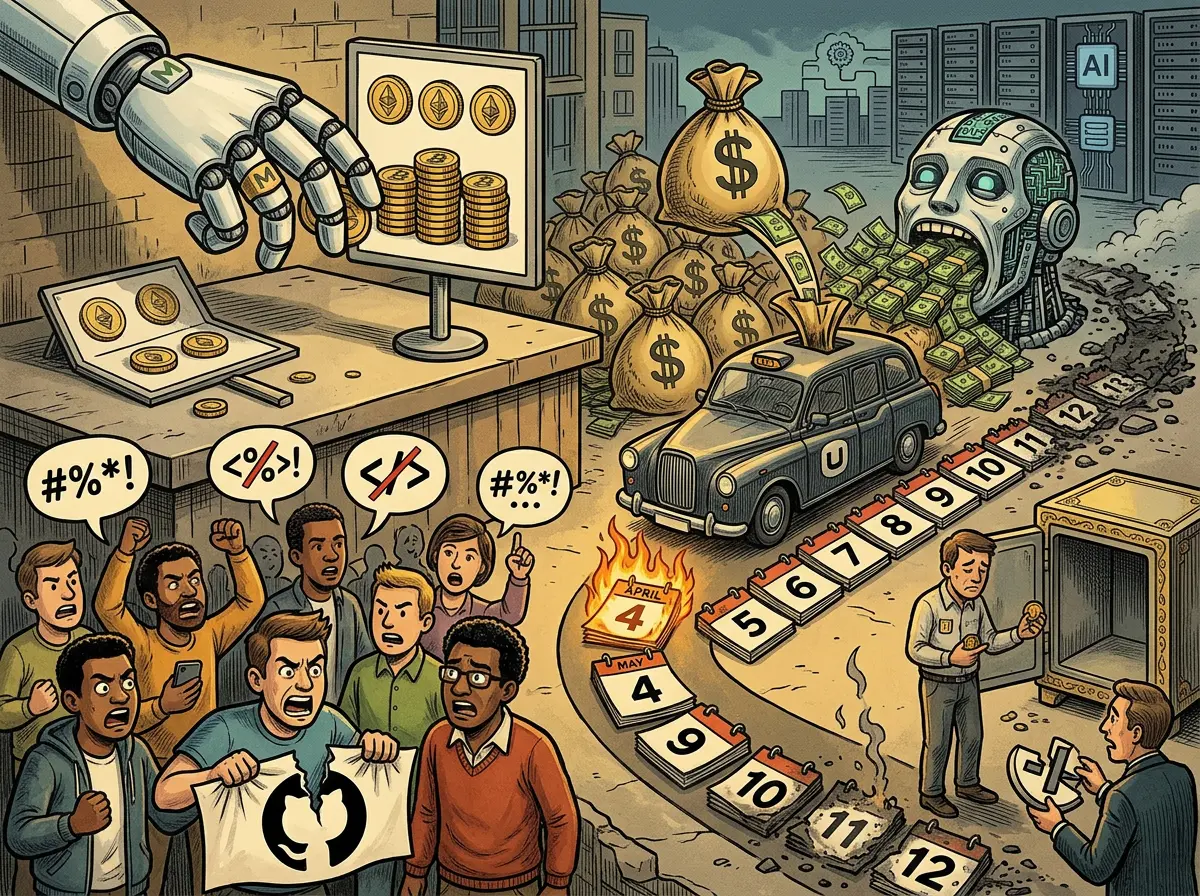
In the latest episode of TechCrunch’s podcast 《Equity》, published on June 7, it mentioned that Microsoft GitHub Copilot recently announced it would change from a monthly fee model to token-based usage billing, and the Reddit community immediately dubbed the phenomenon “Tokenpocalypse.” The content also notes that Uber burned through its entire annual AI budget in less than four months, after which management urgently set usage caps per person.
Background on GitHub Copilot’s billing model change
In the latest episode, 《Equity》 hosts Anthony Ha, technology reporter Sean O'Kane, and Kirsten Korosec held an in-depth discussion about the AI industry’s pricing-structure shift, using the Microsoft GitHub Copilot event as the entry point. GitHub Copilot has moved from a “flat-rate, unlimited” monthly subscription model to charging based on actual token consumption.
Anthony Ha said on the show: “The whole ecosystem is deeply subsidized with investors’ money. Things that appear to be free are actually surprisingly expensive. Now these costs are starting to be passed on to end consumers. We don’t know how behavior will change, but it will definitely be painful.”
Kirsten Korosec said, “Tokenmaxxing rose, hit its peak, and was then shunned—yet it only took six months.” Uber co-founder and COO was blunt internally: there is no proportional relationship between token consumption and useful output.
Confirmed event list
This article includes the following confirmed events:
GitHub Copilot: Microsoft announced it would switch from a monthly subscription model to token-based billing (recently)
Uber: The annual AI budget was depleted by employees’ token usage in less than four months; management set usage limits per person
Anthropic S-1: It has secretly filed for an IPO listing, with a valuation approaching one trillion dollars
Trump AI executive order: Signed this week, requiring the government to have the opportunity to review powerful AI models (a narrower version)
Reddit community: Called the GitHub Copilot billing change “Tokenpocalypse”
Token cost risk in Anthropic’s IPO
Sean O'Kane asked on the show: “How many token-related risk factors will appear in Anthropic’s S-1?” Kirsten Korosec replied: “These risks are evolving day by day right in front of us—how do you write them into the filing?”
The three hosts pointed out that AI companies’ business models, pricing strategies, and cost structures are still changing rapidly, posing challenges to the traditional SEC risk-disclosure framework. Anthony Ha drew an analogy to Uber: Uber was once seen as a “company that would never make money,” but it ultimately became profitable; however, Sean O'Kane noted that AI compute costs are hard costs, unlike Uber’s platform, where costs can be optimized through subsidies and supply-demand matching—so cost pass-through may be more direct.
FAQ
What is GitHub Copilot’s “Tokenpocalypse,” and why has it sparked controversy?
“Tokenpocalypse” is the Reddit community’s name for GitHub Copilot’s shift from a monthly subscription model to token-based billing. This change means developers’ AI usage costs move from a fixed monthly fee to being tied to actual usage, ending the previous usage pattern of “AI is very cheap, use as much as you want.” The three TechCrunch hosts believe this is a representative event showing the whole AI industry shifting from investment subsidies to cost pass-through.
What exactly does Uber’s runaway AI budget mean?
In TechCrunch’s《Equity》 episode, Kirsten Korosec said that Uber’s AI spending budget originally earmarked for 2026 was exhausted in less than four months due to employees’ token usage, after which management urgently set usage caps per person. Uber co-founder and COO said internally that there is no proportional relationship between token consumption and useful output.
At what stage is Anthropic’s S-1 filing currently?
According to reports, Anthropic has secretly submitted its S-1 filing for an IPO, with a valuation approaching one trillion dollars. The specific IPO timing, pricing, and underwriting arrangements are not yet publicly disclosed. TechCrunch hosts discussed on the show how token-cost-related risk factors in the S-1 would be disclosed.


