
According to records from the Canadian Parliament, the “Strong Elections Act” (Bill C-25) passed its second reading in the House of Commons on Friday, indicating that members generally support the bill in principle. The next step will be to send it to a committee for detailed review, and amendments may be proposed; the specific timeline for the committee’s consideration has not yet been determined. If passed, the bill will prohibit Canadian political parties and candidates from accepting cryptocurrency donations to fill a regulatory gap in the current election campaign funding rules.
Bill C-25: Legislative Progress and Core Goals
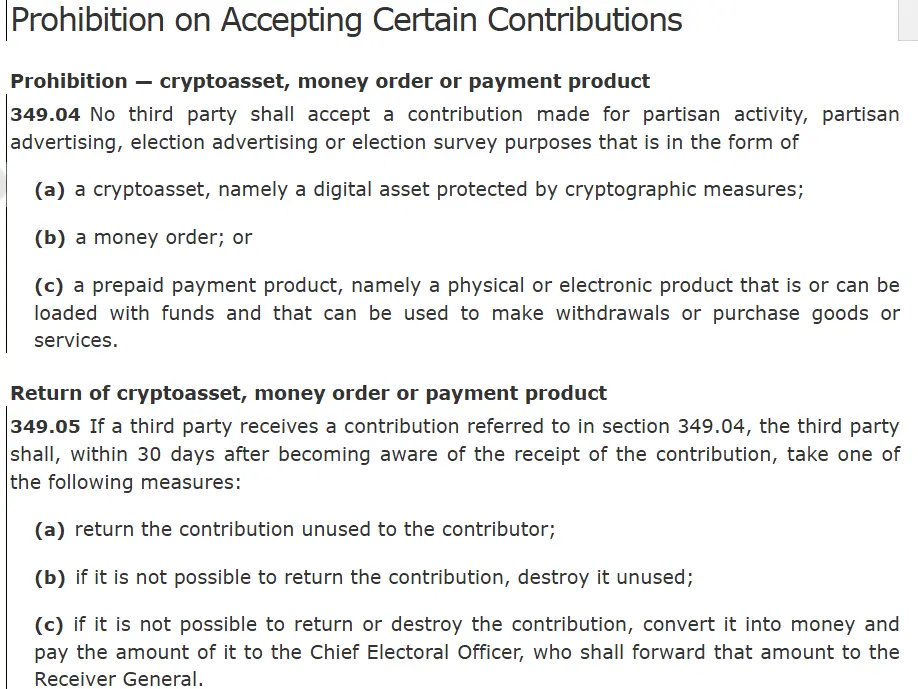
(Source: Canadian Parliament)
According to records from the Canadian Parliament, Bill C-25 was first introduced on March 26, 2026. It is intended to bring comprehensive reforms to election law, with objectives including enhancing transparency, strengthening enforcement efforts, and reducing the risk of foreign interference.
According to earlier reporting by Cointelegraph, the controversy surrounding this matter has focused on the traceability of cryptocurrency donations and whether such donations comply with the existing donation limit rules. Cryptocurrency donations have therefore become one of the key issues in this election campaign funding reform.
Specific Provisions of the Crypto Donation Ban
According to the bill’s text, Bill C-25 was not designed specifically for digital assets, but it clearly includes cryptocurrency within the scope of restrictions on political financing, banning political parties and candidates from accepting donations in the form of cryptocurrency. Regulators believe that the current election campaign funding rules contain a loophole that allows cryptocurrency donations to flow in; the purpose of Bill C-25 is to close this gap.
Broader Crypto Regulatory Developments in Canada
Based on publicly available legislative progress, Canada’s crypto regulatory framework continues to evolve in parallel. Regulators have advanced a stablecoin regulatory framework (granting relevant oversight powers to the Bank of Canada) and have also refined rules related to crypto investment funds, custodial entities, and cold storage practices. Canada’s current Prime Minister, Mark Carney, is a former central bank governor; he has previously publicly stated that he holds a cautious stance toward cryptocurrencies.
Frequently Asked Questions
What legislative stage is Canada’s Bill C-25 in right now?
According to records from the Canadian Parliament, Bill C-25 passed its second reading in the House of Commons on Friday, indicating that members generally support the bill in principle. The next step will be to send it to a committee for detailed review; the specific timeline for consideration has not yet been confirmed.
What is the scope of the crypto donation ban under Bill C-25?
According to the bill’s text, Bill C-25 prohibits Canadian political parties and candidates from accepting cryptocurrency donations. While the bill was not designed specifically for digital assets, it clearly includes cryptocurrency within the scope of restrictions on political financing.
Why was Bill C-25 introduced, and what is the legislative background?
According to records from the Canadian Parliament, the bill was first introduced on March 26, 2026, with the goal of comprehensively reforming election law. Its objectives are to strengthen transparency, enhance enforcement, and reduce the risk of foreign interference. The issue of traceability of cryptocurrency donations is one of the core controversies driving this reform.


