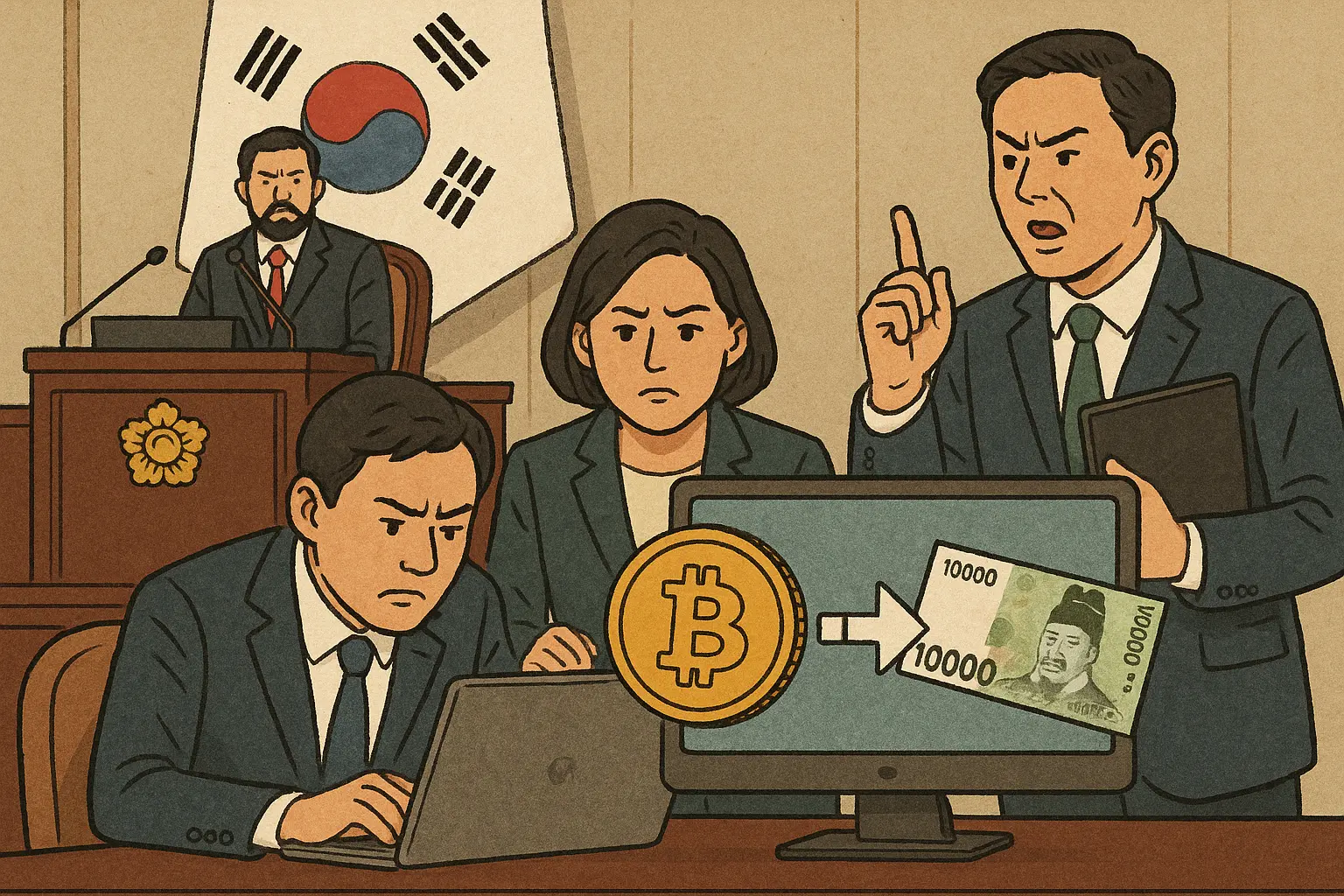
According to a May 8 announcement by the South Korean National Assembly and a report by South Korean financial media outlet Edaily, the National Assembly plenary session on May 7 passed an amendment to the Foreign Exchange Transactions Act. The amendment requires companies engaged in cross-border transfers of virtual assets to register with the Minister of Strategy and Finance. It also brings the cross-border movement of virtual assets such as stablecoins and cross-border capital flows between KRW and foreign currencies under the foreign exchange regulatory framework. The amendment also adjusts the categorization structure for foreign exchange business operations and increases penalties for illegal foreign exchange transaction conduct.
Key Provisions of the Amendment: New Legal Definition of Virtual Asset Transfer Business and Registration Requirements
According to the parliamentary announcement, the amendment introduces a new legal concept for “virtual asset transfer business,” which refers to actions by virtual asset operators, in accordance with presidential decree provisions, to transfer virtual assets between South Korea and foreign countries through buying and selling, exchange, or other means.
The amendment stipulates that companies engaged in the aforementioned business must register with the Minister of Strategy and Finance. Virtual asset exchanges and custody institutions are also included within the registration scope. According to Edaily’s report, the South Korean government plans to systematically monitor cross-border virtual asset flows through this measure to ensure the stability of the financial system. The amendment takes effect immediately upon publication.
According to the parliamentary announcement, this amendment was formed by combining and adjusting three bills separately proposed by People Power Party lawmaker Choi Eun-seok and Democratic Party lawmaker Kim Tae-sun and Choi Ki-sang, with the relevant review process chaired by Lin Yi-ja, chair of the Strategy, Economy and Planning Committee.
Restructuring of the Foreign Exchange Business System and Revisions to Penalties for Violations
According to the parliamentary announcement, the amendment reorganizes the professional foreign exchange business framework. The existing classifications, including currency exchange, small overseas remittances, and other professional foreign exchange businesses, are consolidated and adjusted into two categories: “General Currency Exchange Business” and “Overseas Remittance Settlement Business.” It also clearly sets out the basis for canceling registrations when operators of professional foreign exchange business violate the scope of their business.
For conduct that violates foreign exchange transaction procedures and is intended to obtain improper gains, the amendment increases the penalty standard from the current maximum administrative fine of 50M won to up to 1 year of imprisonment or up to 100M won in fines.
Management of currency exchange institutions that shut down will also be strengthened: if an institution reports its closure to tax authorities or if its business license is revoked, the Minister of Strategy and Finance will be authorized to revoke its registration status ex officio. The tax collection period for the “foreign exchange stability tax” is set at within 10 years in line with the government’s reorganized tax collection policy, and the specific timeframe is determined by presidential decree.
Statement by the Chair of the Strategy, Economy and Planning Committee
According to Edaily’s report, Lin Yi-ja, chair of the Strategy, Economy and Planning Committee, said regarding the passage of the amendment: “We plan to build a sound foreign exchange transaction ecosystem by establishing a virtual asset monitoring system, clearly eliminating the basis for registration eligibility of operators of professional foreign exchange business, extending the collection period for the foreign exchange stability tax, and requiring automatic cancellation of registration eligibility for currency exchange institutions that have already actually ceased operations, among other measures.”
Frequently Asked Questions
When was the amendment to South Korea’s Foreign Exchange Transactions Act passed, and which institutions are required to register?
According to a May 8, 2026 announcement by the South Korean National Assembly, the amendment was passed in the plenary session on May 7, 2026. Companies engaged in cross-border virtual asset transfer business, as well as virtual asset exchanges and custody institutions, must all register with the Minister of Strategy and Finance.
How has the penalty strength for unlawful foreign exchange conduct changed under the amendment?
According to the parliamentary announcement, for conduct that violates foreign exchange transaction procedures and is intended to obtain improper gains, the penalty standard has been raised from the current maximum of 50M won in fines to up to 1 year of imprisonment or up to 100M won in fines.
What is the legal definition of “virtual asset transfer business” in the amendment?
According to the amendment’s provisions, “virtual asset transfer business” refers to actions by virtual asset operators, in accordance with presidential decree provisions, to transfer virtual assets between South Korea and foreign countries through buying and selling, exchange, or other means.


