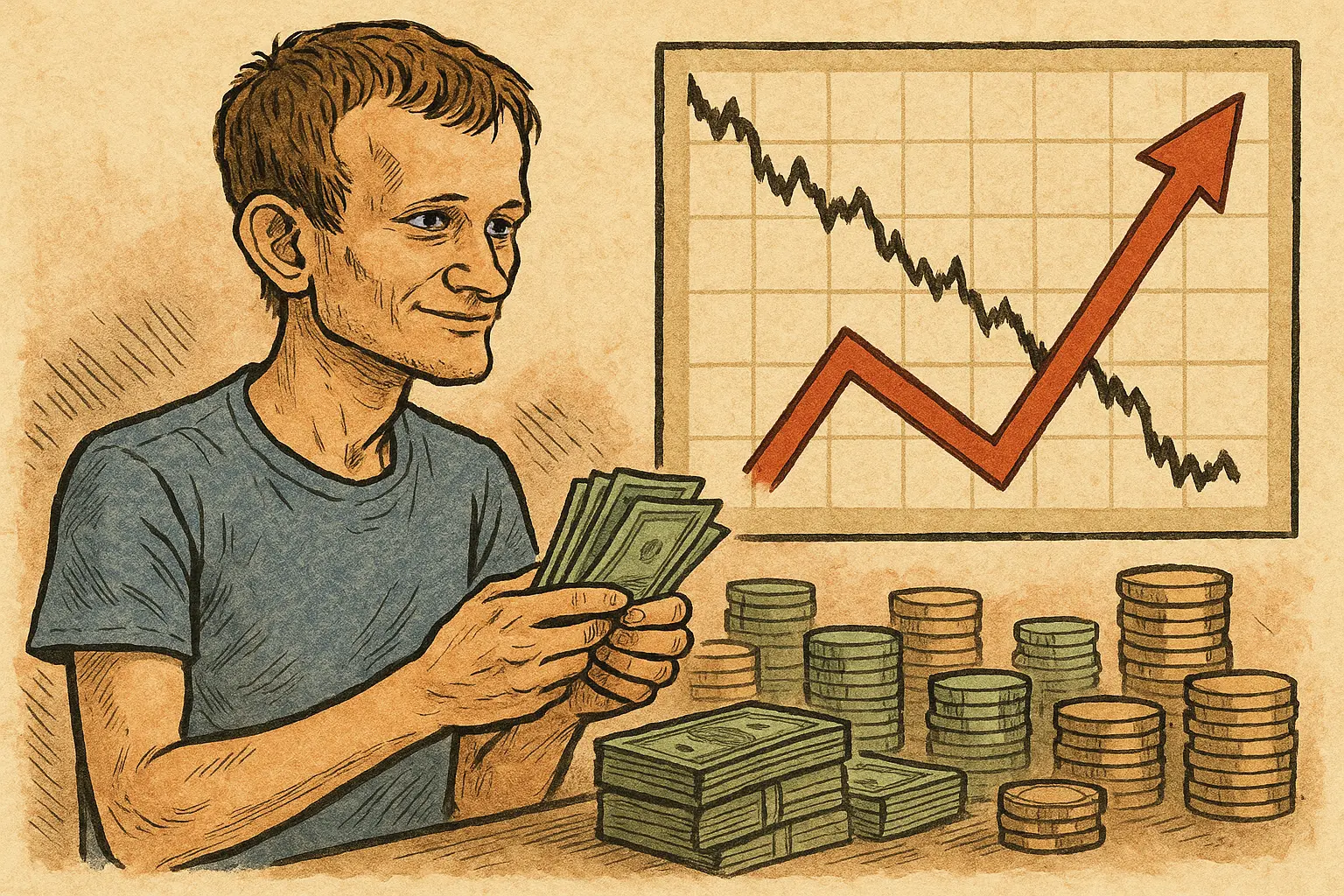
According to BeInCrypto’s report on April 28, Ethereum co-founder Vitalik Buterin disclosed in an interview he gave in January this year that he profited $70k on a Polymarket prediction contract through reverse betting with an investment of about $440k, for a return rate of 16%. Polymarket’s official accuracy page shows that the platform’s contract ended in “No” 73.3%.
Buterin’s Reverse Strategy and Specific Results
According to Buterin’s public interview disclosures in January this year, he spent about $440k to buy a series of contracts for what he considered “crazy and irrational” predictions; in the end, he made a profit of $70k, with a return rate of 16%. Buterin said that the core of his strategy is to find bets that are most watched yet most absurd and least likely to come true, and then place the wager in reverse.
Polymarket Structural Data: 73.3% of Markets End in “No”
According to data Polymarket published on its official accuracy page, among all resolved markets on the platform, 73.3% ended with “No” as the result. Engineer Sterling Chrispin independently verified the above pattern by building a bot that buys “No” across all non-sports betting markets; based on his findings, 73.4% of bets ultimately did not occur, closely matching Polymarket’s official data.
Greenland Island and Nobel Peace Prize Contract Case
(Source: Polymarket)
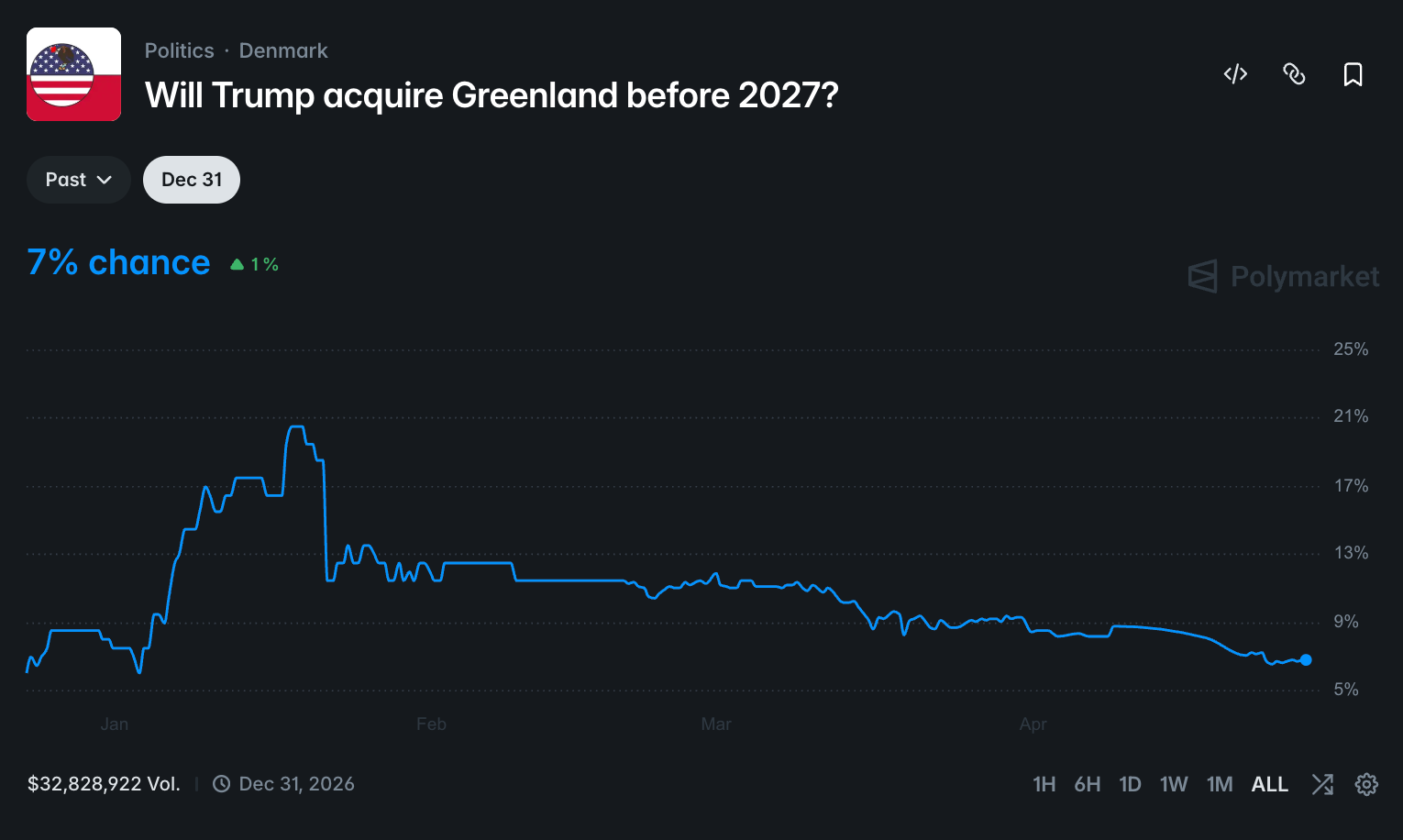
Based on Polymarket’s public data, the odds for whether Trump would obtain related contracts for Greenland by the end of 2026 reached as high as 21% at one point, both before and after Trump issued related threat statements; currently, trading volume is already close to $33 million. Contracts predicting that Trump would win the Nobel Peace Prize saw certain odds reaching as high as 14% at one point. In the interview, Buterin said that the above predictions were driven by emotion rather than logic or actual probabilities.
Domer’s Independent Verification and Betting on the Pope Case
According to public reports, Domer (a former professional poker player), one of Polymarket’s largest bettors, profited $400k on Polymarket through a similar reverse strategy. The most representative bet was placing a $100k wager at odds that the market at the time gave only a 5% chance—betting that Cardinal Robert Francis Prevost would be chosen as the next pope. According to public records, Domer had previously also accurately predicted Sam Bankman-Fried would be sentenced to 25 years in prison and Sam Altman would be removed as OpenAI CEO in 2023.
Behavioral Economics Analysis by a Dartmouth Professor
According to statements by Eric Zitzewitz, an economics professor researching prediction markets at Dartmouth, in an Ipsos interview in October, politics and sports are especially fertile ground for emotional bias to push up odds; in behavioral economics, this phenomenon is called “narrative bias”—people tend to treat the emotional impact of a story as a proxy measure for the actual probability of an event occurring. In the interview, Zitzewitz quoted: “For a market to operate normally, either people have to be overconfident, or people have to be willing to lose on average, because that’s fun.”
Frequently Asked Questions
What are the specific details of Vitalik Buterin’s reverse strategy on Polymarket?
According to Buterin’s public interview disclosures in January this year, he bought a series of prediction contracts he considered “crazy and irrational” for about $440k; in the end, he made a profit of $70k, for a return rate of 16%. The core of the strategy is placing reverse bets on contracts that are most watched yet least likely to come true.
What proportion of markets on Polymarket ultimately end in “No”?
According to data Polymarket published on its official accuracy page, among all resolved markets, 73.3% ended with “No” as the result. An experiment with a bot by engineer Sterling Chrispin independently verified the pattern; 73.4% of the bot’s bets ultimately did not occur.
How does Dartmouth professor Zitzewitz explain the emotional bias in prediction markets?
According to statements by Eric Zitzewitz in an Ipsos interview in October, politics and sports are especially fertile ground for emotional bias to push up odds; he said that for the market to function normally, it needs bettors who are overconfident or entertainment bettors who are willing to tolerate average losses.


