#eslaHolds11509BTCFor4Years
Tesla Holds 11,509 BTC For 4 Years — The Market Signal Nobody Can Ignore
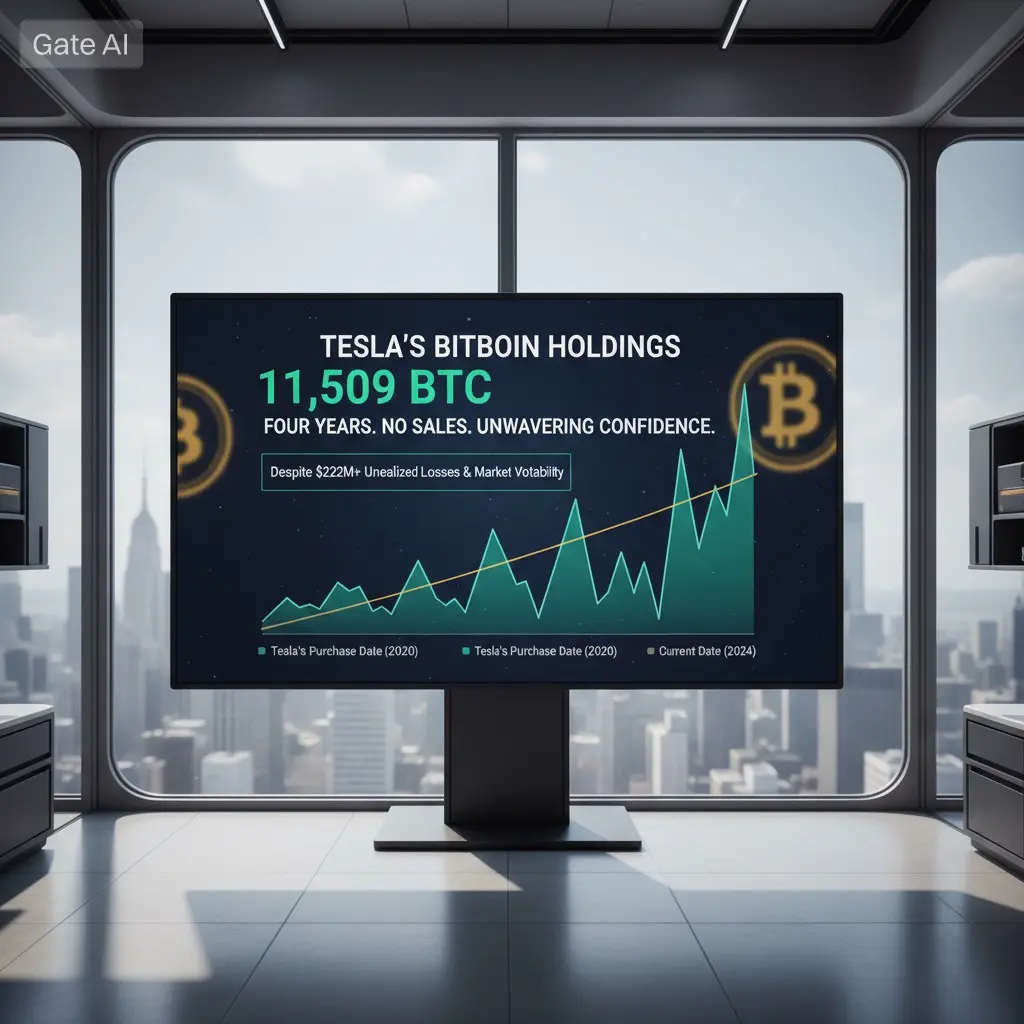
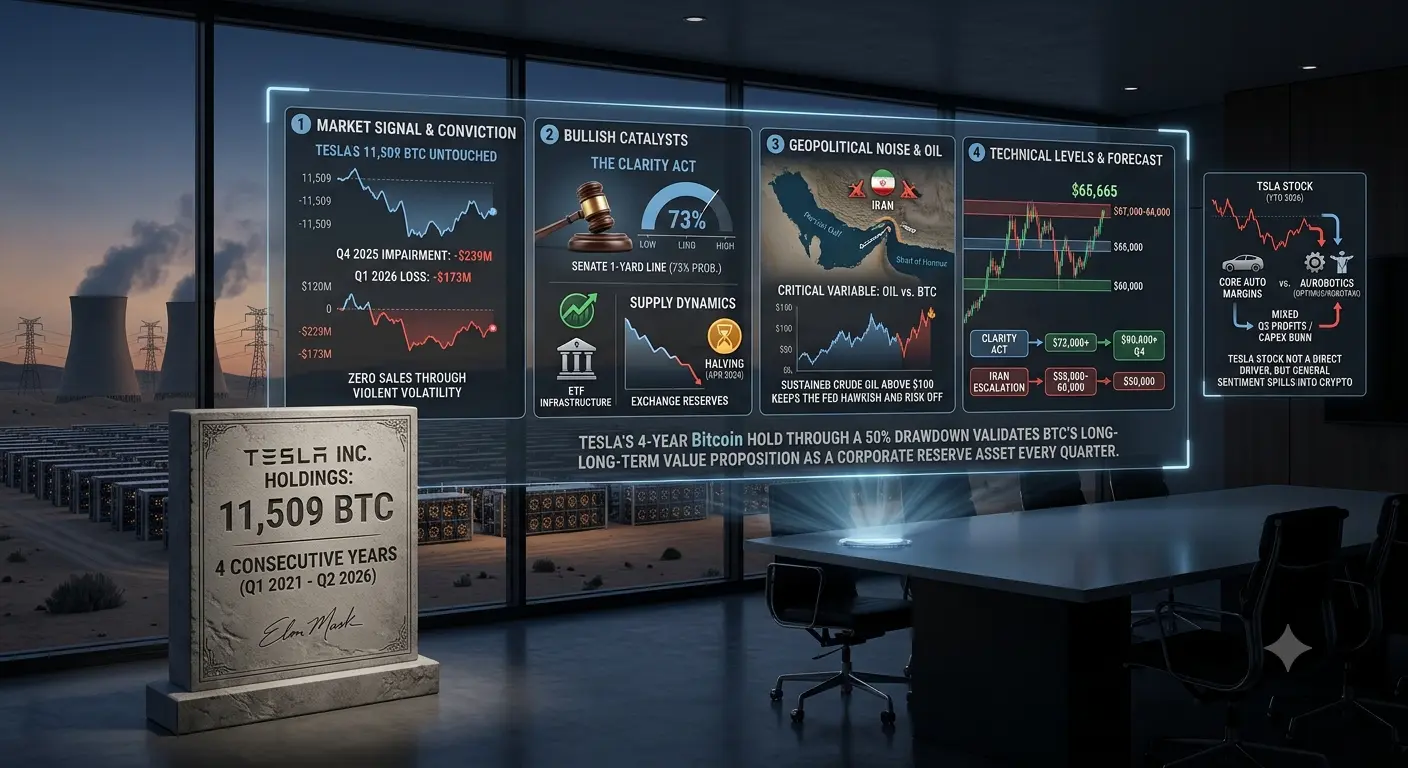
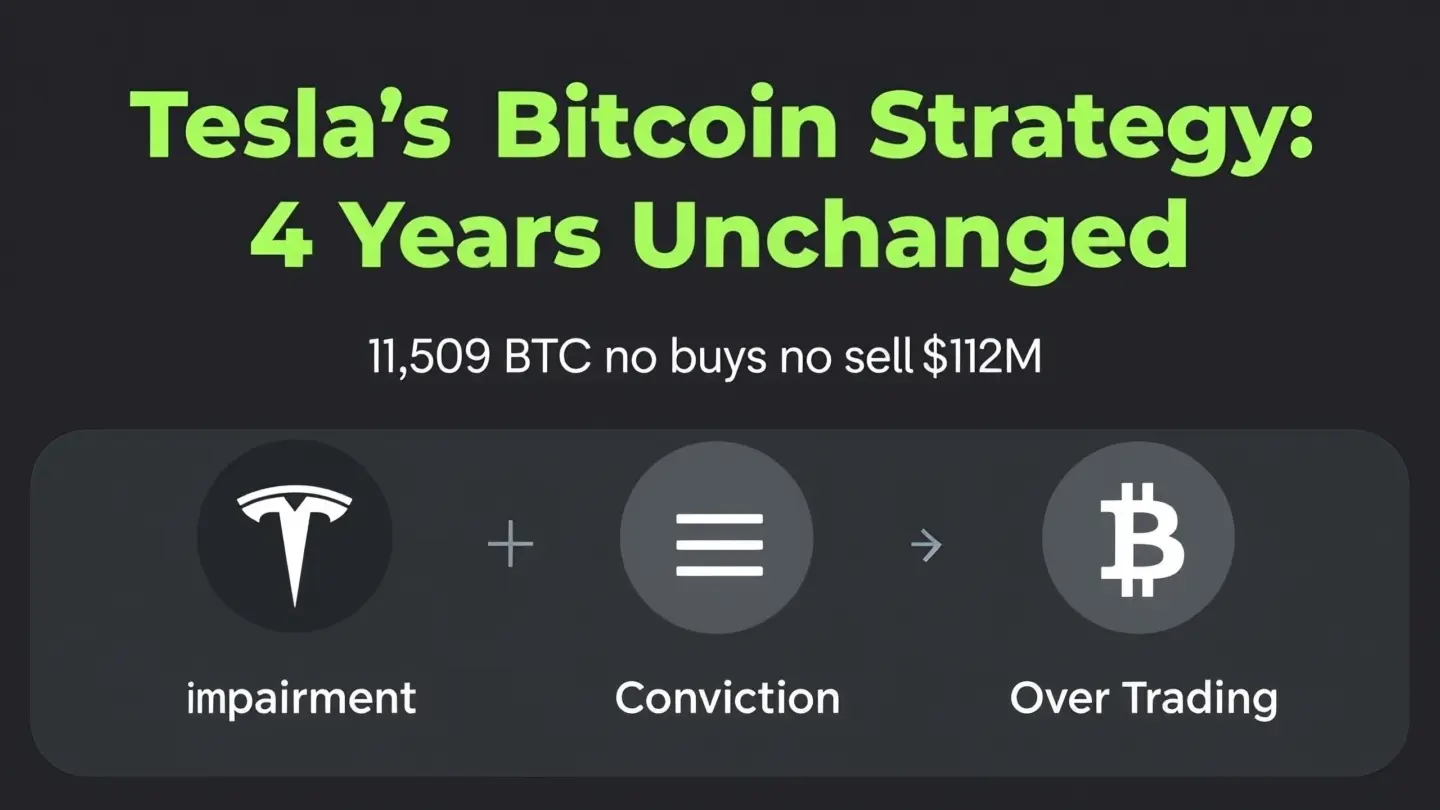
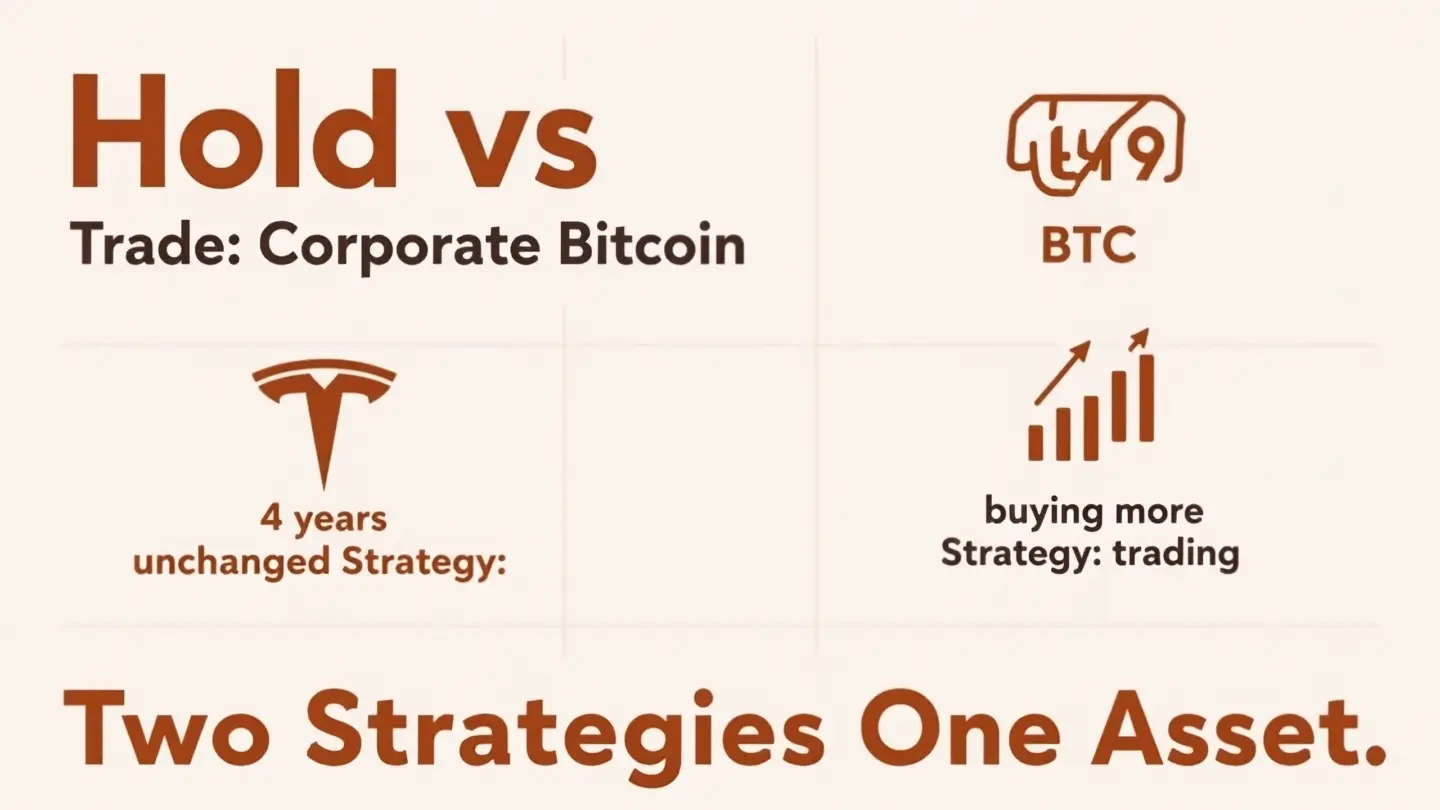
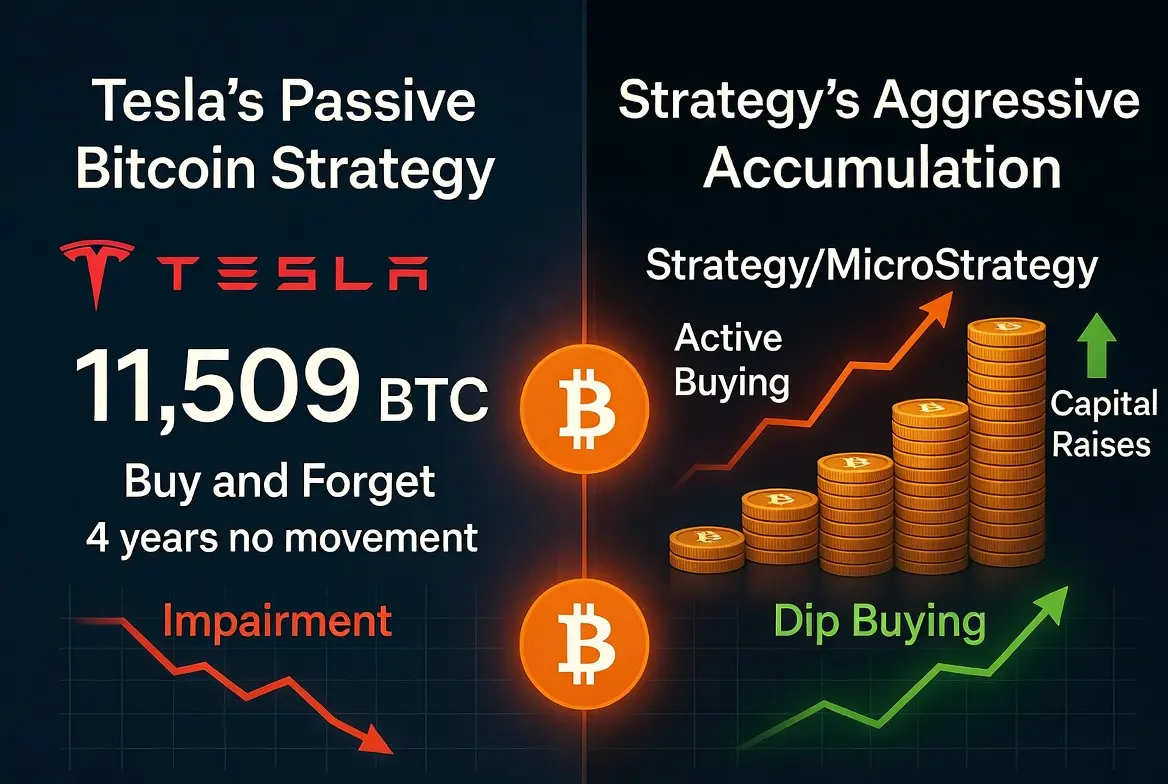
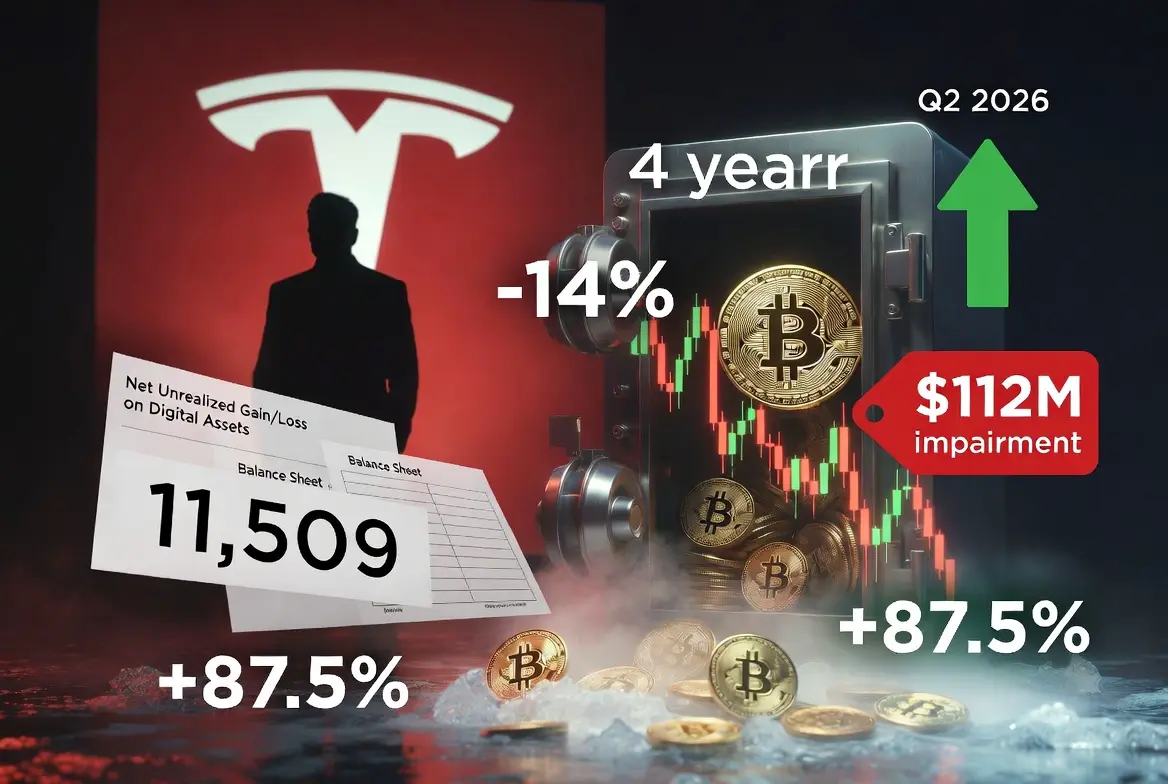
Tesla, led by Elon Musk, has kept exactly 11,509 Bitcoin untouched on its balance sheet for four consecutive years. Not a single coin sold since early 2021 despite absorbing over $222 million in unrealized losses. Through Q4 2025, when Bitcoin crashed from $114,000 to sub-$90,000, Tesla booked a $239 million impairment charge and held. Through Q1 2026, when BTC slid from $90,000 to $68,000, the company absorbed another $173 million after-tax loss and still refused to liquidate. At the current BTC price near $65,665, that 11,509 stack is worth approximately $755 million. This is not a trivial number for any corporation, and choosing to ride the volatility rather than exit is a strategic posture that tells the market Tesla views Bitcoin as a long-duration reserve asset, not a trading instrument.
This conviction becomes even more meaningful when you consider the history. In 2022, Tesla did sell approximately 75 percent of its then-42,000 BTC position to boost liquidity during uncertain times. But after adding a small amount back in early 2025 to reach 11,509 BTC, the company has not budged. Every quarterly filing since has confirmed the same number. Through two major drawdowns totaling nearly 50 percent from the all-time high, through shifting corporate priorities that now heavily favor AI and robotics over crypto accumulation, Tesla's Bitcoin position has remained frozen. That silence is the loudest conviction signal in the corporate crypto world today.
Together with SpaceX, which also holds substantial Bitcoin, the Musk-controlled entities represent one of the largest non-institutional corporate Bitcoin positions globally. They stand alongside Strategy, the largest corporate holder with over 500,000 BTC. Interestingly, Strategy disclosed a $216 million Bitcoin sale on July 6, 2026, its largest since Michael Saylor began building the position. The market barely reacted, suggesting investors now separate routine treasury management from genuine shifts in corporate conviction. Tesla, by contrast, has done nothing at all. Zero sales, zero additions, just a steady hand through violent price swings.
Now let us examine where Bitcoin stands right now and why bullish sentiment is building despite the turbulence.
Bitcoin trades near $65,665 as of late July 2026, down almost 50 percent from its October 2025 peak above $125,000. Painful for top buyers, but exactly the environment where the next upward leg gets constructed. Several catalysts are converging to create a bullish undercurrent even as geopolitical noise dominates headlines.
The first and most powerful catalyst is the Clarity Act. The Digital Asset Market Clarity Act passed the US House of Representatives and is now before the Senate. Treasury Secretary Scott Bessent told lawmakers on July 21 that the bill is at the "1-yard line," urging passage before the August recess. President Trump publicly pushed for it on Truth Social. Kalshi prediction markets place a 73 percent likelihood of a Senate vote before recess. If enacted, this legislation would establish a coherent federal framework for digital assets, replacing the current patchwork of SEC and CFTC jurisdictional disputes that have kept institutional capital sidelined for years. Analysts have called the Clarity Act Bitcoin's "ultimate catalyst," one that could spark institutional FOMO as allocators race to gain exposure. Bitcoin, as the largest and most liquid digital asset, would capture the first and largest wave of institutional inflows.
The second catalyst is the maturation of Bitcoin ETF infrastructure. Spot Bitcoin ETFs approved in early 2024 have made it dramatically easier for retail and institutional investors to gain exposure without self-custody complexity. BlackRock's iShares Bitcoin Trust remains the dominant vehicle. With regulatory clarity potentially imminent, the next allocation wave from pension funds, endowments, sovereign wealth vehicles, and registered investment advisors who have waited for legal certainty could be transformative. Expectations of further major institutional disclosures are building.
The third catalyst is Bitcoin's own supply dynamics. The April 2024 halving cut the block subsidy from 6.25 to 3.125 BTC, bringing annual supply inflation to roughly 0.85 percent, well below most fiat currencies. Every prior halving cycle historically produced a bull run within 12-18 months. While the current cycle has been distorted by the extraordinary surge to $126,000 and subsequent deep correction, the supply squeeze is still working in Bitcoin's favor. Exchange reserve balances have been declining throughout 2026, consistent with accumulation rather than distribution. Long-term holder metrics show coins unmoved for over a year growing as a share of total supply, meaning the cohort least likely to sell is expanding.
Now the complication: Iran.
The US-Iran conflict that began February 28, 2026 has escalated dramatically in July. Trump declared the ceasefire "over" on July 8, triggering immediate risk-off selling. Bitcoin dropped over 2 percent that day. Explosions were reported in Tabriz, Tehran, and Isfahan. Iran shot down a drone over southern territory. Iran closed the Strait of Hormuz after nine consecutive nights of US airstrikes, sending oil prices surging. Polymarket shows 31 percent probability of a US invasion by 2027 and 58 percent probability of Iranian military action against a Gulf state imminently. WTI crude hitting $90 by end-July is priced at 46 percent probability.
Bitcoin and geopolitical risk have a two-phase relationship. Phase one: immediate shock, Bitcoin sells off alongside equities as investors rush to liquidity. That happened in early July when BTC dipped toward $63,000. Phase two: once panic subsides, Bitcoin often recovers and sometimes rallies because the same geopolitical stress revives its scarcity-hedge narrative. Bitcoin did surge back to $71,000 at one point in mid-July amid Iran fears before settling back near $65,000 as profit-taking and continued escalation pulled it lower.
The critical variable is oil. If crude sustains above $100 per barrel from the Hormuz disruption, inflation expectations keep the Fed hawkish and the macro environment stays hostile for risk assets including Bitcoin. If oil falls toward $80-85 on ceasefire signals or reserve releases, inflation pressure eases, rate-cut expectations revive, and that becomes the most reliable bullish catalyst for BTC. The shorthand from professional traders: watch oil, not headlines.
On the technical side, Bitcoin closed Tuesday above a key resistance step at $66,445, printing a four-hour TBO Breakout Cluster according to Kitco analysis. However, daily RSI is overbought, and analysts caution this is constructive without being complacent. STS Digital's Maxime Seiler identifies $70,000-72,000 as the upside zone into month end, with immediate resistance at $67,000-68,000 and strong support at $60,000. A breakout above $72,000 with momentum could extend toward $80,000 if the regulatory catalyst delivers and oil stabilizes.
So the bullish path: Clarity Act passes Senate, institutional inflows accelerate, oil stabilizes below $90, Iran situation does not further escalate, and Bitcoin pushes from $65,665 toward $72,000 by August, potentially $90,000+ by Q4 2026 as supply tightness and ETF demand compound. The structural case is solid — halving supply squeeze, declining exchange reserves, corporate diamond-hand conviction from Tesla and others, regulatory clarity imminent.
The bearish path: Iran escalates further — full Hormuz closure, sustained oil above $100, direct military engagement — keeping the Fed hawkish and crushing risk appetite. Bitcoin retests $58,000-60,000 support, potentially breaking toward $50,000. If the Clarity Act stalls in the Senate, the institutional catalyst evaporates and BTC stays range-bound between $60,000-68,000 through summer.
My assessment: Bitcoin is at a genuine inflection point. The bullish catalysts are real and approaching, but competing with serious geopolitical headwinds that could override them short-term. Resolution over the next 2-4 weeks will likely determine whether BTC breaks toward $72,000+ or revisits $58,000. Tesla's four-year hold through a 50 percent drawdown is the strongest corporate signal that Bitcoin's long-term value proposition remains intact. Whether the next move is up or down, the structural case for Bitcoin as a reserve asset is validated every quarter Tesla chooses not to sell.
Now regarding Tesla stock specifically. Tesla currently trades around $370-400, down roughly 17 percent year-to-date in 2026. Q2 2026 earnings reported July 22 showed mixed results. Deliveries were outstanding at 480,126 vehicles, up 25 percent year-over-year and 74,000 above consensus, Tesla's best-ever Q2. Energy deployment hit 13.5 GWh, up over 40 percent. But profits disappointed — missed earnings forecasts, first negative free cash flow in over two years, and guidance for over $25 billion in remaining CapEx with ongoing negative cash flow as Tesla pours capital into AI infrastructure, Robotaxi, Optimus, and in-house AI silicon.
Analyst consensus is Hold with an average target around $420. The stock trades at roughly 167x forward earnings — enterprise software multiples applied to auto manufacturer margins. Technical indicators showed Strong Sell signals as of mid-July: MACD negative, price below both 50-day and 200-day moving averages, ADX indicating trend weakening. Prediction markets give Optimus only 16 percent chance of shipping in 2026 and Tesla only 48 percent chance of closing July above $370.
The upside scenario: if Robotaxi launches commercially, Optimus ships, or in-house AI silicon delivers competitive advantage, the stock could re-rate dramatically toward $500-600. RBC raised its target to $500 with Outperform on that thesis. The realistic 2026 range is likely $300-480. Sustained levels above $500 require proof of revenue from AI/robotics, which most analysts do not expect this year.
The downside scenario: core auto margins compress as Rivian's R2 and other competitors enter the mass-market segment, AI investments burn cash without near-term returns, and the narrative cracks. On that path, $300 or lower is plausible. 24/7 Wall St. called Tesla a Sell at $370, arguing the multiple asks investors to underwrite three uninvented businesses while the core operation decelerates.
Tesla's stock trajectory does not directly drive Bitcoin, but general risk-on or risk-off sentiment from Tesla moves can spill over into crypto markets. The more relevant Bitcoin question is whether Tesla ever sells those 11,509 BTC. For four years, the answer has been no. Through two major drawdowns, through hundreds of millions in impairments, through shifting priorities toward AI, Tesla has held. That conviction is worth respecting and remains one of the strongest signals in the Bitcoin market today.@Gate_Square #SummerCreationCamp
Tesla Holds 11,509 BTC For 4 Years — The Market Signal Nobody Can Ignore
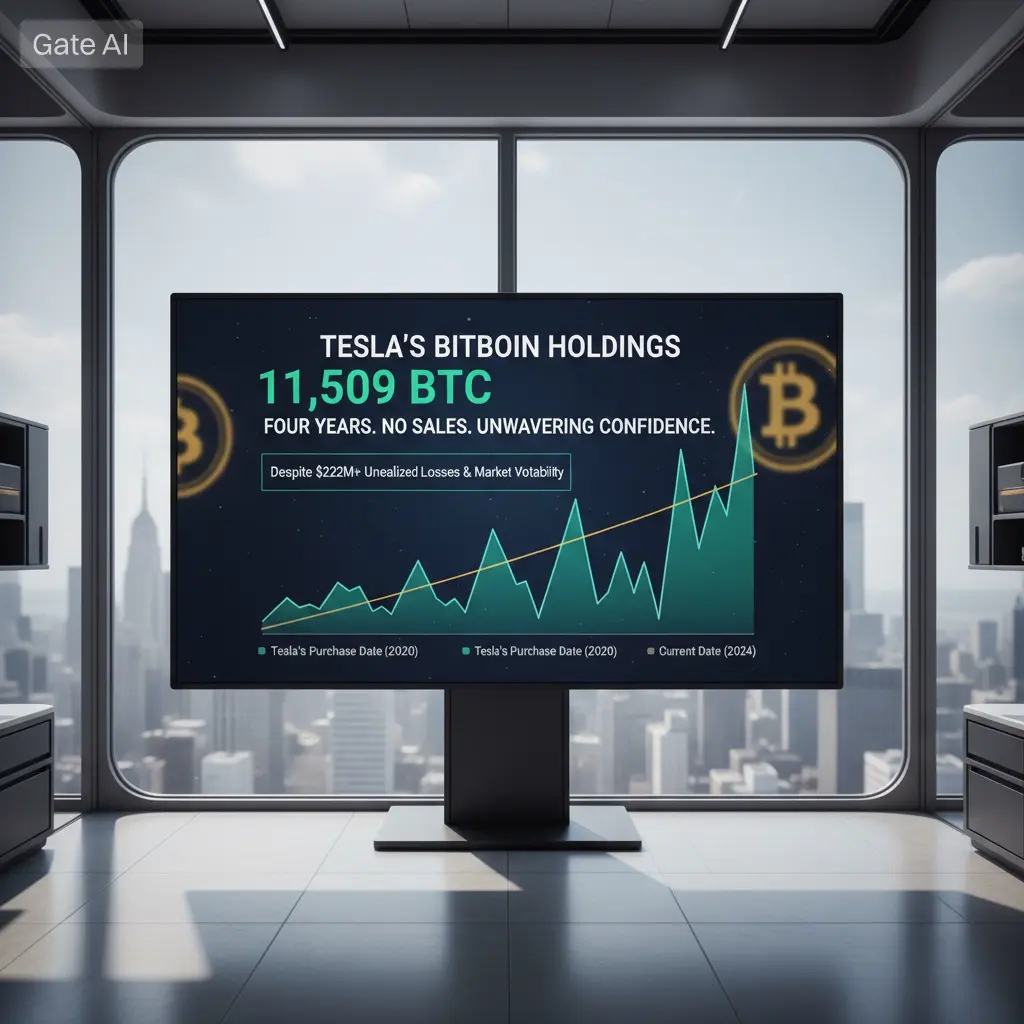
Tesla, led by Elon Musk, has kept exactly 11,509 Bitcoin untouched on its balance sheet for four consecutive years. Not a single coin sold since early 2021 despite absorbing over $222 million in unrealized losses. Through Q4 2025, when Bitcoin crashed from $114,000 to sub-$90,000, Tesla booked a $239 million impairment charge and held. Through Q1 2026, when BTC slid from $90,000 to $68,000, the company absorbed another $173 million after-tax loss and still refused to liquidate. At the current BTC price near $65,665, that 11,509 stack is worth approximately $755 million. This is not a trivial number for any corporation, and choosing to ride the volatility rather than exit is a strategic posture that tells the market Tesla views Bitcoin as a long-duration reserve asset, not a trading instrument.
This conviction becomes even more meaningful when you consider the history. In 2022, Tesla did sell approximately 75 percent of its then-42,000 BTC position to boost liquidity during uncertain times. But after adding a small amount back in early 2025 to reach 11,509 BTC, the company has not budged. Every quarterly filing since has confirmed the same number. Through two major drawdowns totaling nearly 50 percent from the all-time high, through shifting corporate priorities that now heavily favor AI and robotics over crypto accumulation, Tesla's Bitcoin position has remained frozen. That silence is the loudest conviction signal in the corporate crypto world today.
Together with SpaceX, which also holds substantial Bitcoin, the Musk-controlled entities represent one of the largest non-institutional corporate Bitcoin positions globally. They stand alongside Strategy, the largest corporate holder with over 500,000 BTC. Interestingly, Strategy disclosed a $216 million Bitcoin sale on July 6, 2026, its largest since Michael Saylor began building the position. The market barely reacted, suggesting investors now separate routine treasury management from genuine shifts in corporate conviction. Tesla, by contrast, has done nothing at all. Zero sales, zero additions, just a steady hand through violent price swings.
Now let us examine where Bitcoin stands right now and why bullish sentiment is building despite the turbulence.
Bitcoin trades near $65,665 as of late July 2026, down almost 50 percent from its October 2025 peak above $125,000. Painful for top buyers, but exactly the environment where the next upward leg gets constructed. Several catalysts are converging to create a bullish undercurrent even as geopolitical noise dominates headlines.
The first and most powerful catalyst is the Clarity Act. The Digital Asset Market Clarity Act passed the US House of Representatives and is now before the Senate. Treasury Secretary Scott Bessent told lawmakers on July 21 that the bill is at the "1-yard line," urging passage before the August recess. President Trump publicly pushed for it on Truth Social. Kalshi prediction markets place a 73 percent likelihood of a Senate vote before recess. If enacted, this legislation would establish a coherent federal framework for digital assets, replacing the current patchwork of SEC and CFTC jurisdictional disputes that have kept institutional capital sidelined for years. Analysts have called the Clarity Act Bitcoin's "ultimate catalyst," one that could spark institutional FOMO as allocators race to gain exposure. Bitcoin, as the largest and most liquid digital asset, would capture the first and largest wave of institutional inflows.
The second catalyst is the maturation of Bitcoin ETF infrastructure. Spot Bitcoin ETFs approved in early 2024 have made it dramatically easier for retail and institutional investors to gain exposure without self-custody complexity. BlackRock's iShares Bitcoin Trust remains the dominant vehicle. With regulatory clarity potentially imminent, the next allocation wave from pension funds, endowments, sovereign wealth vehicles, and registered investment advisors who have waited for legal certainty could be transformative. Expectations of further major institutional disclosures are building.
The third catalyst is Bitcoin's own supply dynamics. The April 2024 halving cut the block subsidy from 6.25 to 3.125 BTC, bringing annual supply inflation to roughly 0.85 percent, well below most fiat currencies. Every prior halving cycle historically produced a bull run within 12-18 months. While the current cycle has been distorted by the extraordinary surge to $126,000 and subsequent deep correction, the supply squeeze is still working in Bitcoin's favor. Exchange reserve balances have been declining throughout 2026, consistent with accumulation rather than distribution. Long-term holder metrics show coins unmoved for over a year growing as a share of total supply, meaning the cohort least likely to sell is expanding.
Now the complication: Iran.
The US-Iran conflict that began February 28, 2026 has escalated dramatically in July. Trump declared the ceasefire "over" on July 8, triggering immediate risk-off selling. Bitcoin dropped over 2 percent that day. Explosions were reported in Tabriz, Tehran, and Isfahan. Iran shot down a drone over southern territory. Iran closed the Strait of Hormuz after nine consecutive nights of US airstrikes, sending oil prices surging. Polymarket shows 31 percent probability of a US invasion by 2027 and 58 percent probability of Iranian military action against a Gulf state imminently. WTI crude hitting $90 by end-July is priced at 46 percent probability.
Bitcoin and geopolitical risk have a two-phase relationship. Phase one: immediate shock, Bitcoin sells off alongside equities as investors rush to liquidity. That happened in early July when BTC dipped toward $63,000. Phase two: once panic subsides, Bitcoin often recovers and sometimes rallies because the same geopolitical stress revives its scarcity-hedge narrative. Bitcoin did surge back to $71,000 at one point in mid-July amid Iran fears before settling back near $65,000 as profit-taking and continued escalation pulled it lower.
The critical variable is oil. If crude sustains above $100 per barrel from the Hormuz disruption, inflation expectations keep the Fed hawkish and the macro environment stays hostile for risk assets including Bitcoin. If oil falls toward $80-85 on ceasefire signals or reserve releases, inflation pressure eases, rate-cut expectations revive, and that becomes the most reliable bullish catalyst for BTC. The shorthand from professional traders: watch oil, not headlines.
On the technical side, Bitcoin closed Tuesday above a key resistance step at $66,445, printing a four-hour TBO Breakout Cluster according to Kitco analysis. However, daily RSI is overbought, and analysts caution this is constructive without being complacent. STS Digital's Maxime Seiler identifies $70,000-72,000 as the upside zone into month end, with immediate resistance at $67,000-68,000 and strong support at $60,000. A breakout above $72,000 with momentum could extend toward $80,000 if the regulatory catalyst delivers and oil stabilizes.
So the bullish path: Clarity Act passes Senate, institutional inflows accelerate, oil stabilizes below $90, Iran situation does not further escalate, and Bitcoin pushes from $65,665 toward $72,000 by August, potentially $90,000+ by Q4 2026 as supply tightness and ETF demand compound. The structural case is solid — halving supply squeeze, declining exchange reserves, corporate diamond-hand conviction from Tesla and others, regulatory clarity imminent.
The bearish path: Iran escalates further — full Hormuz closure, sustained oil above $100, direct military engagement — keeping the Fed hawkish and crushing risk appetite. Bitcoin retests $58,000-60,000 support, potentially breaking toward $50,000. If the Clarity Act stalls in the Senate, the institutional catalyst evaporates and BTC stays range-bound between $60,000-68,000 through summer.
My assessment: Bitcoin is at a genuine inflection point. The bullish catalysts are real and approaching, but competing with serious geopolitical headwinds that could override them short-term. Resolution over the next 2-4 weeks will likely determine whether BTC breaks toward $72,000+ or revisits $58,000. Tesla's four-year hold through a 50 percent drawdown is the strongest corporate signal that Bitcoin's long-term value proposition remains intact. Whether the next move is up or down, the structural case for Bitcoin as a reserve asset is validated every quarter Tesla chooses not to sell.
Now regarding Tesla stock specifically. Tesla currently trades around $370-400, down roughly 17 percent year-to-date in 2026. Q2 2026 earnings reported July 22 showed mixed results. Deliveries were outstanding at 480,126 vehicles, up 25 percent year-over-year and 74,000 above consensus, Tesla's best-ever Q2. Energy deployment hit 13.5 GWh, up over 40 percent. But profits disappointed — missed earnings forecasts, first negative free cash flow in over two years, and guidance for over $25 billion in remaining CapEx with ongoing negative cash flow as Tesla pours capital into AI infrastructure, Robotaxi, Optimus, and in-house AI silicon.
Analyst consensus is Hold with an average target around $420. The stock trades at roughly 167x forward earnings — enterprise software multiples applied to auto manufacturer margins. Technical indicators showed Strong Sell signals as of mid-July: MACD negative, price below both 50-day and 200-day moving averages, ADX indicating trend weakening. Prediction markets give Optimus only 16 percent chance of shipping in 2026 and Tesla only 48 percent chance of closing July above $370.
The upside scenario: if Robotaxi launches commercially, Optimus ships, or in-house AI silicon delivers competitive advantage, the stock could re-rate dramatically toward $500-600. RBC raised its target to $500 with Outperform on that thesis. The realistic 2026 range is likely $300-480. Sustained levels above $500 require proof of revenue from AI/robotics, which most analysts do not expect this year.
The downside scenario: core auto margins compress as Rivian's R2 and other competitors enter the mass-market segment, AI investments burn cash without near-term returns, and the narrative cracks. On that path, $300 or lower is plausible. 24/7 Wall St. called Tesla a Sell at $370, arguing the multiple asks investors to underwrite three uninvented businesses while the core operation decelerates.
Tesla's stock trajectory does not directly drive Bitcoin, but general risk-on or risk-off sentiment from Tesla moves can spill over into crypto markets. The more relevant Bitcoin question is whether Tesla ever sells those 11,509 BTC. For four years, the answer has been no. Through two major drawdowns, through hundreds of millions in impairments, through shifting priorities toward AI, Tesla has held. That conviction is worth respecting and remains one of the strongest signals in the Bitcoin market today.@Gate_Square #SummerCreationCamp