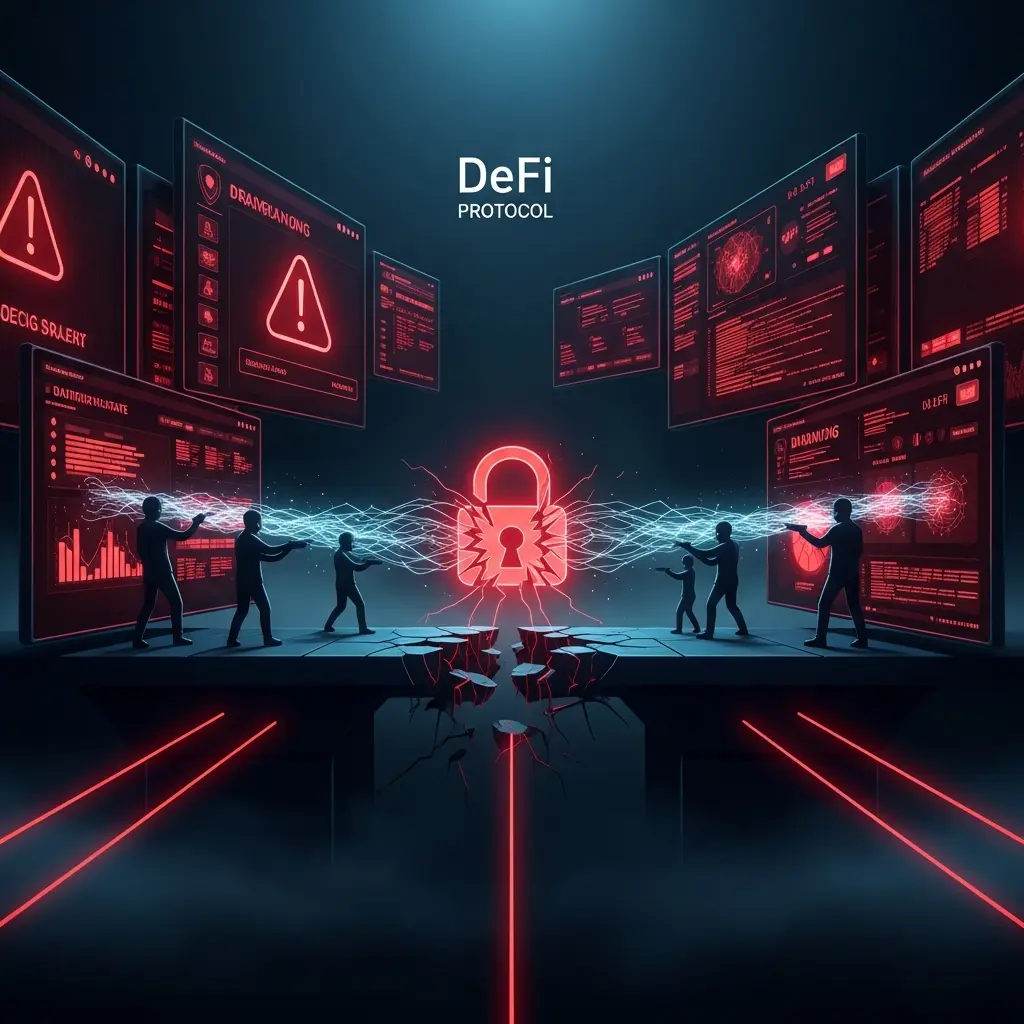
#DeFi4月安全事件损失超6亿美元 #Gate广场五月交易分享 Cross-Chain Bridges Are Not "Safety Bridges" | Dissecting Recent Attack Incidents and DeFi Security Weaknesses
In April 2026, two consecutive cross-chain bridge attacks shook the DeFi world again.
First, on April 18, KelpDAO was hacked due to a flaw in cross-chain verification configuration, resulting in the theft of approximately $293 million;
then, on April 29, Syndicate Commons' cross-chain bridge experienced a message verification failure, causing the token to plummet nearly 35%.
The attackers did not touch the core smart contract code but exploited the "trust blind spot" in the design of the cross-chain bridge—faking a message, and the system obediently approved it.
These two incidents once again expose a core issue: **Cross-chain bridges are becoming one of the "biggest weak points" in blockchain security.**
For ordinary users and project teams, the warning from these events is: the underlying trust model of cross-chain bridges is being systematically challenged.
This article starts from the essence of risk and provides practical protective suggestions.
---
**1. Why Are Cross-Chain Bridges Prone to "Falling Over"?**
Frequent accidents in cross-chain bridges stem from several common design flaws:
1. **Verification mechanisms are too simple**
Single-node confirmation can be broken, allowing hackers to forge instructions. This "single point of trust" pattern is equivalent to having no defenses in a decentralized world.
2. **Lack of two-way reconciliation**
Events on the source chain are not recognized by the target chain, enabling forged messages to pass freely. It's like a bank only checking your check but not verifying your account balance by phone.
3. **Over-concentrated permissions**
Large funds pools without limits, delays, or multi-signature protections can be drained in one breach. Like a safe with keys held by only one person—lose the key, and it's all over.
4. **Insufficient auditing**
Many vulnerabilities are only discovered after months of operation, leaving attack windows open for a long time. Auditing at launch does not guarantee eternal security; new methods often emerge after audits.
Both incidents fundamentally stem from "trust in the wrong single link."
---
**2. Common Risk Types of Cross-Chain Bridges**
Every link in a cross-chain bridge can become a breach point; stay vigilant when using.
1. **Verification mechanism vulnerabilities**
Single-point verification is easy to break, allowing forged messages to pass. Once hackers control the verification node, they hold the "release button" for all cross-chain assets.
2. **Contract logic flaws**
Such as missing permission checks, reentrancy vulnerabilities, etc. These small code oversights often become backdoors repeatedly exploited.
3. **Centralized node risks**
If servers, APIs, or keys are compromised, the system can go out of control. Centralized components relied upon by cross-chain bridges are favorite targets for nation-state hackers.
4. **Data trustworthiness issues**
External data hijacked or tampered with can cause incorrect execution. Oracles or off-chain data sources being polluted can cause the entire bridge to "go in the wrong direction."
5. **Concentrated funds pools**
Large assets without risk controls can be quickly drained if breached. Storing all user funds in one pool is like setting a trap for hackers—an "all-in-one" opportunity.
Users don't need to remember all technical details—just understand: **every step of a cross-chain bridge can go wrong.**
---
**3. How Can Ordinary Users Protect Themselves?**
This part is most critical—many losses are actually due to operational habits.
✅ Minimize cross-chain operations frequency
Every cross-chain transfer involves handing assets to a third party; any link failure can lead to asset loss.
💡 Recommendations:
- Avoid frequent, multi-time cross-chain transfers unless necessary.
- Prioritize mature, well-established cross-chain bridges and avoid niche or obscure tools.
Core principle: the more cross-chain steps, the higher the exposure risk.
✅ Do not use "just launched" cross-chain bridges
Many bridges, when first launched:
- Have untested code in real-world scenarios
- May lack thorough audits, and risk controls are incomplete—precisely the "window" hackers love.
💡 Suggestions:
- Avoid newly launched or overly hyped projects
- Observe for a period to see if anomalies or security incidents occur
👉 Remember: "Newer" ≠ "Safer"; often, it’s riskier.
✅ Test with small amounts before large transfers
Many users transfer large sums directly, which is very risky. It’s recommended to first transfer a small amount to test the full process, confirm receipt, then proceed with larger amounts. Even if issues occur, losses are manageable.
👉 The purpose of this approach: even if problems happen, losses are controlled, avoiding "one-time big losses."
✅ Be cautious with approvals and signatures
Most cross-chain operations involve wallet contract approvals, which are the main entry point for asset theft.
⚠ Key risk points:
- Unlimited approvals: can transfer all assets in your wallet without restriction
- Blindly approving unknown contracts makes you vulnerable to phishing thefts
💡 Protective suggestions:
- Revoke approvals immediately after completing operations
- Be cautious with unfamiliar signatures; verify address and permissions before signing
✅ Use separate wallets for asset management to avoid "total loss in one go"
Many users store all assets in one wallet; if compromised (via approval abuse, private key leaks, etc.), all assets are at risk.
👉 Safer practices:
- Main wallet: only for storing large assets (no daily interactions)
- Operational wallet: for DeFi, cross-chain, and daily activities
- High-risk operations: use a new, dedicated wallet
📌 Protective effect: even if the daily interaction wallet is hacked or stolen, your core large assets remain unaffected, preventing total loss.
---
**4. Security Issues Project Teams Must Prioritize**
If users can "reduce risks," project teams must "prevent accidents."
1. **Decentralized verification**
Multiple nodes reaching consensus to eliminate single points of failure. At least 3 independent verification nodes, not sharing the same infrastructure.
2. **Minimal permissions + time locks**
Split admin permissions, enforce delays (e.g., 24 hours) on critical operations. Even if permissions are stolen, the team and users have reaction windows.
3. **Ongoing auditing and monitoring**
Audits before launch are just the start; continuous 24/7 monitoring of abnormal transactions is essential. Many attacks happen after audits; dynamic defense is more important than one-time checks.
4. **Fund isolation**
Don’t keep all assets in one pool; implement layered management. Separate protocol funds, user collateral, and platform fees. A breach in one does not affect all.
---
**Conclusion**
KelpDAO and Syndicate Commons incidents once again prove: **Cross-chain bridges are not "functional components" but "high-risk infrastructure."**
From verification flaws to permission loss, every link can be an attack vector. Although the methods differ, the essence is the same: **trust assumptions are overly simplistic.**
For ordinary users: reducing cross-chain operations, cautious approvals, and asset diversification are the most effective defenses.
For the industry: decentralized verification, permission control, and transparent mechanisms are key directions for cross-chain security.
In April 2026, two consecutive cross-chain bridge attacks shook the DeFi world again.
First, on April 18, KelpDAO was hacked due to a flaw in cross-chain verification configuration, resulting in the theft of approximately $293 million;
then, on April 29, Syndicate Commons' cross-chain bridge experienced a message verification failure, causing the token to plummet nearly 35%.
The attackers did not touch the core smart contract code but exploited the "trust blind spot" in the design of the cross-chain bridge—faking a message, and the system obediently approved it.
These two incidents once again expose a core issue: **Cross-chain bridges are becoming one of the "biggest weak points" in blockchain security.**
For ordinary users and project teams, the warning from these events is: the underlying trust model of cross-chain bridges is being systematically challenged.
This article starts from the essence of risk and provides practical protective suggestions.
---
**1. Why Are Cross-Chain Bridges Prone to "Falling Over"?**
Frequent accidents in cross-chain bridges stem from several common design flaws:
1. **Verification mechanisms are too simple**
Single-node confirmation can be broken, allowing hackers to forge instructions. This "single point of trust" pattern is equivalent to having no defenses in a decentralized world.
2. **Lack of two-way reconciliation**
Events on the source chain are not recognized by the target chain, enabling forged messages to pass freely. It's like a bank only checking your check but not verifying your account balance by phone.
3. **Over-concentrated permissions**
Large funds pools without limits, delays, or multi-signature protections can be drained in one breach. Like a safe with keys held by only one person—lose the key, and it's all over.
4. **Insufficient auditing**
Many vulnerabilities are only discovered after months of operation, leaving attack windows open for a long time. Auditing at launch does not guarantee eternal security; new methods often emerge after audits.
Both incidents fundamentally stem from "trust in the wrong single link."
---
**2. Common Risk Types of Cross-Chain Bridges**
Every link in a cross-chain bridge can become a breach point; stay vigilant when using.
1. **Verification mechanism vulnerabilities**
Single-point verification is easy to break, allowing forged messages to pass. Once hackers control the verification node, they hold the "release button" for all cross-chain assets.
2. **Contract logic flaws**
Such as missing permission checks, reentrancy vulnerabilities, etc. These small code oversights often become backdoors repeatedly exploited.
3. **Centralized node risks**
If servers, APIs, or keys are compromised, the system can go out of control. Centralized components relied upon by cross-chain bridges are favorite targets for nation-state hackers.
4. **Data trustworthiness issues**
External data hijacked or tampered with can cause incorrect execution. Oracles or off-chain data sources being polluted can cause the entire bridge to "go in the wrong direction."
5. **Concentrated funds pools**
Large assets without risk controls can be quickly drained if breached. Storing all user funds in one pool is like setting a trap for hackers—an "all-in-one" opportunity.
Users don't need to remember all technical details—just understand: **every step of a cross-chain bridge can go wrong.**
---
**3. How Can Ordinary Users Protect Themselves?**
This part is most critical—many losses are actually due to operational habits.
✅ Minimize cross-chain operations frequency
Every cross-chain transfer involves handing assets to a third party; any link failure can lead to asset loss.
💡 Recommendations:
- Avoid frequent, multi-time cross-chain transfers unless necessary.
- Prioritize mature, well-established cross-chain bridges and avoid niche or obscure tools.
Core principle: the more cross-chain steps, the higher the exposure risk.
✅ Do not use "just launched" cross-chain bridges
Many bridges, when first launched:
- Have untested code in real-world scenarios
- May lack thorough audits, and risk controls are incomplete—precisely the "window" hackers love.
💡 Suggestions:
- Avoid newly launched or overly hyped projects
- Observe for a period to see if anomalies or security incidents occur
👉 Remember: "Newer" ≠ "Safer"; often, it’s riskier.
✅ Test with small amounts before large transfers
Many users transfer large sums directly, which is very risky. It’s recommended to first transfer a small amount to test the full process, confirm receipt, then proceed with larger amounts. Even if issues occur, losses are manageable.
👉 The purpose of this approach: even if problems happen, losses are controlled, avoiding "one-time big losses."
✅ Be cautious with approvals and signatures
Most cross-chain operations involve wallet contract approvals, which are the main entry point for asset theft.
⚠ Key risk points:
- Unlimited approvals: can transfer all assets in your wallet without restriction
- Blindly approving unknown contracts makes you vulnerable to phishing thefts
💡 Protective suggestions:
- Revoke approvals immediately after completing operations
- Be cautious with unfamiliar signatures; verify address and permissions before signing
✅ Use separate wallets for asset management to avoid "total loss in one go"
Many users store all assets in one wallet; if compromised (via approval abuse, private key leaks, etc.), all assets are at risk.
👉 Safer practices:
- Main wallet: only for storing large assets (no daily interactions)
- Operational wallet: for DeFi, cross-chain, and daily activities
- High-risk operations: use a new, dedicated wallet
📌 Protective effect: even if the daily interaction wallet is hacked or stolen, your core large assets remain unaffected, preventing total loss.
---
**4. Security Issues Project Teams Must Prioritize**
If users can "reduce risks," project teams must "prevent accidents."
1. **Decentralized verification**
Multiple nodes reaching consensus to eliminate single points of failure. At least 3 independent verification nodes, not sharing the same infrastructure.
2. **Minimal permissions + time locks**
Split admin permissions, enforce delays (e.g., 24 hours) on critical operations. Even if permissions are stolen, the team and users have reaction windows.
3. **Ongoing auditing and monitoring**
Audits before launch are just the start; continuous 24/7 monitoring of abnormal transactions is essential. Many attacks happen after audits; dynamic defense is more important than one-time checks.
4. **Fund isolation**
Don’t keep all assets in one pool; implement layered management. Separate protocol funds, user collateral, and platform fees. A breach in one does not affect all.
---
**Conclusion**
KelpDAO and Syndicate Commons incidents once again prove: **Cross-chain bridges are not "functional components" but "high-risk infrastructure."**
From verification flaws to permission loss, every link can be an attack vector. Although the methods differ, the essence is the same: **trust assumptions are overly simplistic.**
For ordinary users: reducing cross-chain operations, cautious approvals, and asset diversification are the most effective defenses.
For the industry: decentralized verification, permission control, and transparent mechanisms are key directions for cross-chain security.