# MarvellPlungesNearly10%

139.05K

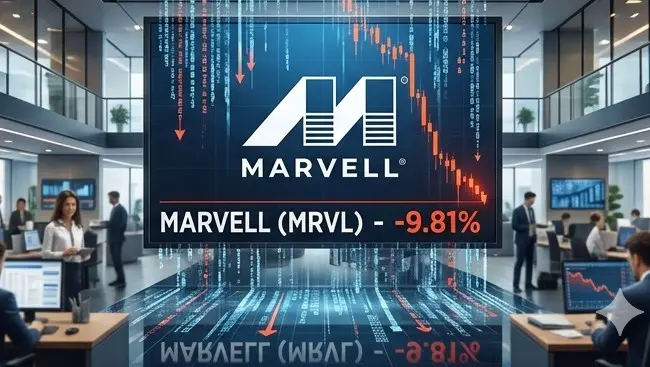
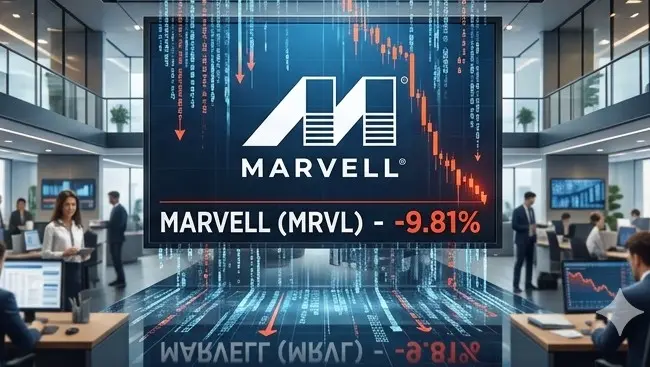
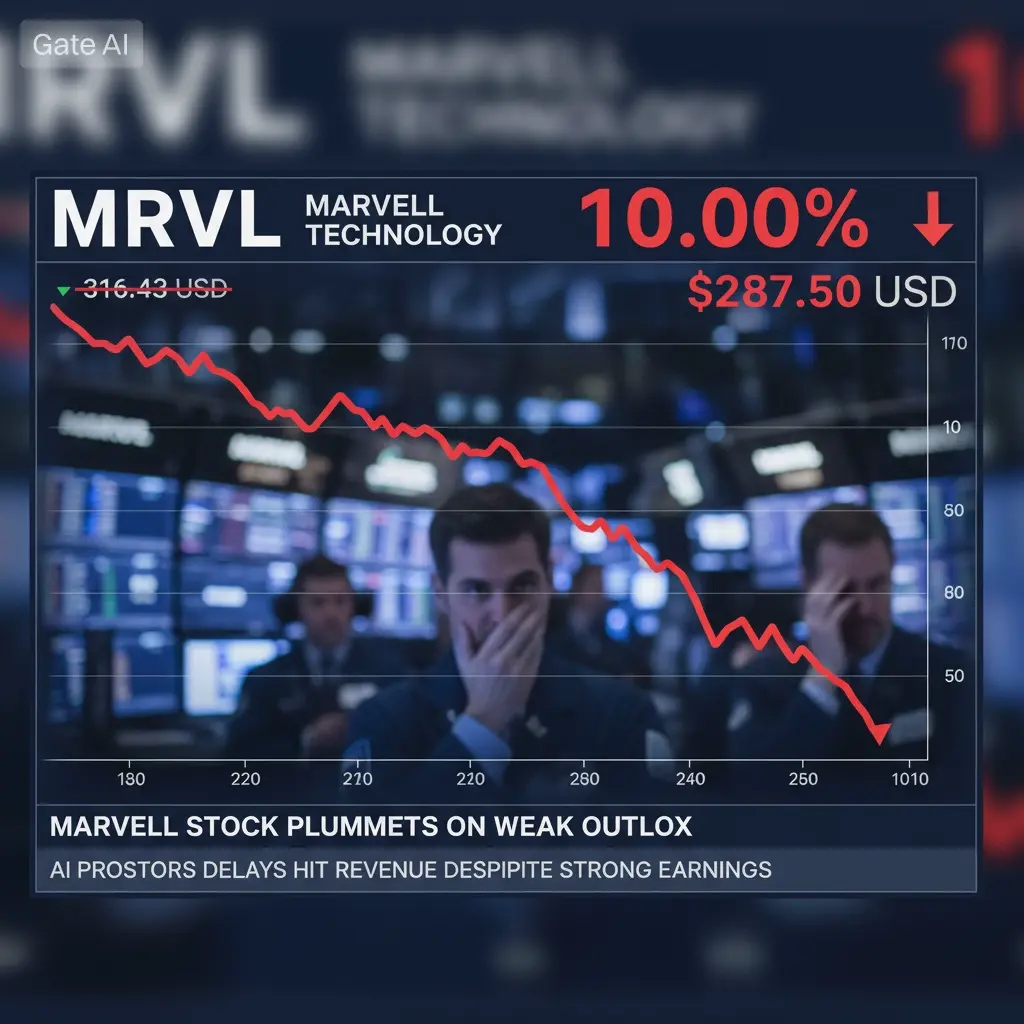
On June 16, the US AI chip sector faced a sharp profit-taking selloff. Marvell Technology tumbled 9.78% to $278.67, making it the worst performer in both the Philadelphia Semiconductor Index and the S&P 500. AMD fell 7.3%, Micron dropped 6.18%, and Intel plunged 8.45%, dragging the Philadelphia Semiconductor Index down 5.71%. Despite intact AI custom silicon demand fundamentals, Marvell had surged over 227% year-to-date, with valuation reaching 96x P/E, triggering concentrated profit-taking. The market is shifting from "theme chasing" to "fundamental validation" phase.

#MarvellPlungesNearly10%
Marvell Technology has recently experienced a sharp pullback of nearly 10%, with the stock stabilizing around $288 after a strong AI-driven rally earlier in the year. On the surface, this looks like a normal correction, but in reality, the move reflects a deeper shift in how the market is now pricing AI semiconductor companies — moving from story-driven optimism to execution-driven valuation.
Earlier in the cycle, Marvell was one of the strongest beneficiaries of the AI infrastructure narrative. Investors aggressively priced in rapid expansion in custom AI chips (ASIC
HighAmbition
#MarvellPlungesNearly10%
Marvell Technology has recently experienced a sharp pullback of nearly 10%, with the stock stabilizing around $288 after a strong AI-driven rally earlier in the year. On the surface, this looks like a normal correction, but in reality, the move reflects a deeper shift in how the market is now pricing AI semiconductor companies — moving from story-driven optimism to execution-driven valuation.
Earlier in the cycle, Marvell was one of the strongest beneficiaries of the AI infrastructure narrative. Investors aggressively priced in rapid expansion in custom AI chips (ASICs), hyperscaler data center spending, and next-generation optical interconnect demand. This created a powerful upward momentum where expectations moved faster than actual revenue realization. However, once earnings and forward guidance were updated, the market began to recognize a key issue: demand is not disappearing, but its conversion into revenue is slower and more uneven than expected.
The core reason behind the recent decline is not weakness in the AI trend, but a timing mismatch in revenue recognition. Major hyperscaler customers such as Amazon and Microsoft are still heavily investing in AI infrastructure, but their custom silicon deployment schedules have shifted further into 2026. This creates what markets often call a “visibility gap” — where future growth exists, but near-term numbers do not fully reflect it. In high-valuation semiconductor stocks, this gap alone is enough to trigger strong repricing.
At the same time, Marvell’s strategic restructuring, including the divestiture of non-core segments like automotive Ethernet, has added to short-term uncertainty. While this decision improves long-term focus on AI and data center growth, it temporarily reduces diversification and makes quarterly revenue more dependent on a smaller set of high-impact programs. Markets typically punish this type of transition phase until clarity returns.
Another important factor is sentiment rotation within the AI sector itself. The AI trade is no longer moving as a single unified trend. Instead, it has split into tiers. GPU leaders with dominant ecosystems are being treated as “core AI infrastructure assets,” while ASIC and networking-focused players like Marvell are being treated as cycle-sensitive enablers. This creates higher volatility even when long-term fundamentals remain intact.
From a psychological perspective, the stock is also going through what can be described as a “post-euphoria normalization phase.” After a strong rally fueled by AI excitement and positive external commentary, expectations reached a level where even slightly conservative guidance was enough to trigger profit-taking and institutional rebalancing. This is a classic pattern in semiconductor bull cycles — where sentiment peaks before revenue peaks.
Despite this correction, the long-term structural story has not weakened. In fact, the underlying AI infrastructure expansion is still accelerating globally. The demand for high-bandwidth interconnect solutions is increasing as AI clusters scale in size and complexity. Similarly, custom silicon adoption by hyperscalers is still in early stages, meaning Marvell’s ASIC pipeline continues to represent a multi-year growth opportunity rather than a short-term trade.
However, the key difference now is that the market is demanding proof of consistency rather than projections of potential. Investors want to see stable ASIC ramps, predictable hyperscaler deployment, and sustained growth in optical networking before assigning higher valuation multiples again.
Technically, the stock is currently sitting in a broad consolidation zone after its prior rally. The $260 level is acting as the most important structural support, where long-term buyers are likely to re-enter if volatility continues. On the upside, the $300–$324 range remains the key resistance zone, and a sustained breakout above it would indicate that the correction phase is over and a new bullish trend leg is forming.
In a broader sense, this is not a breakdown of the AI semiconductor story — it is a re-rating phase within it. The market is refining expectations, filtering out excess optimism, and aligning price action with realistic deployment timelines.
For investors and traders, this phase is critical because it often defines the next major trend direction. Either Marvell stabilizes and continues its AI-driven growth trajectory with improved execution visibility, or it enters a longer consolidation period where time — not price collapse — becomes the corrective mechanism.
At $288, the stock is positioned right in the middle of this decision zone, where sentiment, fundamentals, and expectations are all in balance, and the next earnings cycle will likely determine the direction of the next major move.
#MyGateTradeStory 📊
repost-content-media
  • Reward
  • 3
  • Repost
  • Share
Vortex_King:
LFG 🔥
View More
#MyGateTradeStory
Marvell Technology Plunges Nearly 10% as Profit-Taking Overpowers AI Chip Optimism
Marvell Technology (MRVL) closed at approximately $278 on June 16, 2026, with the stock suffering a combined session and after-hours decline approaching 10 percent, one of the sharpest single-day drops for the semiconductor leader in recent months. The plunge unfolded in two stages: a 5.13 percent intraday retreat during regular trading hours, followed by an additional 8 percent slide in after-hours activity, compounding into a cumulative loss that erased billions in market capitalization and
post-image
post-image
  • Reward
  • 6
  • Repost
  • Share
CryptoSpecto:
To The Moon 🌕
View More
₿ The overall market (Bitcoin as an indicator)
Bitcoin's price is repeating the March 2023 pattern that preceded a 238% rise, but institutional demand is shrinking this time from both sides, leaving analysts divided on whether the bullish scenario will be repeated for the entire market.
$BTC
#MyGateTradeStory #TradFiCFDGoldMasters #PredictWorldCup🏴󠁧󠁢󠁥󠁮󠁧󠁿vs🇭🇷 #GateSpotVolumeLeadsGlobalGrowth #MarvellPlungesNearly10%
BTC-2.08%
  • Reward
  • Comment
  • Repost
  • Share
#MarvellPlungesNearly10%
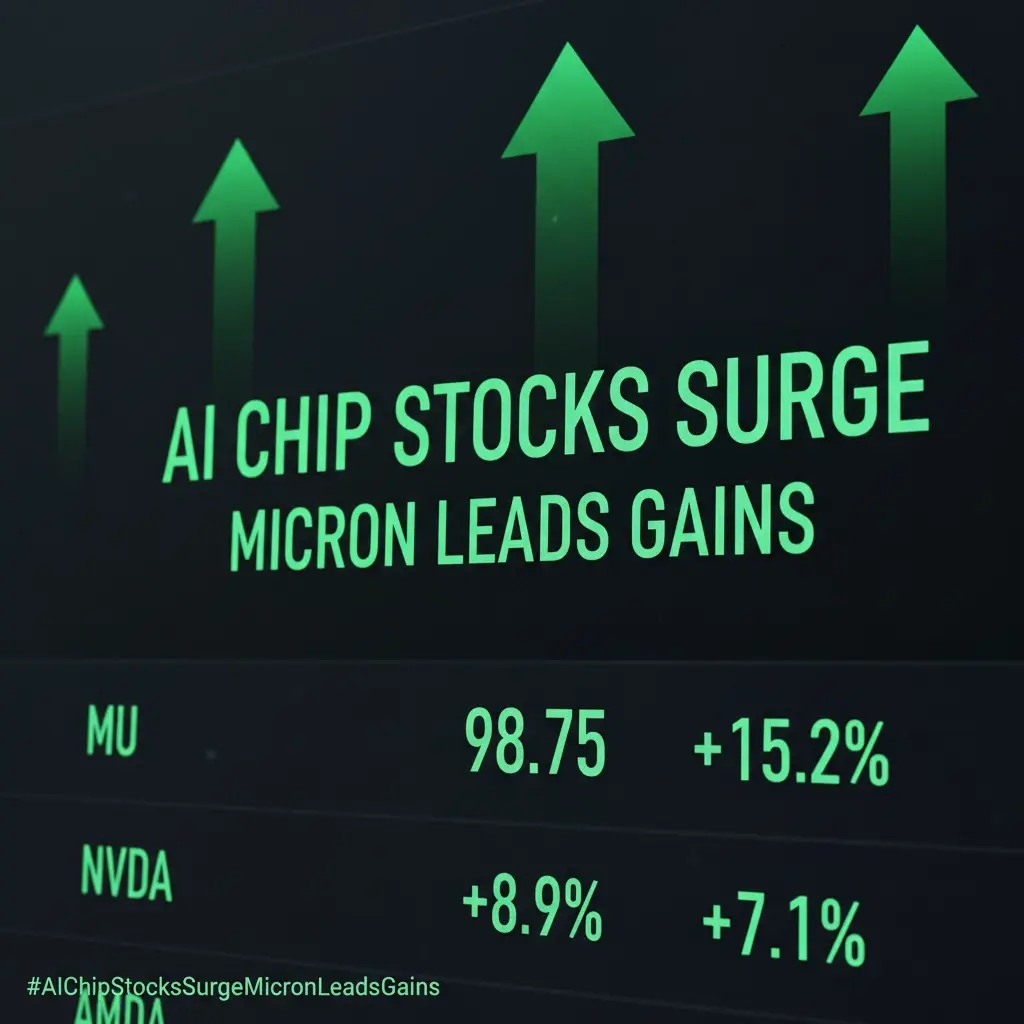
#AIChipStocksSurgeMicronLeadsGains
Artificial Intelligence is entering a new phase of growth, and this time the spotlight is shifting from software to the hardware that makes AI possible. While AI applications continue transforming industries worldwide, the companies building the infrastructure behind these innovations are becoming some of the biggest beneficiaries of the technology revolution.
Leading the latest rally is Micron, whose strong performance has reignited investor confidence across the AI semiconductor sector. The market is increasingly recognizing that a
  • Reward
  • 2
  • Repost
  • Share
HighAmbition:
good information 👍
View More
#MarvellPlungesNearly10%
Marvell Technology surprised the market as its stock plunged nearly 10%, reminding investors that even the strongest technology companies can experience sharp corrections. The decline sparked discussions across financial markets as traders reacted to changing sentiment in the semiconductor sector. While AI-related stocks have been among the market’s biggest winners over the past year, periods of profit-taking and uncertainty can trigger significant volatility.
The semiconductor industry remains one of the most important sectors driving the future of artificial intelli
post-image
post-image
post-image
  • Reward
  • 13
  • Repost
  • Share
Ai_Power:
To The Moon 🌕
View More
#AIChipStocksSurgeMicronLeadsGains
AI Hardware Boom Accelerates as Micron Strengthens Its Position in the Global Semiconductor Race
Artificial intelligence is entering a new phase where success is no longer driven solely by software innovation. The real competition is now taking place inside data centers, where advanced chips, high-speed memory, and powerful computing infrastructure are becoming the foundation of every AI breakthrough. As global investment in AI continues to expand, Micron has emerged as one of the strongest performers, leading the latest rally in AI chip stocks and highlight
post-image
post-image
  • Reward
  • 7
  • Repost
  • Share
CryptoDaisy:
LFG 🔥
View More
#AIChipStocksSurgeMicronLeadsGains
AI Chip Stocks Rally as Micron Leads the Next Wave of Artificial Intelligence Growth
Artificial intelligence is no longer just a software revolution it has become a hardware race. As technology companies invest billions of dollars into building the infrastructure required to power advanced AI models, semiconductor manufacturers are emerging as some of the biggest beneficiaries. Leading the latest rally is Micron, whose strong performance has reignited investor enthusiasm across the AI chip sector and reinforced the view that memory technology will be a
discovery
#AIChipStocksSurgeMicronLeadsGains
AI Chip Stocks Rally as Micron Leads the Next Wave of Artificial Intelligence Growth
Artificial intelligence is no longer just a software revolution it has become a hardware race. As technology companies invest billions of dollars into building the infrastructure required to power advanced AI models, semiconductor manufacturers are emerging as some of the biggest beneficiaries. Leading the latest rally is Micron, whose strong performance has reignited investor enthusiasm across the AI chip sector and reinforced the view that memory technology will be a critical component of the industry's future.
The surge in AI-related chip stocks highlights a broader market trend: while AI applications capture headlines, the companies supplying the computing power, memory, and data infrastructure behind those innovations are becoming increasingly valuable. Investors are now focusing on the businesses that provide the foundation of the AI ecosystem, and Micron has positioned itself at the center of that narrative.
Why AI Demand Is Transforming the Semiconductor Industry
The rapid expansion of artificial intelligence is creating an unprecedented need for computing resources. Training and operating modern AI models requires enormous amounts of processing power, storage capacity, and high-speed memory capable of handling vast datasets.
Unlike traditional computing workloads, AI systems continuously process and analyze massive volumes of information. This creates demand for advanced semiconductor solutions that can deliver greater speed, efficiency, and scalability.
As a result, technology companies are accelerating investments in:
- AI data centers
- Cloud computing infrastructure
- High-performance processors
- Advanced memory systems
- Networking technologies
- AI accelerators
These investments are fueling a new growth cycle across the semiconductor industry.
Micron Emerges as a Major AI Infrastructure Winner
Among the companies benefiting from this trend, Micron has attracted significant investor attention due to its leadership in memory technology.
Modern AI systems rely heavily on high-performance memory solutions to transfer and process data efficiently. As AI models become larger and more sophisticated, the importance of memory performance continues to increase.
Micron's position in advanced memory products has made it one of the key suppliers supporting next-generation AI infrastructure. Investors increasingly view the company as a direct beneficiary of long-term AI spending, helping drive renewed momentum in its stock performance.
The latest gains reflect growing confidence that demand for advanced memory products could remain strong for years as AI adoption expands globally.
High-Bandwidth Memory Becomes a Critical AI Component
One of the strongest themes supporting Micron's growth outlook is the increasing importance of High-Bandwidth Memory (HBM).
HBM technology allows data to move between processors and memory at extremely high speeds, making it essential for AI workloads that require rapid access to large datasets.
As AI companies continue developing more powerful models, demand for HBM solutions has accelerated dramatically.
This trend has created several advantages for memory manufacturers:
- Higher-value product demand
- Improved profit margins
- Long-term supply agreements
- Increased visibility into future revenues
Industry experts believe memory demand may remain one of the most important growth drivers within the AI hardware ecosystem over the coming years.
Data Centers Fueling a New Investment Cycle
The AI boom is driving one of the largest data center expansion cycles in recent history.
Major technology companies are investing aggressively to increase computing capacity and support growing AI workloads. These investments extend far beyond processors and include storage systems, networking equipment, cooling infrastructure, and memory solutions.
As data centers become larger and more sophisticated, semiconductor suppliers benefit from rising demand across multiple product categories.
This infrastructure buildout is expected to remain a key growth catalyst for the sector, providing long-term support for companies involved in AI hardware development.
AI Investment Extends Beyond One Company
While Micron has led recent gains, the broader semiconductor sector is benefiting from the same underlying trend.
The AI ecosystem depends on multiple layers of technology, creating opportunities across the supply chain.
Key beneficiaries include:
- Memory manufacturers
- GPU developers
- Chip designers
- Semiconductor equipment suppliers
- Networking infrastructure providers
- Data center operators
This interconnected ecosystem means that continued AI adoption has the potential to support growth across the entire semiconductor industry rather than a single company.
Investors Shift Focus Toward AI Infrastructure
The market's growing emphasis on AI infrastructure reflects a change in investor thinking.
During the early stages of AI adoption, attention was largely concentrated on software platforms and consumer-facing applications. Today, investors increasingly recognize that every AI breakthrough depends on physical infrastructure capable of supporting complex computational tasks.
This realization has elevated the importance of semiconductor companies, which provide the critical hardware layer powering the entire ecosystem.
As a result, AI infrastructure has become one of the most closely watched themes in global equity markets.
Risks Investors Should Monitor
Despite strong momentum, the semiconductor industry remains subject to several challenges.
Key risks include:
- Global economic slowdowns
- Supply chain disruptions
- Geopolitical tensions
- Export restrictions
- Competitive pressures
- Valuation concerns following rapid stock appreciation
Additionally, semiconductor markets have historically been cyclical, meaning periods of strong demand can sometimes be followed by inventory adjustments and slower growth phases.
Investors continue to balance long-term optimism about AI with awareness of these potential risks.
The Future of AI Hardware
The current wave of investment suggests that artificial intelligence is still in the early stages of its infrastructure buildout.
As AI applications become increasingly integrated into business operations, consumer products, healthcare, finance, and industrial systems, demand for advanced computing resources is expected to grow substantially.
This expansion will likely require:
- More powerful processors
- Faster memory systems
- Larger data centers
- Enhanced networking infrastructure
- Greater energy efficiency
Companies capable of supplying these technologies may remain central to the next phase of AI development.
Outlook
Micron's leadership in the latest AI chip rally underscores the growing importance of semiconductor infrastructure within the global technology landscape. As artificial intelligence continues to reshape industries and drive investment, memory technology is emerging as one of the most critical components supporting future innovation.
The surge in AI chip stocks reflects investor confidence that the demand for advanced computing infrastructure is far from over. While software may define how users experience artificial intelligence, the semiconductor industry remains the engine powering every breakthrough.
For investors and market participants alike, the message is becoming increasingly clear: the future of AI will be built not only through algorithms and applications, but through the chips, memory systems, and infrastructure that make those innovations possible. 🚀📈
repost-content-media
  • Reward
  • 16
  • Repost
  • Share
Falcon_Official:
To The Moon 🌕
View More
#AIChipStocksSurgeMicronLeadsGains
AI Chip Stocks Rally as Micron Leads the Next Wave of Artificial Intelligence Growth
Artificial intelligence is no longer just a software revolution it has become a hardware race. As technology companies invest billions of dollars into building the infrastructure required to power advanced AI models, semiconductor manufacturers are emerging as some of the biggest beneficiaries. Leading the latest rally is Micron, whose strong performance has reignited investor enthusiasm across the AI chip sector and reinforced the view that memory technology will be a
post-image
post-image
post-image
post-image
  • Reward
  • 28
  • Repost
  • Share
Ai_Power:
2026 GOGOGO 👊
View More
🚀 #AIChipStocksSurgeMicronLeadsGains
AI-driven demand continues to fuel the semiconductor rally, with Micron leading gains as investors bet on the future of high-performance memory and data center growth.
💡 Key drivers behind the surge: ✅ Rising AI infrastructure investments
✅ Growing demand for advanced memory chips
✅ Expansion of cloud computing and data centers
✅ Strong optimism across the semiconductor sector
As the AI revolution accelerates, chipmakers remain at the center of innovation, powering everything from large language models to next-generation computing.
Will AI demand keep pus
post-image
  • Reward
  • 1
  • Repost
  • Share
CryptoFiler:
To The Moon 🌕
#AIChipStocksSurgeMicronLeadsGains
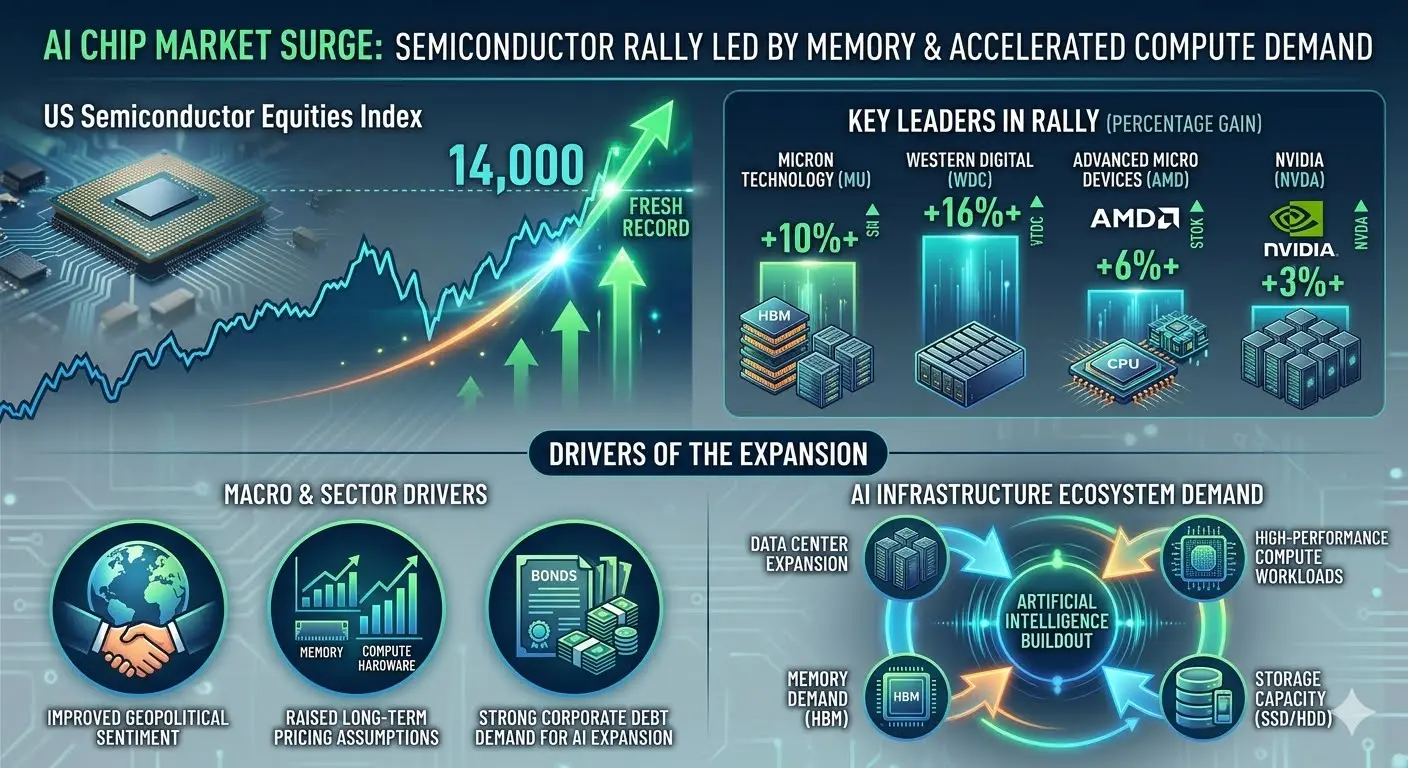
AI Chip Market Surge: Semiconductor Rally Led by Memory and Accelerated Compute Demand
US semiconductor equities advanced sharply in recent trading, pushing the sector index to a fresh record level above the 14,000 mark. The move reflected renewed confidence in artificial intelligence infrastructure demand and strengthening expectations for hardware cycle expansion.
Micron Technology emerged as a key leader, climbing more than 10% after revised outlook adjustments from major research desks significantly lifted price expectations. The upward revision reflect
post-image
  • Reward
  • 9
  • Repost
  • Share
cryptoStylish:
good information
View More
Load More