#Meta卖算力引发存储股大跌 Meta's "Selling Computing Power" Shakes the AI Market: Oversupply or Overreaction?
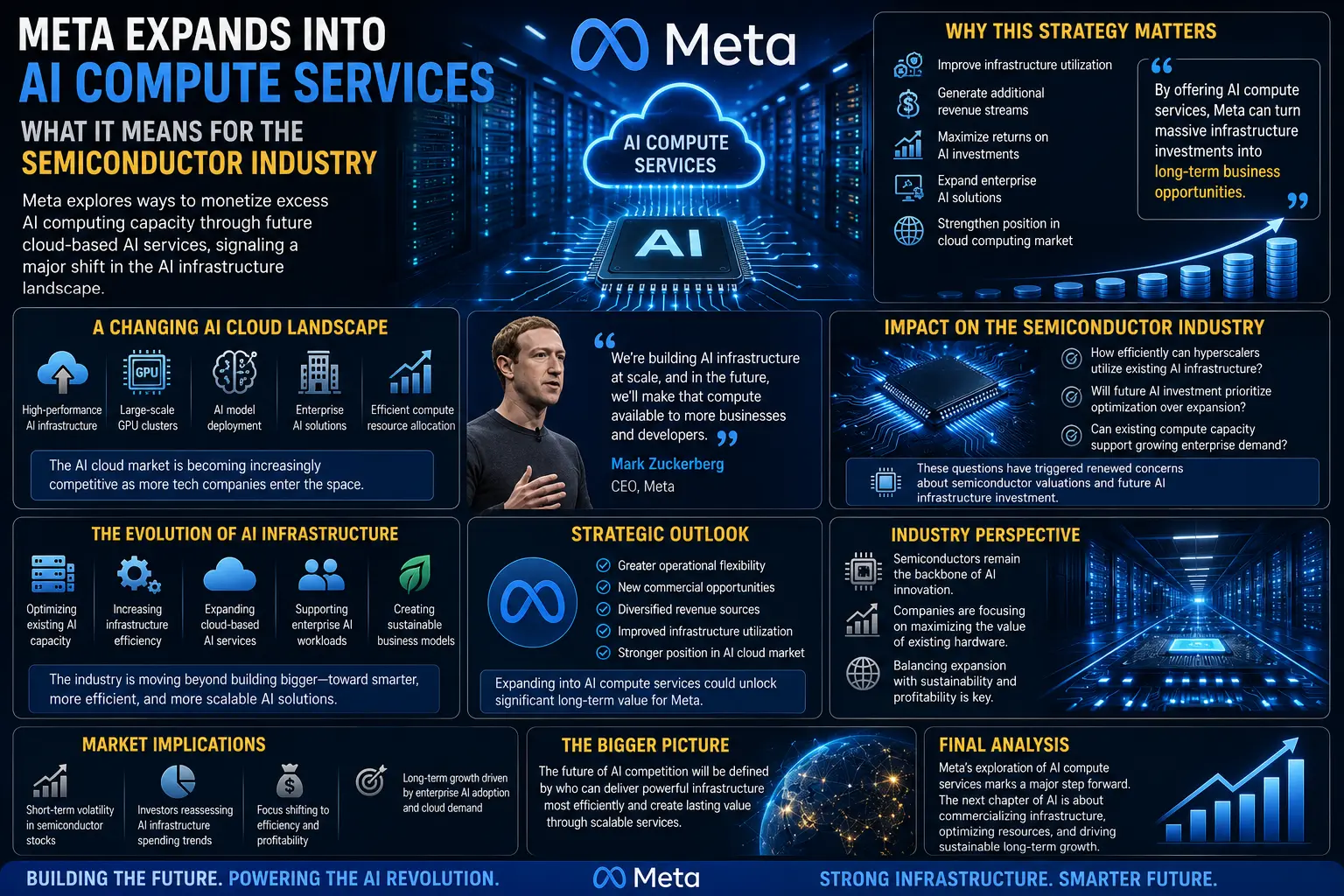
A piece of news about Meta has sparked a heated debate in global capital markets about the future of AI infrastructure. Currently, Meta is planning to offer AI computing services to external customers and is considering leasing out some of its idle AI computing power to improve the utilization of its AI infrastructure. This means that the internet giant, which previously relied mainly on its advertising business to digest AI investments, is now attempting to directly convert its massive GPU clusters into sellable cloud services, seeking new return paths for its persistently high AI capital expenditures. The market immediately gave drastically different pricing.
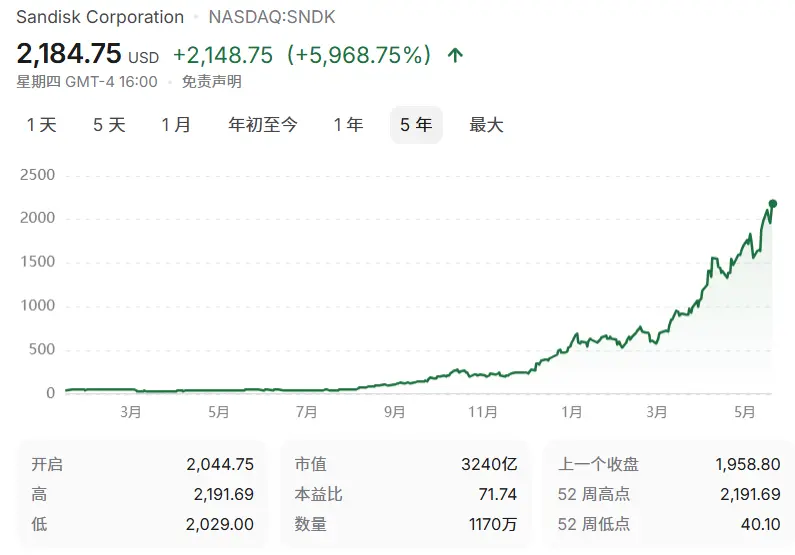
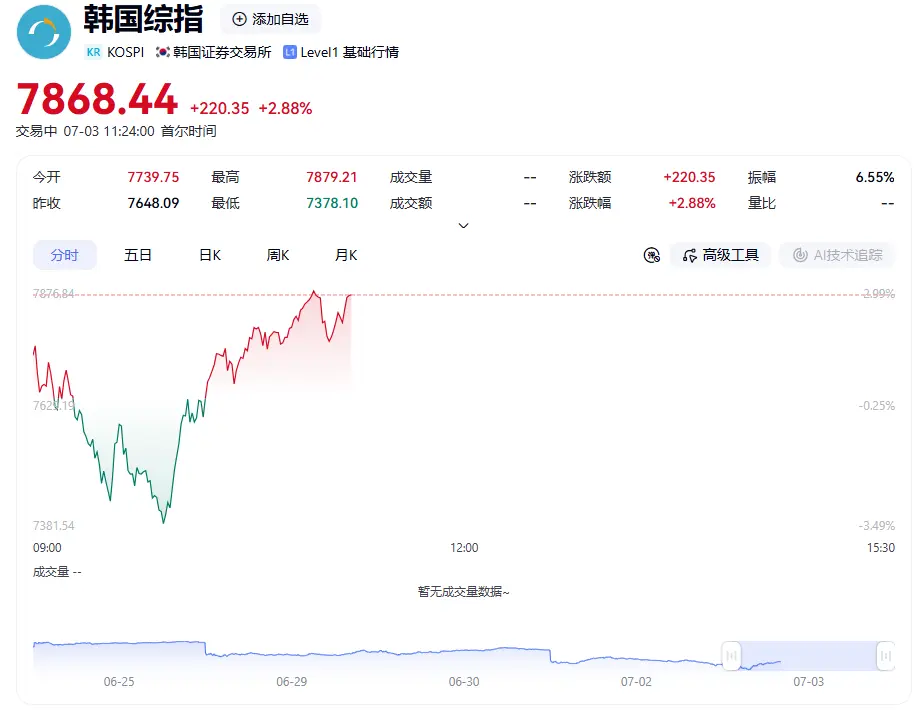
On July 1st local time, Meta's stock surged 8.8%, adding about $127 billion in market cap in a single day, while on the other side, the computing power industry chain, considered a beneficiary of AI infrastructure, came under collective pressure. CoreWeave and Nebius fell sharply by 13.92% and 17.01% respectively, while storage chip stocks like SanDisk and Micron Technology dropped over 10%. The sentiment then spread to other markets. On July 2nd, South Korea's Samsung Electronics and SK Hynix fell by 9.06% and 14.57% respectively. A-share AI industry chain stocks like storage chips, optical modules, and PCBs also generally corrected, with GigaDevice hitting the down limit, and multiple stocks such as Eoptolink, Montage Technology, and Longsys falling over 10%.
Compared to stock price fluctuations, the bigger shock came from market sentiment. Over the past two years, driven by generative AI, global tech giants have launched an unprecedented capital expenditure race. From Meta, Microsoft, Google, to Amazon, OpenAI, and xAI, the competition in large models has driven the continuous expansion of global GPUs, HBM, high-speed networks, and data centers, making AI infrastructure one of the most important investment themes in global capital markets.
Now, Meta's attempt to lease computing power to external parties is seen by investors as a signal: if even one of the world's largest GPU buyers starts seeking to sell its "surplus" computing power, does it mean that AI infrastructure construction has reached an inflection point? Is the demand for computing power, which has been growing rapidly over the past two years, starting to show signs of oversupply?
Why Meta Triggered the Debate on Computing Power Oversupply Meta's action is essentially an adjustment of its business model. Over the past few years, Meta has been purchasing AI chips and building data centers on a large scale. Its AI investments have mainly been monetized indirectly through its advertising business, improving ad recommendation effectiveness to boost ad revenue. Financial reports show that in the fourth quarter of 2025, advertising revenue still accounted for over 90% of Meta's total revenue. Compared to its advertising business, Meta has not fared well in the competition for large models. In terms of model development, Meta has been continuously adjusting its AI strategy over the past year, undergoing multiple rounds of organizational restructuring. Under competitive pressure from Google's Gemini and OpenAI, Meta has begun exploring more ways to monetize its AI assets. Selling or leasing computing power has thus become a new option.
In fact, Meta is not the first company to do this. Previously, Musk's xAI also leased out part of the computing power of its Colossus supercomputing cluster to clients like Anthropic and Google to improve GPU utilization. But market concerns have followed. Many investors believe that if leading internet companies start leasing computing power, it means that a large number of previously purchased GPUs may already be idle. The logic of "continuous capacity expansion" that the AI industry chain relied on may be changing. Therefore, the first to be sold off are AI hardware sectors like HBM, storage, and optical modules.
However, several industry insiders interviewed did not agree with the judgment of "overall oversupply of computing power." A relevant person from the marketing department of JiuZhangYunJi told reporters that the current problem is not absolute oversupply, but a "structural mismatch." "If oversupply refers to low-end general-purpose computing power or intelligent computing centers lacking application scenarios, then there is indeed a local oversupply problem, but if it refers to high-end intelligent computing power that can support large model training and inference, and operational computing power that can be scheduled on demand, then it is far from enough." Citing industry data, the person said that the effective utilization rate of current intelligent computing clusters averages less than 20%, but the gap for high-end computing power supporting large model training is about 40%. Training computing power is currently in a state of supply shortage from an industry perspective.
Ablikim Ablimit, Vice President of Lenovo Group and Chief Strategy Officer of Lenovo China, also told reporters that both in China and overseas, the demand for AI computing power still has significant room for growth in the long term, and there is currently no oversupply. He believes that truly mature C-end AI products are still limited, while B-end enterprise AI commercialization is just beginning. The demand release brought about by previous productivity revolutions mostly came from the industrial side, not the consumer side, so there is still great room for growth in future AI computing power demand.
An insider at Lenovo previously revealed that the company's AI servers are still in a state of supply shortage, with pending delivery orders of about 150 billion yuan. Due to tight supply of core chips like GPUs, some orders still need to queue for delivery. An insider at Unisplendour Group also believes that it is too early to discuss "oversupply." "The real problem is not whether there is computing power, but when AI applications can form a closed commercial loop, using application revenue to cover infrastructure investment." Slowing capital expenditure does not mean the industry is peaking. Over the past two years, the AI industry competed on "who invests more," but the focus of capital markets has gradually shifted from the scale of capital expenditure itself to investment efficiency.
Chen Jun, Deputy General Manager and Chief Analyst at Sigmaintell, told reporters that the closed loop of computing power investment is an indispensable part of the entire AI infrastructure investment closed loop and is a core issue that global cloud vendors need to address in the coming period. He predicts that future AI infrastructure investment will gradually shift from extensive expansion to a phase of efficiency improvement. Top cloud vendors will be more cautious when purchasing hardware like storage, but this will not change the long-term investment direction.
Sigmaintell predicts that from 2024 to 2028, global AI infrastructure investment will still maintain double-digit growth. Among them, investment in 2026 will still grow by 51% year-on-year. Although it is a decline from the 104% growth rate in 2025, it is still in a phase of rapid expansion. In 2027 and 2028, growth is expected to be 15% and 11% respectively. This means that AI investment is shifting from explosive growth to a more sustainable development phase, rather than entering a recession cycle. This trend is also reflected in the latest actions of global tech giants. Just as the market was worried about AI capital expenditure peaking, South Korea's Samsung Electronics and SK Hynix recently announced plans to invest approximately 4,755 trillion won in South Korea in the future, increasing investment in AI-related businesses such as semiconductors, physical AI, and data centers; Chinese internet companies like Alibaba and Tencent have also recently reaffirmed their commitment to continue expanding AI capital expenditure, with domestic computing power deployment progressing steadily.
In the view of many brokerages, Meta leasing computing power is essentially about optimizing capital returns, not cutting investment. Everbright Securities stated that Meta's trial of external computing power leasing is an optimization of its computing power capital expenditure structure, with short-term valuation facing competitive pressure. The underlying logic of Meta's move into cloud computing is to create new monetization channels for its massive AI infrastructure investment. Previously, the core issue questioned by the market was that Meta's AI capital expenditure was too large, and when it would translate into profits. The establishment of a cloud business turns Meta's GPU clusters from a "pure cost burden" into "revenue-generating assets." Monetizing idle computing power externally directly dilutes depreciation and operational costs, which will effectively boost market expectations of its future cash flow. "Computing power leasing is a resource optimization tool that does not change medium-to-long-term expansion plans, but expansion expectations may converge periodically. According to Zuckerberg's statement at the shareholder meeting, the company has the ability to lease out part of its computing resources, indicating that external monetization capability itself has become a cash flow guarantee to support Meta's continued expansion of AI investment." Everbright Securities believes that the current AI computing power leasing track is gaining the strongest endorsement, with Meta's direct involvement indirectly verifying the current high returns: referencing xAI's leasing of computing power to Anthropic, with a monthly rent of $47.55M implying an ROI that can recover the Capex in two years. Open Router's latest data for June shows that global weekly token volume from June 21 to June 28 hit a new high of 46.7 trillion, up 0.2% month-on-month, and the current supply shortage situation remains unchanged. Tianfeng Securities believes that Meta doing AI cloud does not mean admitting a full oversupply of GPUs. It is more likely that it is putting different generations of AI computing power to different economic uses. The latest GB200/GB300/Rubin and other resources prioritize serving next-generation model training; the previous generation H100/H200 is more directed towards inference and external computing power sales. Meanwhile, Google once failed to fully meet Meta's access needs for Gemini due to capacity constraints, which instead shows that frontier models and high-quality inference capacity are still tight. "Therefore, this is not the end of AI CapEx trading, but an evolution of the business model from pure cash-burning infrastructure to chargeable platform assets. The market should not simply interpret Meta's leasing of computing power as AI computing power demand peaking." Tianfeng Securities stated that for the hardware supply chain, what really needs to be observed is not "whether Meta is leasing computing power," but whether the real token usage and ARR growth rate of OpenAI and Anthropic continue to rise. If the ARR and token usage of model companies continue to grow, and hyperscaler CapEx is not substantially revised downward, then the hardware main line still holds. However, during the interview, Ablikim Ablimit also raised another issue worth attention: currently, the supply side of the AI industry still has strong bargaining power, and the industry's supply-demand cycle has not been fully established. This judgment also aligns with industry insiders' consensus.
He Hui, Director of Omdia's China Semiconductor Analysis Division, told reporters that the development of large models has not stopped, and cloud vendors are also looking for monetizable business models. An insider from Unisplendour Group believes that the AI industry must ultimately return to commercialization itself. "In the early days of internet development, there was also a phase where infrastructure came first, followed by a lag in business models. AI must also find truly sustainable industrial scenarios in the future, forming a commercial closed loop where revenue covers investment."
In the industry's view, the current focus should no longer be on whether AI will continue to invest, but on when the hundreds of billions of dollars in AI infrastructure can enter a new phase of self-generation and self-circulation. Only when infrastructure, model capabilities, and application commercialization form a complete positive cycle can the AI industry chain truly break free from relying solely on capital investment for its development model and enter a healthier, more sustainable growth cycle.
A piece of news about Meta has sparked a heated debate in global capital markets about the future of AI infrastructure. Currently, Meta is planning to offer AI computing services to external customers and is considering leasing out some of its idle AI computing power to improve the utilization of its AI infrastructure. This means that the internet giant, which previously relied mainly on its advertising business to digest AI investments, is now attempting to directly convert its massive GPU clusters into sellable cloud services, seeking new return paths for its persistently high AI capital expenditures. The market immediately gave drastically different pricing.
On July 1st local time, Meta's stock surged 8.8%, adding about $127 billion in market cap in a single day, while on the other side, the computing power industry chain, considered a beneficiary of AI infrastructure, came under collective pressure. CoreWeave and Nebius fell sharply by 13.92% and 17.01% respectively, while storage chip stocks like SanDisk and Micron Technology dropped over 10%. The sentiment then spread to other markets. On July 2nd, South Korea's Samsung Electronics and SK Hynix fell by 9.06% and 14.57% respectively. A-share AI industry chain stocks like storage chips, optical modules, and PCBs also generally corrected, with GigaDevice hitting the down limit, and multiple stocks such as Eoptolink, Montage Technology, and Longsys falling over 10%.
Compared to stock price fluctuations, the bigger shock came from market sentiment. Over the past two years, driven by generative AI, global tech giants have launched an unprecedented capital expenditure race. From Meta, Microsoft, Google, to Amazon, OpenAI, and xAI, the competition in large models has driven the continuous expansion of global GPUs, HBM, high-speed networks, and data centers, making AI infrastructure one of the most important investment themes in global capital markets.
Now, Meta's attempt to lease computing power to external parties is seen by investors as a signal: if even one of the world's largest GPU buyers starts seeking to sell its "surplus" computing power, does it mean that AI infrastructure construction has reached an inflection point? Is the demand for computing power, which has been growing rapidly over the past two years, starting to show signs of oversupply?
Why Meta Triggered the Debate on Computing Power Oversupply Meta's action is essentially an adjustment of its business model. Over the past few years, Meta has been purchasing AI chips and building data centers on a large scale. Its AI investments have mainly been monetized indirectly through its advertising business, improving ad recommendation effectiveness to boost ad revenue. Financial reports show that in the fourth quarter of 2025, advertising revenue still accounted for over 90% of Meta's total revenue. Compared to its advertising business, Meta has not fared well in the competition for large models. In terms of model development, Meta has been continuously adjusting its AI strategy over the past year, undergoing multiple rounds of organizational restructuring. Under competitive pressure from Google's Gemini and OpenAI, Meta has begun exploring more ways to monetize its AI assets. Selling or leasing computing power has thus become a new option.
In fact, Meta is not the first company to do this. Previously, Musk's xAI also leased out part of the computing power of its Colossus supercomputing cluster to clients like Anthropic and Google to improve GPU utilization. But market concerns have followed. Many investors believe that if leading internet companies start leasing computing power, it means that a large number of previously purchased GPUs may already be idle. The logic of "continuous capacity expansion" that the AI industry chain relied on may be changing. Therefore, the first to be sold off are AI hardware sectors like HBM, storage, and optical modules.
However, several industry insiders interviewed did not agree with the judgment of "overall oversupply of computing power." A relevant person from the marketing department of JiuZhangYunJi told reporters that the current problem is not absolute oversupply, but a "structural mismatch." "If oversupply refers to low-end general-purpose computing power or intelligent computing centers lacking application scenarios, then there is indeed a local oversupply problem, but if it refers to high-end intelligent computing power that can support large model training and inference, and operational computing power that can be scheduled on demand, then it is far from enough." Citing industry data, the person said that the effective utilization rate of current intelligent computing clusters averages less than 20%, but the gap for high-end computing power supporting large model training is about 40%. Training computing power is currently in a state of supply shortage from an industry perspective.
Ablikim Ablimit, Vice President of Lenovo Group and Chief Strategy Officer of Lenovo China, also told reporters that both in China and overseas, the demand for AI computing power still has significant room for growth in the long term, and there is currently no oversupply. He believes that truly mature C-end AI products are still limited, while B-end enterprise AI commercialization is just beginning. The demand release brought about by previous productivity revolutions mostly came from the industrial side, not the consumer side, so there is still great room for growth in future AI computing power demand.
An insider at Lenovo previously revealed that the company's AI servers are still in a state of supply shortage, with pending delivery orders of about 150 billion yuan. Due to tight supply of core chips like GPUs, some orders still need to queue for delivery. An insider at Unisplendour Group also believes that it is too early to discuss "oversupply." "The real problem is not whether there is computing power, but when AI applications can form a closed commercial loop, using application revenue to cover infrastructure investment." Slowing capital expenditure does not mean the industry is peaking. Over the past two years, the AI industry competed on "who invests more," but the focus of capital markets has gradually shifted from the scale of capital expenditure itself to investment efficiency.
Chen Jun, Deputy General Manager and Chief Analyst at Sigmaintell, told reporters that the closed loop of computing power investment is an indispensable part of the entire AI infrastructure investment closed loop and is a core issue that global cloud vendors need to address in the coming period. He predicts that future AI infrastructure investment will gradually shift from extensive expansion to a phase of efficiency improvement. Top cloud vendors will be more cautious when purchasing hardware like storage, but this will not change the long-term investment direction.
Sigmaintell predicts that from 2024 to 2028, global AI infrastructure investment will still maintain double-digit growth. Among them, investment in 2026 will still grow by 51% year-on-year. Although it is a decline from the 104% growth rate in 2025, it is still in a phase of rapid expansion. In 2027 and 2028, growth is expected to be 15% and 11% respectively. This means that AI investment is shifting from explosive growth to a more sustainable development phase, rather than entering a recession cycle. This trend is also reflected in the latest actions of global tech giants. Just as the market was worried about AI capital expenditure peaking, South Korea's Samsung Electronics and SK Hynix recently announced plans to invest approximately 4,755 trillion won in South Korea in the future, increasing investment in AI-related businesses such as semiconductors, physical AI, and data centers; Chinese internet companies like Alibaba and Tencent have also recently reaffirmed their commitment to continue expanding AI capital expenditure, with domestic computing power deployment progressing steadily.
In the view of many brokerages, Meta leasing computing power is essentially about optimizing capital returns, not cutting investment. Everbright Securities stated that Meta's trial of external computing power leasing is an optimization of its computing power capital expenditure structure, with short-term valuation facing competitive pressure. The underlying logic of Meta's move into cloud computing is to create new monetization channels for its massive AI infrastructure investment. Previously, the core issue questioned by the market was that Meta's AI capital expenditure was too large, and when it would translate into profits. The establishment of a cloud business turns Meta's GPU clusters from a "pure cost burden" into "revenue-generating assets." Monetizing idle computing power externally directly dilutes depreciation and operational costs, which will effectively boost market expectations of its future cash flow. "Computing power leasing is a resource optimization tool that does not change medium-to-long-term expansion plans, but expansion expectations may converge periodically. According to Zuckerberg's statement at the shareholder meeting, the company has the ability to lease out part of its computing resources, indicating that external monetization capability itself has become a cash flow guarantee to support Meta's continued expansion of AI investment." Everbright Securities believes that the current AI computing power leasing track is gaining the strongest endorsement, with Meta's direct involvement indirectly verifying the current high returns: referencing xAI's leasing of computing power to Anthropic, with a monthly rent of $47.55M implying an ROI that can recover the Capex in two years. Open Router's latest data for June shows that global weekly token volume from June 21 to June 28 hit a new high of 46.7 trillion, up 0.2% month-on-month, and the current supply shortage situation remains unchanged. Tianfeng Securities believes that Meta doing AI cloud does not mean admitting a full oversupply of GPUs. It is more likely that it is putting different generations of AI computing power to different economic uses. The latest GB200/GB300/Rubin and other resources prioritize serving next-generation model training; the previous generation H100/H200 is more directed towards inference and external computing power sales. Meanwhile, Google once failed to fully meet Meta's access needs for Gemini due to capacity constraints, which instead shows that frontier models and high-quality inference capacity are still tight. "Therefore, this is not the end of AI CapEx trading, but an evolution of the business model from pure cash-burning infrastructure to chargeable platform assets. The market should not simply interpret Meta's leasing of computing power as AI computing power demand peaking." Tianfeng Securities stated that for the hardware supply chain, what really needs to be observed is not "whether Meta is leasing computing power," but whether the real token usage and ARR growth rate of OpenAI and Anthropic continue to rise. If the ARR and token usage of model companies continue to grow, and hyperscaler CapEx is not substantially revised downward, then the hardware main line still holds. However, during the interview, Ablikim Ablimit also raised another issue worth attention: currently, the supply side of the AI industry still has strong bargaining power, and the industry's supply-demand cycle has not been fully established. This judgment also aligns with industry insiders' consensus.
He Hui, Director of Omdia's China Semiconductor Analysis Division, told reporters that the development of large models has not stopped, and cloud vendors are also looking for monetizable business models. An insider from Unisplendour Group believes that the AI industry must ultimately return to commercialization itself. "In the early days of internet development, there was also a phase where infrastructure came first, followed by a lag in business models. AI must also find truly sustainable industrial scenarios in the future, forming a commercial closed loop where revenue covers investment."
In the industry's view, the current focus should no longer be on whether AI will continue to invest, but on when the hundreds of billions of dollars in AI infrastructure can enter a new phase of self-generation and self-circulation. Only when infrastructure, model capabilities, and application commercialization form a complete positive cycle can the AI industry chain truly break free from relying solely on capital investment for its development model and enter a healthier, more sustainable growth cycle.