

#SECWarnsOnChainLendingMayFallUnderSecuritiesLaw
SEC Warns On Chain Lending May Fall Under Securities Law — What Every Crypto Investor Should Understand
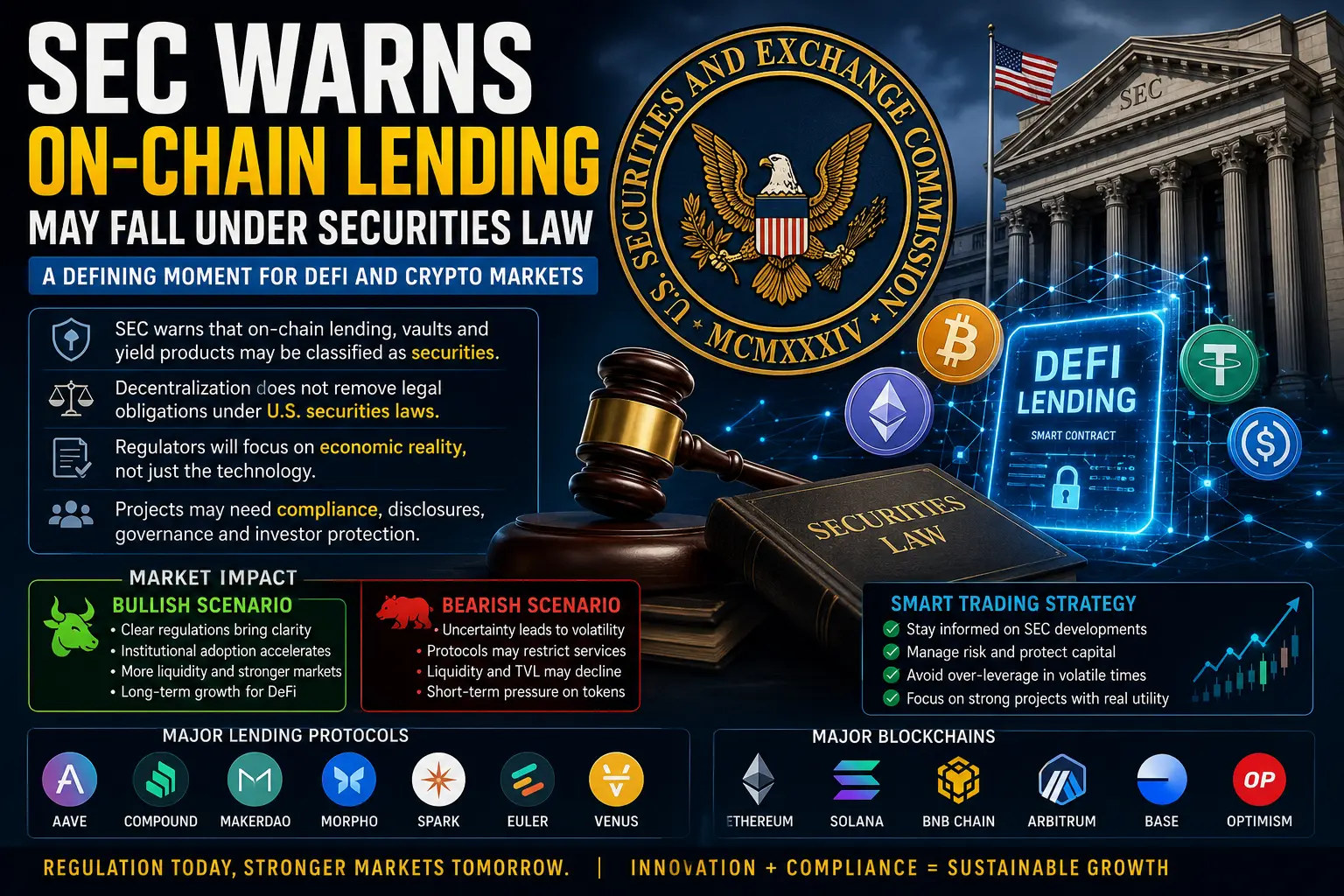
The United States Securities and Exchange Commission has once again placed decentralized finance under the global spotlight after warning that certain on chain lending activities may fall under existing federal securities laws. This announcement is not simply another regulatory headline because it directly targets one of the fastest growing sectors of the cryptocurrency industry. For years millions of investors have deposited crypto assets into decentralized lending protocols and vaults to earn passive income while developers have promoted blockchain based lending as an alternative to traditional banking. The SEC is now making it clear that placing financial services on a blockchain does not automatically remove them from securities regulation. If an on chain lending product functions like an investment contract and users invest assets expecting profits generated through the efforts of others then securities laws may still apply.
This warning has immediately become one of the most important discussions across the crypto market because it could influence how future DeFi platforms are designed developed marketed and regulated.
WHY THE SEC ISSUED THIS WARNING
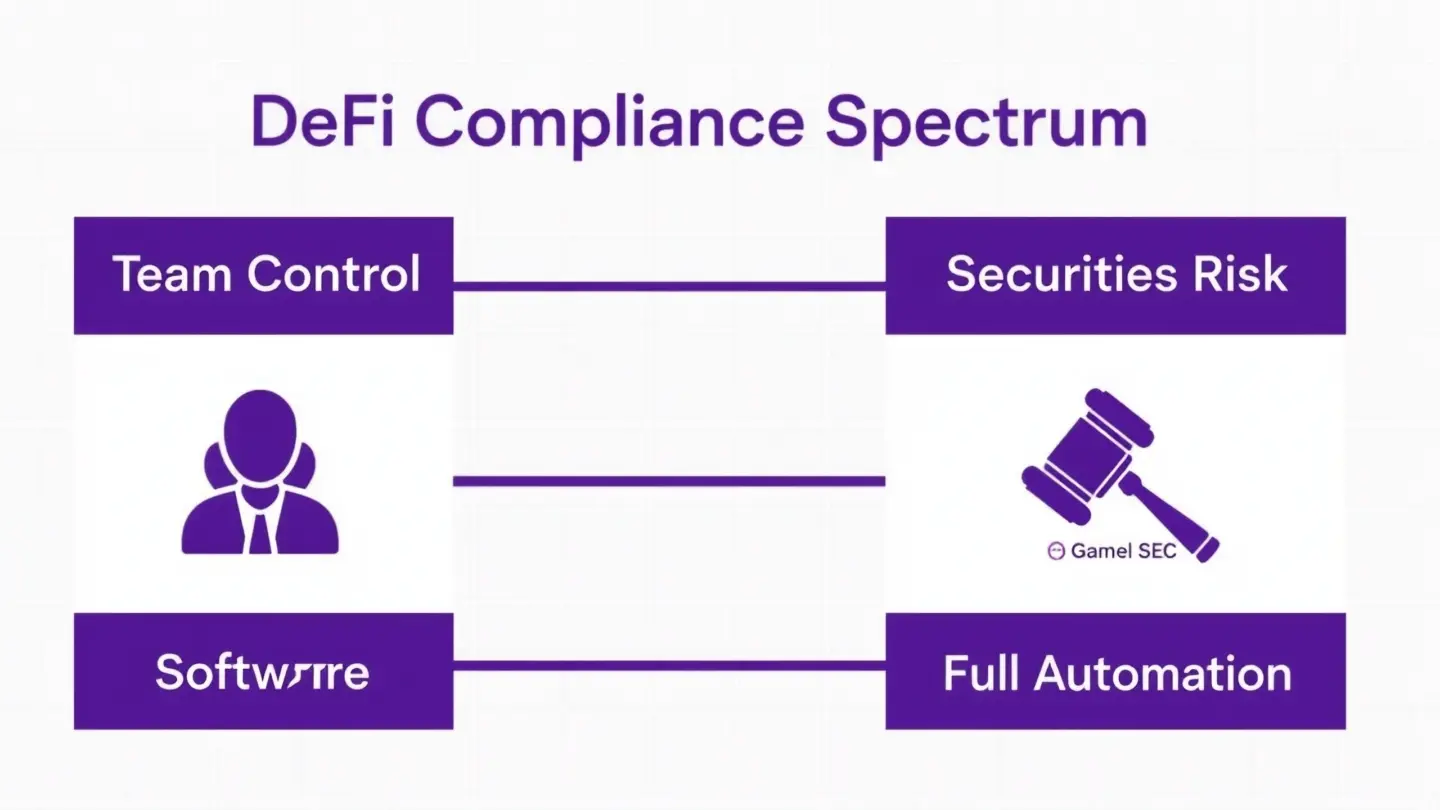
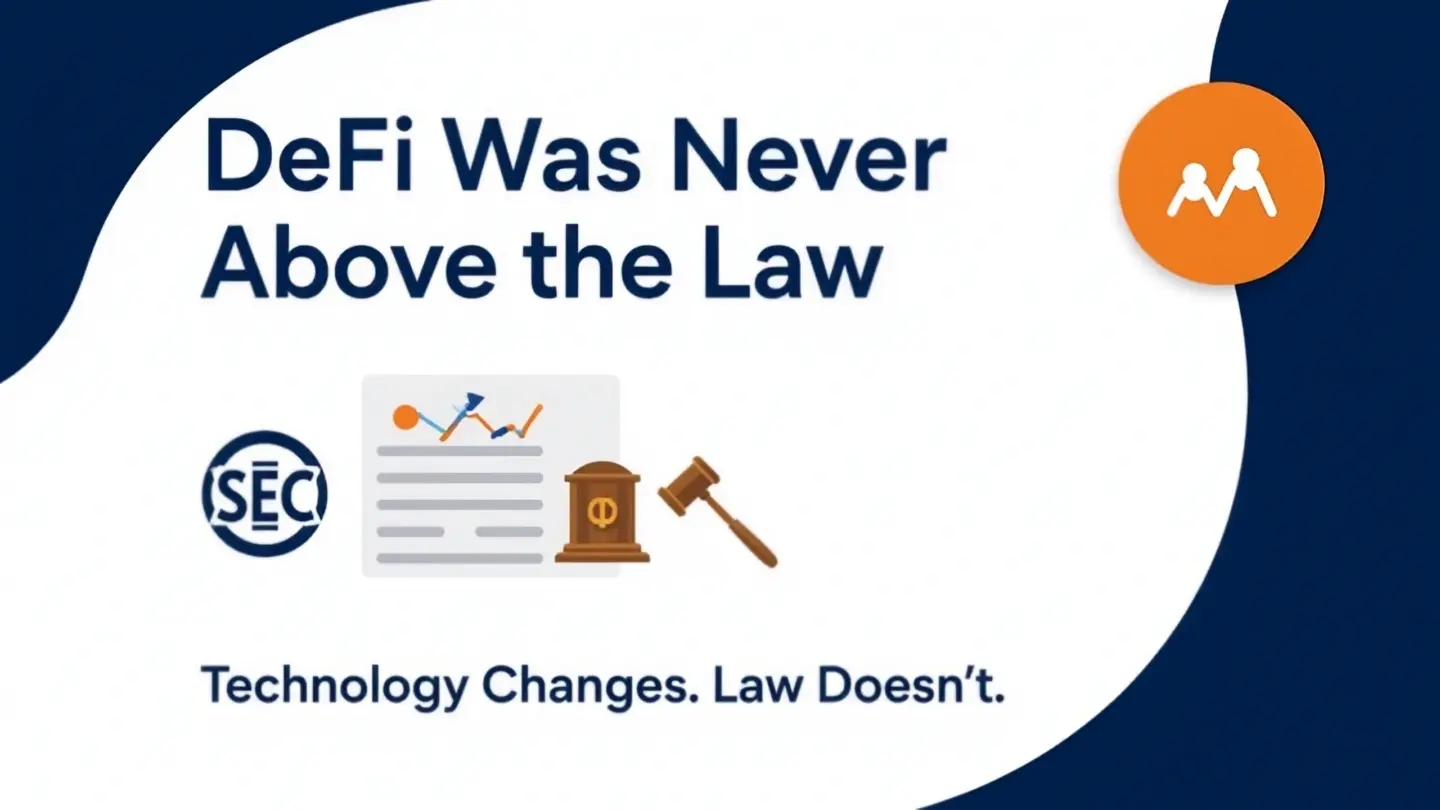
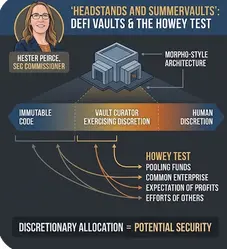
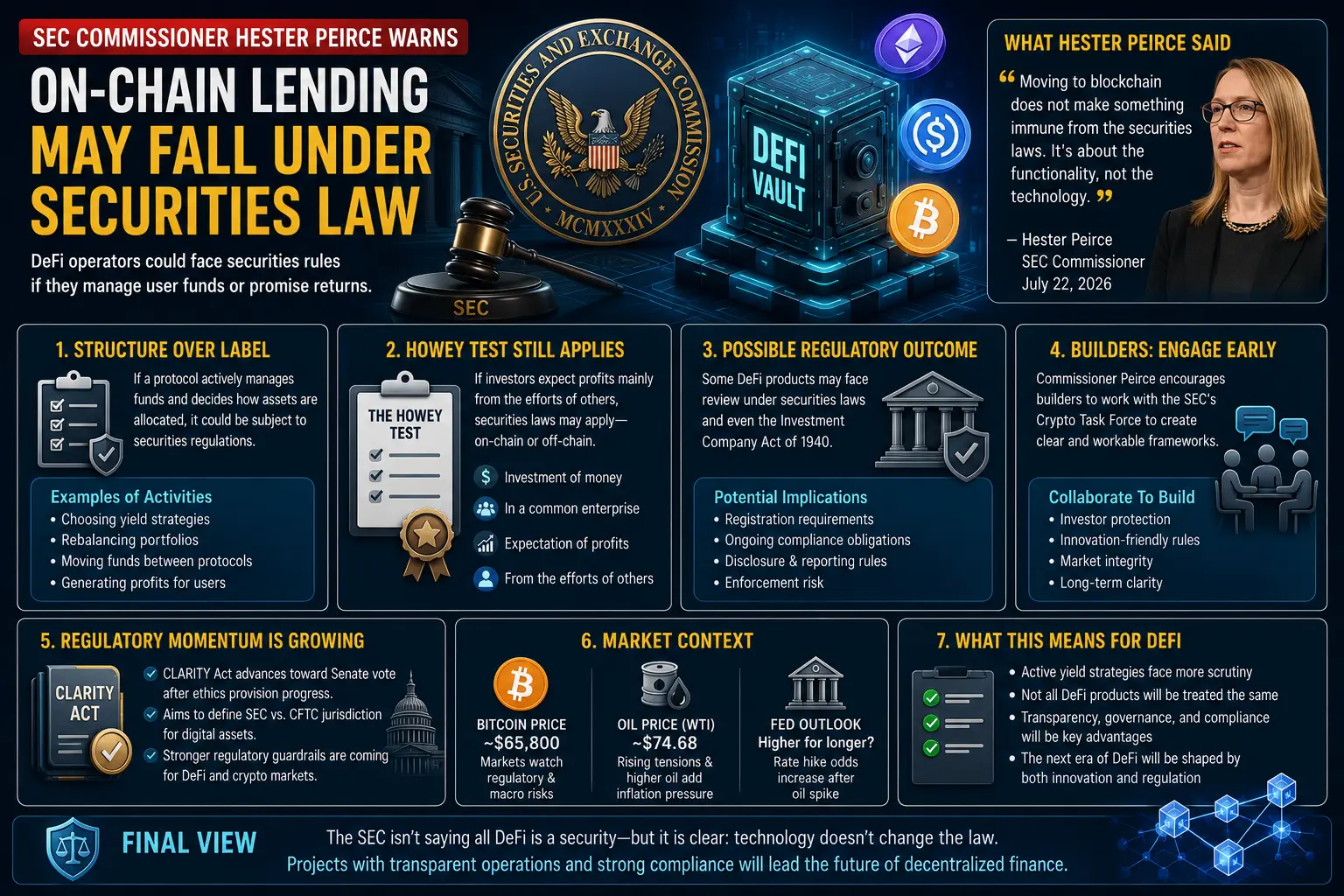
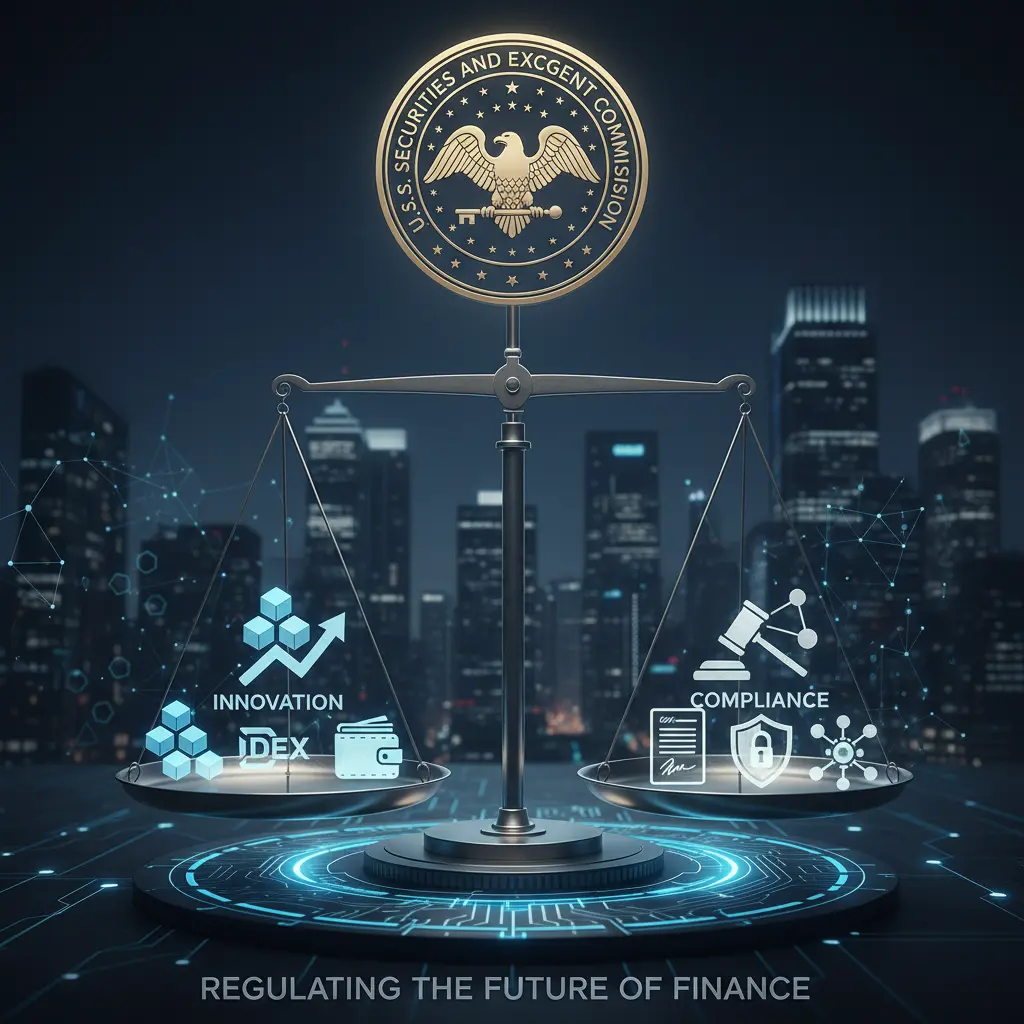
The SEC believes that technology should not be confused with legal structure. According to the regulator blockchain is simply a technology while securities laws focus on how an investment actually operates. If users deposit crypto assets into lending pools crypto vaults or automated yield products expecting regular returns without actively managing those investments regulators may consider those products investment contracts. Commissioner Hester Peirce explained that attempting to avoid securities law simply by using blockchain technology will not necessarily succeed because regulators examine the economic reality of a product rather than the technology behind it. This statement is intended to remind developers exchanges protocol operators and investors that compliance remains important even inside decentralized finance.
WHAT IS ON CHAIN LENDER
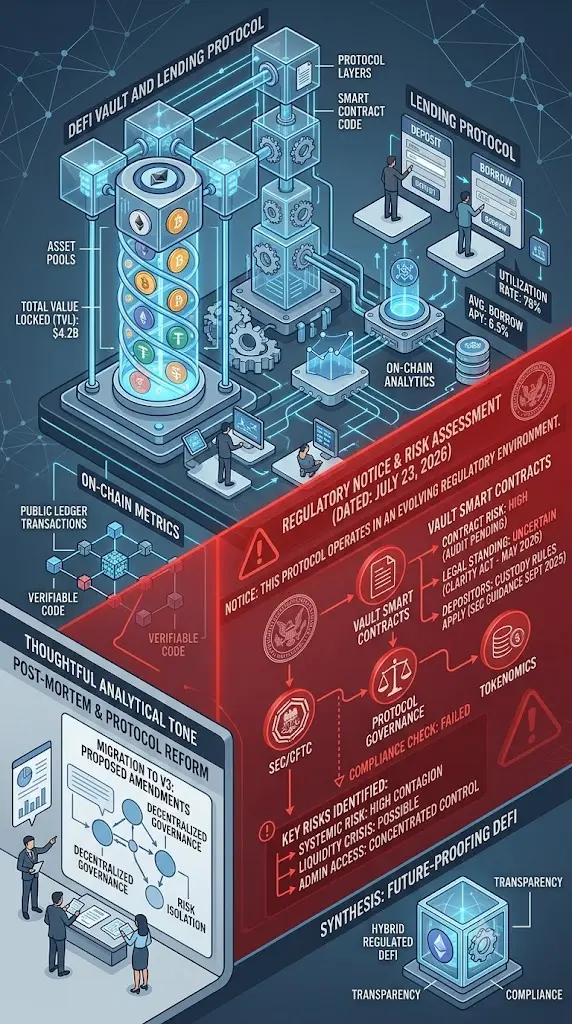
On chain lending allows cryptocurrency holders to lend digital assets directly through blockchain smart contracts instead of traditional banks. Investors deposit assets into lending pools while borrowers provide collateral and receive loans. Interest generated from borrowers is distributed back to lenders creating passive income opportunities. Major blockchain ecosystems including Ethereum Solana BNB Chain Avalanche Base Arbitrum and Polygon all support decentralized lending markets worth billions of dollars. This model has become one of the most popular sectors within decentralized finance because users can earn returns without selling their crypto holdings while borrowers gain instant access to liquidity without relying on banks.
WHY THIS WARNING IS IMPORTANT
The SEC warning matters because decentralized finance has expanded rapidly during recent years. Billions of dollars remain locked inside lending protocols liquidity pools yield vaults and automated investment strategies. Until now many participants believed decentralization itself provided sufficient protection against traditional financial regulation. The SEC has challenged that assumption by stating that financial activities remain subject to securities law regardless of whether they occur through banks websites or blockchain smart contracts. This clarification increases legal uncertainty for some projects while encouraging others to strengthen compliance and transparency.
WHICH PROJECTS COULD BE AFFECTED
The warning does not target one specific cryptocurrency or blockchain network. Instead it applies broadly to lending protocols crypto vaults automated yield strategies structured investment products and similar financial services operating on blockchain infrastructure. Projects offering passive income fixed returns revenue sharing or professionally managed vault strategies may receive greater regulatory attention if regulators believe investors depend primarily on the efforts of developers operators or managers to generate profits. Every protocol therefore needs to evaluate its business model carefully because future regulatory scrutiny could become much stronger than before.
IMPACT ON DEFI PLATFORMS
For decentralized finance platforms this warning creates both challenges and opportunities. Some protocols may decide to improve transparency strengthen governance publish additional disclosures and introduce stronger compliance procedures to reduce regulatory risk. Others may redesign products to provide users with greater control over investment decisions rather than relying on centralized management. Although compliance may increase operating costs stronger legal clarity could eventually encourage greater institutional participation because professional investors generally prefer markets supported by predictable regulations.
IMPACT ON CRYPTO INVESTORS
Retail investors should understand that the SEC warning does not make decentralized lending illegal. Instead it reminds investors that some products may eventually require additional regulatory oversight or structural changes. Users should therefore research platforms carefully examine security audits understand how returns are generated review protocol governance and avoid assuming that every high yield opportunity carries low risk. Responsible investing becomes even more important whenever regulation evolves because legal developments can influence market sentiment as strongly as technological innovation.
MARKET REACTION
Regulatory headlines often produce immediate volatility because uncertainty affects investor confidence. Short term traders sometimes reduce exposure until additional clarification becomes available while long term investors focus on whether the fundamental growth story remains intact. History shows that cryptocurrency markets frequently react negatively immediately after regulatory announcements before gradually stabilizing once investors better understand the actual scope of new guidance. The current situation may follow a similar pattern depending on future SEC actions and industry responses.
BULLISH OUTLOOK
From a bullish perspective this warning could ultimately strengthen the cryptocurrency industry rather than weaken it. Clear regulations often increase institutional confidence because large investment firms pension funds banks and asset managers prefer operating within well defined legal frameworks. Projects capable of balancing innovation with compliance may attract greater capital stronger partnerships improved credibility and broader global adoption. As regulatory uncertainty gradually declines the entire decentralized finance sector could become more attractive to professional investors seeking long term blockchain exposure.
BEARISH OUTLOOK
The bearish scenario remains possible if aggressive enforcement actions create fear across decentralized finance. Smaller projects with limited legal resources could suspend operations restrict access for certain regions or delay product development while adapting to changing regulations. Venture capital investment into experimental lending protocols may temporarily slow and governance tokens connected to affected ecosystems could experience additional volatility until greater legal clarity emerges. Market sentiment may therefore remain sensitive to every new regulatory announcement over the coming months.
STRATEGIC VIEW FOR INVESTORS
The best approach during regulatory uncertainty is remaining informed rather than reacting emotionally. Investors should monitor official SEC statements congressional developments court decisions protocol announcements and compliance initiatives before making major investment decisions. Diversification disciplined risk management strong research and focusing on fundamentally sound blockchain ecosystems remain more effective strategies than chasing extremely high yields without understanding the associated legal and financial risks. Regulatory evolution is becoming a permanent part of cryptocurrency investing and successful participants will be those who combine market knowledge with patience and responsible decision making.
FINAL CONCLUSION
The SEC warning that on chain lending may fall under securities law represents an important milestone in the evolution of decentralized finance rather than the end of blockchain innovation. The message is clear that financial products will increasingly be judged according to how they function instead of the technology they use. Although this development may create short term uncertainty it also encourages higher standards stronger investor protection greater transparency and healthier long term market growth. Projects capable of adapting to regulatory expectations while continuing to innovate are likely to emerge stronger and more trusted. For investors this is a reminder that successful crypto investing is no longer driven only by technology and price movements but also by understanding regulation market structure and long term industry evolution..@Gate_Square #SummerCreationCamp
SEC Warns On Chain Lending May Fall Under Securities Law — What Every Crypto Investor Should Understand
The United States Securities and Exchange Commission has once again placed decentralized finance under the global spotlight after warning that certain on chain lending activities may fall under existing federal securities laws. This announcement is not simply another regulatory headline because it directly targets one of the fastest growing sectors of the cryptocurrency industry. For years millions of investors have deposited crypto assets into decentralized lending protocols and vaults to earn passive income while developers have promoted blockchain based lending as an alternative to traditional banking. The SEC is now making it clear that placing financial services on a blockchain does not automatically remove them from securities regulation. If an on chain lending product functions like an investment contract and users invest assets expecting profits generated through the efforts of others then securities laws may still apply.
This warning has immediately become one of the most important discussions across the crypto market because it could influence how future DeFi platforms are designed developed marketed and regulated.
WHY THE SEC ISSUED THIS WARNING
The SEC believes that technology should not be confused with legal structure. According to the regulator blockchain is simply a technology while securities laws focus on how an investment actually operates. If users deposit crypto assets into lending pools crypto vaults or automated yield products expecting regular returns without actively managing those investments regulators may consider those products investment contracts. Commissioner Hester Peirce explained that attempting to avoid securities law simply by using blockchain technology will not necessarily succeed because regulators examine the economic reality of a product rather than the technology behind it. This statement is intended to remind developers exchanges protocol operators and investors that compliance remains important even inside decentralized finance.
WHAT IS ON CHAIN LENDER
On chain lending allows cryptocurrency holders to lend digital assets directly through blockchain smart contracts instead of traditional banks. Investors deposit assets into lending pools while borrowers provide collateral and receive loans. Interest generated from borrowers is distributed back to lenders creating passive income opportunities. Major blockchain ecosystems including Ethereum Solana BNB Chain Avalanche Base Arbitrum and Polygon all support decentralized lending markets worth billions of dollars. This model has become one of the most popular sectors within decentralized finance because users can earn returns without selling their crypto holdings while borrowers gain instant access to liquidity without relying on banks.
WHY THIS WARNING IS IMPORTANT
The SEC warning matters because decentralized finance has expanded rapidly during recent years. Billions of dollars remain locked inside lending protocols liquidity pools yield vaults and automated investment strategies. Until now many participants believed decentralization itself provided sufficient protection against traditional financial regulation. The SEC has challenged that assumption by stating that financial activities remain subject to securities law regardless of whether they occur through banks websites or blockchain smart contracts. This clarification increases legal uncertainty for some projects while encouraging others to strengthen compliance and transparency.
WHICH PROJECTS COULD BE AFFECTED
The warning does not target one specific cryptocurrency or blockchain network. Instead it applies broadly to lending protocols crypto vaults automated yield strategies structured investment products and similar financial services operating on blockchain infrastructure. Projects offering passive income fixed returns revenue sharing or professionally managed vault strategies may receive greater regulatory attention if regulators believe investors depend primarily on the efforts of developers operators or managers to generate profits. Every protocol therefore needs to evaluate its business model carefully because future regulatory scrutiny could become much stronger than before.
IMPACT ON DEFI PLATFORMS
For decentralized finance platforms this warning creates both challenges and opportunities. Some protocols may decide to improve transparency strengthen governance publish additional disclosures and introduce stronger compliance procedures to reduce regulatory risk. Others may redesign products to provide users with greater control over investment decisions rather than relying on centralized management. Although compliance may increase operating costs stronger legal clarity could eventually encourage greater institutional participation because professional investors generally prefer markets supported by predictable regulations.
IMPACT ON CRYPTO INVESTORS
Retail investors should understand that the SEC warning does not make decentralized lending illegal. Instead it reminds investors that some products may eventually require additional regulatory oversight or structural changes. Users should therefore research platforms carefully examine security audits understand how returns are generated review protocol governance and avoid assuming that every high yield opportunity carries low risk. Responsible investing becomes even more important whenever regulation evolves because legal developments can influence market sentiment as strongly as technological innovation.
MARKET REACTION
Regulatory headlines often produce immediate volatility because uncertainty affects investor confidence. Short term traders sometimes reduce exposure until additional clarification becomes available while long term investors focus on whether the fundamental growth story remains intact. History shows that cryptocurrency markets frequently react negatively immediately after regulatory announcements before gradually stabilizing once investors better understand the actual scope of new guidance. The current situation may follow a similar pattern depending on future SEC actions and industry responses.
BULLISH OUTLOOK
From a bullish perspective this warning could ultimately strengthen the cryptocurrency industry rather than weaken it. Clear regulations often increase institutional confidence because large investment firms pension funds banks and asset managers prefer operating within well defined legal frameworks. Projects capable of balancing innovation with compliance may attract greater capital stronger partnerships improved credibility and broader global adoption. As regulatory uncertainty gradually declines the entire decentralized finance sector could become more attractive to professional investors seeking long term blockchain exposure.
BEARISH OUTLOOK
The bearish scenario remains possible if aggressive enforcement actions create fear across decentralized finance. Smaller projects with limited legal resources could suspend operations restrict access for certain regions or delay product development while adapting to changing regulations. Venture capital investment into experimental lending protocols may temporarily slow and governance tokens connected to affected ecosystems could experience additional volatility until greater legal clarity emerges. Market sentiment may therefore remain sensitive to every new regulatory announcement over the coming months.
STRATEGIC VIEW FOR INVESTORS
The best approach during regulatory uncertainty is remaining informed rather than reacting emotionally. Investors should monitor official SEC statements congressional developments court decisions protocol announcements and compliance initiatives before making major investment decisions. Diversification disciplined risk management strong research and focusing on fundamentally sound blockchain ecosystems remain more effective strategies than chasing extremely high yields without understanding the associated legal and financial risks. Regulatory evolution is becoming a permanent part of cryptocurrency investing and successful participants will be those who combine market knowledge with patience and responsible decision making.
FINAL CONCLUSION
The SEC warning that on chain lending may fall under securities law represents an important milestone in the evolution of decentralized finance rather than the end of blockchain innovation. The message is clear that financial products will increasingly be judged according to how they function instead of the technology they use. Although this development may create short term uncertainty it also encourages higher standards stronger investor protection greater transparency and healthier long term market growth. Projects capable of adapting to regulatory expectations while continuing to innovate are likely to emerge stronger and more trusted. For investors this is a reminder that successful crypto investing is no longer driven only by technology and price movements but also by understanding regulation market structure and long term industry evolution..@Gate_Square #SummerCreationCamp