#USMayCPIHits3YearHigh
What is CPI and Why Does It Matter?
The Consumer Price Index (CPI) is the primary inflation gauge in the United States. It tracks the average price change over time for a fixed basket of goods and services that urban consumers purchase regularly, covering categories like food, housing, transportation, medical care, apparel, and energy. A rising CPI means the cost of living is increasing, while a flat or declining CPI suggests price pressures are easing. The Federal Reserve monitors CPI closely because maintaining price stability around a 2% annual inflation target is a core part of its mandate. When CPI deviates significantly from that target, it directly influences the Fed's interest rate decisions, and those decisions cascade through every financial market, including equities, bonds, commodities, and digital assets like Bitcoin.
Point 2: The May 2026 CPI Numbers — 3-Year High Confirmed
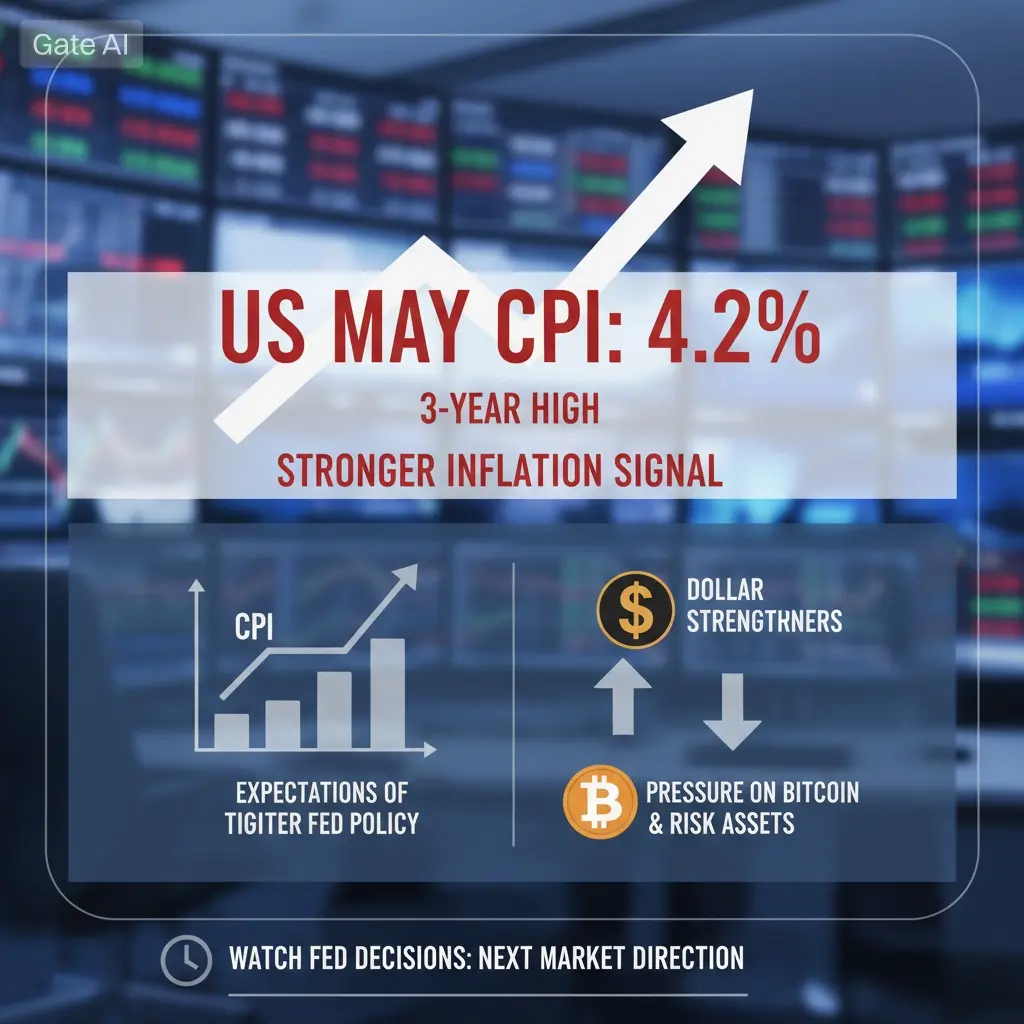
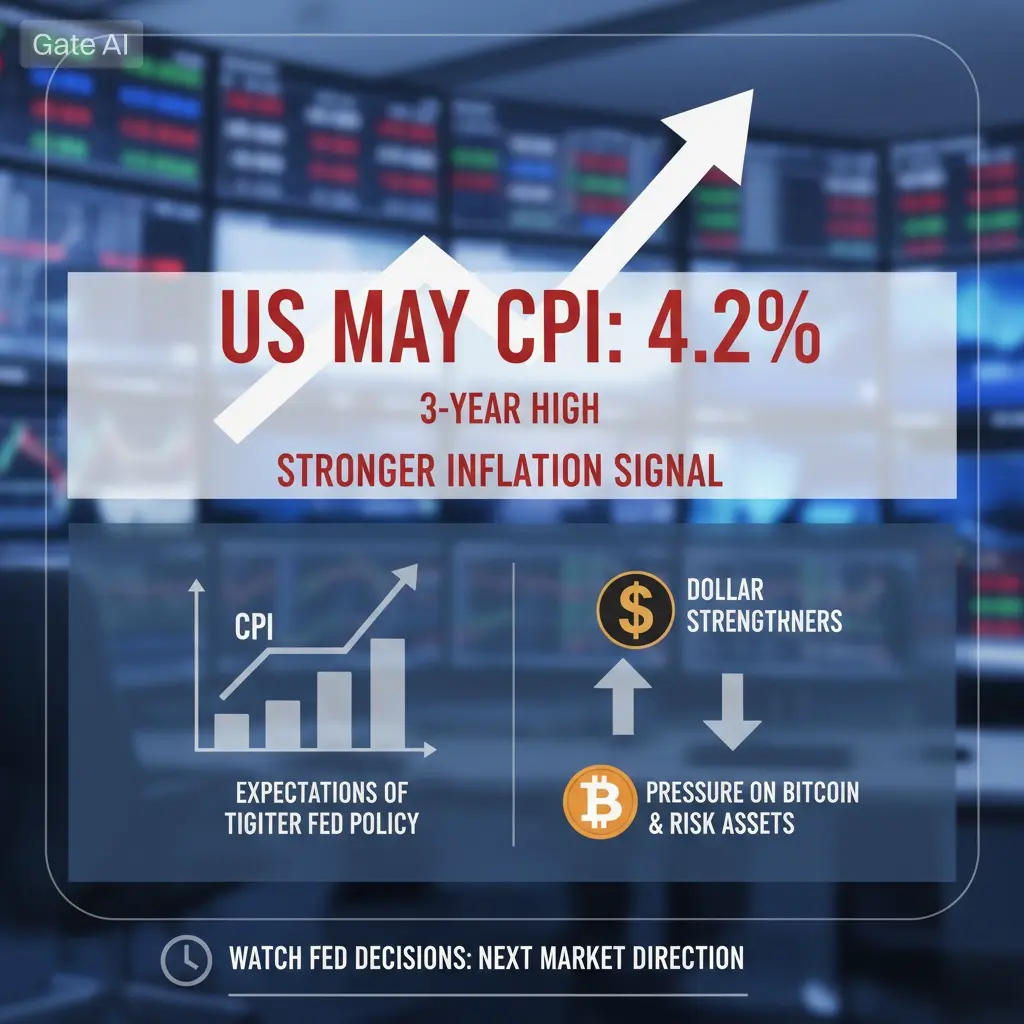
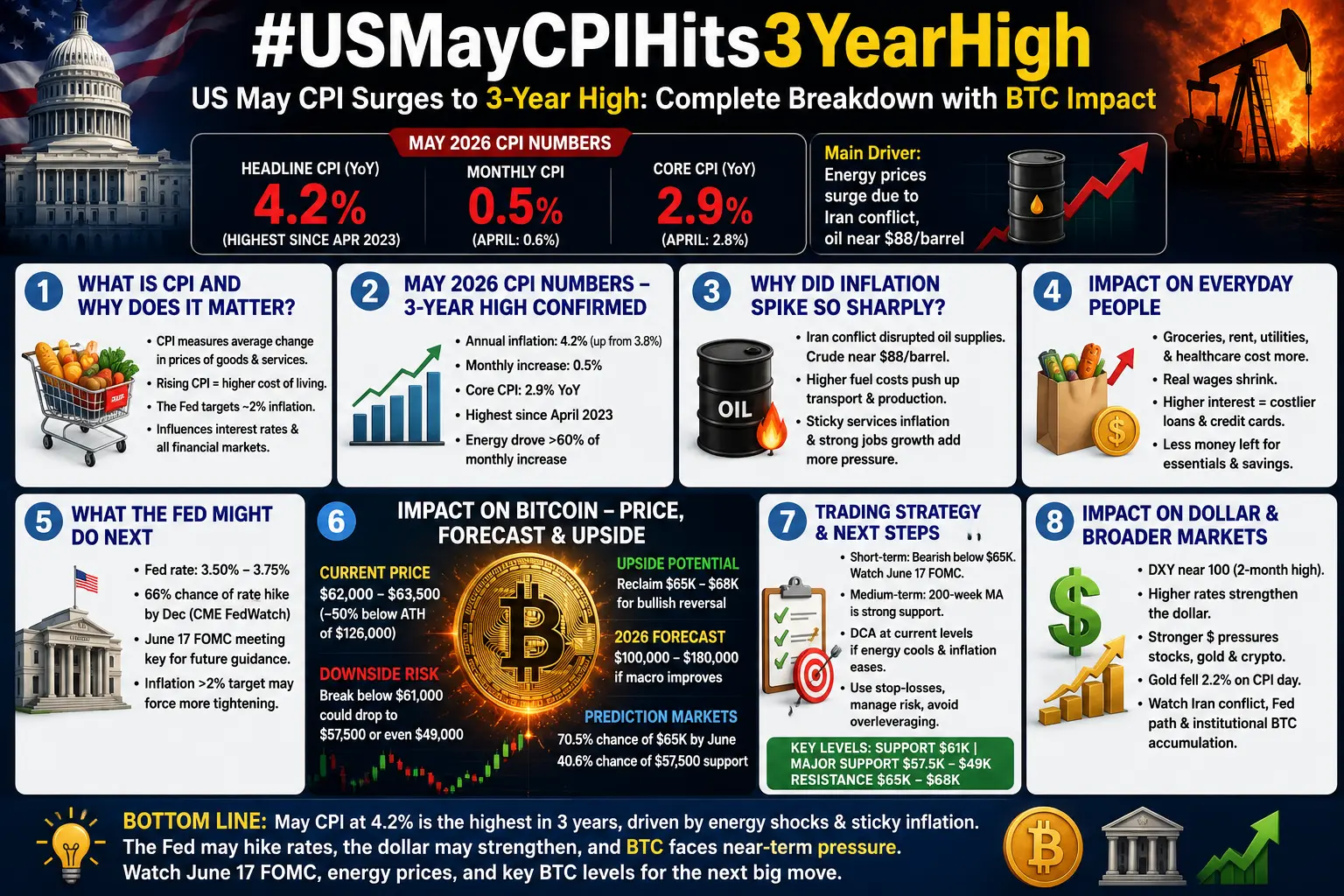
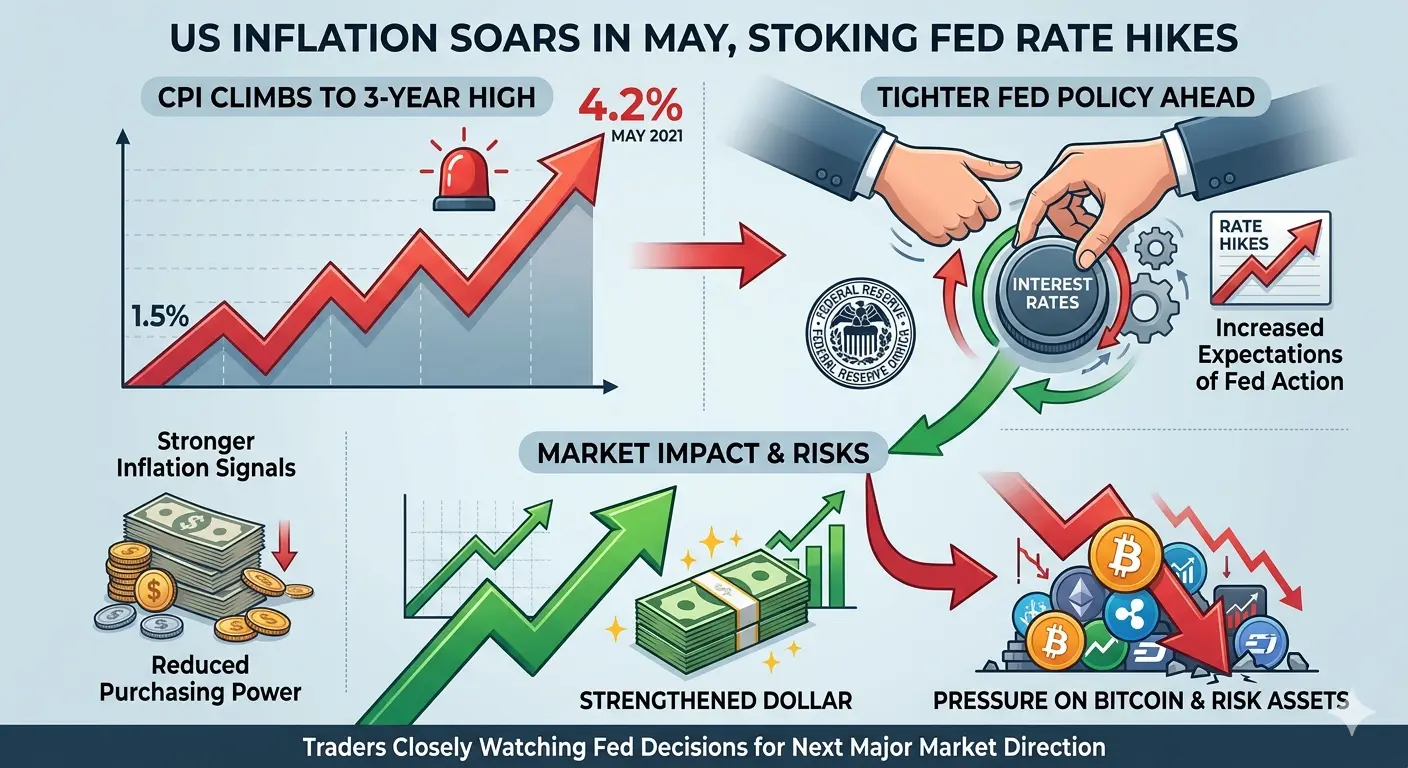
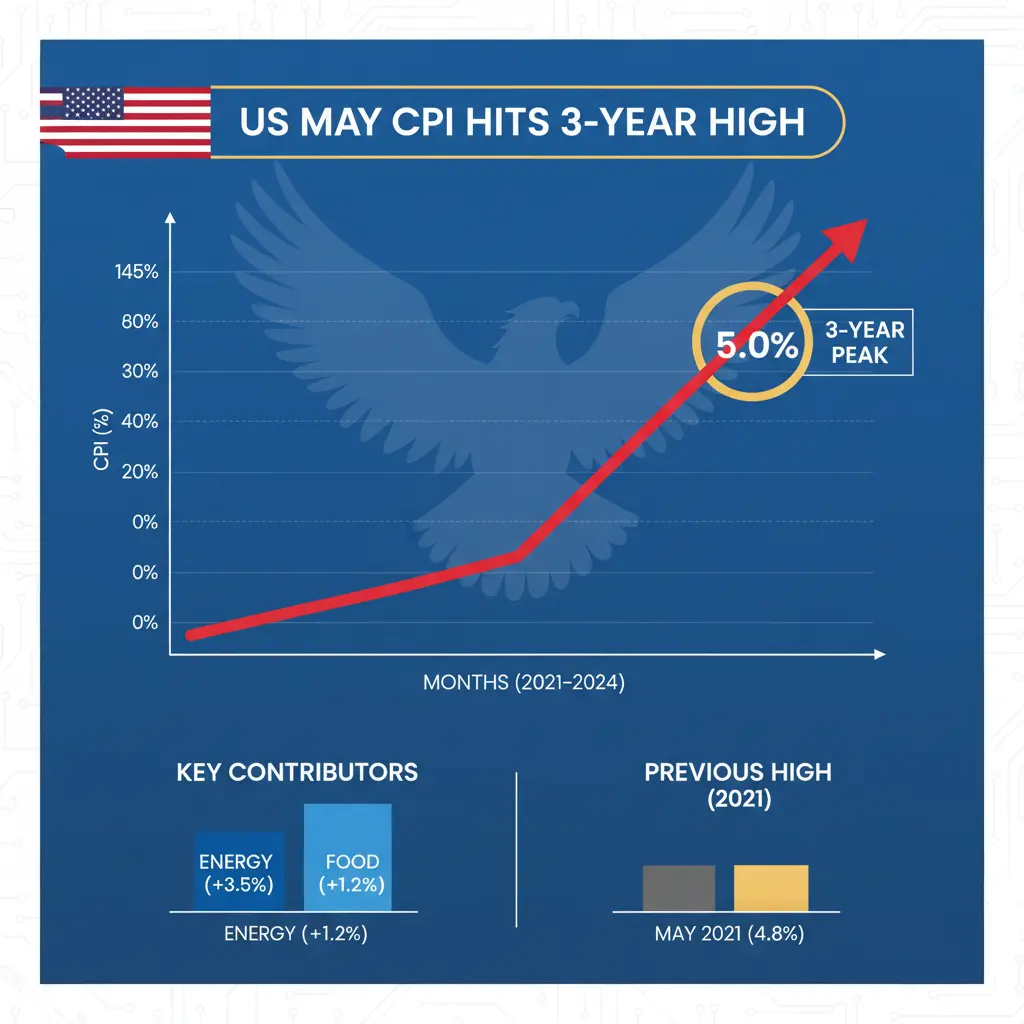
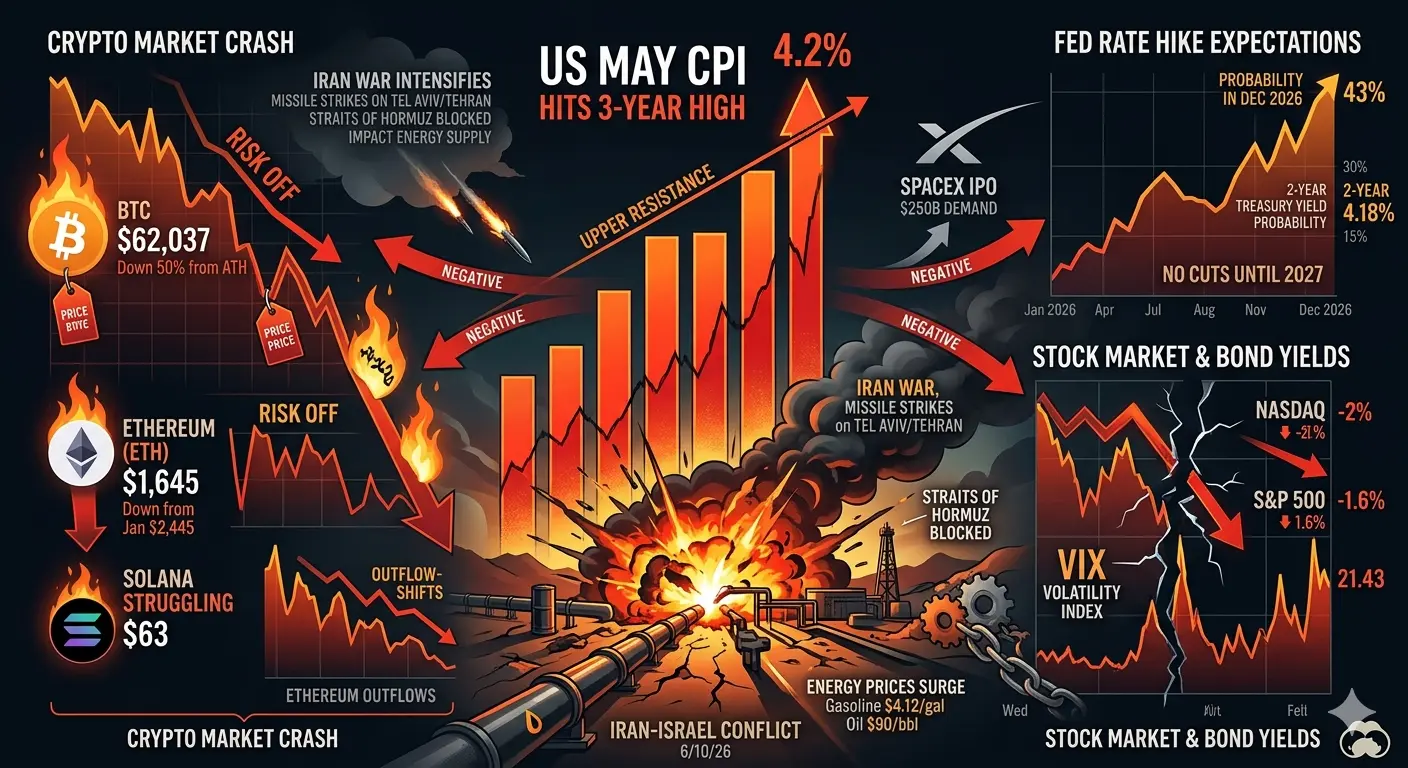
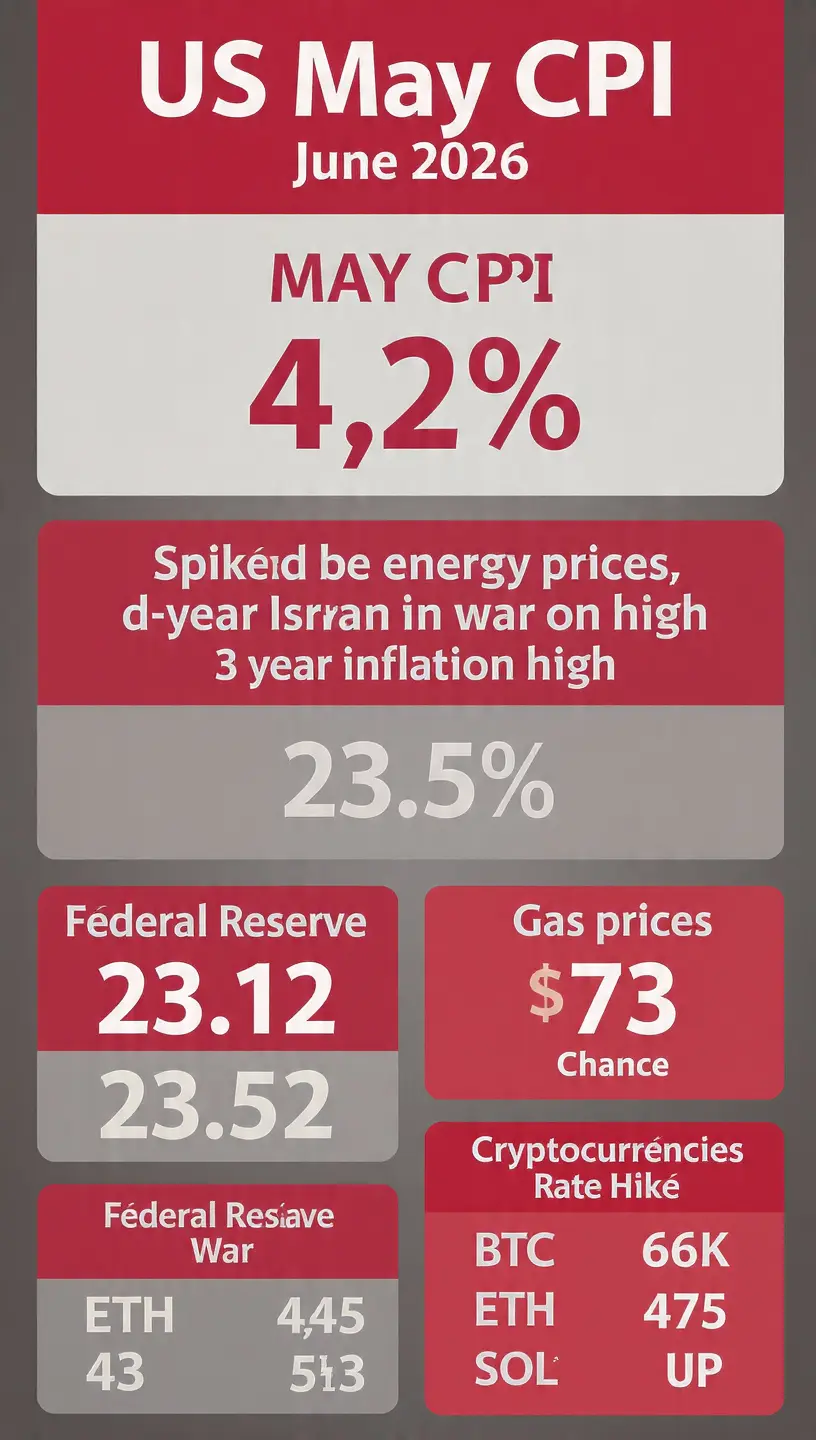
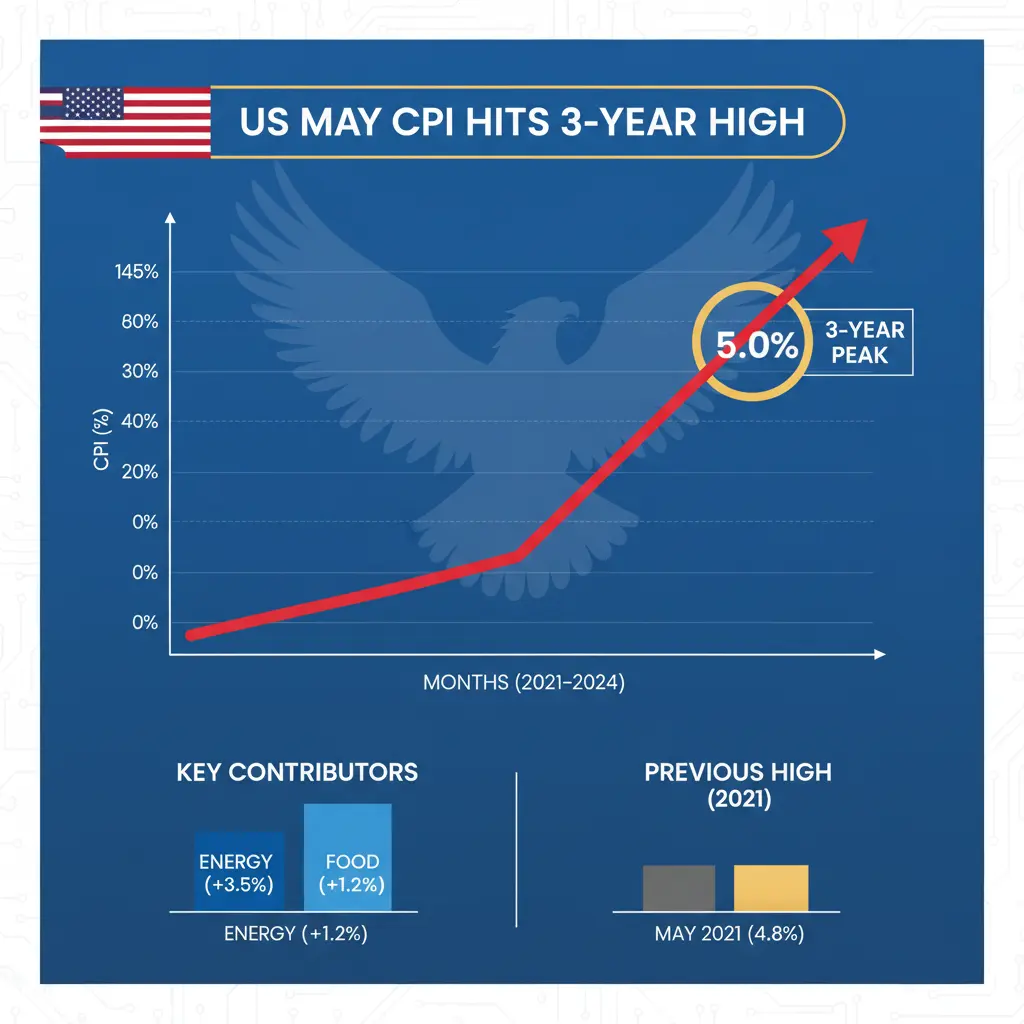
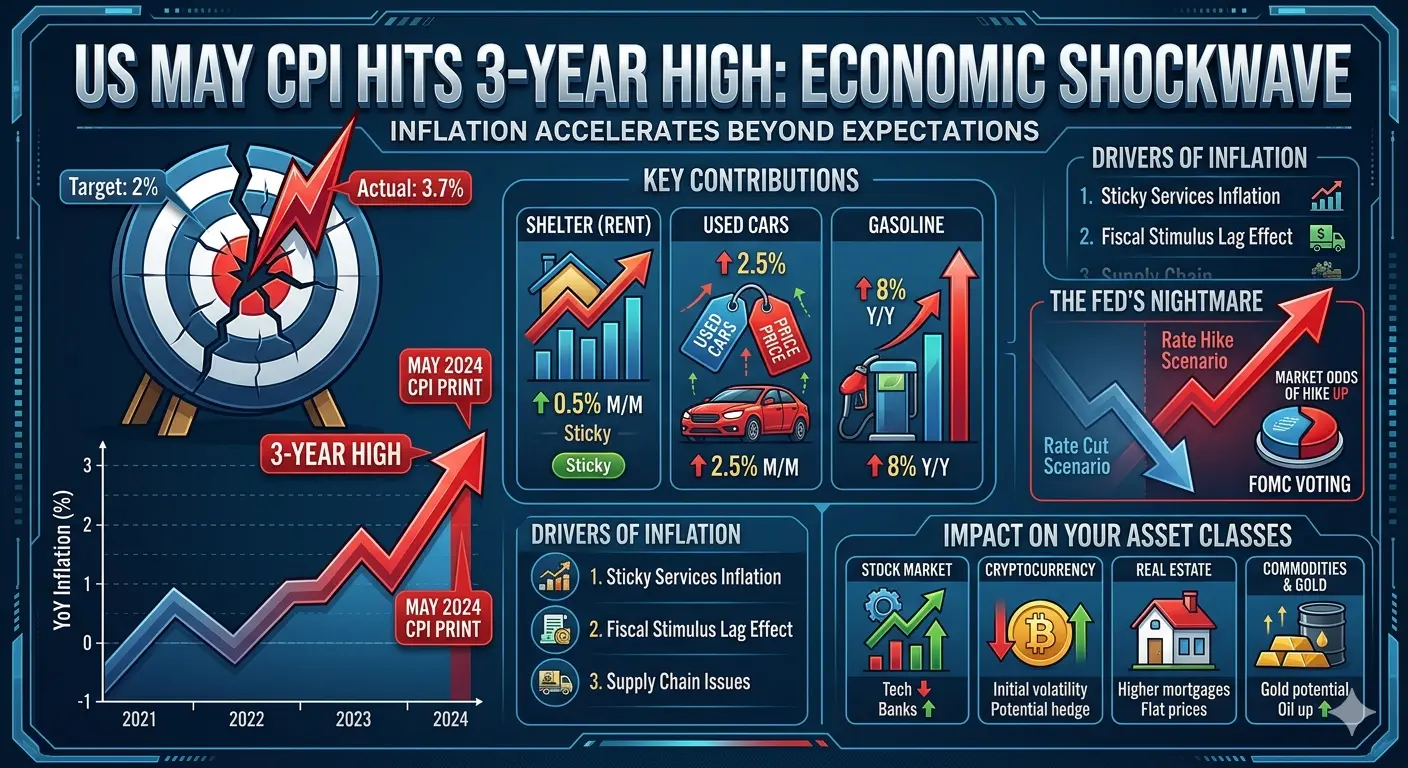
The US Bureau of Labor Statistics released the May 2026 CPI report on June 10, and the headline figure was striking. Annual inflation surged to 4.2%, up from 3.8% in April, marking the highest inflation rate since April 2023, more than three years ago. On a monthly basis, consumer prices rose 0.5%, slightly slower than the 0.6% increase seen in April but still well above the pace the Federal Reserve considers acceptable. Core CPI, which excludes the more volatile food and energy categories and is considered a cleaner measure of underlying inflation trends, came in at 2.9% year-over-year, up marginally from 2.8% in the prior month. The headline figure matched economists' consensus forecast of 4.2%, but the reality of inflation breaking above 4% for the first time in three years immediately reshaped market expectations. Energy prices alone accounted for more than 60% of the monthly CPI increase, reflecting the impact of elevated global oil prices on household costs.
Point 3: Why Did Inflation Spike So Sharply?
The primary driver behind the May CPI surge is the energy price shock. Global crude oil prices have remained elevated near $88 per barrel as of early June, driven by supply disruptions and geopolitical uncertainty affecting key energy transit routes. Higher fuel costs have cascaded throughout the economy, pushing up gasoline prices, transportation costs, utility bills, and production expenses for businesses across virtually every sector. Beyond energy, services inflation has remained sticky. Wage growth continues at a pace that keeps labor-intensive industries expensive, and rental and housing costs have shown limited signs of moderation. The combination of an energy-driven price spike and persistent services inflation created conditions that pushed headline CPI well beyond the Federal Reserve's comfort zone. The labor market has also contributed to inflationary pressure, with three consecutive months of above-expectation job gains through May, keeping demand strong even as prices rise.
Point 4: Impact on Everyday People — Rising Costs Across the Board
When CPI reaches 4.2%, the effects on daily life are tangible and widespread. Grocery bills increase because food producers and retailers face higher transportation and fuel costs. Rent and housing expenses continue their upward trajectory, squeezing household budgets further. Utility bills rise as energy costs climb, and health care and insurance premiums have been steadily increasing as well. For families already navigating years of elevated inflation, this latest surge compounds the financial strain. Real wages, meaning income adjusted for inflation, are effectively shrinking for many workers, so each paycheck covers fewer goods and services than before. Credit card borrowing costs remain elevated under the current interest rate environment, and if the Fed raises rates further, those borrowing costs will climb even higher. The practical outcome is straightforward: maintaining the same standard of living becomes more expensive month after month, and discretionary spending, including entertainment, travel, and non-essential purchases, gets squeezed.
Point 5: What the Federal Reserve Might Do Next
Before this CPI report, market expectations leaned toward gradual rate reductions through 2026. That narrative shifted dramatically. The Federal Reserve's benchmark rate currently sits in the 3.50% to 3.75% range, and multiple Fed officials have now publicly raised the possibility of rate hikes by year-end. According to the CME FedWatch tool, traders assign a 66% probability to at least one quarter-point rate increase before December, with a majority expecting such a move by October. The upcoming FOMC meeting on June 17 is nearly certain to result in rates being held steady, but the accompanying policy statement and press conference will be critical for understanding the Fed's forward guidance. A rate hike would represent a direct response to inflation running more than double the 2% target. If elevated energy prices persist through the summer months and CPI remains above 4%, the Fed may face increasing pressure to tighten monetary policy further, even while the labor market continues showing strength. This scenario fundamentally changes the investment landscape compared to what most analysts anticipated just weeks ago.
Point 6: Impact on Bitcoin — Current Price, Forecast, and How High Can It Go
Bitcoin currently trades in the range of $62,000 to $63,500, approximately 50% below its all-time high of $126,000 reached in September 2025. The May CPI data exerted immediate downward pressure on BTC, with prices dropping roughly 2% on the release date as market participants repriced Fed policy expectations. On the technical side, BTC has formed a bearish pennant pattern on daily charts, with critical support situated around $61,000. If that support level breaks, technical analysts identify the next downside target near $49,000. On the upside, reclaiming the $65,000 to $68,000 resistance zone would signal a potential bullish reversal. CoinGecko prediction markets indicate a 70.5% probability of BTC reaching $65,000 by June end, while downside support at $57,500 carries a 40.6% probability. Broader 2026 forecasts from various analysts range from $100,000 to $180,000 in the second half of the year if macro conditions improve. The 200-week moving average is a historically significant level where BTC currently trades, and previous visits to this metric have proven to be strong accumulation points over multiple cycles. However, the near-term trajectory remains heavily dependent on the Federal Reserve's policy decisions and the evolution of global energy prices.
Point 7: Trading Strategy and Next Steps for BTC
Given the current macro backdrop, a defensive yet opportunistic approach is prudent for BTC traders. In the short term, BTC faces clear downward pressure. The bearish pennant formation on daily charts favors continuation of the downside trend unless the $65,000 resistance is convincingly reclaimed. Conservative traders should wait for confirmation signals before initiating new positions, with the June 17 FOMC meeting serving as the next major catalyst. If the Fed signals that a rate hike is likely, expect another leg downward, potentially testing the $57,500 support and possibly reaching $49,000. In the medium term, the 200-week moving average has historically served as a strong accumulation zone. Dollar-cost averaging at current levels could reward patient investors if energy prices normalize in coming months, pulling CPI back toward the Fed's target and eventually opening the door to rate reductions. Notably, major institutional players have demonstrated conviction at these price levels, with Strategy recently purchasing 1,550 BTC at an average price of approximately $65,332 per coin. Risk management remains essential in this environment. Traders should use stop-loss orders, avoid overleveraging in futures markets, and position sizes should tolerate a drawdown to $49,000 without triggering forced liquidations. The priority is capital preservation first, then opportunistic accumulation when clearer signals emerge.
Point 8: Impact on the US Dollar and the Broader Investment Landscape
The US Dollar Index (DXY) held near 100, around a two-month high, reflecting two concurrent forces: safe-haven demand driven by global uncertainty and expectations of tighter monetary policy from the Federal Reserve. If the Fed proceeds with rate hikes, the dollar could strengthen further, since higher yields tend to attract capital inflows into dollar-denominated assets. A stronger dollar typically pressures risk assets, including BTC and equities, by making lower-yielding or non-yielding alternatives relatively less attractive. Gold fell 2.2% to approximately $4,194 per ounce on the CPI release day, demonstrating that even traditional safe-haven assets can face headwinds when real interest rates rise and the dollar strengthens. The stock market also faces challenges, as elevated borrowing costs squeeze corporate profit margins and reduce consumer discretionary spending, which in turn weighs on revenue growth for many companies. For the crypto sector specifically, the correlation between BTC and tech stocks has moderated recently, but macro-driven risk-off sentiment continues to exert broad pressure across digital assets. Looking ahead, three key variables will shape the market direction: the trajectory of global energy prices and whether they normalize in coming months, the Federal Reserve's rate decision path through the remainder of 2026, and the pace of institutional BTC accumulation. The intersection of these factors will determine whether BTC establishes a sustainable bottom and begins recovery or continues navigating downward pressure through the summer.@Gate_Square
What is CPI and Why Does It Matter?
The Consumer Price Index (CPI) is the primary inflation gauge in the United States. It tracks the average price change over time for a fixed basket of goods and services that urban consumers purchase regularly, covering categories like food, housing, transportation, medical care, apparel, and energy. A rising CPI means the cost of living is increasing, while a flat or declining CPI suggests price pressures are easing. The Federal Reserve monitors CPI closely because maintaining price stability around a 2% annual inflation target is a core part of its mandate. When CPI deviates significantly from that target, it directly influences the Fed's interest rate decisions, and those decisions cascade through every financial market, including equities, bonds, commodities, and digital assets like Bitcoin.
Point 2: The May 2026 CPI Numbers — 3-Year High Confirmed
The US Bureau of Labor Statistics released the May 2026 CPI report on June 10, and the headline figure was striking. Annual inflation surged to 4.2%, up from 3.8% in April, marking the highest inflation rate since April 2023, more than three years ago. On a monthly basis, consumer prices rose 0.5%, slightly slower than the 0.6% increase seen in April but still well above the pace the Federal Reserve considers acceptable. Core CPI, which excludes the more volatile food and energy categories and is considered a cleaner measure of underlying inflation trends, came in at 2.9% year-over-year, up marginally from 2.8% in the prior month. The headline figure matched economists' consensus forecast of 4.2%, but the reality of inflation breaking above 4% for the first time in three years immediately reshaped market expectations. Energy prices alone accounted for more than 60% of the monthly CPI increase, reflecting the impact of elevated global oil prices on household costs.
Point 3: Why Did Inflation Spike So Sharply?
The primary driver behind the May CPI surge is the energy price shock. Global crude oil prices have remained elevated near $88 per barrel as of early June, driven by supply disruptions and geopolitical uncertainty affecting key energy transit routes. Higher fuel costs have cascaded throughout the economy, pushing up gasoline prices, transportation costs, utility bills, and production expenses for businesses across virtually every sector. Beyond energy, services inflation has remained sticky. Wage growth continues at a pace that keeps labor-intensive industries expensive, and rental and housing costs have shown limited signs of moderation. The combination of an energy-driven price spike and persistent services inflation created conditions that pushed headline CPI well beyond the Federal Reserve's comfort zone. The labor market has also contributed to inflationary pressure, with three consecutive months of above-expectation job gains through May, keeping demand strong even as prices rise.
Point 4: Impact on Everyday People — Rising Costs Across the Board
When CPI reaches 4.2%, the effects on daily life are tangible and widespread. Grocery bills increase because food producers and retailers face higher transportation and fuel costs. Rent and housing expenses continue their upward trajectory, squeezing household budgets further. Utility bills rise as energy costs climb, and health care and insurance premiums have been steadily increasing as well. For families already navigating years of elevated inflation, this latest surge compounds the financial strain. Real wages, meaning income adjusted for inflation, are effectively shrinking for many workers, so each paycheck covers fewer goods and services than before. Credit card borrowing costs remain elevated under the current interest rate environment, and if the Fed raises rates further, those borrowing costs will climb even higher. The practical outcome is straightforward: maintaining the same standard of living becomes more expensive month after month, and discretionary spending, including entertainment, travel, and non-essential purchases, gets squeezed.
Point 5: What the Federal Reserve Might Do Next
Before this CPI report, market expectations leaned toward gradual rate reductions through 2026. That narrative shifted dramatically. The Federal Reserve's benchmark rate currently sits in the 3.50% to 3.75% range, and multiple Fed officials have now publicly raised the possibility of rate hikes by year-end. According to the CME FedWatch tool, traders assign a 66% probability to at least one quarter-point rate increase before December, with a majority expecting such a move by October. The upcoming FOMC meeting on June 17 is nearly certain to result in rates being held steady, but the accompanying policy statement and press conference will be critical for understanding the Fed's forward guidance. A rate hike would represent a direct response to inflation running more than double the 2% target. If elevated energy prices persist through the summer months and CPI remains above 4%, the Fed may face increasing pressure to tighten monetary policy further, even while the labor market continues showing strength. This scenario fundamentally changes the investment landscape compared to what most analysts anticipated just weeks ago.
Point 6: Impact on Bitcoin — Current Price, Forecast, and How High Can It Go
Bitcoin currently trades in the range of $62,000 to $63,500, approximately 50% below its all-time high of $126,000 reached in September 2025. The May CPI data exerted immediate downward pressure on BTC, with prices dropping roughly 2% on the release date as market participants repriced Fed policy expectations. On the technical side, BTC has formed a bearish pennant pattern on daily charts, with critical support situated around $61,000. If that support level breaks, technical analysts identify the next downside target near $49,000. On the upside, reclaiming the $65,000 to $68,000 resistance zone would signal a potential bullish reversal. CoinGecko prediction markets indicate a 70.5% probability of BTC reaching $65,000 by June end, while downside support at $57,500 carries a 40.6% probability. Broader 2026 forecasts from various analysts range from $100,000 to $180,000 in the second half of the year if macro conditions improve. The 200-week moving average is a historically significant level where BTC currently trades, and previous visits to this metric have proven to be strong accumulation points over multiple cycles. However, the near-term trajectory remains heavily dependent on the Federal Reserve's policy decisions and the evolution of global energy prices.
Point 7: Trading Strategy and Next Steps for BTC
Given the current macro backdrop, a defensive yet opportunistic approach is prudent for BTC traders. In the short term, BTC faces clear downward pressure. The bearish pennant formation on daily charts favors continuation of the downside trend unless the $65,000 resistance is convincingly reclaimed. Conservative traders should wait for confirmation signals before initiating new positions, with the June 17 FOMC meeting serving as the next major catalyst. If the Fed signals that a rate hike is likely, expect another leg downward, potentially testing the $57,500 support and possibly reaching $49,000. In the medium term, the 200-week moving average has historically served as a strong accumulation zone. Dollar-cost averaging at current levels could reward patient investors if energy prices normalize in coming months, pulling CPI back toward the Fed's target and eventually opening the door to rate reductions. Notably, major institutional players have demonstrated conviction at these price levels, with Strategy recently purchasing 1,550 BTC at an average price of approximately $65,332 per coin. Risk management remains essential in this environment. Traders should use stop-loss orders, avoid overleveraging in futures markets, and position sizes should tolerate a drawdown to $49,000 without triggering forced liquidations. The priority is capital preservation first, then opportunistic accumulation when clearer signals emerge.
Point 8: Impact on the US Dollar and the Broader Investment Landscape
The US Dollar Index (DXY) held near 100, around a two-month high, reflecting two concurrent forces: safe-haven demand driven by global uncertainty and expectations of tighter monetary policy from the Federal Reserve. If the Fed proceeds with rate hikes, the dollar could strengthen further, since higher yields tend to attract capital inflows into dollar-denominated assets. A stronger dollar typically pressures risk assets, including BTC and equities, by making lower-yielding or non-yielding alternatives relatively less attractive. Gold fell 2.2% to approximately $4,194 per ounce on the CPI release day, demonstrating that even traditional safe-haven assets can face headwinds when real interest rates rise and the dollar strengthens. The stock market also faces challenges, as elevated borrowing costs squeeze corporate profit margins and reduce consumer discretionary spending, which in turn weighs on revenue growth for many companies. For the crypto sector specifically, the correlation between BTC and tech stocks has moderated recently, but macro-driven risk-off sentiment continues to exert broad pressure across digital assets. Looking ahead, three key variables will shape the market direction: the trajectory of global energy prices and whether they normalize in coming months, the Federal Reserve's rate decision path through the remainder of 2026, and the pace of institutional BTC accumulation. The intersection of these factors will determine whether BTC establishes a sustainable bottom and begins recovery or continues navigating downward pressure through the summer.@Gate_Square