Everything About DeFi Lending: A Comprehensive Guide

How Does the Traditional Financial System Operate?
The traditional financial system encompasses all entities within the financial ecosystem, including institutions, banks, and investment brokers. The primary purpose of this system is to facilitate and mediate the flow of capital throughout society. Financial institutions manage capital circulation and channel deposited funds from some participants to other investors who need financing.
In a market economy, businesses require loans from banks to operate and grow. However, this process is often time-consuming and approval is not always guaranteed. Traditional financial systems typically operate across three main sectors: public finance (all systems and services related to government), corporate finance (management of business assets and revenue), and personal finance (all financial decisions related to individuals).
Two critical factors that significantly impact our daily financial lives within this system are negative interest rates and inflation. Understanding these elements helps explain why alternative financial systems like DeFi have gained traction in recent years.
Negative Interest Rates
When people borrow money from banks, they pay interest on their loans, which represents the cost of borrowing. However, when people hoard money instead of spending it, the economy experiences demand reduction, leading to falling prices. This phenomenon, known as deflation, signals economic weakness and can trigger a downward economic spiral.
To combat deflation, central banks implement measures to stimulate credit and cash lending. They may even offer negative interest rates to encourage investment and help economies recover from recession. In a negative interest rate environment, depositors effectively pay banks to hold their money, creating an unusual incentive structure that pushes capital toward riskier investments or alternative financial systems.
Unlimited Currency Printing
Until 1971, the US dollar was backed by gold, meaning paper currency was guaranteed by gold reserves, and anyone could exchange their paper money for an equivalent amount of gold. This gold standard provided a natural limit on currency creation. However, this is no longer the case in modern financial systems.
Today, fiat currencies are backed by nothing more than government credit and public trust. While these currencies function conventionally, nothing prevents governments from printing more money when they deem it necessary. When the money supply increases without corresponding growth in goods and services, more people have more money to chase the same products, causing prices to rise and triggering inflation.
Central banks must carefully manage inflation and deflation to ensure the global economy functions properly. However, they may not always successfully balance these issues, as central institutions can be influenced by external pressures, political considerations, and competing economic objectives. These limitations and vulnerabilities in traditional financial systems have created opportunities for emerging decentralized finance industries and distributed economic systems to offer alternative solutions.
What is Decentralized Finance (DeFi)?
DeFi, short for decentralized finance, was developed based on the smart contract functionality of blockchain networks, particularly the Ethereum network. The DeFi ecosystem enables users to access financial system benefits without intermediaries or third parties typically required in traditional banking sectors.
DeFi networks can create virtually countless decentralized applications (dApps), allowing users to manage digital assets regardless of their location or circumstances. All of this is made possible through blockchain technology and transparent, open-source, permissionless networks that operate without central authority control.
Smart contracts are special computer programs stored on blockchains that automatically execute when predefined conditions are met. These self-executing contracts eliminate the need for intermediaries, reduce transaction costs, and increase the speed of financial operations. The automation provided by smart contracts ensures that lending and borrowing processes occur transparently and efficiently.
Numerous DeFi applications have been developed on the Ethereum blockchain, which pioneered smart contract functionality. Alternative networks with smart contract capabilities that serve as Ethereum competitors include Cardano, EOS, and Solana, each offering unique features and advantages for DeFi development.
What is DeFi Lending?
DeFi lending, or decentralized finance lending, is similar to traditional loan services provided by banks, except that it is offered through peer-to-peer decentralized applications (dApps) rather than centralized institutions. This fundamental difference transforms how lending and borrowing operate in the financial ecosystem.
In traditional finance, people create deposit accounts and receive interest on their deposits, with banks acting as intermediaries. In contrast, DeFi investors deposit funds or supply liquidity to liquidity pools to earn interest directly from borrowers. This peer-to-peer model eliminates the middleman, potentially offering better rates for both lenders and borrowers.
When trading coins, there is no central entity ensuring sufficient liquidity for trading pairs. Decentralized platforms depend on investors who supply cryptocurrency liquidity and provide incentives to these liquidity providers. These incentives typically come in the form of transaction fees and platform tokens, creating a self-sustaining ecosystem.
The DeFi lending market has grown significantly since 2020, with the Total Value Locked (TVL) in DeFi protocols exceeding $80 billion. This explosive growth demonstrates increasing confidence in decentralized financial systems and their ability to compete with traditional banking services.
DeFi lending has attracted attention as a method for generating additional income because DeFi interest rates are often much higher than those offered in traditional financial markets. While traditional savings accounts might offer less than 1% annual interest, DeFi lending platforms can offer rates ranging from 5% to over 20%, depending on the asset and platform.
DeFi Lending vs Traditional Lending
Traditional financial systems provide functions such as lending, borrowing, spot trading, and margin trading. The DeFi ecosystem continues to evolve and can now offer the same services and financial products as traditional systems, often with improved efficiency and accessibility.
One major difference between traditional lending and DeFi is that traditional finance requires lengthy verification processes and burdensome documentation to confirm loan conditions. Banks must verify identity, credit history, income sources, and collateral value before approving loans. In contrast, DeFi can quickly approve loans as long as collateral requirements are met, with much of the review process handled by smart contracts, making it easier for both lenders and borrowers to use.
Another significant advantage is that DeFi lending offers yields that are often much higher than or equal to traditional lending markets. While rates vary, lending amounts can be 10% or higher compared to other assets, which explains the current popularity of DeFi lending platforms.
Additionally, DeFi lending operates 24/7 without business hours restrictions, provides instant settlement, and offers greater transparency through blockchain technology. Borrowers can access funds within minutes rather than days or weeks, and all transactions are recorded on public ledgers for anyone to verify.
How Does DeFi Lending Work?
DeFi lending is not complicated once you understand the basic mechanics. Borrowers deposit specific assets as collateral into DeFi lending platforms through smart contracts. The deposited assets and loan amounts must match in value, creating an over-collateralized lending system. These deposits, called collateral, can exist in various cryptocurrencies, providing flexibility for borrowers.
The good news is that anyone can become a lender in the DeFi ecosystem. There are various methods for lending cryptocurrency, with some platforms offering higher interest rates than others. Lenders can browse different lending pools and choose options that match their risk tolerance and return expectations.
Borrowers must also explore various lending pools and select pools that meet their conditions and needs. For example, suppose a borrower wants to take out a DeFi loan equivalent to one Bitcoin. The borrower must deposit other cryptocurrencies with the same value as one Bitcoin on the platform. This over-collateralization protects lenders from default risk and market volatility.
However, due to cryptocurrency price volatility, the value of collateral may fall below the DeFi loan price. When collateral value drops below the loan value, liquidation penalties are imposed to protect the lending pool. The liquidation process is automated through smart contracts, which monitor collateral ratios continuously and execute liquidations when necessary.
Most DeFi platforms require collateralization ratios between 150% and 200%, meaning borrowers must deposit collateral worth 1.5 to 2 times the loan value. This buffer protects against price fluctuations and ensures the lending pool remains solvent even during market downturns.
Advantages of DeFi Lending
Compared to traditional systems, DeFi lending offers various advantages that satisfy all participants. These benefits have contributed to the rapid adoption and growth of decentralized lending platforms.
Lending Consistency
DeFi lending is provided consistently with all rates and conditions clearly specified, minimizing human errors that can occur in traditional systems. Smart contracts execute exactly as programmed, ensuring that all participants receive fair and predictable treatment. This consistency builds trust and makes it easier for users to compare different platforms and make informed decisions.
Accountability
Blockchains serve as public ledgers that provide on-demand records of all DeFi lending transactions and the conditions and policies required for loans. Public distributed ledgers verify all financial transactions when approving DeFi loans, creating an immutable audit trail. This transparency allows anyone to verify the integrity of the system and ensures that platforms cannot manipulate data or hide unfavorable information.
Speed
Once loans are approved, DeFi lending is processed quickly, and borrowed amounts are immediately available for use. This rapid processing speed results from DeFi lending platforms operating on cloud services and blockchain infrastructure, which can also identify fraud and other risk factors in real-time. Traditional bank loans might take days or weeks to process, while DeFi loans can be disbursed in minutes.
Loan Analytics
The completely digital process for lending helps users monitor and access lending and borrowing markets more effectively. These loan analytics are useful for investors who want to grow their money strategically. DeFi lending platforms provide insights such as loan sources, borrower behavior patterns, and historical performance data, helping users improve their lending performance and make data-driven decisions.
Transparency and Immutability
Blockchains are public distributed ledgers that anyone can easily verify, providing unprecedented transparency in financial operations. This transparency enables data analysis and ensures the validity of all transactions through decentralization. Once recorded, transactions cannot be altered or deleted, providing a permanent and trustworthy record of all lending activities. This immutability protects both lenders and borrowers from fraud and disputes.
Disadvantages of DeFi Lending
As a cryptocurrency holder interested in participating in DeFi lending, you should be aware of several types of risk factors that could impact your investments.
Impermanent Loss
Participants who lend cryptocurrency can earn passive income by providing their cryptocurrency to liquidity pools. However, they are also exposed to the risk of impermanent loss, which is one of the most significant challenges facing liquidity providers.
Impermanent loss occurs when the price of cryptocurrency locked in a liquidity pool changes. This typically happens when the token ratio within the liquidity pool becomes imbalanced. For example, if you provide equal values of two tokens to a liquidity pool and one token's price doubles while the other remains stable, the pool automatically rebalances, resulting in you holding more of the lower-priced token and less of the higher-priced token. Impermanent loss is not realized until funds are withdrawn from the liquidity pool.
Liquidity providers are protected from impermanent loss and compensated through trading fees to offset losses. For example, a major decentralized exchange distributes 0.3% trading fees to liquidity providers. In many cases, these fees can offset or exceed impermanent losses, especially in high-volume pools.
The best way to avoid or minimize impermanent loss is to provide liquidity with stablecoins, which have low volatility and much less potential for price fluctuations. Stablecoin pairs like USDC/USDT or DAI/USDC experience minimal impermanent loss because both tokens maintain relatively stable prices.
DeFi Rug Pulls
Unlike traditional lending platforms, DeFi has weaker essential regulations to protect users from hackers and malicious actors. Cryptocurrency traders must fully trust DeFi lending platforms, and unfortunately, some platforms betray this trust through fraudulent schemes.
A DeFi rug pull is a type of cryptocurrency scam where developers create new tokens, secure funds from initial investors, and then suddenly abandon the project, taking investor funds with them. Rug pulls often occur with tokens on decentralized cryptocurrency exchanges like PancakeSwap or Uniswap because anyone can list tokens on these DEXs without audits or verification processes.
To protect against rug pulls, investors should research projects thoroughly, verify that smart contracts have been audited by reputable firms, check if liquidity is locked, and be cautious of projects promising unrealistically high returns. Community engagement and transparent team information are also positive indicators of legitimate projects.
Flash Loan Attacks
Flash loans are a unique service that exists only in the DeFi world, offering loans that require no collateral. Because blockchain transactions can include multiple transactions in a single block, users can execute various operations through flash loans, including borrowing cryptocurrency, transferring it, executing smart contracts related to loans, and repaying the initial loan—all within a single transaction.
If the loan is not repaid within the same transaction block, the lender can roll back the transaction, making it as if the loan never occurred. This is a decentralized process with no credit scores that could prevent someone from receiving a DeFi flash loan.
While flash loans enable innovative arbitrage opportunities and can be used for legitimate purposes like refinancing positions or executing complex trading strategies, they have also been exploited in attacks on DeFi protocols. Attackers have used flash loans to manipulate prices, exploit vulnerabilities in smart contracts, and drain funds from protocols. These attacks highlight the importance of robust security measures and thorough smart contract audits in the DeFi ecosystem.
Top 5 DeFi Lending Platforms
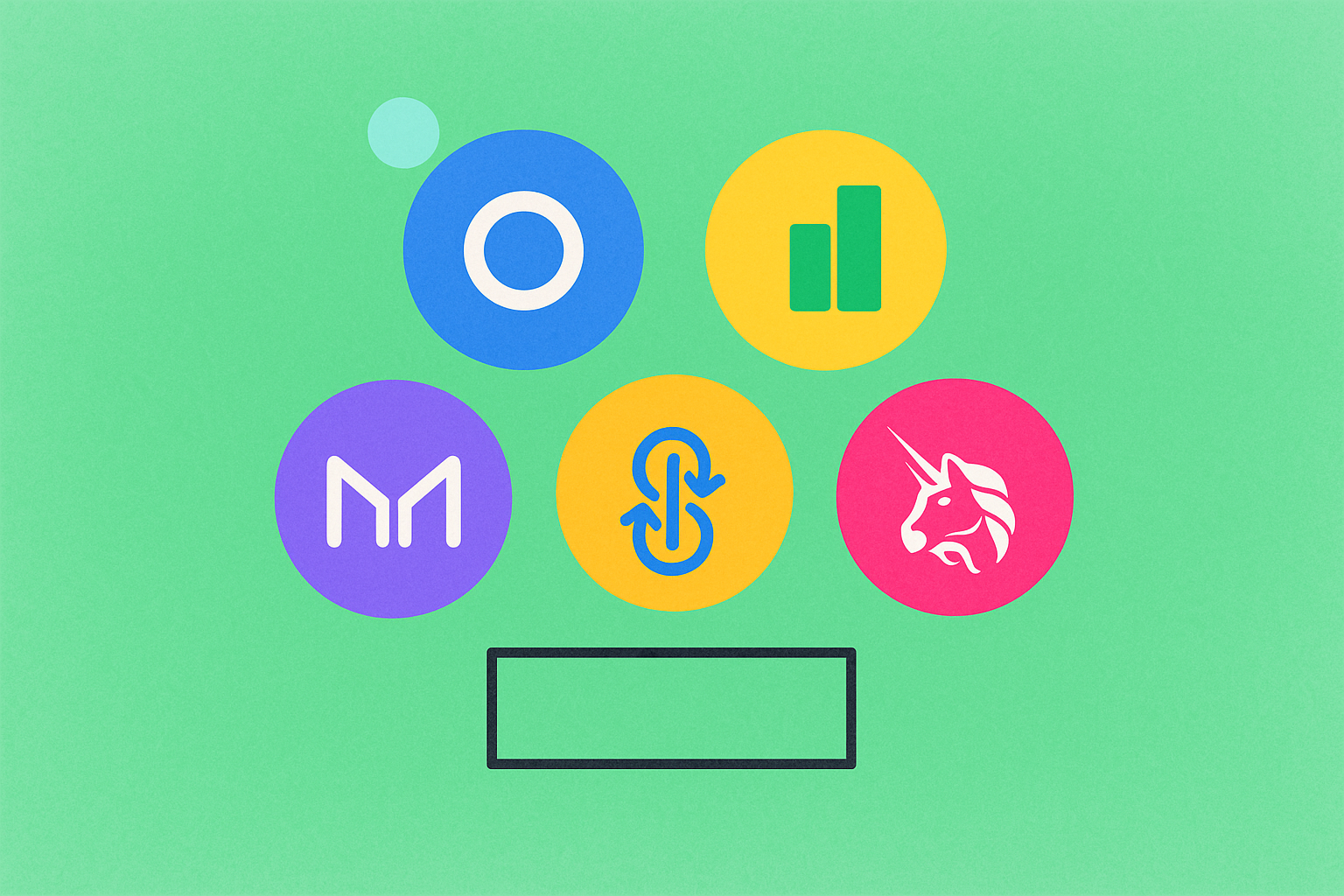
Aave
Aave is one of the most popular DeFi lending platforms, launched in 2020. It provides an open-source and non-custodial liquidity protocol that has become a cornerstone of the DeFi ecosystem. The platform's name, "Aave," means "ghost" in Finnish, reflecting its transparent yet powerful presence in decentralized finance.
Users can deposit cryptocurrency into liquidity pools through Aave and receive corresponding aTokens in return. These aTokens represent the deposited assets plus accrued interest and can be freely transferred or traded. The protocol has a built-in algorithm that adjusts interest rates based on current supply and demand in liquidity pools. The more users hold aTokens, the higher the interest rates rise, creating a dynamic and responsive lending market.
Aave's governance token is used to provide holders with benefits for securely managing and developing the platform. Token holders can propose and vote on protocol changes, including adding new assets, adjusting risk parameters, and implementing new features.
Aave offers high yields in the DeFi lending market, with each liquidity pool providing different interest rates to lenders. Users can check the platform for the most recent interest rates, which fluctuate based on market conditions. Additionally, users can choose loans with fixed or variable interest rates, providing flexibility to match their risk preferences and market outlook.
Aave also pioneered several innovative features, including flash loans, credit delegation, and rate switching. These features have made it a preferred platform for both retail users and institutional participants.
Compound
Compound is an automated interest rate protocol used for open financial applications. Users can deposit cryptocurrency, lend cryptocurrency, and earn additional income through interest. The platform has become synonymous with DeFi lending and has inspired numerous competing protocols.
The governance token, COMP, grants users voting rights on decisions such as adding new assets and upgrading the platform. This decentralized governance model ensures that the protocol evolves according to community needs rather than centralized corporate interests.
All lenders receive cTokens according to the quantity supplied to the liquidity pool. cTokens are determined by the digital assets supplied to the liquidity pool. For example, depositing Ethereum results in receiving cETH tokens. These tokens earn interest based on different interest rates in the liquidity pool, with rates adjusting automatically based on supply and demand dynamics.
Compound's top three markets are Ethereum (ETH), USD Coin (USDC), and DAI. The platform's transparent interest rate model makes it easy for users to predict returns and compare opportunities across different assets. Compound's Total Value Locked represents billions of dollars in user deposits, demonstrating its position as a leading DeFi lending protocol.
MakerDAO
MakerDAO is a DeFi lending platform that provides only DAI tokens to borrowers. DAI is a stablecoin pegged to the US dollar, providing price stability in the volatile cryptocurrency market. MakerDAO operates as a decentralized autonomous organization (DAO), meaning it is governed by its community rather than a centralized entity.
MakerDAO is an open system where anyone can borrow DAI by providing collateral such as Ethereum or BAT (Basic Attention Token). Users can earn returns through network interest rates and governance fees. The platform charges a stability fee on borrowed DAI, which serves as the interest rate and helps maintain the peg to the US dollar.
Users on MakerDAO can receive up to 66% of their collateral value in DAI. If the value of deposited assets falls below the fixed interest rate threshold, a 13% penalty is incurred to compensate for losses. This liquidation penalty protects the system from under-collateralized positions. Liquidated collateral is sold on the open market at a 3% discount, incentivizing liquidators to maintain system health.
The native token is MKR (Maker), which is issued when collateral values begin to decline. MKR tokens are sold on the open market to increase collateral levels while simultaneously diluting the value of existing MKR tokens. This mechanism ensures the system remains solvent even during extreme market conditions.
MakerDAO can be accessed through Maker's Oasis portal, which provides a user-friendly interface for opening vaults, depositing collateral, and managing DAI positions. The platform has been operational since 2017 and has proven resilient through multiple market cycles.
Uniswap
Uniswap is a decentralized cryptocurrency exchange based on the Ethereum network. Users can completely control their assets through smart contract modifications, maintaining custody of their funds at all times. The biggest advantage of this DEX platform is that new coins can be easily listed on the exchange through factory smart contracts, democratizing access to cryptocurrency markets.
Users can exchange ERC-20 tokens through Uniswap or receive interest by providing liquidity for token swaps. The platform uses an automated market maker (AMM) model rather than traditional order books, making it easy for anyone to become a liquidity provider. Users can easily create new liquidity pools, and minimal requirements are needed to provide token pairs to the market. Market makers determine exchange rates through an algorithmic formula that balances supply and demand.
Uniswap's top three pools are USDC/ETH, WBTC/ETH, and ETH/USDT. These pairs represent the most liquid and actively traded markets on the platform. Uniswap's Total Value Locked represents billions of dollars in liquidity, making it one of the largest decentralized exchanges in the cryptocurrency ecosystem.
The platform has released multiple versions, with Uniswap V3 introducing concentrated liquidity, allowing liquidity providers to specify price ranges for their capital, potentially increasing capital efficiency and returns. This innovation has made Uniswap even more competitive with centralized exchanges.
Yearn Finance
Yearn Finance is a DeFi aggregator platform where users can lend, borrow, and yield farm. The platform operates on the Ethereum network and has become known for its innovative approach to maximizing returns for depositors. Users can deposit assets and obtain YFI tokens, which serve as governance tokens for the protocol.
Yearn Finance is popular due to its ability to automatically switch between lending platforms to optimize returns. This automated strategy execution removes the burden of constantly monitoring and rebalancing positions from users. The Yearn Finance platform offers several independent products that work together to maximize yields:
- APY (Annual Percentage Yield): Interest rates across multiple lending protocols, displayed in real-time to help users make informed decisions
- Earn: Helps users find the highest interest rates available for lending their assets across various protocols
- Vaults: Investment strategies that generate the highest returns through automated yield farming and optimization
- Zap: Allows many transactions to be processed with a single click to save labor and capital, simplifying complex DeFi operations
Yearn Finance's Total Value Locked represents billions of dollars, demonstrating its popularity among yield-seeking investors. The platform's automated strategies have made it accessible to users who want DeFi returns without the complexity of managing multiple positions across different protocols.
The YFI token has become one of the most valuable governance tokens in DeFi, despite having a limited supply. Token holders can propose and vote on new strategies, fee structures, and protocol upgrades, ensuring the platform evolves to meet user needs.
Financial Revolution: DeFi Lending
DeFi lending represents a growing ecosystem that has already captured significant interest from cryptocurrency holders worldwide. These platforms are gaining trust more than ever before and are laying the foundation for a decentralized financial services world that operates independently of traditional banking infrastructure.
The key characteristics that make DeFi lending revolutionary include:
Permissionless Access: DeFi lending platforms are accessible to anyone, anywhere, allowing users to borrow funds even without bank accounts or low credit scores. This has the potential to significantly improve global financial inclusion, bringing banking services to the unbanked and underbanked populations worldwide.
Smart Contract-Based: DeFi lending is automated using smart contracts. These contracts execute automatically when specific conditions are met, making the lending and repayment process fast and transparent. This automation reduces operational costs and eliminates the potential for human error or bias in lending decisions.
No Centralized Management: Traditional financial systems are managed by centralized institutions like banks, but DeFi operates through distributed networks. This enhances security for user data and assets while reducing the risk of single points of failure. No single entity can freeze accounts, censor transactions, or manipulate interest rates arbitrarily.
Transparency: All transactions are recorded on the blockchain, allowing users to verify transaction history in real-time. The operation of the system is completely open, with smart contract code available for anyone to audit. This transparency builds trust and enables users to make informed decisions based on verifiable data.
Flexibility and Innovation: Various types of DeFi lending products exist, helping to meet diverse financial needs. The ecosystem provides flexibility to quickly integrate new features or improvements, allowing rapid iteration and innovation. Developers can build on existing protocols, creating composable financial products that combine multiple services.
Due to these characteristics, many experts evaluate DeFi lending as an innovation that transcends the limitations of traditional finance. It can contribute to increasing financial accessibility and reducing the cost of financial services, potentially democratizing access to sophisticated financial products that were previously available only to wealthy individuals or institutions.
The DeFi lending revolution is still in its early stages, with new protocols, features, and use cases emerging regularly. As the ecosystem matures, we can expect improvements in security, user experience, and regulatory clarity that will further accelerate adoption and integration with traditional financial systems.
FAQ
What is DeFi Lending and how does it differ from traditional bank lending?
DeFi lending uses smart contracts on blockchain to automate lending without intermediaries, while traditional banking relies on central institutions. DeFi offers greater transparency, user control, and accessibility through decentralized protocols, eliminating gatekeepers and reducing costs.
What are the main risks in DeFi lending and how to protect your funds?
Main risks include smart contract vulnerabilities, liquidation, and user errors. Protect yourself by using audited protocols, maintaining healthy collateral ratios, diversifying across platforms, enabling multi-signature wallets, and conducting thorough due diligence before depositing funds.
How to borrow on DeFi lending platforms? What are the steps required?
Connect your Web3 wallet to the platform, deposit collateral assets, select the asset you want to borrow, and complete the transaction. Ensure sufficient native tokens for gas fees. Your borrowed amount depends on collateral value and platform's loan-to-value ratio.
How do overcollateralization and liquidation mechanisms work in DeFi lending?
Overcollateralization requires borrowers to deposit collateral exceeding their loan value as protection. When collateral value drops below the required ratio, liquidators automatically sell the collateral to recover funds, protecting lenders while penalizing borrowers for insufficient coverage.
What are the mainstream DeFi lending protocols? (such as Aave, Compound, etc.)
Major DeFi lending protocols include Aave, Compound, Notional, Euler, and Liquity. Aave and Compound are mature protocols on Ethereum, while Notional specializes in fixed-rate lending, and Euler offers risk management features. Each protocol serves different user needs in the lending ecosystem.
How is the yield rate in DeFi lending calculated? Will interest rates fluctuate?
DeFi lending yields are calculated using APY (Annual Percentage Yield), which accounts for compounding. Interest rates fluctuate dynamically based on market demand and supply, changing in real-time as borrowing and lending demands shift across protocols.
What is a Flash Loan? What are its security risks?
A flash loan is an uncollateralized DeFi lending mechanism allowing borrowers to instantly borrow protocol assets without collateral, provided they repay principal plus fees within a single transaction block. Security risks include: vulnerable price oracle manipulation enabling attackers to arbitrage lending protocols, potential smart contract exploits, and lack of asset redemption guarantees if repayment logic fails.
How to assess the safety and credibility of DeFi lending platforms?
Review smart contract audits from reputable firms, check security certifications, analyze transaction volume and user base size, examine team background and governance structure, and verify community reputation through social channels.
Share
Content
How Does the Traditional Financial System Operate?
Negative Interest Rates
Unlimited Currency Printing
What is Decentralized Finance (DeFi)?
What is DeFi Lending?
DeFi Lending vs Traditional Lending
How Does DeFi Lending Work?
Advantages of DeFi Lending
Lending Consistency
Accountability
Speed
Loan Analytics
Transparency and Immutability
Disadvantages of DeFi Lending
Impermanent Loss
DeFi Rug Pulls
Flash Loan Attacks
Top 5 DeFi Lending Platforms
Aave
Compound
MakerDAO
Uniswap
Yearn Finance
Financial Revolution: DeFi Lending
FAQ
How to Buy Cryptocurrency


Trending Cryptocurrencies



What will be the market capitalization of USDC in 2025? Analysis of the stablecoin market landscape.
How is DeFi different from Bitcoin?

What is DeFi: Understanding Decentralized Finance in 2025
USDC stablecoin 2025 Latest Analysis: Principles, Advantages, and Web3 Eco-Applications

Development of Decentralized Finance Ecosystem in 2025: Integration of Decentralized Finance Applications with Web3

2025 USDT USD Complete Guide: A Must-Read for Newbie Investors

What is PUSH: A Comprehensive Guide to Understanding Push Technology and Its Applications in Modern Digital Communication

What is NEURO: A Comprehensive Guide to Understanding Neural Networks and Brain-Inspired Computing Technologies
What is PAI: A Comprehensive Guide to Platform for Artificial Intelligence and Its Applications in Modern Technology

What is HTM: A Comprehensive Guide to Hierarchical Temporal Memory and Its Applications in Machine Learning

Comprehensive Guide to APR and APY in Cryptocurrency