This comprehensive analysis evaluates whether RWA Inc. (RWAINC) represents a viable investment opportunity within the emerging real-world asset tokenization sector. The article examines RWAINC's financial metrics, historical price performance declining 91.51% over the past year to current levels of $0.002577, and the broader RWA tokenization market projected to reach $16-26 trillion by 2030. Key investment considerations include tokenomics featuring controlled supply with deflationary mechanisms, institutional adoption potential, and regulatory compliance positioning. The analysis provides differentiated investment strategies for beginners through institutional investors, incorporates realistic price forecasts ranging from $0.00198-$0.00659 through 2031, and details essential risk management approaches. Critical risk factors including extreme volatility, limited liquidity, regulatory uncertainty, and smart contract vulnerabilities are thoroughly addressed to equip investors with complete decision-making frame
Introduction: RWA Inc. (RWAINC) Investment Status and Market Outlook
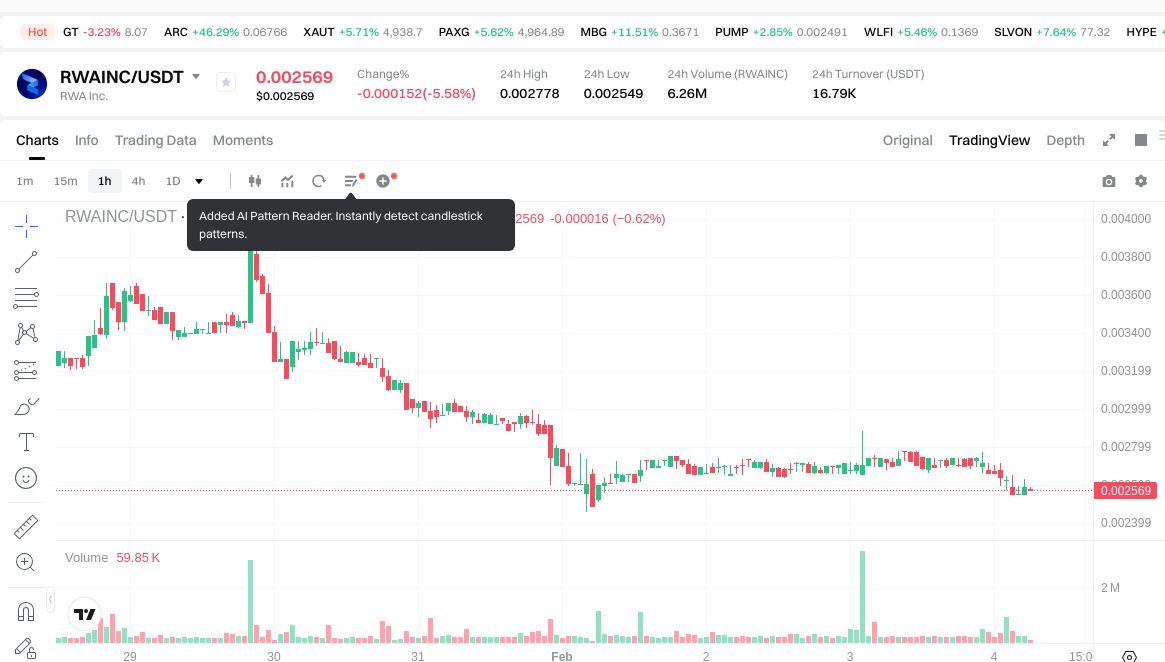
RWA Inc. (RWAINC) represents a notable asset in the cryptocurrency sector, designed to bridge traditional finance and blockchain technology through its comprehensive Real-World Asset ecosystem. As of February 4, 2026, RWAINC maintains a market capitalization of approximately $857,589, with a circulating supply of 332,785,884 tokens out of a maximum supply of 1,000,000,000. The current trading price stands at $0.002577, reflecting recent market fluctuations with a 24-hour trading volume of $16,759.63. With its positioning in the tokenization of real-world assets, a market segment expected to experience growth toward 2030, RWAINC has become a subject of interest when investors evaluate "Is RWA Inc. (RWAINC) a good investment?" This article provides a comprehensive analysis of RWAINC's investment characteristics, historical price movements, future price considerations, and associated risks to assist investors in their decision-making process.
I. RWAINC Price History Review and Investment Value Status
- 2024: Token launch on December 4 → Price reached $0.14542, but experienced significant volatility thereafter
- 2025-2026: Market correction phase → Price declined from December 2024 levels to $0.002456
- Recent performance: Over the past year, RWAINC has experienced a price decrease of 91.51%, reflecting broader market adjustments
Current RWAINC Investment Market Status (February 2026)
- RWAINC current price: $0.002577
- Market sentiment (Fear & Greed Index): Data not available in provided materials
- 24-hour trading volume: $16,759.63
- Market capitalization: $857,589.22
- Circulating supply: 332,785,884 RWAINC (33.28% of total supply)
- Total supply: 1,000,000,000 RWAINC
- Holder count: 73,053 addresses
Click to view real-time RWAINC market price
II. Core Factors Affecting Whether RWAINC is a Good Investment (Is RWA Inc.(RWAINC) a Good Investment)
Supply Mechanism and Scarcity (RWAINC investment scarcity)
- Supply structure influences price dynamics and investment appeal
- RWAINC features a maximum supply of 1,000,000,000 tokens with approximately 332,785,884 tokens (33.28%) currently in circulation
- The token incorporates a deflationary mechanism through revenue buybacks, with recent data indicating 11.2M tokens burned
- Investment consideration: The controlled supply model and token burn mechanism may contribute to potential scarcity dynamics over time
Institutional Investment and Mainstream Adoption (Institutional investment in RWAINC)
- RWA Inc. positions itself as a comprehensive Real-World Asset ecosystem bridging traditional finance and blockchain
- The project aligns with the broader RWA tokenization sector, which industry projections suggest could reach between $16 trillion and $26 trillion by 2030
- Regulatory compliance emphasis may support institutional participation in the tokenized asset space
- Consideration for investors: The project's approach to connecting traditional financial assets with blockchain infrastructure represents its primary value proposition
Macroeconomic Environment Impact on RWAINC Investment
- The real-world asset tokenization sector demonstrates growth momentum amid evolving financial market conditions
- Interest in tokenized assets reflects broader trends in digital transformation of traditional financial instruments
- Market analysis suggests that regulatory frameworks and institutional infrastructure development influence the RWA sector's expansion trajectory
- Investment context: RWAINC operates within a sector experiencing structural changes in how traditional assets interface with blockchain technology
Technology and Ecosystem Development (Technology & Ecosystem for RWAINC investment)
- The project utilizes the $RWA utility token to power and connect various ecosystem components
- Token deployment on Base blockchain provides technical infrastructure for operations
- The ecosystem approach aims to facilitate accessibility to traditionally illiquid asset classes through tokenization
- Development focus: The project emphasizes regulatory compliance and asset accessibility as foundational elements of its technical and operational framework
III. RWAINC Future Investment Forecast and Price Outlook (Is RWA Inc.(RWAINC) worth investing in 2026-2031)
Short-term Investment Forecast (2026, short-term RWAINC investment outlook)
- Conservative forecast: $0.00198 - $0.00257
- Neutral forecast: $0.00257 - $0.00303
- Optimistic forecast: $0.00303 - $0.00349
Mid-term Investment Outlook (2027-2029, mid-term RWA Inc.(RWAINC) investment forecast)
- Market stage expectation: Entering growth phase with gradual ecosystem development
- Investment return forecast:
- 2027: $0.00179 - $0.00376 (approximately 17% potential growth)
- 2028: $0.00251 - $0.00489 (approximately 31% cumulative growth)
- 2029: $0.00389 - $0.00489 (approximately 60% cumulative growth)
- Key catalysts: Real-world asset tokenization market expansion and regulatory compliance advantages
Long-term Investment Outlook (Is RWAINC a good long-term investment?)
- Base scenario: $0.00266 - $0.00451 (assuming steady adoption and moderate market conditions)
- Optimistic scenario: $0.00555 - $0.00659 (assuming accelerated ecosystem development and favorable regulatory environment)
- Risk scenario: Below $0.00266 (under adverse market conditions or ecosystem setbacks)
Click to view RWAINC long-term investment and price forecast: Price Prediction
2026-2031 Long-term Outlook
- Base scenario: $0.00266 - $0.00451 (corresponding to steady progress and gradual mainstream application growth)
- Optimistic scenario: $0.00555 - $0.00659 (corresponding to large-scale adoption and favorable market conditions)
- Transformative scenario: Above $0.00659 (if ecosystem achieves breakthrough progress and mainstream adoption)
- 2031-12-31 forecast high: $0.00659 (based on optimistic development assumptions)
Disclaimer: These forecasts are based on predictive models and historical data analysis. Cryptocurrency markets are highly volatile and subject to numerous unpredictable factors. Past performance does not guarantee future results. Investors should conduct their own research and consider their risk tolerance before making investment decisions.
| Year |
Predicted High Price |
Predicted Average Price |
Predicted Low Price |
Price Change |
| 2026 |
0.00349384 |
0.002569 |
0.00197813 |
0 |
| 2027 |
0.0037589608 |
0.00303142 |
0.0017885378 |
17 |
| 2028 |
0.004889074176 |
0.0033951904 |
0.002512440896 |
31 |
| 2029 |
0.00488771609984 |
0.004142132288 |
0.00389360435072 |
60 |
| 2030 |
0.006591789323123 |
0.00451492419392 |
0.002663805274412 |
75 |
| 2031 |
0.005831024596447 |
0.005553356758521 |
0.003776282595794 |
115 |
IV. RWAINC Investment Strategy and Risk Management (How to invest in Real-World Asset Tokens)
Investment Strategy (RWAINC investment strategy)
-
Long-term Holding (HODL RWAINC): Suitable for conservative investors who believe in the long-term potential of the Real-World Asset (RWA) tokenization market. Given the projected market size of $16-26 trillion by 2030, a long-term holding strategy may allow investors to participate in the ecosystem's growth as RWA Inc. expands its platform and regulatory compliance framework.
-
Active Trading: Relies on technical analysis and swing trading strategies. Given RWAINC's significant price fluctuations (e.g., 24-hour change of -4.07%, 7-day change of -22.01%, and 30-day change of -36.52% as of February 4, 2026), active traders may seek to capitalize on short-term price movements. However, this approach requires careful monitoring of market trends and technical indicators.
Risk Management (Risk management for RWAINC investment)
-
Asset Allocation Ratio:
- Conservative investors: Consider allocating no more than 1-3% of total portfolio to RWAINC due to its high volatility and relatively low market capitalization ($857,589 as of February 4, 2026).
- Aggressive investors: May allocate 5-10% of portfolio, accepting higher risk for potential returns.
- Professional investors: Should conduct thorough due diligence and consider strategic positions based on comprehensive market analysis.
-
Risk Hedging Solutions: Implement multi-asset portfolio diversification by combining RWAINC with other digital assets and traditional financial instruments. Consider utilizing hedging tools available in the cryptocurrency market to mitigate downside risk.
-
Secure Storage: Use cold wallets for long-term storage and hot wallets for active trading needs. Hardware wallet solutions are recommended for enhanced security of RWAINC holdings, particularly given the BASE blockchain infrastructure.
V. RWAINC Investment Risks and Challenges (Risks of investing in Real-World Asset Tokens)
-
Market Risk: RWAINC exhibits high volatility, with price fluctuations ranging from $0.002456 (all-time low on January 31, 2026) to $0.14542 (all-time high on December 4, 2024). The token has experienced a decline of approximately 91.51% over the past year. Market manipulation risks exist due to relatively low trading volume ($16,759.63 as of February 4, 2026) and limited exchange availability (1 exchange).
-
Regulatory Risk: Different jurisdictions maintain varying approaches to cryptocurrency regulation and RWA tokenization. Policy uncertainty across countries may impact the project's operational framework and token valuation. While RWA Inc. emphasizes regulatory compliance, evolving regulatory landscapes present ongoing challenges.
-
Technical Risk: Network security vulnerabilities on the BASE blockchain infrastructure could pose risks to token holders. Technical upgrade failures or implementation issues within the RWA Inc. ecosystem may affect token functionality and user experience. Smart contract risks associated with the token contract address (0xe2b1dc2d4a3b4e59fdf0c47b71a7a86391a8b35a) should be considered.
VI. Conclusion: Is Real-World Asset Tokenization a Good Investment?
-
Investment Value Summary: RWAINC represents exposure to the emerging RWA tokenization sector, which industry projections suggest could reach $16-26 trillion by 2030. However, the token has demonstrated substantial short-term price volatility, with declines across multiple timeframes (1-hour: -0.54%, 24-hour: -4.07%, 7-day: -22.01%, 30-day: -36.52%, 1-year: -91.51% as of February 4, 2026). The circulating supply represents 33.28% of total supply, with a holder base of 73,053 participants.
-
Investor Recommendations:
✅ Beginners: Consider dollar-cost averaging (DCA) strategies combined with secure wallet storage. Start with small allocations to understand market dynamics before increasing exposure.
✅ Experienced Investors: May employ swing trading strategies alongside portfolio diversification. Monitor technical indicators and market trends for tactical positioning.
✅ Institutional Investors: Conduct comprehensive due diligence on the RWA Inc. ecosystem, regulatory framework, and competitive positioning before considering strategic long-term allocation.
⚠️ Disclaimer: Cryptocurrency investments carry substantial risk, including potential loss of principal. This content is provided for informational purposes only and does not constitute investment advice. Conduct independent research and consult with qualified financial advisors before making investment decisions.
VII. FAQ
Q1: Is RWA Inc. (RWAINC) a good investment for beginners in 2026?
RWAINC presents significant risk for beginners due to extreme volatility, with a 91.51% price decline over the past year and current market capitalization of only $857,589. Beginners should approach with caution, starting with minimal allocations (1-3% of portfolio maximum) and employing dollar-cost averaging strategies. The token's low trading volume ($16,759.63 as of February 4, 2026) and availability on only one exchange create liquidity concerns. While the underlying RWA tokenization sector shows promising long-term potential with projected market size reaching $16-26 trillion by 2030, RWAINC's current market position requires investors to possess strong risk tolerance and commitment to long-term holding strategies.
Q2: What are the main risks associated with investing in RWAINC?
The primary risks include extreme market volatility (price ranging from $0.002456 to $0.14542 within 14 months), limited liquidity with daily trading volume under $17,000, and regulatory uncertainty surrounding RWA tokenization across different jurisdictions. Technical risks exist related to the BASE blockchain infrastructure and smart contract vulnerabilities. Additionally, with only 33.28% of total supply currently circulating, future token releases could create downward price pressure. The project's relatively small holder base (73,053 addresses) and minimal exchange presence increase exposure to market manipulation risks. These factors make RWAINC suitable only for investors who can afford potential complete loss of investment capital.
Q3: How does RWAINC's tokenomics affect its investment potential?
RWAINC features a maximum supply of 1,000,000,000 tokens with 332,785,884 (33.28%) currently in circulation, creating potential future dilution concerns as remaining tokens enter the market. However, the project implements a deflationary mechanism through revenue buybacks, with 11.2 million tokens already burned. This dual dynamic creates opposing price pressures: potential inflation from unreleased supply versus deflationary burns from revenue generation. The tokenomics structure suggests that RWAINC's long-term value appreciation depends heavily on ecosystem revenue growth sufficient to offset supply expansion. Investors should monitor burn rates relative to circulating supply growth when evaluating investment timing and position sizing.
Q4: What is the realistic price forecast for RWAINC through 2031?
Conservative forecasts suggest RWAINC may trade between $0.00198-$0.00257 in 2026, potentially reaching $0.00266-$0.00451 by 2031 under base-case scenarios. Optimistic projections range from $0.00303-$0.00349 short-term, extending to $0.00555-$0.00659 by 2031 if ecosystem development accelerates and regulatory environments prove favorable. These forecasts represent potential gains of 17% (2027), 31% (2028), and 60% (2029) cumulatively from current levels. However, these projections assume successful ecosystem development and favorable market conditions. Given historical volatility and current market positioning, investors should prepare for scenarios including prices remaining below $0.00266 or further declines under adverse conditions.
Q5: How should I allocate RWAINC within my cryptocurrency portfolio?
Portfolio allocation should correlate directly with risk tolerance and investment experience. Conservative investors should limit RWAINC exposure to 1-3% of total portfolio value, treating it as a high-risk speculative position within the broader cryptocurrency allocation. Aggressive investors accepting higher volatility may consider 5-10% allocation, while professional investors should conduct comprehensive due diligence before determining strategic positioning. Recommended approach includes diversification across multiple digital assets and traditional instruments, utilizing cold wallet storage for long-term holdings, and implementing position sizing that allows psychological comfort during 50%+ drawdowns. Never allocate capital to RWAINC that exceeds your capacity for complete loss.
Q6: What catalysts could drive RWAINC price appreciation?
Key potential catalysts include broader adoption of RWA tokenization frameworks, favorable regulatory developments in major jurisdictions, increased institutional participation in tokenized asset markets, and successful expansion of the RWA Inc. ecosystem. The projected growth of the RWA tokenization sector toward $16-26 trillion by 2030 represents significant tailwind potential. Additional catalysts may include exchange listings expanding from current single-exchange availability, partnership announcements with traditional financial institutions, demonstrated revenue growth supporting token burn mechanisms, and technical developments enhancing platform functionality. However, catalyst materialization remains uncertain, and investors should evaluate RWAINC against competing RWA tokenization projects when assessing relative value proposition.
Q7: When is the best time to invest in RWAINC?
Optimal entry timing depends on individual investment strategy and market conditions. Current price levels ($0.002577 as of February 4, 2026) represent approximately 98% discount from all-time high ($0.14542), suggesting potential value for risk-tolerant investors believing in long-term ecosystem development. Dollar-cost averaging (DCA) strategies may prove advantageous given high volatility, allowing gradual position building while minimizing timing risk. Consider entering positions during periods of market stabilization rather than during sharp downtrends (noting 7-day decline of 22.01% and 30-day decline of 36.52%). Long-term investors focused on 2027-2031 horizons may view current levels as accumulation opportunities, while short-term traders should wait for technical confirmation of trend reversals before establishing positions.
Q8: How does RWAINC compare to other RWA tokenization projects?
Direct comparative analysis requires evaluation across multiple dimensions including market capitalization, liquidity profiles, regulatory positioning, ecosystem development, and institutional adoption rates. RWAINC's current market cap of $857,589 places it in the micro-cap category within the RWA sector, suggesting higher risk but potentially higher reward compared to established projects. The emphasis on regulatory compliance and comprehensive ecosystem approach represents competitive positioning, though limited exchange availability and low trading volumes indicate early developmental stage. Investors should benchmark RWAINC against competitors regarding token burn mechanisms, circulating supply percentages, holder distribution, and demonstrable progress toward stated roadmap objectives. Consider diversification across multiple RWA tokenization projects rather than concentrated exposure to single protocols.
* The information is not intended to be and does not constitute financial advice or any other recommendation of any sort offered or endorsed by Gate.