


Why Crypto Crashed: Pre-CNY Liquidity & Negative Gamma Doom Loop
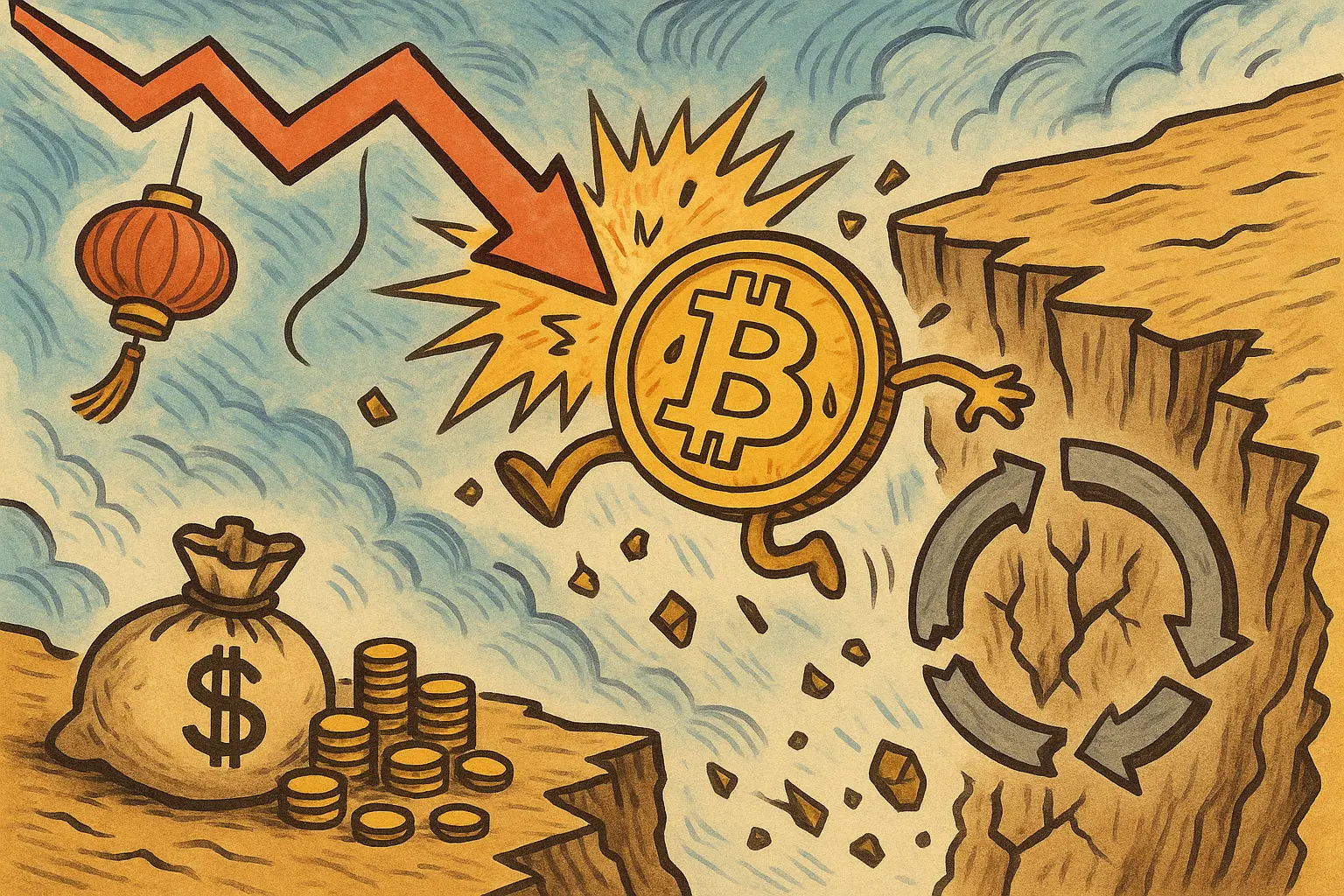
Pre-CNY liquidity void is driving crypto’s latest crash, not FUD or regulatory news. The market is experiencing “Liquidity Flush” driven by Negative Gamma hedging, Pre-CNY holiday liquidity drain, and sudden rotation to hard assets. Smart money is aggressively rebalancing from crypto into Palladium (XPD) and Copper (XCU) as commodity supercycle narrative driven by AI infrastructure needs sucks capital from digital risk assets.
There’s No News Headline—This Is Pure Market Mechanics
If you are looking for specific news headline to explain today’s red candles, stop looking. There isn’t one. Retail traders are currently scouring Twitter for “FUD” (Fear, Uncertainty, Doubt) to blame for the drop. But if you sit on institutional trading desk, the picture is different. The market didn’t crash because of regulatory rumor or hack. It crashed because of market mechanics and massive, silent capital rotation.
We are witnessing “Liquidity Flush” driven by three specific factors that algos react to long before humans do: Negative Gamma hedging, Pre-CNY holiday liquidity drain, and sudden flight to Industrial Scarcity. This isn’t panic selling—it’s systematic repositioning by institutional capital following quantitative signals invisible to retail traders watching price charts and social media sentiment.
The Great Rotation: From Digital Risk to Physical Scarcity
The most critical signal right now is not on Bitcoin chart—it’s on Commodities board. For the past six months, Bitcoin acted as high-beta proxy for tech stocks. Today, that correlation snapped. According to TradingEconomics Commodities Data, while crypto bleeds, Palladium (XPD) and Copper (XCU) are breaking out to new local highs.
This is not coincidence. Smart money is aggressively rebalancing. The “Commodity Supercycle” narrative—driven by AI infrastructure needs and supply shocks in Russia/South Africa—is sucking liquidity out of “Digital Risk” (Crypto) and moving it into “Physical Scarcity” (RWA). Funds aren’t leaving the ecosystem; they are just changing lanes. They are selling liquid BTC/ETH positions to chase breakout in XPD and XCU futures.
If you are only watching crypto, you are seeing crash. If you are watching full macro terminal, you are seeing rotation. Palladium’s recent surge stems from supply constraints as Russian exports face sanctions and South African mines experience production disruptions. Meanwhile, Copper demand is accelerating due to AI data center buildouts requiring massive amounts of copper wiring and cooling systems.
Why Smart Money Is Rotating
AI Infrastructure Boom: Data centers require copper wiring, cooling systems creating physical commodity demand
Supply Shocks: Russian sanctions and South African production issues constrain palladium supply
Inflation Hedging: Physical commodities offer inflation protection as monetary policy uncertainty rises
Liquidity Preference: Institutional capital prefers regulated commodity futures during risk-off periods
This rotation pattern is familiar to macro traders who’ve observed similar moves during previous risk regime shifts. When growth expectations moderate and inflation concerns resurface, capital historically flows from high-beta digital assets into tangible commodities with supply-demand fundamentals.
Negative Gamma Doom Loop: Why Drops Accelerate
Why was the drop so fast? Why did we wipe out weeks of gains in hours? Blame the Options Market. According to derivatives data from Coinglass, Open Interest (OI) had reached fever-pitch levels leading up to this week. Crucially, Market Makers were heavily positioned in what quantitative traders call “Negative Gamma.”
When price cracked key support levels—triggered by the rotation mentioned above—Market Makers were mathematically forced to sell spot to hedge their books. This creates mechanical feedback loop: Price ticks down → Dealers forced to sell → Price drops further → Dealers sell more. This “Gamma Squeeze” explains vertical nature of red candles. It wasn’t human panic; it was hedging algorithms executing mandatory sell orders into thin order book.
Negative Gamma occurs when options dealers are short volatility—they’ve sold put options to clients seeking downside protection. As prices fall, these dealers must sell underlying assets to maintain delta-neutral positions. The larger the price move, the more they must sell, creating acceleration dynamic that amplifies volatility in both directions.
The concentration of options expiration dates exacerbated this effect. When major options expire, Market Makers who were short gamma suddenly face massive hedging requirements as expiry approaches. This “pin risk” forces rapid position adjustments that can overwhelm spot market liquidity, causing the vertical price moves retail traders interpret as panic but are actually systematic hedging flows.
Pre-CNY Liquidity Void: The Asian Bid Vanishes
Finally, look at the calendar. We are two weeks away from Lunar New Year. Veterans of this market know the drill: The “Asian Bid” disappears in early February. As noted in historical volatility reports, the weeks preceding Lunar New Year often see withdrawal of fiat liquidity as OTC desks in Asia settle accounts and miners cash out for end-of-year bonuses.
This creates “Liquidity Void.” The buy-side depth on order books is currently at its thinnest point of the quarter. In this environment, standard sell order causes significant slippage. The bears know this, and they are pressing their advantage while bulls are on holiday.
The Pre-CNY liquidity pattern repeats annually with remarkable consistency. Chinese New Year typically falls between late January and mid-February, and the two weeks preceding it consistently show reduced trading volumes and increased volatility in crypto markets. This occurs because significant portion of crypto trading volume originates from Asia, where participants liquidate positions to fund holiday expenses, bonuses, and gift-giving traditions.
Pre-CNY Liquidity Drain Mechanics
OTC Desk Settlement: Asian OTC desks settle accounts before holiday break, reducing institutional buying capacity
Miner Cashouts: Mining operations liquidate holdings to pay year-end bonuses and operational expenses
Retail Liquidations: Asian retail traders sell crypto to fund holiday spending, travel, and traditional gifts
Reduced Market Depth: Thinner order books amplify price impact of any selling pressure
Strategic Bear Positioning: Sophisticated traders exploit this predictable seasonal weakness
The Pre-CNY effect is so well-documented that quantitative trading strategies specifically target this period for short positions or reduced exposure. However, retail traders unfamiliar with this pattern often misinterpret the selling pressure as fundamental bearishness rather than temporary seasonal dynamics.
Historical data shows crypto markets typically experience 10-20% drawdowns during Pre-CNY periods, followed by sharp recoveries once Chinese New Year concludes and Asian liquidity returns. The 2022, 2023, and 2024 Pre-CNY periods all exhibited this pattern, validating the seasonal effect’s persistence.
The Trader’s Verdict: Watch USDT Borrow Rates
So, is the bull market over? Unlikely. This is structural flush, not fundamental breakdown. But don’t try to catch falling knife based on RSI divergence. Instead, watch USDT Borrowing Rates on-chain via DefiLlama Yields.
The Signal: We need to see USDT borrowing costs spike on protocols like Aave. That indicates smart money is stepping in to buy the dip with leverage. Until then, cash (or Commodities like XPD) is king. Rising USDT borrow rates signal that traders are willing to pay premium to access leverage for long positions—a clear indication that institutional capital views current prices as attractive entry points.
Current USDT borrow rates remain subdued around 5-7% APR, suggesting limited conviction for immediate reversal. Historical patterns show that true bottoms coincide with USDT borrow spikes to 15-25% APR as competing buyers rush to leverage up simultaneously. This lending rate surge precedes price recoveries by 24-48 hours, providing actionable signal for timing re-entry.
What Should Traders Do Right Now?
The Bottom Line: Capital hasn’t evaporated; it has rotated. The savvy trader isn’t panic-selling Bitcoin; they are likely shorting the weakness or following smart money into Palladium (XPD) and Copper (XCU) volatility while crypto dust settles.
Tactical Options for Different Risk Profiles
Conservative: Move to stablecoins or cash until USDT borrow rates spike signaling institutional re-entry
Moderate: Reduce crypto exposure by 40-60%, rotate into commodity futures like XPD/XCU tracking rotation
Aggressive: Short crypto volatility or establish small long positions with tight stops targeting oversold bounces
The key is recognizing this as technical deleveraging rather than fundamental bearish shift. Bitcoin’s long-term thesis hasn’t changed—regulatory clarity continues improving, institutional adoption accelerates, and supply dynamics from halving remain supportive. What changed is short-term capital allocation preferences driven by relative value opportunities in other asset classes.
Pre-CNY liquidity will return after February 10-12, 2026, when Chinese New Year celebrations conclude and Asian markets reopen. Historical patterns suggest sharp rebounds follow this liquidity return, often recovering 50-70% of Pre-CNY drawdowns within two weeks. Positioning before this liquidity wave returns offers asymmetric risk-reward for patient traders.
Reading the Institutional Playbook
Institutional desks are running systematic strategies invisible to retail traders focused on news headlines and social media sentiment. The rotation to hard assets reflects quantitative models identifying mean reversion opportunities in commodities that have underperformed tech-linked assets for months.
Monitor these institutional signals for reversal confirmation: USDT borrow rates spiking above 15% APR indicating leveraged buying pressure, funding rates on perpetual futures turning deeply negative showing aggressive shorting exhaustion, spot exchange inflows decreasing signaling selling pressure abatement, and commodity momentum stalling as palladium and copper reach resistance levels.
When these signals align, capital will rotate back into crypto with the same mechanical intensity it rotated out. The Negative Gamma that amplified downside will amplify upside when direction reverses. Market Makers forced to sell during decline will be forced to buy during recovery, potentially creating violent snapback rally.
The Pre-CNY liquidity dynamic creates predictable setup. Patient traders can position ahead of February liquidity return while impatient participants chase rotations into already-extended commodity positions. Understanding these structural mechanics separates institutional approach from retail reaction.
FAQ
What is Pre-CNY liquidity drain?
Pre-CNY refers to liquidity withdrawal in the two weeks before Chinese New Year (February 10-12, 2026). Asian OTC desks settle accounts, miners cash out for bonuses, and retail traders sell for holiday spending, creating thinnest order book depth of the quarter.
Why does Negative Gamma cause crashes?
Negative Gamma occurs when options dealers are short volatility. As prices fall, they must systematically sell underlying assets to hedge, creating feedback loop: price drops force more selling, which causes more drops. This explains vertical red candles beyond human panic.
Is the bull market over?
Unlikely. This is structural flush from mechanics (Negative Gamma), seasonal factors (Pre-CNY), and rotation (commodities), not fundamental breakdown. Historical patterns show sharp recoveries after Chinese New Year when Asian liquidity returns.
What are Palladium (XPD) and Copper (XCU)?
Palladium and Copper are industrial metals experiencing breakouts due to AI infrastructure demands and supply shocks. Smart money is rotating from crypto into these physical commodities, tracking the “Commodity Supercycle” narrative.
When will crypto recover?
Watch for USDT borrowing rates spiking above 15% APR on DeFi protocols, indicating institutional buyers stepping in with leverage. Historical patterns suggest recovery begins after Chinese New Year (mid-February) when Asian liquidity returns.
Should I buy the dip now?
Not yet. Wait for confirmation signals: USDT borrow rate spikes, deeply negative funding rates showing short exhaustion, and decreasing spot exchange inflows. Until then, cash or commodities offer better risk-reward.