


Cryptocurrency payments enter the UK online gambling market; FCA's 2027 comprehensive framework will determine the fate

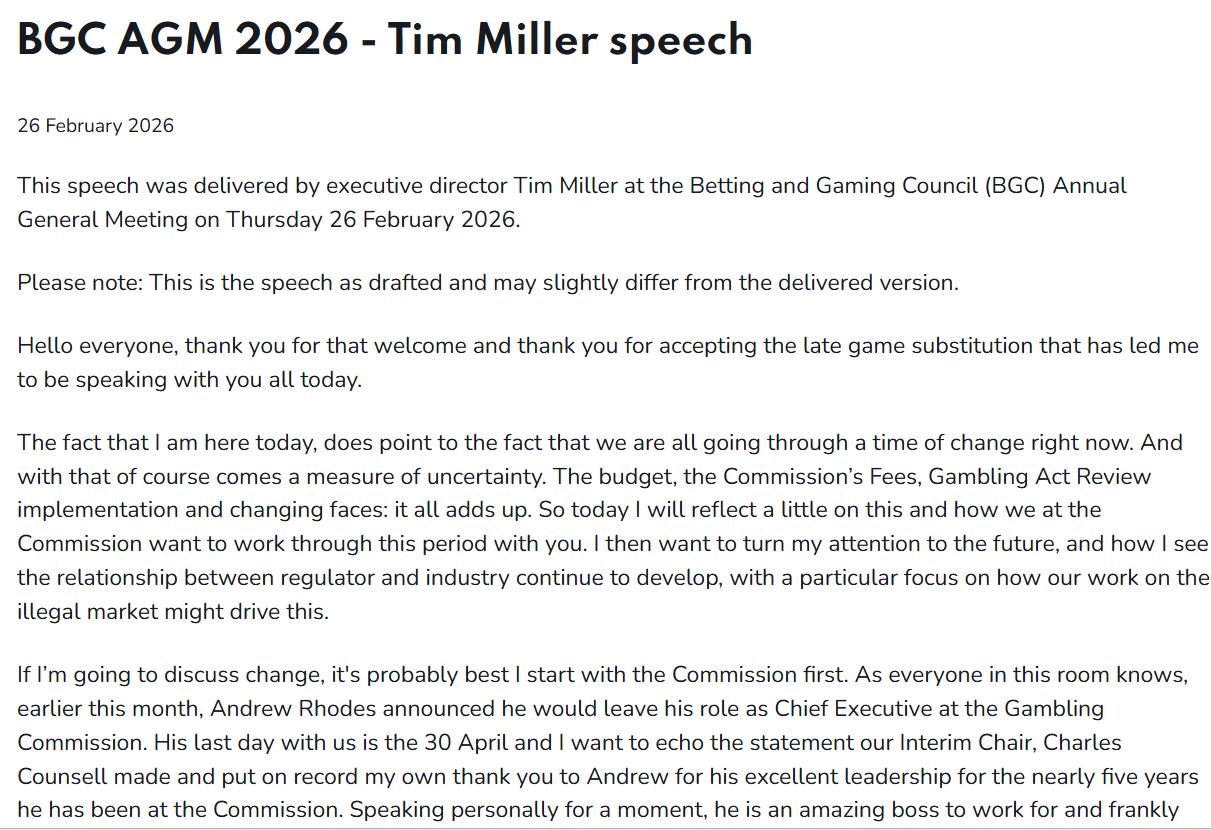
UK Gambling Commission Research and Policy Executive Director Tim Miller stated at the annual conference in London on February 26 that the commission is exploring the potential pathway to allow cryptocurrency payments as an option for consumers in licensed UK gambling activities, emphasizing that related cryptocurrency activities will need to be formally authorized by the UK Financial Conduct Authority (FCA).
Why Is the Gambling Commission Considering Opening Up Cryptocurrency Payments?
 (Source: UK Gambling Commission)
In his speech, Tim Miller directly identified the core motivation behind this research: consumer protection. He pointed out that cryptocurrencies are among the top two search terms leading UK gamblers to illegal websites, meaning that if licensed UK gambling platforms cannot accept cryptocurrency payments, some players might turn to unregulated offshore sites.
Miller’s logic is: allowing compliant licensed platforms to accept cryptocurrency payments could actually keep players within a regulated environment rather than pushing them toward illegal markets. He has asked the industry advisory group, the “Industry Forum,” to explore the best pathways for accepting cryptocurrency payments, but no specific deadline has been set.
It is also noteworthy that Miller explicitly stated that allowing cryptocurrency payments does not mean that the casinos themselves will receive full recognition under UK law—they still must undergo strict customer suitability and affordability checks.
FCA Regulatory Framework: Policy Timeline for Cryptocurrency Gambling Payments
The Gambling Commission’s exploration is closely related to the FCA’s ongoing cryptocurrency regulatory framework. The FCA has issued a final consultation document covering ten proposals for the cryptocurrency market, planning to complete the consultation by March 2026, with full implementation expected by October 2027.
In this context, any service providers wishing to accept cryptocurrency payments on licensed UK gambling platforms will need to obtain full compliance authorization under the new FCA system. The official timeline for opening up crypto gambling payments is highly dependent on the progress of the FCA framework implementation.
Key Regulatory Timeline for Cryptocurrency Gambling Payments in the UK
March 2026: FCA is expected to complete consultation on ten proposals for the cryptocurrency market
September 2026: FCA opens formal application window for Crypto Asset Service Providers (CASPs)
October 25, 2027: FCA’s new crypto regulatory framework officially takes effect; all relevant service providers must obtain full authorization
Ongoing: The Industry Forum of the Gambling Commission continues to evaluate the best implementation pathways for cryptocurrency payments, with no set deadline
Frequently Asked Questions
Why does the UK Gambling Commission believe allowing cryptocurrency payments can help protect consumers?
Tim Miller pointed out that cryptocurrencies are among the top two keywords UK gamblers search for when visiting illegal sites. If compliant licensed platforms cannot accept cryptocurrency payments, these players might be pushed toward unregulated offshore casinos, increasing consumer risks. Allowing licensed platforms to accept crypto payments is a protective measure to keep players within a regulated environment.
After allowing cryptocurrency payments, do online casinos automatically comply with UK regulations?
No. Miller clearly stated that permitting cryptocurrencies as a payment method does not mean the casino platform itself is recognized by UK regulators. All platforms wishing to accept cryptocurrency payments still need to undergo strict customer suitability and affordability checks, and related crypto activities must be authorized independently under the FCA framework.
When will the FCA’s cryptocurrency regulatory framework come into effect, and how should the gambling industry respond?
The FCA plans to fully implement the new crypto regulatory framework by October 25, 2027, with the application window expected to open in September 2026. If the gambling industry is ultimately permitted to accept cryptocurrency payments, relevant service providers will need to obtain full FCA authorization under this framework. Those who miss the application window will be subject to transitional rules—existing products can continue to operate, but new product launches will be regulated.
Related Articles
SEC Chair Gensler: Missed the Opportunity for Effective Cryptocurrency Regulation, Now Working Hard to Fill the Gap
CLARITY Bill Stablecoin Yield Negotiation Stalls, Banking Sector Pressures Senate to Halt
What signals did the US SEC send behind the new 2% discount regulation for stablecoins?
Chicago Fed President Austan Goolsbee has Forecasted More Rate Cuts
Ripple CEO on Crypto: 'I Have So Much Optimism for 2026' - U.Today
Ukraine advances the central bank digital currency e-hryvnia. How should crypto investors respond to regulatory and market changes?