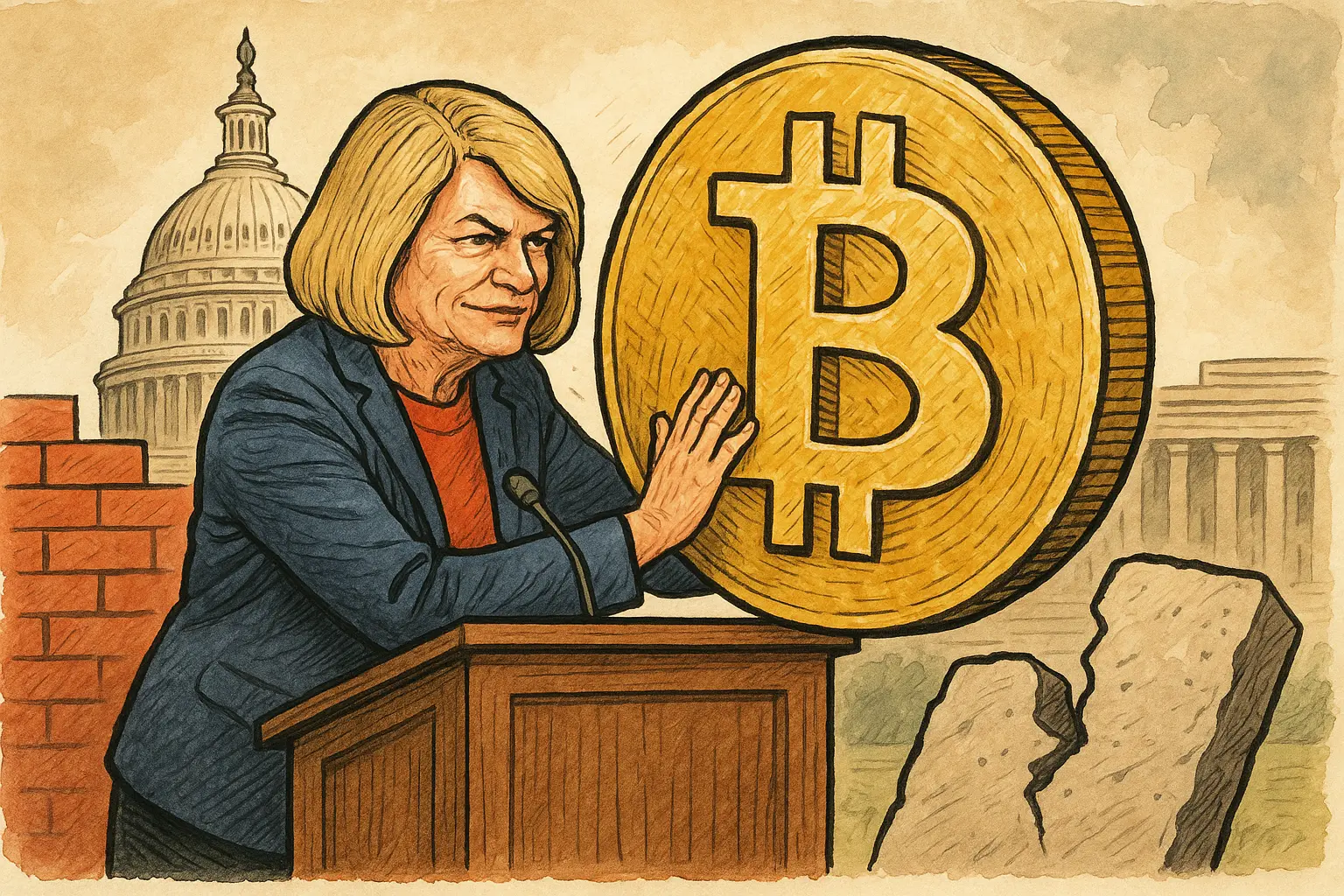
Wyoming Senator Cynthia Lummis told CNBC on Wednesday that the House Financial Services Committee and the Senate Finance Committee are currently considering a $300 small transaction exemption for cryptocurrency trades, allowing users to avoid reporting capital gains taxes on transactions below this amount. However, the progress of the CLARITY Act in the Senate remains unclear, with no definite timeline for its resumption.
Lummis’s Tax Exemption Proposal: The Core Argument for Cryptocurrency as a Payment Medium
Lummis previously introduced a standalone bill in July 2025 proposing a minimal tax exemption for cryptocurrency transactions under $300, with an annual exemption cap of $5,000. Her recent mention of this plan during negotiations on the Market Structure Bill aims to embed it into broader crypto legislation, increasing its chances of passage.
Lummis explained the core logic behind the tax exemption: “We’re trying to figure out how to balance properly—when selling (Bitcoin and other crypto assets) should be subject to capital gains tax, and when it should be allowed to serve as a simple exchange medium like the dollar.”
She emphasized that the $300 threshold addresses a long-standing practical issue in everyday crypto use: each crypto payment could theoretically trigger a capital gains tax reporting obligation, making small, everyday transactions with assets like Bitcoin nearly impossible. The tax exemption is seen as a necessary step to make cryptocurrencies truly usable as an “exchange medium.”
Senate Deadlock on the CLARITY Act: Four Major Obstacles
After passing the House in July 2025, the CLARITY Act has stalled significantly in the Senate. The Senate Banking Committee was scheduled to review the bill in January, but Chairman Senator Tim Scott of South Carolina indefinitely postponed the hearing after Coinbase CEO Brian Armstrong stated that the exchange “cannot support” the bill as it stands. The main issue cited was the bill’s provisions involving tokenized stocks.
Main Disputes Hindering the Bill’s Progress
-
Tokenized Stocks Clause: Whether the bill should permit and regulate crypto platforms issuing tokenized stocks, touching on the jurisdictional boundaries between traditional securities regulators and crypto regulators.
-
Stablecoin Yield Issue: Whether to allow stablecoin issuers to pay interest or rewards to holders, a move strongly opposed by banking groups.
-
Regulatory Responsibilities: The unclear division of authority between the SEC and CFTC over digital asset regulation.
-
Potential Conflicts of Interest: Concerns raised by some lawmakers and critics regarding the ethics of involved institutions and personnel.
Lummis noted that her Democratic colleagues have yet to express support for the bill, indicating that bipartisan consensus has not yet been achieved.
Trump Pressures Banks, Legislation Still Uncertain
Last week, President Trump unusually intervened publicly on social media, urging the banking industry and the crypto sector to “reach a good agreement,” and explicitly stating that banks cannot “hold hostage” the CLARITY Act. This was Trump’s first public pressure on traditional financial institutions regarding the legislative process, which some market observers see as a positive sign that the bill might be revived.
However, as of Monday, the Senate Banking Committee had not rescheduled a hearing on the bill. Lummis’s own schedule is also tightening—being a senator set to leave office in January 2027, her window to push this legislation is rapidly closing.
Frequently Asked Questions
How exactly does the $300 crypto tax exemption work?
According to Lummis’s proposal, users can conduct a single crypto transaction under $300 without calculating or reporting capital gains taxes, with an annual exemption cap of $5,000. Transactions exceeding this threshold must still be reported under normal capital gains rules. The goal is to make crypto a practical medium for small, everyday payments without triggering complex tax obligations every time.
Why has the CLARITY Act stalled after Coinbase’s stance?
Coinbase CEO Brian Armstrong stated that the bill’s provisions involving tokenized stocks prevent it from “supporting it as is.” The regulation of tokenized stocks involves SEC jurisdiction, raising concerns among banks about crypto platforms expanding into traditional finance without sufficient oversight. This led the Senate Banking Committee chair to delay further deliberation, awaiting broader consensus.
What is the outlook for crypto legislation after Lummis’s departure?
Lummis has been one of Congress’s most active advocates for crypto-friendly legislation. Her departure could mean losing a key ally for the industry. However, with Trump’s administration showing support for crypto and new leadership at SEC and CFTC (Paul Atkins and Mike Selig), regulatory progress might still be achieved through administrative channels to fill legislative gaps. Nonetheless, without advocates like Lummis, the long-term sustainability of comprehensive legislation remains uncertain.
Disclaimer: The information on this page may come from third parties and does not represent the views or opinions of Gate. The content displayed on this page is for reference only and does not constitute any financial, investment, or legal advice. Gate does not guarantee the accuracy or completeness of the information and shall not be liable for any losses arising from the use of this information. Virtual asset investments carry high risks and are subject to significant price volatility. You may lose all of your invested principal. Please fully understand the relevant risks and make prudent decisions based on your own financial situation and risk tolerance. For details, please refer to
Disclaimer.


