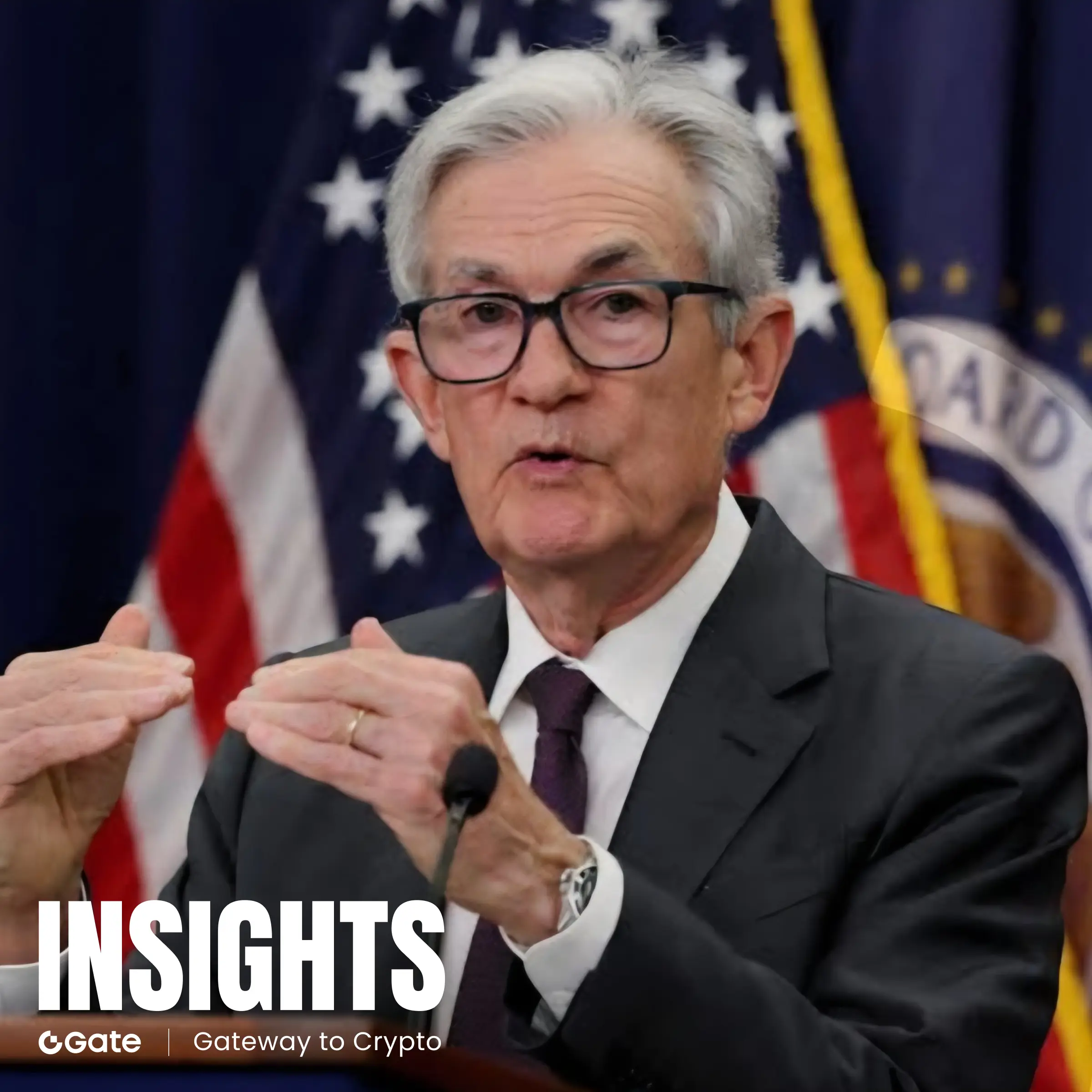
At 2:00 a.m. Beijing Time on April 9, the U.S. Federal Reserve will release the minutes of its March monetary policy meeting. This document is drawing intense attention not only because it records the internal discussions from the previous rate-setting meeting, but also because Middle East geopolitical risk—especially the Iran war that began on February 28—has already started to heat up significantly. Since then, oil prices have risen, financial conditions have been tightening passively, and market expectations for the interest-rate path have swung violently. In the absence of clear policy actions, the Fed’s communication about its stance has become more sensitive than at any time before.
Why do geopolitical conflicts change the market’s original judgment about the Fed’s interest-rate path?
The Iran-U.S. conflict affects the Fed’s decision-making environment through two core channels:
- First, an energy supply shock pushes up oil prices, which in turn raises the overall inflation level;
- Second, a rise in risk premium leads to wider credit spreads and heightened stock market volatility, automatically tightening financial conditions.
When the March rate-setting meeting was held, the market still generally expected that there would be one rate cut within the year, but the persistence of the conflict exceeded most officials’ predictions. The minutes’ discussion of whether “geopolitical uncertainty constitutes an upside risk to inflation” will become a key basis for judging the officials’ stance at the time. If most members believe that the rise in oil prices is temporary, then the window for rate cuts remains; conversely, if they believe the conflict will become prolonged, the period during which rates remain high will be extended.
What internal discussions about restarting rate hikes might be revealed in the March meeting minutes?
Although the market is currently mainly focused on the timing of rate cuts, the Fed has never fully ruled out the possibility of restarting rate hikes. The March meeting took place in the early stage of the conflict, and some officials may already have proposed: if oil prices push inflation expectations to become unanchored, or if financial conditions unexpectedly loosen and cause demand overheating, then rate hikes should be treated as a contingency tool. In the minutes, two details deserve special attention:
- First, whether any members explicitly mention “rate hike” scenarios;
- Second, the specific quantitative conditions that would trigger a rate hike, such as core PCE staying above a certain threshold for several consecutive months.
These points will directly affect how the market prices the upper and lower bounds of the policy rate. Even if current mainstream expectations still lean toward maintaining rates or cutting rates, the very presence of rate-hike discussions will, by itself, curb the valuation expansion of risk assets.
How does a substantial tightening of financial conditions affect the valuation logic for crypto assets?
Since the outbreak of the Iran war, U.S. Treasury yields have risen and dollar liquidity indicators have tightened, and the crypto market has felt the pressure as well. As of April 8, 2026, according to Gate’s latest market data, the price of BTC is 71,900 USD and ETH is 2,250 USD; overall, crypto’s price performance has pulled back compared with the prior peak before the Middle East geopolitical risk-related conflict.
The tightening of financial conditions mainly transmits to crypto assets through two mechanisms:
- Rising real interest rates raise the opportunity cost of holding non-yielding assets;
- A contraction in risk appetite leads to the passive deleveraging of leveraged positions.
If the minutes show that the Fed holds an attitude of “welcoming” the tightening of financial conditions, it means that in the short term liquidity will not receive policy support; the crypto market’s valuation recovery will rely more on endogenous demand and supply-side factors such as halvings.
How do the transmission of oil prices and inflation expectations constrain the Fed’s room to cut rates?
After today’s Iran-U.S. temporary ceasefire, Brent crude oil briefly fell below 95 USD per barrel, but the price is still far higher than last year’s average level. Oil is a core production input and a consumption-cost item; its increase will directly push up prices in industries such as transportation, chemicals, and aviation, and gradually seep into core services inflation.
At the March meeting, Fed officials may already have simulated inflation paths under different oil-price scenarios. The minutes’ quantitative analysis of the “lagged impact of a 10 USD increase in oil prices on core inflation” will be crucial for assessing the threshold for rate cuts. If the committee believes that higher oil prices would systematically lift long-term inflation expectations, then even if economic growth slows, rate cuts would be delayed; conversely, if they view it as a one-off shock, employment data would become the dominant factor.
How have market expectations for the number of rate cuts in 2026 shifted?
Before the March meeting, pricing in the interest-rate futures market showed that the probability of one rate cut during all of 2026 was about 65%, while the probability of two rate cuts was less than 20%. After the outbreak of the conflict, the probability of one rate cut fell to around 40%, while the probability of “no rate cuts” rose to 35%. The minutes can reveal whether officials noticed this change in expectations, and what their stance is. If the minutes acknowledge that “the market’s pricing of the policy path has moved closer to the committee’s neutral judgment,” then the timing of actual rate cuts may shift further back. On the other hand, if the minutes express concern about financial conditions tightening too much, the market will interpret it as a dovish signal. Investors need to compare the wording in the minutes with the gap between it and the subsequent public remarks by officials.
What challenges does the Fed’s data-dependent framework face under geopolitical uncertainty?
The Fed has long emphasized a “data-dependent” policy decision framework, meaning adjusting policy based on subsequent economic data. But geopolitical events are highly unpredictable, causing models based on historical data to fail. The March meeting minutes may discuss the following internal contradictions: on the one hand, hard data such as the unemployment rate and core inflation have not yet shown signs of a recession; on the other hand, soft indicators such as business surveys and credit manager surveys have already started to deteriorate. If the minutes include statements such as “the outlook is highly uncertain” and “risks in both directions,” it shows that there are differences within the committee regarding how to allocate weight to the data. Such disagreement itself increases the market’s sensitivity to every economic data release, thereby exacerbating volatility in crypto assets.
What signals should investors look for in the minutes to adjust their crypto positions?
From a trading-logic perspective, there are three categories of signals worth focusing on. First, any discussion about the pace of balance-sheet reduction. If the minutes show that officials are inclined to end balance-sheet reduction earlier, then even if interest rates remain unchanged, an improvement at the margin in the liquidity environment would benefit the crypto market. Second, indirect comments on the dollar’s international standing. Geopolitical conflicts typically reinforce the dollar’s safe-haven attributes, but if the minutes acknowledge that “over-sanctioning could drive long-term de-dollarization,” that would support the narrative of crypto as a substitute asset. Third, adjustments to the long-run neutral interest rate in the internal economic forecast summary. Raising the neutral rate means there will be less room for future rate cuts; conversely, it opens up expectations for easier policy. Investors should not seek a clear direction from a single set of minutes, but treat it as a tool to calibrate a probability distribution.
Summary
The Fed’s March meeting minutes are a record of policy discussions formed during the special time window at the beginning of the Iran-U.S. conflict. They reflect officials’ initial assessment of energy-driven inflation and the tightening of financial conditions, and they also imply trigger conditions for extreme scenarios such as restarting rate hikes. For the crypto market, the core message conveyed by the minutes is not about any single specific action, but about how the Fed views the balance between geopolitical risk and data dependence. Since the conflict broke out, the substantive tightening of financial conditions has suppressed the valuations of risk assets, and Gate’s market data show that major crypto assets are still trading in a range-bound pattern. Investors should focus on the minutes’ discussions of the oil price transmission mechanism, the pace of balance-sheet reduction, and the long-run neutral interest rate, rather than simply looking for signals of rate cuts. Geopolitical uncertainty means the Fed’s policy path will remain highly sensitive to data, and the crypto market’s volatility center is likely to stay at a relatively high level.
FAQ
Q: Will the Fed’s March meeting minutes directly announce rate cuts or rate hikes?
A: No. The meeting minutes are a record of discussions from a meeting that has already taken place; they do not represent new policy actions. They only reveal officials’ views during the meeting on the economic outlook and risk balance, and they do not contain any immediate policy changes.
Q: If the Iran-U.S. conflict continues, do crypto assets still have safe-haven attributes?
A: Based on historical performance, in the early stage of geopolitical conflicts, crypto assets often fall along with risk assets, which is especially evident when liquidity tightens. The long-term safe-haven attribute depends on whether the conflict triggers a crisis of trust in the fiat-currency system or cross-border settlement systems, rather than on short-term price movements.
Q: If the minutes show that the Fed is considering rate hikes, should I sell crypto assets immediately?
A: There is a significant difference between discussing rate hikes and actually implementing rate hikes. The market cares more about the threshold conditions for rate hikes than about the discussion itself. It is recommended to make a comprehensive judgment based on subsequent inflation and employment data, to avoid overreacting to the text of a single set of minutes.


