

# USStockFuturesTurnHigher

1.18M
#USStockFuturesTurnHigher
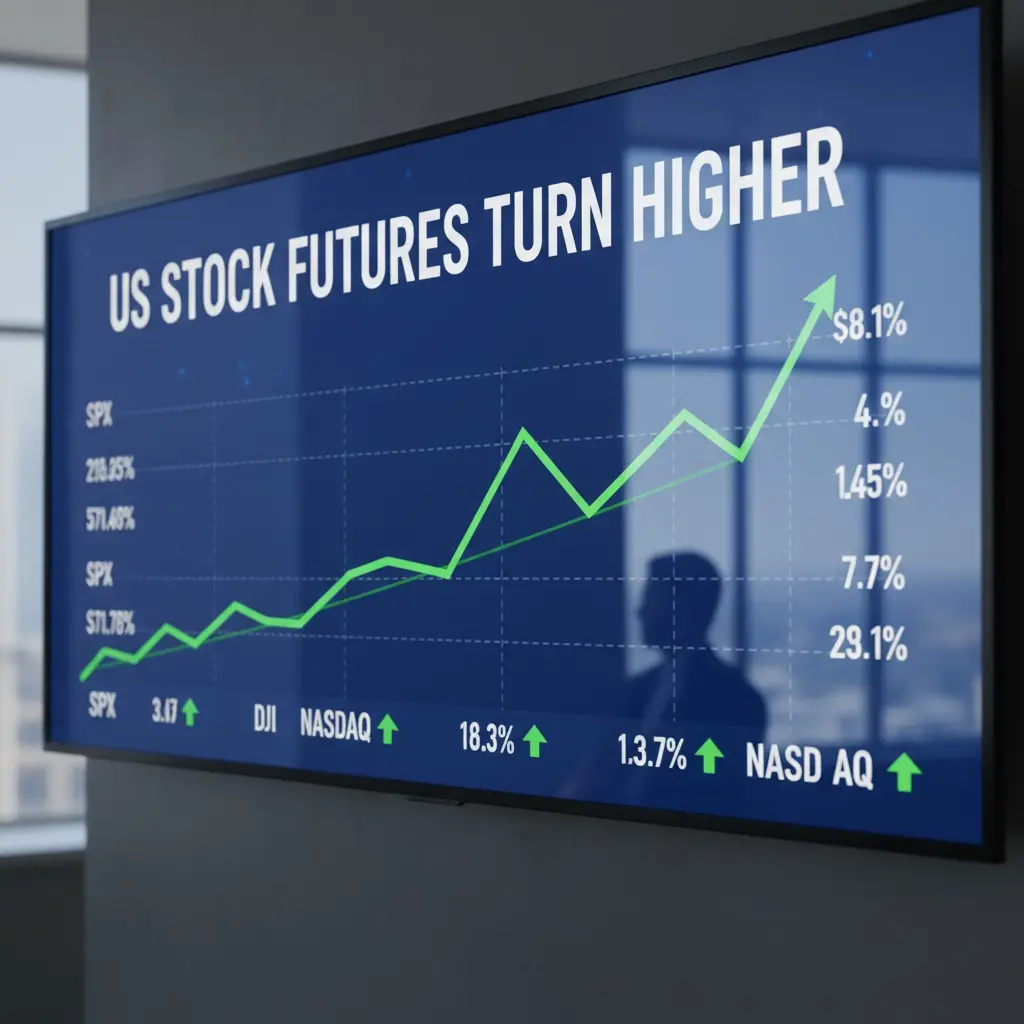
Before the opening bell, the market has already shown its hand — futures flipping green is not optimism, it’s positioning.
But let’s cut through the surface:
👉 Is this real accumulation… or a liquidity-driven setup?
Because in this market, not every rally is built to sustain — some are engineered to trap late participants.
📊 S&P 500 and Nasdaq futures pushing higher signals one thing:
Capital is stepping back into risk — but likely tactically, not structurally.
And when institutions move early, they’re not chasing price…
They’re preparing for reaction.
🧠 Macro Len
BTC1,77%
ETH2,82%
post-image
  • Reward
  • 1
  • Repost
  • Share
dragon_fly2vip:
LFG 🔥
#USStockFuturesTurnHigher
Pre-Market Signal or Smart Money Setup? ⚡📊
Before the opening bell even rings, the market has already started making decisions. US stock futures flipping green isn’t just a color change on the screen — it’s a shift in positioning, expectations, and short-term psychology.
But here’s the real question:
Is this strength conviction-driven… or liquidity-driven?
Because not every bounce is built to last.
Right now, futures tied to the S&P 500 and Nasdaq are pushing higher, suggesting that institutions are stepping back into risk — at least tactically. After days of hesita
BTC1,77%
ETH2,82%
post-image
post-image
  • Reward
  • 8
  • Repost
  • Share
CryptoEyevip:
2026 GOGOGO 👊
View More
#USStockFuturesTurnHigher
What Does “US Stock Futures Turn Higher” Mean?
When US stock futures — tied to the Dow Jones Industrial Average, S&P 500, and Nasdaq Composite — move higher before the market opens, it signals improving institutional sentiment and expectations of buying pressure in the upcoming session, which often leads to a broader risk-on environment across global markets.
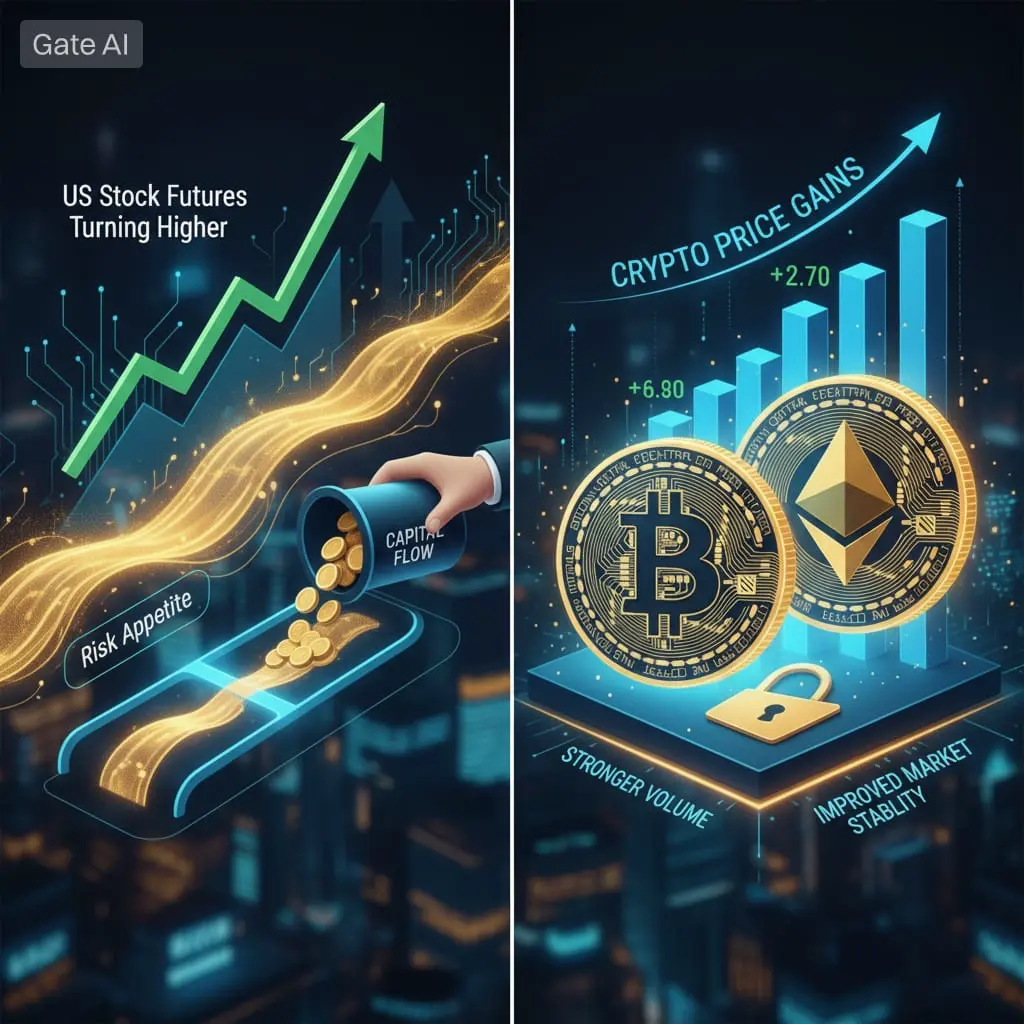
Because futures trade nearly 24/7, they act as an early indicator of capital flow, liquidity direction, and positioning by large players, making them highly relevant for crypto traders.
Why Futures Moving Higher
ETH2,82%
BTC1,77%
post-image
post-image
  • Reward
  • 16
  • Repost
  • Share
ybaservip:
To The Moon 🌕
View More
#USStockFuturesTurnHigher
Market Pulse: US Futures Flip Green as Sentiment Shifts 📈🇺🇸
The opening bell is still hours away, but the pre-market data is already telling a compelling story. US stock futures have officially turned higher, reclaiming lost ground and injecting a fresh wave of optimism into global risk assets. This pivot suggests that the "dip-buying" appetite remains resilient, even as the macro landscape continues to evolve.
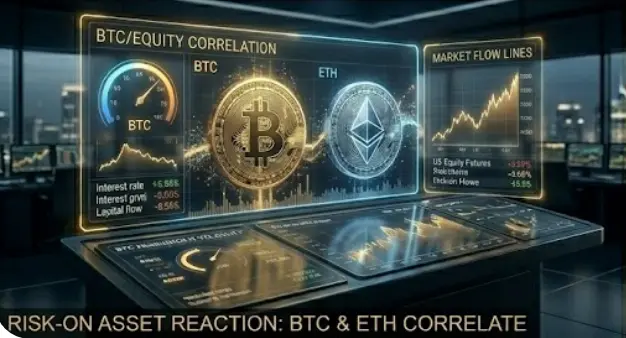
For the crypto community in the Square, this is a significant "Risk-On" signal. We know that $BTC and $ETH often move in lockstep with high-growth equities
BTC1,77%
ETH2,82%
GT-0,3%
post-image
post-image
  • Reward
  • 5
  • Repost
  • Share
ybaservip:
Ape In 🚀
View More
🌟 US Stock Futures Turn Higher — Market Insight
by Dragon Fly Official
#USStockFuturesTurnHigher
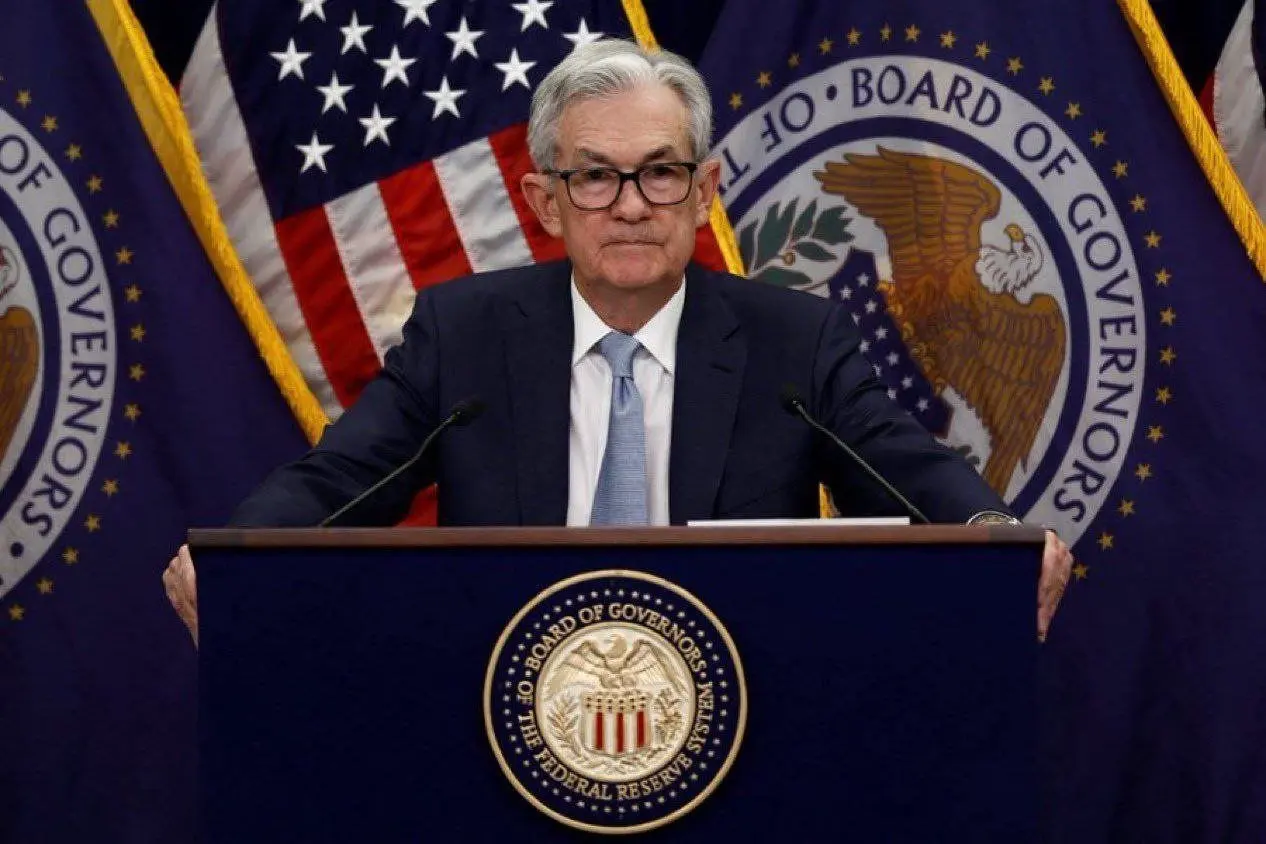
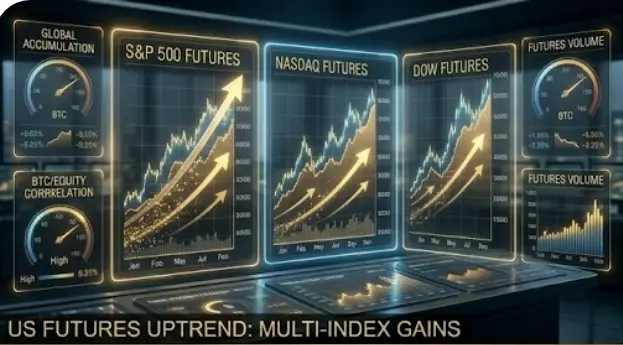
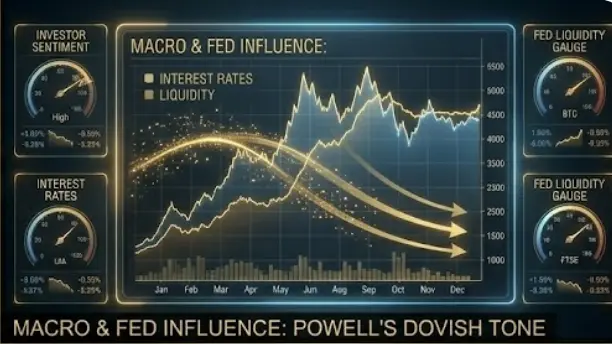
US stock futures have shown strong upward movement today, signaling a potential continuation of risk-on sentiment ahead of the regular trading session. Futures for the S&P 500, Nasdaq, and Dow Jones are all trading higher, reflecting renewed investor confidence following Powell’s dovish tone and easing rate hike expectations.
This upward shift in futures markets is noteworthy for several reasons:
1️⃣ Macro Stability: Powell’s recent comments on holding rates steady and stable inflation expectati
BTC1,77%
ETH2,82%
post-image
post-image
post-image
post-image
  • Reward
  • 7
  • Repost
  • Share
ybaservip:
2026 GOGOGO 👊
View More
The latest data from the US labor market provides critical information that will reshape the pace of economic recovery and risk appetite in financial markets. According to the US Department of Labor's JOLTS (Job Openings and Labor Turnover Survey) data, the number of job openings reached 6,882,000 as of February 2026. Analysts had expected 6,920,000, compared to 6,950,000 the previous month.
These figures indicate a slight slowdown in labor demand. The decline in job openings suggests that employers are cautious about creating new positions and that vulnerabilities persist in the labor market.
BTC1,77%
ETH2,82%
User_anyvip
The latest data from the US labor market provides critical information that will reshape the pace of economic recovery and risk appetite in financial markets. According to the US Department of Labor's JOLTS (Job Openings and Labor Turnover Survey) data, the number of job openings reached 6,882,000 as of February 2026. Analysts had expected 6,920,000, compared to 6,950,000 the previous month.
These figures indicate a slight slowdown in labor demand. The decline in job openings suggests that employers are cautious about creating new positions and that vulnerabilities persist in the labor market. In particular, continued high inflation and uncertainty surrounding interest rate policies in the US are limiting the pace of hiring by employers.
For markets, this data carries several important signals: Firstly, this slowdown in the labor market is being closely watched in terms of the Federal Reserve's (Fed) interest rate decisions. Weaker labor demand could reduce pressure against interest rate hikes in the short term and support a shift towards riskier assets. Therefore, a short-term rise in cryptocurrencies and other risky assets may be observed immediately following the release of the JOLTS data.
From a cryptocurrency perspective, the slowdown in the labor market creates expectations of easing liquidity. The slowdown in interest rate hikes could encourage investors to take on more risk, creating a supportive environment for the prices of major crypto assets like Bitcoin and Ethereum. However, these movements are generally short-term reactions, and markets continue to react sensitively to macroeconomic indicators and Fed statements.
In addition, the cautious picture in the labor market could increase volatility in stock and technology-heavy indices. The impact of cost pressures and slowing hiring, particularly on growth-oriented companies, could lead to short-term fluctuations.
In summary, the JOLTS data shows that there are still vulnerabilities in the US labor market. The decrease in the number of open jobs may have a positive impact on risky assets and cryptocurrencies in the short term. However, in the medium and long term, markets will continue to be guided by economic growth, interest rate policies, and inflation data. The key message for investors to note is that while the slowdown in the labor market may offer short-term support, macroeconomic risks remain.
#PowellDovishRemarksReviveRateCutHopes
#USStockFuturesTurnHigher
#CreatorLeaderboard
repost-content-media
  • Reward
  • 11
  • Repost
  • Share
Northwindvip:
2026 GOGOGO 👊
View More
The latest data from the US labor market provides critical information that will reshape the pace of economic recovery and risk appetite in financial markets. According to the US Department of Labor's JOLTS (Job Openings and Labor Turnover Survey) data, the number of job openings reached 6,882,000 as of February 2026. Analysts had expected 6,920,000, compared to 6,950,000 the previous month.
These figures indicate a slight slowdown in labor demand. The decline in job openings suggests that employers are cautious about creating new positions and that vulnerabilities persist in the labor market.
BTC1,77%
ETH2,82%
post-image
post-image
post-image
  • Reward
  • 11
  • Repost
  • Share
ybaservip:
2026 GOGOGO 👊
View More
#USStockFuturesTurnHigher
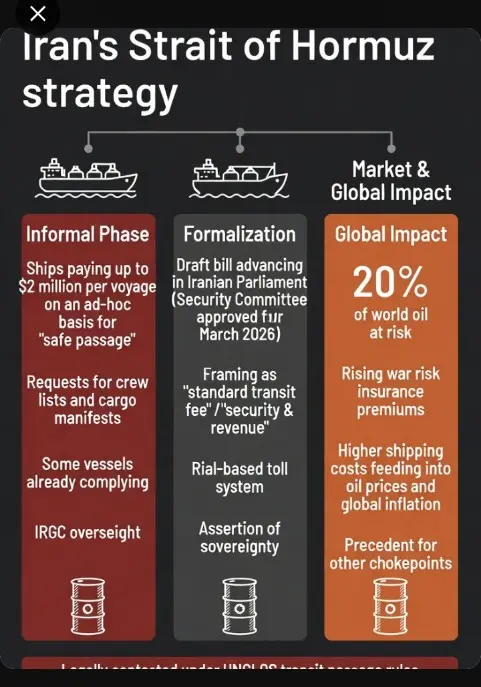
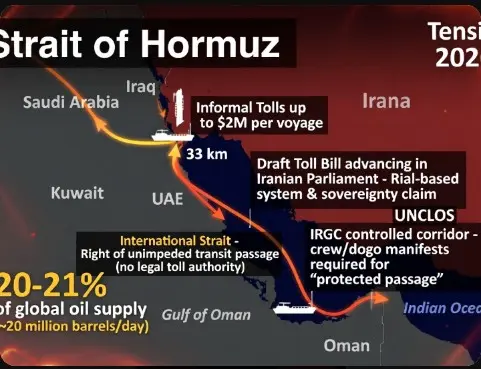
Iran has begun charging transit fees of up to two million dollars per voyage on select commercial vessels moving through the Strait of Hormuz. What started as quiet, informal payments is now moving toward formal policy, with a draft bill advancing in parliament to codify a permanent toll system. Lawmakers are presenting it as a standard corridor fee. In reality, it represents a significant geopolitical shift centered on control of a critical global chokepoint.
The Strait of Hormuz is only about 33 kilometers wide at its narrowest point, yet roughly 20 to 21 percent o
BTC1,77%
ETH2,82%
BeautifulDayvip
#USStockFuturesTurnHigher
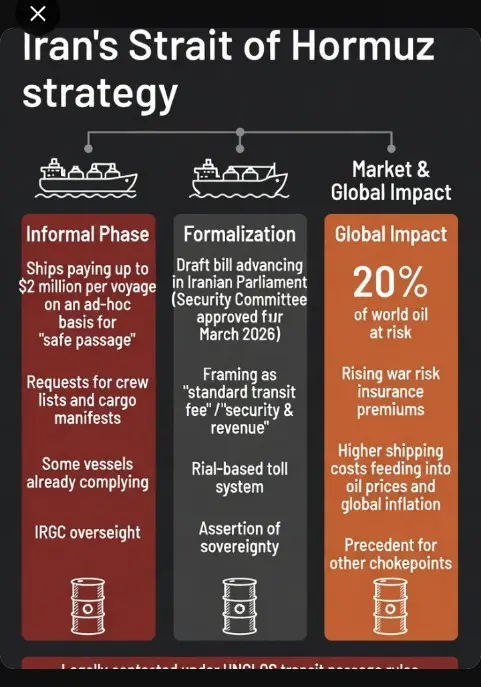
Iran has begun charging transit fees of up to two million dollars per voyage on select commercial vessels moving through the Strait of Hormuz. What started as quiet, informal payments is now moving toward formal policy, with a draft bill advancing in parliament to codify a permanent toll system. Lawmakers are presenting it as a standard corridor fee. In reality, it represents a significant geopolitical shift centered on control of a critical global chokepoint.
The Strait of Hormuz is only about 33 kilometers wide at its narrowest point, yet roughly 20 to 21 percent of the world’s oil supply passes through it each day. Crude exports from Saudi Arabia, Iraq, Kuwait, and the UAE, along with Qatar’s LNG shipments, all depend heavily on this route. While some alternative pipelines exist, they cannot absorb the majority of this volume. Hormuz remains structurally irreplaceable in the global energy system.
Under international maritime law, specifically the United Nations Convention on the Law of the Sea, this strait is classified as a transit passage. That designation guarantees free and continuous movement for all vessels, without interference or fees. On paper, Iran has no legal authority to impose tolls. In practice, however, enforcement is being shaped by power rather than legal interpretation.
Some vessels are already paying. Others are adjusting routes and behavior to minimize friction. At the same time, the Islamic Revolutionary Guard Corps is operating what has effectively become a controlled corridor. Ships seeking smoother passage are being asked to submit crew lists, cargo manifests, and voyage documentation in advance. In return, they receive what is described as protected transit. This creates a parallel system that functions like a gatekeeping mechanism layered on top of international shipping norms.
The timing is strategic. Iranian leadership has openly framed Hormuz as a leverage point that should continue to be used. Elevating that leverage into a formalized revenue mechanism turns geographic control into a recurring economic and political tool.
The market impact is immediate and far-reaching. War risk insurance premiums for tankers in the region have already been rising. Adding a potential two-million-dollar transit cost, even if applied inconsistently, increases baseline shipping expenses. Those costs feed directly into oil prices, and from there into fuel, manufacturing, and global supply chains. In an environment where inflation expectations are already fragile, this introduces a supply-side pressure that central banks have limited ability to offset.
For energy markets, the situation creates both opportunity and instability. Crude prices have clear upside risk, but with a wide uncertainty range. If tolls become formalized and broadly enforced, they effectively become a permanent cost embedded in global energy pricing. If tensions escalate into military confrontation, the risk shifts from higher costs to outright disruption or closure, which historically produces extreme price spikes.
From a crypto perspective, the effects run along two tracks. In the short term, rising geopolitical risk typically drives risk-off behavior, which can pressure assets like Bitcoin and Ethereum alongside equities. In the longer term, sustained instability in critical global systems tends to strengthen the case for decentralized financial alternatives. If energy trade becomes more fragmented, if dollar-based settlement faces increasing friction, or if trust in existing financial infrastructure weakens, the structural narrative for crypto assets becomes stronger.
The most important dimension may be precedent. If a toll system in Hormuz is successfully established and sustained without meaningful international pushback, it signals that control over strategic waterways can be monetized regardless of legal frameworks. That has implications far beyond this single strait. Other chokepoints around the world could follow a similar path, fundamentally reshaping the assumptions behind global trade.
The situation is still evolving. The legislation is not yet fully enacted, and enforcement remains partly informal. But the direction is clear. Markets are already beginning to price in the risk.
Watch crude benchmarks, tanker shipping rates, and war risk insurance spreads closely. Together, they will reveal whether this emerging system is becoming a lasting feature of the global economy or remains a temporary distortion.
repost-content-media
  • Reward
  • 2
  • Repost
  • Share
world_onedayvip:
LFG 🔥
View More
#USStockFuturesTurnHigher
Iran has begun charging transit fees of up to two million dollars per voyage on select commercial vessels moving through the Strait of Hormuz. What started as quiet, informal payments is now moving toward formal policy, with a draft bill advancing in parliament to codify a permanent toll system. Lawmakers are presenting it as a standard corridor fee. In reality, it represents a significant geopolitical shift centered on control of a critical global chokepoint.
The Strait of Hormuz is only about 33 kilometers wide at its narrowest point, yet roughly 20 to 21 percent o
BTC1,77%
ETH2,82%
post-image
post-image
  • Reward
  • 2
  • Repost
  • Share
discoveryvip:
To The Moon 🌕
View More
#USStockFuturesTurnHigher
📈 #USStockFuturesTurnHigher: Optimism Returns to Markets
US stock futures are moving higher, signaling a positive shift in market sentiment ahead of the trading session. This upward movement often reflects growing investor confidence, driven by expectations around economic data, corporate performance, or supportive macro signals.
When futures trend upward, it sets the tone for broader markets, influencing not only equities but also risk assets like cryptocurrencies. A strong start in traditional markets can encourage capital flow into higher-risk opportunities, crea
post-image
  • Reward
  • Comment
  • Repost
  • Share
Load More