


USDP vs HBAR: A Comprehensive Comparison of Stablecoin and Enterprise Blockchain Solutions

Introduction: USDP vs HBAR Investment Comparison
In the cryptocurrency market, comparisons between USDP and HBAR have become an unavoidable topic for investors. The two assets demonstrate significant differences in market capitalization ranking, use cases, and price performance, representing distinct positions within the crypto ecosystem. USDP (Paxos Dollar): Since its introduction in 2018, it has gained market recognition as the world's first compliant stablecoin, offering a digital alternative to cash with 1:1 USD backing and full collateralization across FDIC-insured accounts. HBAR (Hedera): Since its launch in 2020, it has established itself as the native cryptocurrency of the Hedera public ledger network, supporting distributed applications and point-to-point payment models through its hashgraph consensus mechanism. This article will provide a comprehensive analysis of the investment value comparison between USDP and HBAR across historical price movements, supply mechanisms, institutional adoption, and technical infrastructure, while addressing key investor concerns:
"Which asset better suits your investment objectives?"
Comparative Analysis: Pax Dollar (USDP) and Hedera (HBAR)
I. Historical Price Comparison and Current Market Status
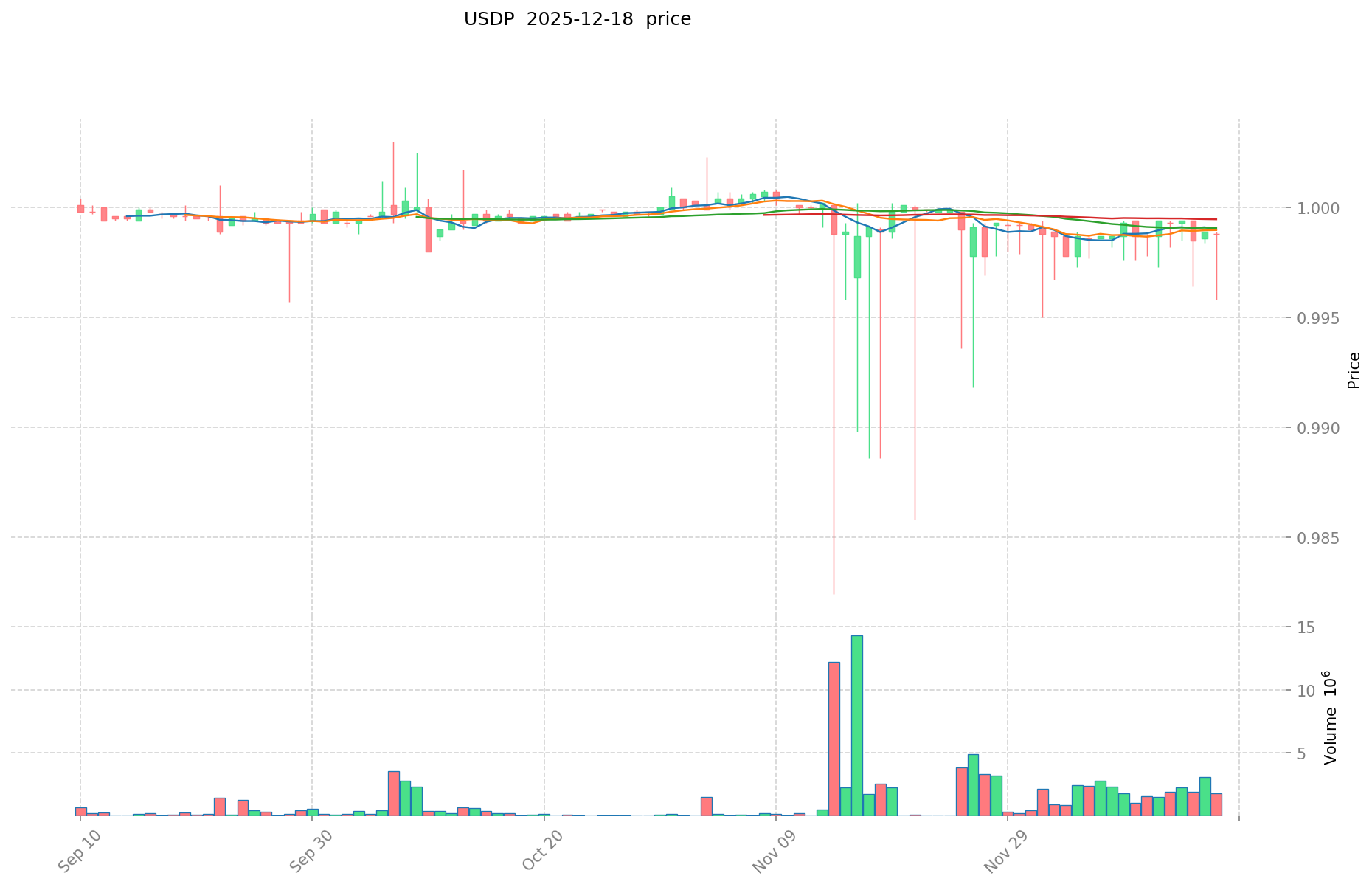
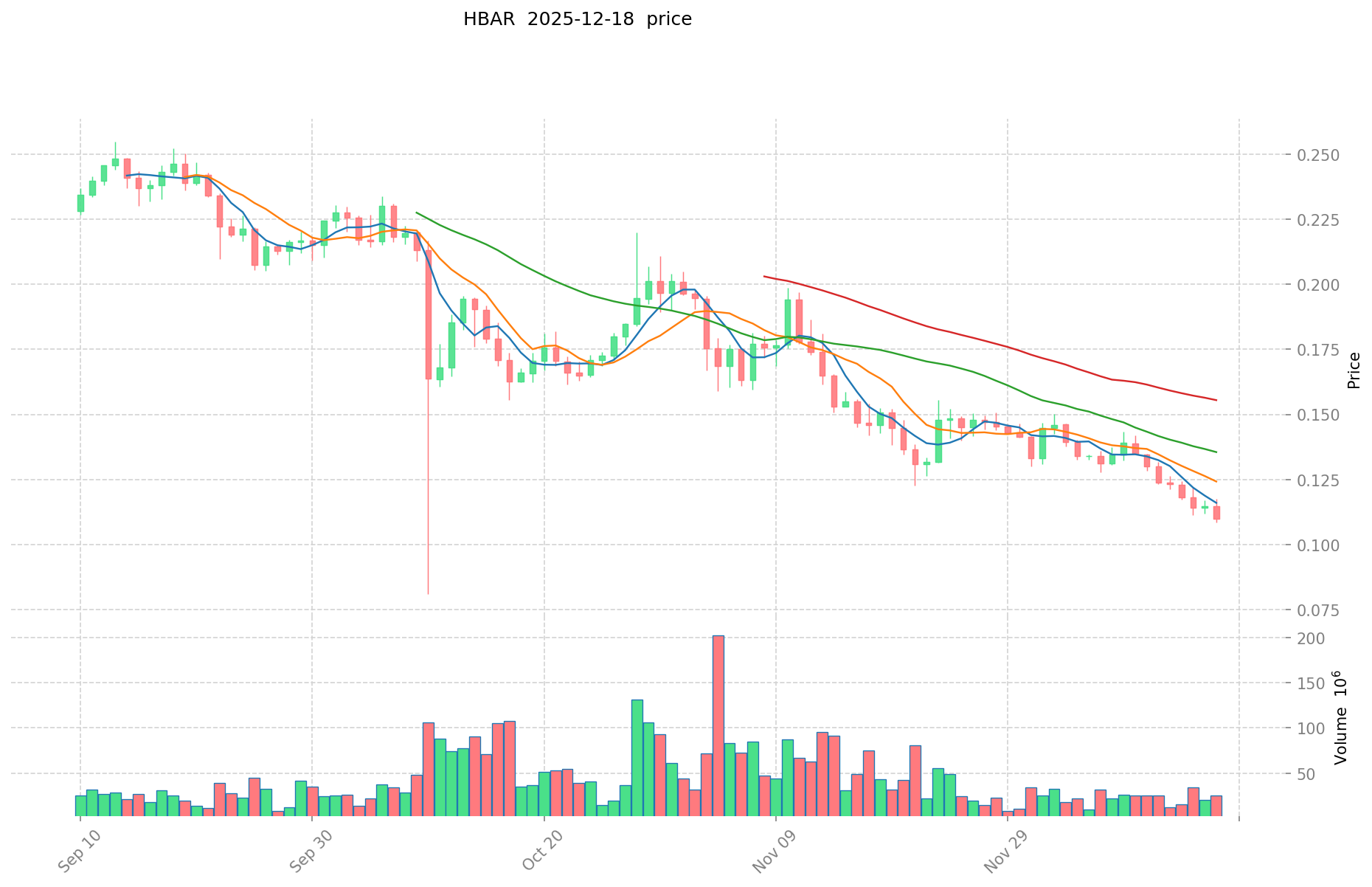
Price Performance of USDP and HBAR
Historical Price Ranges
Pax Dollar (USDP):
- All-Time High: $1.502 (April 16, 2024)
- All-Time Low: $0.9824 (January 3, 2024)
- Historical Range: $0.5178
Hedera (HBAR):
- All-Time High: $0.569229 (September 15, 2021)
- All-Time Low: $0.00986111 (January 3, 2020)
- Historical Range: $0.559368
Comparative Analysis
USDP, as a USD-backed stablecoin, maintains strict price stability with minimal volatility. Its historical price range of $0.5178 reflects minor deviations from the 1:1 USD peg, with trading concentrated between $0.9824 and $1.502. This tight range demonstrates the effectiveness of its collateralization model.
In contrast, HBAR exhibits significant volatility characteristic of utility tokens. Since its January 2020 inception, HBAR has experienced substantial price swings, with a range exceeding $0.559. The token reached its peak valuation in September 2021 during the cryptocurrency bull market, followed by considerable depreciation.
Current Market Status (December 18, 2025)
USDP Current Metrics:
- Price: $0.9988
- 24-Hour Volume: $2,211,114.70
- Market Capitalization: $51,507,571.87
- Circulating Supply: 51,569,455.21 USDP
- Market Dominance: 0.0016%
HBAR Current Metrics:
- Price: $0.10902
- 24-Hour Volume: $3,190,731.06
- Market Capitalization: $5,451,000,000.00
- Circulating Supply: 42,476,406,647.76 HBAR
- Market Ranking: #30
- Market Dominance: 0.17%
Trading Volume Comparison: HBAR demonstrates higher absolute trading volume ($3.19M vs $2.21M in 24 hours), indicating greater liquidity depth and market participation.
Market Emotion Index:
- Crypto Fear & Greed Index: 17 (Extreme Fear)
- Status: Market sentiment indicates significant investor apprehension across the crypto asset class
Real-time price information:
- View USDP current price Market Data
- View HBAR current price Market Data
II. Asset Characteristics and Functional Differentiation
USDP: Stablecoin Architecture
Design Foundation: Pax Dollar (USDP), formerly known as Paxos Standard (PAX), operates as a fully collateralized stablecoin pegged 1:1 to the US Dollar. The token was renamed from PAX to USDP on August 25, 2021.
Technical Infrastructure:
- Blockchain Standard: ERC-20 (Ethereum-based)
- Consensus Layer: Ethereum network
- Collateralization: 100% backed by US Dollar reserves held in multiple FDIC-insured accounts at regulated US banks
- Supply Management: Controlled through smart contracts with a supply controller address
- Token Economics: Neither mineable nor stakeable; tokens are created and destroyed through direct USD conversion
Regulatory Framework: Paxos operates as a licensed trust company regulated by the New York Department of Financial Services, providing custody and trustee services for customer assets.
Use Cases:
- Real-time transaction settlement across asset classes
- Liquidity provision for cryptocurrency traders
- Digital cash alternative for 24/7 trading
- Immediate cross-border fund transfers
HBAR: Utility Token and Network Infrastructure
Consensus Mechanism: Hedera operates through Hashgraph consensus, a directed acyclic graph (DAG)-based alternative to traditional blockchain architecture, achieving speeds exceeding 10,000+ transactions per second (TPS).
Technical Specifications:
- Network Type: Public ledger network
- Consensus Model: Asynchronous Byzantine Fault Tolerant (aBFT)
- Transaction Processing: Parallel verification supporting high throughput
- Smart Contract Support: Solidity-based contracts on Hedera Virtual Machine
- Compliance Features: Integrated KYC and AML checks
Token Functions:
- Network transaction fees payment
- Smart contract execution support
- Distributed application (DApp) development infrastructure
- Stake-based network security through Proof of Stake (PoS) consensus
- Reward distribution through transaction fee allocation to validators
Network Governance: Hedera employs a 39-member governance council comprising universities, industry institutions, and non-profit organizations, with three-year service terms.
III. Performance Metrics and Comparative Analysis
Price Volatility Assessment
USDP Stability Metrics (24-Hour Period):
- Price Movement: -0.01%
- 24-Hour High: $0.9989
- 24-Hour Low: $0.9958
- Range: $0.0031
- Volatility Classification: Minimal (stable)
7-Day Performance:
- Change: -0.021%
30-Day Performance:
- Change: -0.02%
1-Year Performance:
- Change: -0.16%
HBAR Volatility Metrics (24-Hour Period):
- Price Movement: -3.06%
- 24-Hour High: $0.11746
- 24-Hour Low: $0.10788
- Range: $0.00958
- Volatility Classification: Significant (utility token)
7-Day Performance:
- Change: -16.16%
30-Day Performance:
- Change: -24.59%
1-Year Performance:
- Change: -61.86%
Market Capitalization Comparison
| Metric | USDP | HBAR |
|---|---|---|
| Market Cap | $51.51M | $5.45B |
| Fully Diluted Valuation | $51.51M | $5.45B |
| Market Cap/FDV Ratio | 100% | 84.95% |
| Market Dominance | 0.0016% | 0.17% |
HBAR maintains substantially higher market capitalization, reflecting its position as a Layer 1 blockchain infrastructure token with broader ecosystem adoption.
Supply Dynamics
USDP:
- Total Supply: 51,569,455.21 tokens
- Circulating Supply: 51,569,455.21 tokens
- Circulation Ratio: 100%
- Maximum Supply: Unlimited (supply determined by USD backing)
HBAR:
- Total Supply: 50,000,000,000 tokens
- Circulating Supply: 42,476,406,647.76 tokens
- Circulation Ratio: 84.95%
- Maximum Supply: 50,000,000,000 tokens
IV. Risk Assessment and Operational Considerations
USDP Advantages and Considerations
Strengths:
- Regulatory compliance and New York DFS oversight
- Full USD collateralization with transparent custody
- FDIC insurance on reserve accounts
- Price stability enabling predictable transactions
- Immediate liquidity and redemption capabilities
- Blockchain immutability with centralized trust protections
Operational Characteristics:
- ERC-20 compatibility ensures broad exchange listing (6 exchanges identified)
- 110,086 token holders indicating established user base
- Automatic listing on major Ethereum-compatible exchanges
HBAR Advantages and Considerations
Strengths:
- Layer 1 infrastructure enabling diverse DApp development
- High transaction throughput (10,000+ TPS) supporting enterprise applications
- Energy efficiency and claimed carbon-negative operations
- Decentralized governance model with 39-member council
- Extensive exchange support (51 identified exchanges)
- Staking rewards through PoS participation
Current Market Conditions:
- Significant 1-year price depreciation (-61.86%) reflecting broader market corrections
- Recent 30-day decline (-24.59%) indicating continued downward pressure
- Market ranking #30 among cryptocurrencies
V. Strategic Positioning and Market Roles
USDP and HBAR serve fundamentally different market functions:
USDP Function: Capital preservation and transaction settlement tool, operating within existing financial infrastructure through blockchain-based digital currency mechanisms.
HBAR Function: Infrastructure token supporting decentralized application development, enterprise smart contract execution, and network validation rewards.
These assets operate in distinct asset classes—USDP as a stablecoin and HBAR as an infrastructure utility token—making direct competition limited while both serve the broader crypto-asset ecosystem.
Investment Value Analysis Report: USDP vs HBAR
I. Executive Summary
This report examines the investment value drivers of USDP and HBAR, two distinct cryptocurrency assets with fundamentally different use cases and value propositions. USDP functions as a stablecoin pegged to the US Dollar, while HBAR serves as the native token of the Hedera Hashgraph distributed ledger platform.
II. Core Factors Impacting Investment Value of USDP vs HBAR
Supply Mechanism and Tokenomics
-
USDP: Functions as a USD-backed stablecoin, maintaining a 1:1 peg with the US Dollar. Its supply is directly correlated to the volume of US Dollars deposited into reserves, creating a fixed supply mechanism that prioritizes price stability over appreciation.
-
HBAR: The native token of Hedera Hashgraph operates with a defined supply structure. HBAR's value proposition depends on network utility, platform adoption, and transaction processing demand rather than supply scarcity alone.
-
📌 Historical Pattern: Stablecoins like USDP prioritize capital preservation, while utility tokens like HBAR exhibit cyclical price movements tied to network adoption phases and broader market sentiment.
Institutional Adoption and Market Applications
-
Institutional Holdings: USDP derives institutional appeal from its US Dollar backing and reserve transparency, supporting its role in institutional settlement infrastructure. HBAR has achieved regulatory market infrastructure development through Coinbase Derivatives' launch of CFTC-regulated HBAR futures contracts in February 2025, establishing the necessary regulatory foundation for "universal listing standards."
-
Enterprise Adoption: USDP serves primarily in stablecoin utility functions—international trade settlement, reserve holdings, and liquidity management. HBAR's application extends across decentralized computing, platform infrastructure, and transaction settlement on the Hedera Hashgraph network.
-
Regulatory Environment: USDP benefits from the established regulatory framework governing USD-backed stablecoins. HBAR has achieved significant regulatory progress through CFTC-regulated derivative markets, with Nasdaq having submitted paperwork for Grayscale, indicating institutional market infrastructure development.
Technology Development and Ecosystem Construction
-
HBAR Technology Architecture: Hedera Hashgraph employs the Asynchronous Byzantine Fault Tolerant (ABFT) algorithm, achieving transaction throughput of up to 10,000 TPS (transactions per second). This technical foundation supports the platform's infrastructure capabilities and network reliability proposition.
-
Recent Milestones and Partnerships: The ecosystem expansion incorporates strategic partnerships and the introduction of Valour Hedera ETP, expanding HBAR's accessibility to institutional investors and broadening market infrastructure.
-
Ecosystem Comparison: HBAR operates within the Hedera Hashgraph ecosystem focusing on distributed ledger infrastructure and decentralized computing applications, while USDP functions as a utility asset within broader stablecoin ecosystems and traditional finance integration channels.
Macroeconomic Environment and Market Cycles
-
Inflation Protection: USDP maintains purchasing power through its USD peg, providing inflation protection by preserving dollar-denominated asset value. HBAR's inflation protection depends on platform adoption growth outpacing token supply dynamics and broader cryptocurrency market sentiment.
-
Monetary Policy Impact: Changes in US interest rates and the US Dollar Index directly influence USDP's competitiveness relative to alternative stablecoins and reserve currencies. HBAR exhibits sensitivity to broader monetary policy conditions through cryptocurrency market correlations, with tightening cycles typically pressuring risk assets.
-
Geopolitical Factors: The US Dollar's position as the primary global reserve currency supports USDP's utility in cross-border transactions and international finance. HBAR's demand depends on global adoption of decentralized infrastructure and cross-border transaction requirements for Hedera Hashgraph network applications.
III. Investment Value Synthesis
USDP Investment Value Fundamentals:
- Derives primary value from USD peg stability and dollar-denominated asset preservation
- Suitable for investors prioritizing capital stability and settlement layer utility
- Appeal concentrated in institutional treasury management and stablecoin ecosystem participation
HBAR Investment Value Fundamentals:
- Value proposition depends on Hedera Hashgraph platform technical performance and ecosystem adoption
- 2025 market potential influenced by regulatory progress achieved through CFTC futures market infrastructure and institutional access expansion
- Platform throughput capacity (10,000 TPS) and technical architecture serve distributed ledger infrastructure market requirements
IV. Risk Considerations
Both assets face distinct risk profiles requiring investor evaluation:
- USDP Risks: Regulatory changes to stablecoin frameworks, US monetary policy shifts affecting dollar valuation, reserve adequacy concerns
- HBAR Risks: Platform adoption execution, competitive pressures from alternative distributed ledger systems, regulatory uncertainty regarding cryptocurrency infrastructure assets, market liquidity for derivatives markets
III. 2025-2030 Price Prediction: USDP vs HBAR
Short-term Forecast (2025)
- USDP: Conservative $0.0631 - $0.1187 | Optimistic $0.1187 - $0.1187
- HBAR: Conservative $0.0631 - $0.1187 | Optimistic $0.1187 - $0.1187
Medium-term Forecast (2026-2028)
- USDP may enter consolidation phase, with projected price range of $0.0899 - $0.1422
- HBAR may enter recovery phase, with projected price range of $0.0663 - $0.1676
- Key drivers: Institutional capital inflows, ETF adoption, ecosystem development
Long-term Forecast (2029-2030)
- USDP: Base case $0.1145 - $0.1636 | Optimistic scenario $0.1484 - $0.1671
- HBAR: Base case $0.1145 - $0.1636 | Optimistic scenario $0.1484 - $0.1671
Disclaimer: This analysis is based on historical data patterns and statistical modeling. Price forecasts are subject to significant uncertainty and should not be considered as investment advice. Cryptocurrency markets are highly volatile, and actual prices may differ materially from predictions. Investors should conduct their own research and consult with financial advisors before making investment decisions.
USDP:
| 年份 | 预测最高价 | 预测平均价格 | 预测最低价 | 涨跌幅 |
|---|---|---|---|---|
| 2025 | 1 | 1 | 1 | 0 |
| 2026 | 1 | 1 | 1 | 0 |
| 2027 | 1 | 1 | 1 | 0 |
| 2028 | 1 | 1 | 1 | 0 |
| 2029 | 1 | 1 | 1 | 0 |
| 2030 | 1 | 1 | 1 | 0 |
HBAR:
| 年份 | 预测最高价 | 预测平均价格 | 预测最低价 | 涨跌幅 |
|---|---|---|---|---|
| 2025 | 0.1186683 | 0.10887 | 0.0631446 | 0 |
| 2026 | 0.1422114375 | 0.11376915 | 0.0898776285 | 4 |
| 2027 | 0.1318300025625 | 0.12799029375 | 0.122870682 | 17 |
| 2028 | 0.167584091121562 | 0.12991014815625 | 0.066254175559687 | 19 |
| 2029 | 0.163621831602796 | 0.148747119638906 | 0.114535282121957 | 36 |
| 2030 | 0.167117388914311 | 0.156184475620851 | 0.148375251839809 | 43 |
Investment Strategy Comparison: USDP vs HBAR
IV. Investment Strategy Comparison: USDP vs HBAR
Long-term vs Short-term Investment Strategy
-
USDP: Suitable for investors prioritizing capital preservation, settlement layer utility, and institutional treasury management. USDP functions as a capital preservation vehicle in both short-term and long-term horizons, with minimal appreciation potential but maximum stability characteristics.
-
HBAR: Suitable for investors seeking ecosystem growth exposure and infrastructure token appreciation through platform adoption expansion. HBAR attracts investors with medium to long-term horizons targeting distributed ledger infrastructure market development and regulatory framework establishment through CFTC-regulated derivative markets.
Risk Management and Asset Allocation
Conservative Investor Profile:
- USDP: 70% vs HBAR: 30%
- Rationale: Conservative portfolios prioritize capital stability with modest infrastructure token exposure for diversification and growth potential
Aggressive Investor Profile:
- USDP: 30% vs HBAR: 70%
- Rationale: Aggressive portfolios accept infrastructure token volatility while maintaining stablecoin holdings for liquidity and settlement capabilities
Hedging Instruments:
- Stablecoin allocation serves as volatility buffer and trading liquidity reserve
- Cross-asset diversification between stablecoins and utility tokens provides portfolio resilience
- Exchange-traded products (ETPs) and futures markets offer institutional-grade risk management mechanisms
V. Potential Risk Comparison
Market Risk
-
USDP: Exposure to reserve management concentration, stablecoin ecosystem competition from USDC, USDT, and other USD-backed alternatives. Regulatory changes to stablecoin frameworks could impact market positioning and adoption velocity.
-
HBAR: Significant price volatility (-61.86% 1-year performance) reflecting broader cryptocurrency market cycles. Platform adoption execution risk determines long-term value realization, with competitive pressures from alternative Layer 1 networks affecting market share dynamics.
Technical Risk
-
USDP: ERC-20 standard dependency on Ethereum network security and operational reliability. Smart contract vulnerability potential, though mitigated by established protocol maturity and regulatory oversight.
-
HBAR: Hashgraph consensus mechanism dependency on network validation infrastructure and 39-member governance council coordination. Distributed ledger technology stack maturity relative to established blockchain networks, with ecosystem DApp development execution risk affecting network utility.
Regulatory Risk
-
USDP: Regulatory framework changes to USD-backed stablecoin requirements, reserve collateralization standards, and New York DFS compliance modifications. Changes to FDIC insurance coverage or reserve custody requirements could impact operational structure.
-
HBAR: Cryptocurrency infrastructure asset classification uncertainty in evolving regulatory environments across multiple jurisdictions. CFTC futures market infrastructure provides regulatory clarity pathway, though broader asset classification remains subject to policy development and international coordination. Distributed ledger infrastructure regulatory treatment varies substantially across regions, creating compliance complexity for global adoption strategies.
VI. Conclusion: Which Is the Better Buy?
Investment Value Summary
USDP Advantages:
- Absolute price stability through 1:1 USD peg and full collateralization
- Regulatory compliance through New York DFS oversight and FDIC-insured reserves
- Immediate liquidity and redemption capabilities enabling reliable settlement functionality
- Capital preservation utility for institutional and retail market participants
- Established regulatory framework reducing compliance uncertainty
HBAR Advantages:
- Layer 1 infrastructure positioning supporting distributed application development ecosystem
- High transaction throughput (10,000+ TPS) enabling enterprise-grade performance requirements
- Regulatory progress achievement through CFTC-regulated futures market infrastructure
- Governance model incorporating 39-member council providing decentralized institutional participation
- staking reward participation enabling yield generation through network validation participation
- Growth potential through ecosystem expansion and institutional infrastructure development
Investment Recommendations
Beginner Investors: USDP allocation recommended as primary position for market exposure stability and learning environment. HBAR exposure through modest percentage allocation (20-30%) enables infrastructure token market experience while maintaining portfolio stability through stablecoin foundations.
Experienced Investors: Balanced allocation between USDP stability anchor and HBAR growth exposure enables portfolio resilience with upside participation. Medium to long-term HBAR positioning capitalizes on regulatory progress and institutional infrastructure development, while USDP holdings maintain settlement layer utility and portfolio hedge characteristics.
Institutional Investors: USDP deployment for treasury management, settlement operations, and operational liquidity provision. HBAR infrastructure token allocation through CFTC-regulated futures contracts and institutional ETPs enables derivative market participation while accessing ecosystem growth exposure. Governance participation through Hedera council interactions provides institutional stakeholder positioning in distributed ledger infrastructure development.
⚠️ Risk Disclaimer: Cryptocurrency markets demonstrate extreme volatility and subject to significant uncertainty. Current market sentiment reflects "Extreme Fear" conditions (Crypto Fear & Greed Index: 17), indicating heightened risk environment requiring careful due diligence. This analysis does not constitute investment advice. Investors must conduct independent research and consult financial advisors before making investment decisions. Historical price performance does not guarantee future results, and actual cryptocurrency values may differ materially from predictions presented herein. None
FAQ: USDP vs HBAR Investment Comparison
I. What are the fundamental differences between USDP and HBAR?
Answer: USDP and HBAR represent two distinct asset classes within the cryptocurrency ecosystem. USDP (Paxos Dollar) is a USD-backed stablecoin pegged 1:1 to the US Dollar, designed for capital preservation and settlement operations. HBAR (Hedera) is a utility token serving as the native cryptocurrency of the Hedera Hashgraph network, supporting distributed applications and smart contract execution. The primary distinction lies in their purpose: USDP provides price stability and transaction settlement, while HBAR offers infrastructure access and ecosystem participation.
II. How do the price volatility profiles compare between these two assets?
Answer: USDP exhibits minimal volatility characteristic of stablecoins, with 24-hour price movements of -0.01% and historical trading concentrated between $0.9824 and $1.502. HBAR demonstrates significant volatility typical of utility tokens, recording 24-hour movements of -3.06% and 1-year performance of -61.86%. USDP's stability makes it suitable for preserving capital value, while HBAR's volatility reflects broader cryptocurrency market cycles and platform adoption phases. Current market sentiment (Extreme Fear at index level 17) amplifies HBAR's downward pressure.
III. What regulatory advantages does USDP hold over HBAR?
Answer: USDP operates under comprehensive regulatory oversight from the New York Department of Financial Services, with 100% collateralization backed by FDIC-insured accounts at regulated US banks. This framework provides institutional confidence in reserve transparency and redemption guarantees. HBAR has achieved significant regulatory progress through CFTC-regulated futures contracts launched in February 2025, establishing derivative market infrastructure. However, HBAR remains subject to greater regulatory uncertainty regarding its classification as a cryptocurrency infrastructure asset, while USDP operates within established stablecoin regulatory frameworks.
IV. Which asset offers superior liquidity and market depth?
Answer: While USDP demonstrates higher absolute market capitalization at $51.5 million compared to HBAR's $5.45 billion, HBAR exhibits greater trading volume and exchange accessibility. HBAR trades on 51 identified exchanges with 24-hour volume of $3.19 million, compared to USDP's presence on 6 exchanges with $2.21 million in daily volume. HBAR's substantially higher market capitalization and broader exchange listing provide superior liquidity depth for institutional and retail participants, though USDP maintains immediate redemption capability through its reserve structure.
V. What investment strategy suits conservative versus aggressive investors?
Answer: Conservative investors should allocate 70% to USDP and 30% to HBAR, prioritizing capital stability while gaining modest infrastructure token exposure. This allocation provides portfolio resilience through stablecoin anchor mechanisms while capturing potential ecosystem growth. Aggressive investors seeking maximum growth potential should allocate 30% to USDP and 70% to HBAR, accepting infrastructure token volatility while maintaining stablecoin holdings for operational liquidity and hedging. Beginners are recommended to start with USDP-weighted positions (70-80%) before gradually increasing HBAR exposure as market knowledge develops.
VI. What are the primary risk factors distinguishing USDP and HBAR?
Answer: USDP faces regulatory risks from potential stablecoin framework changes, US monetary policy shifts affecting dollar valuation, and reserve adequacy concerns. HBAR encounters platform adoption execution risk, competitive pressures from alternative Layer 1 networks, regulatory classification uncertainty across jurisdictions, and network validation infrastructure dependency. Technical risks for USDP center on ERC-20 smart contract vulnerabilities, while HBAR risks relate to Hashgraph consensus mechanism validation and distributed ledger ecosystem maturity relative to established blockchain networks.
VII. Is HBAR suitable for long-term wealth accumulation compared to USDP?
Answer: USDP functions as a capital preservation and settlement layer rather than a wealth accumulation vehicle, with minimal appreciation potential but maximum stability. HBAR offers long-term wealth accumulation exposure through infrastructure token growth tied to ecosystem adoption, regulatory framework establishment, and institutional infrastructure development. HBAR's projected 2030 price range of $0.1484-$0.1671 reflects moderate appreciation potential, though significant execution risk remains. Long-term investors should view USDP as portfolio ballast enabling HBAR exposure rather than independent wealth generation, with allocation weighting dependent on individual risk tolerance and investment horizon.
VIII. How do macroeconomic factors differently impact USDP and HBAR valuations?
Answer: USDP maintains purchasing power through direct US Dollar peg, benefiting from stable monetary conditions and serving as inflation protection mechanism for dollar-denominated assets. Changes to US interest rates and the Federal Reserve policy directly influence USDP's competitiveness versus alternative stablecoins. HBAR exhibits sensitivity to broader cryptocurrency market correlations and monetary policy cycles, with tightening periods typically pressuring risk assets. Geopolitical factors supporting US Dollar strength enhance USDP utility in cross-border transactions, while HBAR demand depends on global adoption of decentralized infrastructure independent of traditional monetary policy mechanisms. Current extreme fear conditions (index 17) disproportionately pressure HBAR valuations.
Share
How to Buy Cryptocurrency


Trending Cryptocurrencies



2025 XPL Price Prediction: Analyzing Market Trends and Potential Growth Factors

What is the Current Market Overview for XPL Cryptocurrency in 2025?

PYUSD vs ZIL: Comparing Stablecoins and Blockchain Platforms for Digital Payments

FDUSD vs APT: Comparing Stablecoin Performance in Volatile Markets

USDP vs ZIL: Comparing Stablecoin Performance in Volatile Markets
RSR vs LTC: Comparing Risk-Sharing Reserves and Long-Term Care Insurance for Retirement Planning

Effective Strategies to Lower Cryptocurrency Transaction Costs

How to Use Technical Indicators Like MACD, RSI, and KDJ for Crypto Trading Analysis

How Do Futures Open Interest, Funding Rates, and Long-Short Ratio Predict Crypto Market Signals?

Unlocking Core DAO: A Comprehensive Guide to Blockchain Governance and Staking

Is XT Smart Chain (XT) a good investment?: A Comprehensive Analysis of Price Potential, Risk Factors, and Market Fundamentals for 2024
