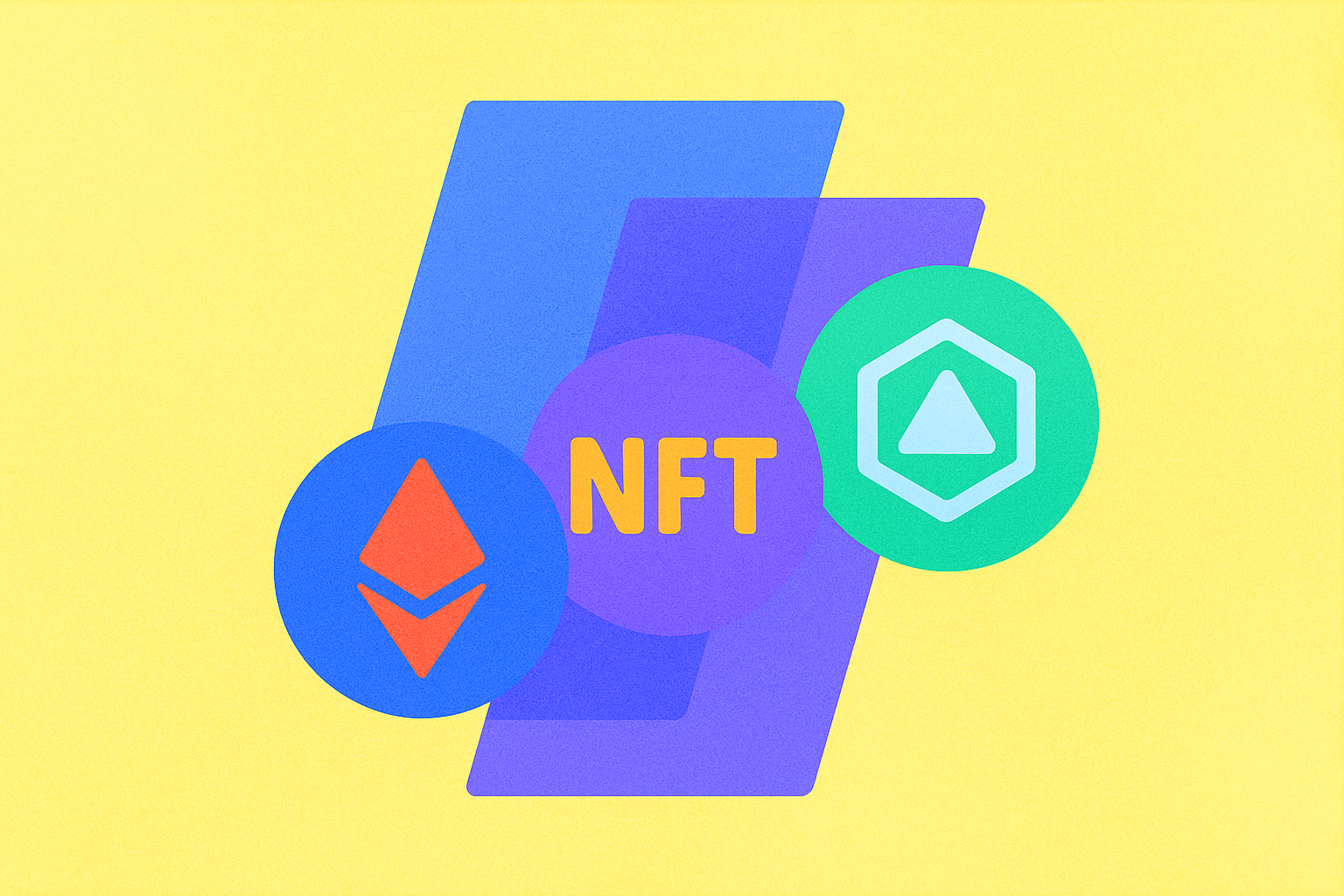
This comprehensive guide explores the top 10 most expensive NFTs ever sold worldwide, featuring record-breaking transactions from Beeple's $69.3 million collection to rare CryptoPunks commanding millions. The article examines the explosive growth of NFT marketplaces including OpenSea, Rarible, and SuperRare, demonstrating how blockchain technology democratizes digital asset ownership without intermediaries. Through detailed analysis of high-value NFT sales, creator backgrounds, and rarity factors, readers understand what drives NFT valuations in this speculative but rapidly expanding market. The guide covers essential platforms, investment considerations, and market prospects, providing both collectors and potential investors with actionable insights into digital art authenticity, scarcity, and community-driven value creation in the NFT ecosystem.
Overview of the NFT Market Scene
The non-fungible token (NFT) market has experienced remarkable growth in recent periods, transforming from a niche digital collectibles space into a mainstream phenomenon. Market activity for high-value NFTs has increased dramatically, with what was once the combined trading volume across multiple NFT marketplaces now being achieved on individual platforms.
Several major NFT marketplaces have demonstrated exceptional growth trajectories:
- Rarible experienced a 260% increase in activity, accounting for $23 million in trading volume, establishing itself as a premier platform for digital art and collectibles.
- SuperRare performed even better, recording a 322% growth in trading digital collectibles worth $32 million, cementing its position as a leading marketplace for high-end crypto art.
- Axie Marketplace, home to the popular blockchain game Axie Infinity, increased its turnover by 143%, reaching $2.9 million in animated NFT gaming assets.
- AtomicMarket currently ranks first among NFT marketplaces, recording nearly 600% growth and $2.2 million in trading volume, demonstrating the rising popularity of alternative blockchain platforms.
- OpenSea remains the top NFT marketplace in terms of total trading volume, achieving $94 million in the previous period with a 240% increase, solidifying its dominance in the NFT ecosystem.
Overall, through the combination of collectible NFTs and digital artworks, the NFT market capitalization has grown significantly from an estimated $338 million in 2020. This represents a massive 400% increase compared to 2019, indicating accelerating adoption and investor interest. While most NFT marketplaces are still powered by the Ethereum blockchain, non-fungible tokens are beginning to support other protocols as well. Among the leading alternatives are WAX, Waves, EOS, and FLOW.
WAX has emerged as a leader as an alternative to ETH thanks to AtomicMarket – an NFT marketplace aggregator sharing liquidity pools. WAX, which stands for Worldwide Asset eXchange, was developed specifically as a decentralized blockchain protocol for exchanging assets in the video game and entertainment industries. This specialized focus has allowed WAX to carve out a significant niche in the gaming NFT sector.
Consequently, the WAX token has even outpaced ETH in growth over recent periods, demonstrating strong market confidence in alternative blockchain solutions.
WAX has a somewhat complex tokenomics consisting of three types of tokens: WAXP, WAXE, and WAXG. WAXG serves as the governance token, while WAXE is an Ethereum-compatible utility token. WAXP functions as a bridge token for conversion to WAXE for staking purposes, creating a comprehensive ecosystem for NFT trading and asset management.
Fortunately, thanks to the MetaMask wallet and decentralized exchanges such as Uniswap, users can easily exchange ETH for WAX to participate in one of the six WAX-powered NFT marketplaces, lowering barriers to entry for new collectors.
Brief Overview of NFT Technology
Just as Decentralized Finance (DeFi) protocols mimic traditional banking financial products – borrowing and lending – NFTs similarly replicate the world of art galleries, shops, and museums, but without any costly and risky intermediaries. This disintermediation represents a fundamental shift in how digital assets are created, traded, and valued.
This is made possible through smart contracts, which originally emerged on the Ethereum blockchain. This type of programmable blockchain can serve a wide range of decentralized applications (dApps). In other words, NFT marketplaces are dApps that enable the entire NFT economy through direct connection between NFT creators and buyers. This significantly lowers market entry barriers for both parties, breaking down traditional gatekeeping mechanisms that have historically limited access to art markets.
NFTs themselves are a type of token – specifically ERC-721 standard – which are indivisible or non-fungible, hence their name. Their value derives from the certainty provided by blockchain technology that each NFT cannot be counterfeited or replicated. Moreover, the entire transaction history is identifiable and verifiable as a completely digital asset, whether it's artwork, music, video, animation, gaming assets, or other digital content.
Considering that more and more people value digital assets over physical ones – from books, games, and music to cryptocurrencies – it was predictable that the NFT market would experience explosive growth. The shift toward digital ownership reflects broader societal changes in how we perceive value and authenticity in the digital age.
Through the following compilation of the 11 most expensive NFTs sold, it becomes evident that these are highly speculative assets, similar to traditional artworks. This means that the fame of the NFT creator is a key factor determining their value. Additionally, their cultural potential also increases the likelihood of value appreciation over time, as certain pieces become iconic representations of digital art history.
Top 11 Most Expensive NFT Sales
On NFT exchanges, you can list your works for sale in three ways: as collections, unique pieces, or multiple editions. Therefore, we count collections as single or multiple NFT packages, rather than ranking only individual NFT pieces sold within collections. This approach provides a more comprehensive view of the highest-value NFT transactions.
Additional Note: The ranking is based on ETH prices at the time of sale, converted to USD for comparison purposes.
1. Beeple Collection – $69,346,250 Million USD
NFT Marketplace: Nifty Gateway
Creator: Mike Winkelmann, also known as Beeple, is a graphic designer and CGI creator from Charleston, South Carolina, who has become one of the most influential digital artists in the world.
Description: As evident from the collection, it's fitting that a professional artist would receive such a high price for 21 sci-fi/fantasy themed works. Beeple previously worked on marketing campaigns for major corporations such as SpaceX, Coca-Cola, Apple, Samsung, and others, bringing mainstream credibility to his digital art practice.
In addition to science-fiction themed works, an important factor increasing engagement in the campaign was the Crossroad collection, which originated during the presidential election period. It was a dynamic NFT that constantly changed its state depending on whether Trump lost or won the election, representing an innovative use of programmable art.
Beeple first gained fame on social media through #everydays – a concept in which he creates original artwork daily without exception. Furthermore, much attention was drawn to his political activism, particularly his anti-Trump stance, which resonated with many collectors.
Ultimately, his #everydays collection titled "EVERYDAYS: THE FIRST 5000 DAYS," comprising 5,000 days of digital artwork, sold for a record-breaking $69 million at the prestigious Christie's auction house on March 11, 2021. This was the first time a traditional auction house sold an NFT, marking a watershed moment for digital art legitimacy.
2. CryptoPunk #7804 NFT – $7.5 Million USD (4,200 ETH)
NFT Marketplace: Larva Labs
Creator: Larva Labs, headquartered in New York and led by software engineers Matt Hall and John Watkinson, who pioneered the concept of generative art on the blockchain.
CryptoPunks embodies 1980s nostalgia with its pixelated computer game aesthetic. A high level of artistic skill and attention to detail is definitely needed to meaningfully stand out in the collection of 10,000 CryptoPunks, each with unique combinations of attributes.
In addition to being male or female, all CryptoPunks are humanoid, though some can be aliens, apes, or even zombies. These special types add layers of rarity to the collection, creating a hierarchical value system among collectors.
The extremely high price of CryptoPunk #7804 can be attributed to its alien status. In the collection of 10,000 CryptoPunks, there are only 9 aliens total. As is well known, rarity in the art world translates to extraordinary value, and this scarcity principle applies powerfully in the NFT space.
NFT Marketplace: Valuables BY CENT
Creator: Jack Dorsey, entrepreneur, billionaire, founder and CEO of Twitter (now X), one of the largest social media platforms, and Square (now Block), a payment processor competing with PayPal.
The bidder for $2.5 million is Sina Estavi, CEO of Bridge Oracle, a tech entrepreneur with deep pockets and a keen interest in historic digital artifacts. The NFT deserving such an astronomical price (even not as a collection) is simply the first tweet ever created, reading "just setting up my twttr."
As such, it gained value as a memento of important technology history, forever preserved on the blockchain for future generations, but owned exclusively by the lucky winner of the ongoing auction. This represents the intersection of social media history and blockchain technology.
4. Rick and Morty Collection – $2.3 Million USD (1,300 ETH)
NFT Marketplace: Nifty Gateway
Creator: Justin Roiland, creator of the popular adult animated series Rick and Morty, which has achieved cult status among millennials and Gen Z audiences.
Description: While the artistic style may seem simpler compared to Beeple's CGI art, one cannot underestimate the cult popularity of Rick and Morty. The "Smintons" collection, which was a parody of the popular animated series The Simpsons, sold particularly well. Only true Rick and Morty fans would understand the nuances of such artistic expression and the meta-humor embedded in the work.
However, part of the proceeds from the collection went to a noble cause – helping the homeless in Los Angeles, adding philanthropic value to the artistic endeavor. In addition to NFTs, some of the works were sold as signed physical copies, creating a bridge between digital and physical art worlds.
5. Land in Axie Infinity – $1.6 Million USD (888.5 ETH)
NFT Marketplace: Axie Marketplace
Creator: Sky Mavis game studio, creators of the popular blockchain game Axie Infinity, which has pioneered the play-to-earn gaming model.
Description: The game is quite unique as it can utilize the tokenomics of various protocols, which translates into real money when tokens are exchanged for fiat currency. Axie Infinity is more elaborate than most blockchain games, featuring a cohesive world-building and art style that creates an immersive gaming experience.
The player is primarily concerned with building kingdoms and managing living creatures in a fantasy land called Lunacia. Of course, as any king knows, building a kingdom requires acquiring land, which serves as the foundation for economic activity within the game.
Considering that in the real world, such a sum could buy a luxury residence, it's safe to say that this lucky player is wealthy. The investment represents confidence in the future of virtual real estate and metaverse economies.
However, as evidenced by social media posts, the buyer treats these virtual land purchases as investments that will pay off over time, counting on the growing popularity of the game and the broader adoption of blockchain gaming.
6. CryptoPunk #6965 NFT – $1.44 Million USD (800 ETH)
NFT Marketplace: Larva Labs
Creator: Larva Labs, headquartered in New York and led by Matt Hall and John Watkinson, software engineers who created one of the earliest and most influential NFT projects.
Description: Rarity breeds demand, a principle that applies universally in collectibles markets. Similar to Bitcoin and its limited supply of 21 million coins, the same applies to CryptoPunks. This is a collection (not a game) of 10,000 pixelated characters that has been making headlines for numerous NFT sales over extended periods. Needless to say, each CryptoPunk is unique, from its expression and accessories to even its species classification.
These NFTs were among the first issued on the Ethereum blockchain in 2017, giving them historical significance as pioneers of the NFT movement. This particular piece was sold on February 19 for 800 ETH. However, it is now being offered for sale at nearly twice the price – 1,500 ETH, demonstrating the appreciation potential of rare digital collectibles.
7. CryptoPunk #4156 NFT – $1.17 Million USD (650 ETH)
NFT Marketplace: Larva Labs
Creator: Larva Labs, headquartered in New York and led by Matt Hall and John Watkinson, software engineers.
Description: Another of the 10,000 CryptoPunks sold, this one belongs to the ape class. The ape variants are among the rarer types in the collection, with only 24 ape punks existing out of the total 10,000. This scarcity factor, combined with the distinctive ape aesthetic featuring unique accessories and expressions, contributes significantly to its high valuation. The ape CryptoPunks have become particularly sought-after among collectors who appreciate their bold, distinctive appearance and their status as one of the rarest categories in this pioneering NFT collection.
8. CryptoPunk #2890 NFT – $1.09 Million USD (605 ETH)
NFT Marketplace: Larva Labs
Creator: Larva Labs, headquartered in New York and led by software engineers Matt Hall and John Watkinson.
Description: Another sold CryptoPunk, this one is part of the alien set. As mentioned earlier, aliens are the rarest type of CryptoPunk, with only 9 existing in the entire 10,000-piece collection. This extreme scarcity makes alien punks the most coveted and valuable category within the CryptoPunks ecosystem. CryptoPunk #2890 features the distinctive alien green skin tone along with unique accessories that further distinguish it from other punks. The alien variants have consistently commanded premium prices in the NFT market, representing the pinnacle of CryptoPunk collecting and serving as status symbols within the crypto art community.
9. Dragon CryptoKitty – $1.08 Million USD (600 ETH)
NFT Marketplace: CryptoKitties
Creator: Dapper Labs, a blockchain company located in Canada that has been instrumental in bringing NFTs to mainstream attention.
Description: Another blockchain-based game that captured the imagination of early crypto enthusiasts. This time it resembles the Tamagotchi craze from before the internet became mainstream, tapping into nostalgia while introducing innovative blockchain mechanics. The player collects and breeds digital crypto cats, each generating unique traits and appearance based on a complex set of algorithms that determine genetic inheritance.
Beyond collecting them, players can also breed their cats to randomly create new traits, known as "cattributes," which can range from common to extremely rare. This breeding mechanism creates a dynamic marketplace where players strategize to produce valuable offspring with desirable trait combinations.
Considering that cats are a fundamental element of internet culture, particularly on video sharing platforms where cat content consistently generates massive engagement, it's not surprising that a blockchain company chose this theme. The Dragon CryptoKitty represents one of the rarest and most sought-after variants, featuring the coveted dragon cattribute that makes it exceptionally valuable to collectors.
10. CryptoPunk #6487 NFT – $991,500 USD (550 ETH)
NFT Marketplace: Larva Labs
Creator: Larva Labs, headquartered in New York and led by Matt Hall and John Watkinson, software engineers.
Description: Another of the 10,000 CryptoPunks sold, this one is not only bald but also female, belonging to one of the 3,840 female punks available in the collection. Female CryptoPunks represent a significant portion of the collection, and while they are more common than aliens or apes, certain combinations of attributes can make individual female punks highly valuable. The bald trait, combined with other potential accessories and characteristics, creates a distinctive appearance that appeals to collectors seeking specific aesthetic combinations. The substantial price paid for this punk demonstrates that even more common types can command premium valuations when they possess desirable attribute combinations.
11. Hashmask #9939 – $747,797 USD (420 ETH)
NFT Marketplace: OpenSea
Creator: Suum Cuique Labs, headquartered in Zurich, Switzerland, bringing European artistic sensibility to the NFT space.
Description: Hashmasks are imbued with intrigue, combining abstract and tribal art elements to create a distinctive aesthetic. This is definitely a unique artistic style for more refined tastes, appealing to collectors who appreciate sophisticated and thought-provoking digital art. Similar to CryptoPunks, this is a collection, but one gathered from a community of 70 artists from across Europe, making it a truly collaborative and diverse artistic endeavor.
Consequently, the collection is significantly larger than CryptoPunks, consisting of 16,000 unique hashmasks, each representing a different artistic vision within the cohesive framework. Although it is the work of many artists, they all agreed to draw inspiration from the works of New York artist Jean-Michel Basquiat, whose influence on contemporary art continues to resonate.
Moreover, each hashmask has its own token called NCT (Name Changing Token), which allows for subtle changes to the otherworldly portraits, giving collectors agency in personalizing their pieces. Potential buyers will also find hidden messages and puzzles scattered throughout the collection, adding layers of engagement and discovery to the ownership experience.
Important Mentions and Conclusions
We cannot complete this ranking without mentioning the legendary Nyan Cat by Chris Torres, which sold for 300 ETH, representing another intersection of internet culture and blockchain technology. This is another example of pop culture that combined YouTube memes with Japanese pop songs, creating a viral phenomenon that transcended cultural boundaries. Chris sold it within one day on the Foundation platform after remastering the original GIF that appeared on YouTube in 2011, demonstrating the enduring value of iconic internet moments.
Similarly, Formula 1 models are in very high demand among collectors who appreciate the intersection of motorsport and digital collectibles. A Formula 1 Delta Time supercar was sold for 415.5 ETH, showcasing the appetite for licensed sports NFTs and virtual racing assets.
As one might expect, the NFT phenomenon is reserved almost exclusively for younger generations, those under 50 years of age. People born or raised in the digital age may seem foreign to older generations who grew up in a world of physical ownership and tangible assets. However, there is no point in judging this phenomenon by external standards, just as there is no point in judging people who bought incomprehensible abstract artworks whose prices reach tens of millions in traditional art markets.
Ultimately, both NFTs and traditional artworks are speculative assets, hoping that their own cultural ecosystems will gain value over time. The mechanisms of value creation are remarkably similar, relying on scarcity, provenance, cultural significance, and community consensus. Nevertheless, with the trajectory of growth observed in recent periods, NFTs have the potential to surpass their physical alternatives because they are more flexible, indestructible, easy to sell, and accessible to a global audience without geographical barriers.
In this initial growth period, it would be wise to examine which types of collectibles tend to increase in value over time, studying market patterns and collector behavior. Potential investors should not spend more than they are willing to lose, as the NFT market remains highly volatile and speculative. Diversification across different types of NFTs – from art to gaming assets to virtual real estate – may provide some protection against market fluctuations while allowing participation in this emerging digital economy.
FAQ
What is NFT? What is the difference between NFT and ordinary digital files?
NFT is a unique digital token representing ownership of specific digital assets. Unlike ordinary digital files, NFTs are non-fungible, indivisible, and irreplaceable. Each NFT has a distinct identity verified on blockchain, ensuring authenticity and scarcity that cannot be duplicated.
Why Can Some NFTs Sell for Such High Prices? What Factors Determine NFT Prices?
NFT prices are driven by ownership authenticity, rarity, community value, and utility. Key factors include scarcity, artist reputation, social identity appeal, exclusive membership benefits, and real-world utility. Limited supply combined with strong community demand creates significant value appreciation.
What is the most expensive NFT ever sold in history? Who purchased it?
CryptoPunk #5822 is the most expensive NFT ever sold, with a transaction amount of 23.7 million USD. It was purchased by Shalom Meckenzie in February 2022.
How to buy and trade NFTs? What conditions are required?
To buy and trade NFTs, you need a crypto wallet and access to an NFT platform. Search for desired NFTs, verify authenticity, and complete transactions using cryptocurrency. Ensure wallet security and sufficient funds before trading.
What are the risks of purchasing high-priced NFTs and what should I pay attention to?
High-priced NFT risks include unreliable teams, unaudited smart contracts, price manipulation, and excessive transaction fees. Focus on project transparency, community feedback, verified code, and team credibility before purchasing.
What is the current state of the NFT market? What are the future prospects?
The NFT market showed significant growth in 2024, with transaction volume reaching billions of dollars. By end of 2026, NFT revenue is projected to continue expanding substantially, driven by institutional adoption and innovative use cases. The future outlook remains bullish.
Major NFT trading platforms include OpenSea, Rarible, SuperRare, NBA Top Shot Marketplace, Foundation.app, and Nifty Gateway. Each platform offers distinct features for buying, selling, and creating NFTs across various digital assets and blockchain networks.
What is the difference between NFT investment and traditional art investment?
NFT investments feature unique digital assets with non-replicable ownership recorded on blockchain, whereas traditional art relies on physical form and market recognition. NFTs offer transparent, instant trading on decentralized platforms, while traditional art sales involve higher transaction costs and longer settlement periods. NFT markets require specialized blockchain knowledge and technical proficiency.
* The information is not intended to be and does not constitute financial advice or any other recommendation of any sort offered or endorsed by Gate.