


ARCHAI vs GMX: A Comprehensive Comparison of Two Leading DeFi Trading Protocols

Introduction: ARCHAI vs GMX Investment Comparison
In the cryptocurrency market, the comparison between ARCHAI and GMX remains a topic of ongoing interest among investors. These two assets exhibit notable differences in market cap ranking, application scenarios, and price performance, representing distinct positioning within the crypto asset landscape. ARCH AI (ARCHAI): Launched in 2025, this project has garnered attention through its proprietary ChainGraph technology and persistent multifaceted multimodal agent capabilities, targeting users, brands, and creators with AI ecosystem solutions. GMX (GMX): Operating as a decentralized perpetual exchange since its inception, GMX has established itself as a utility and governance token that accrues 30% of platform-generated fees, serving the decentralized trading sector. This article examines the investment value comparison between ARCHAI and GMX through multiple dimensions including historical price trajectories, supply mechanisms, market positioning, technical ecosystems, and analytical perspectives. We aim to address a question frequently raised by investors:
"Which asset presents a more compelling investment case at the current juncture?" ARCHAI currently holds market ranking #2227 with a market capitalization of $1,528,830, while GMX ranks #415 with a market cap of $62,444,493. The significant variance in market positioning, technological focus, and trading dynamics between these two assets necessitates careful examination of their respective characteristics and potential trajectories.
I. Historical Price Comparison and Current Market Status
ARCHAI (Coin A) and GMX (Coin B) Historical Price Trends
- 2025: ARCHAI reached its all-time high of $0.08301 on February 20, 2025, marking a significant peak in its early trading history.
- 2023: GMX attained its all-time high of $91.07 on April 18, 2023, reflecting strong momentum during the DeFi sector expansion.
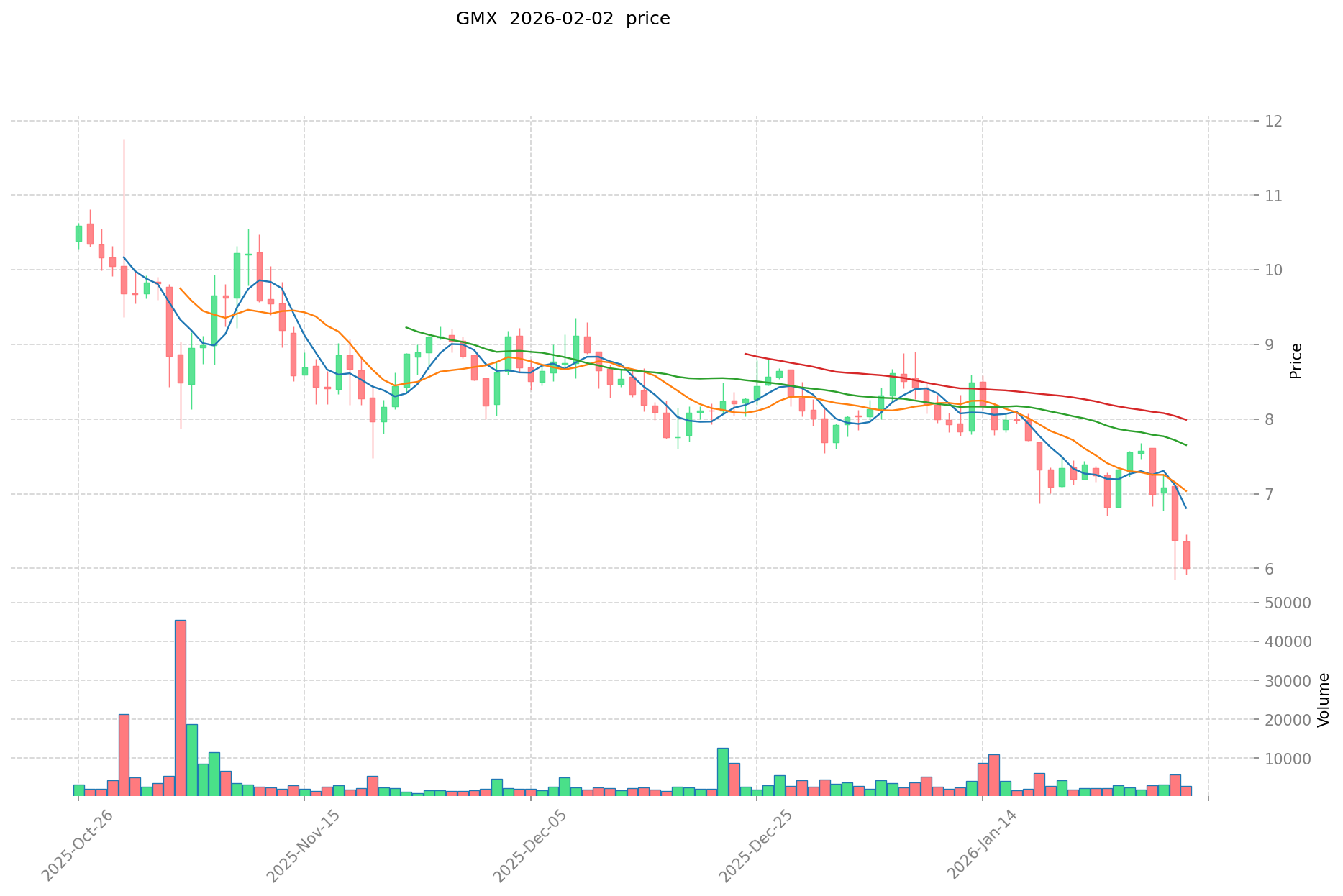
- Comparative Analysis: During the recent market cycle, ARCHAI declined from its peak of $0.08301 to a low of $0.001 recorded on December 9, 2025, representing a substantial correction. Meanwhile, GMX experienced a decline from $91.07 to its recent low of $5.96 observed on February 2, 2026, indicating considerable volatility across different market phases.
Current Market Situation (February 2, 2026)
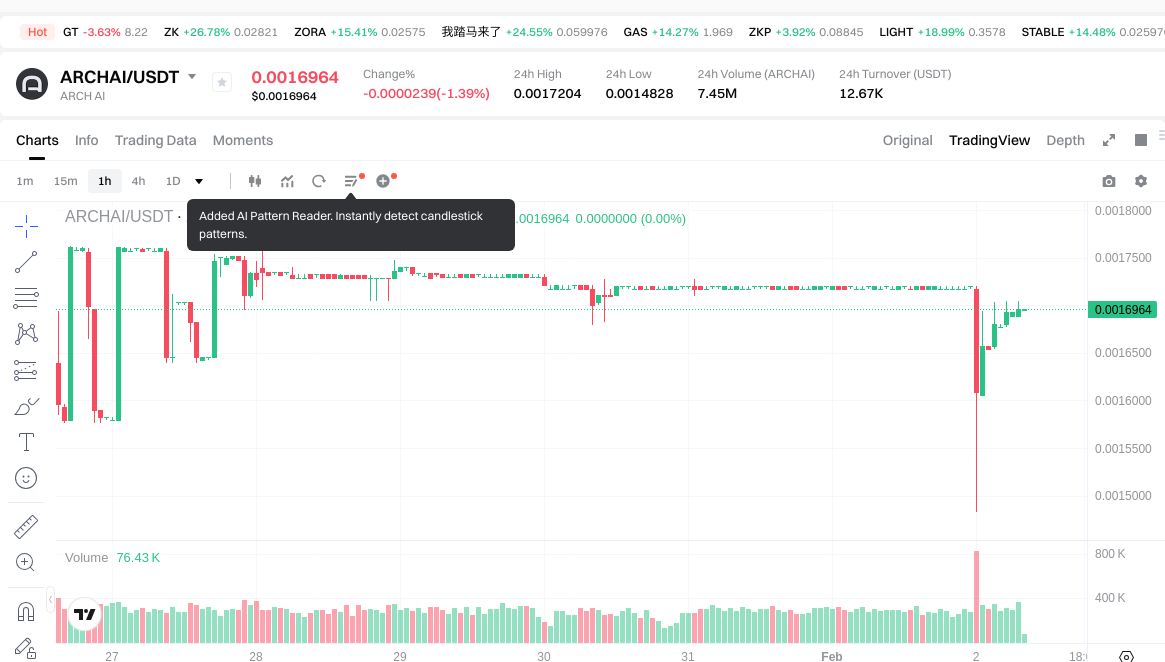
- ARCHAI Current Price: $0.0016987
- GMX Current Price: $6.013
- 24-Hour Trading Volume: ARCHAI $12,669.11 vs GMX $17,370.59
- Market Sentiment Index (Fear & Greed Index): 14 (Extreme Fear)
Click to view real-time prices:
- View ARCHAI current price Market Price
- View GMX current price Market Price
II. Core Factors Influencing ARCHAI vs GMX Investment Value
Tokenomics Comparison
- ARCHAI: The token supply mechanism focuses on supporting AI ecosystem development, with distribution designed to incentivize platform participation and long-term engagement within the AI technology infrastructure.
- GMX: Implements a supply structure aligned with decentralized exchange operations, featuring mechanisms that tie token utility to protocol revenue and governance participation.
- 📌 Historical Pattern: Supply mechanisms influence price cycles through their impact on token availability, distribution schedules, and alignment with protocol growth phases.
Institutional Adoption and Market Application
- Institutional Holdings: Early-stage crypto projects typically prioritize user acquisition and product development over aggressive profitability, with institutional interest varying based on project maturity and market positioning.
- Enterprise Adoption: ARCHAI targets AI-related applications and infrastructure development, while GMX serves decentralized trading and financial services within the DeFi ecosystem.
- Regulatory Environment: Different jurisdictions maintain varying approaches to emerging crypto assets, with regulatory clarity affecting adoption patterns across geographic regions.
Technology Development and Ecosystem Building
- ARCHAI Technology: Focuses on AI integration and development within the crypto ecosystem, building infrastructure to support AI-related applications and services.
- GMX Technology: Develops decentralized trading infrastructure with emphasis on perpetual trading, liquidity provision, and protocol efficiency improvements.
- Ecosystem Comparison: ARCHAI concentrates on AI ecosystem expansion, while GMX emphasizes DeFi applications including trading, liquidity mechanisms, and decentralized financial services.
Macroeconomic and Market Cycle Factors
- Inflation Environment Performance: Crypto assets demonstrate varying responses to inflationary pressures based on their utility, adoption stage, and market positioning.
- Macroeconomic Policy Impact: Interest rate movements and broader monetary conditions affect capital flows into different crypto asset categories.
- Geopolitical Considerations: Cross-border transaction demands and international developments influence adoption patterns across different protocol types and use cases.
III. 2026-2031 Price Forecast: ARCHAI vs GMX
Short-term Forecast (2026)
- ARCHAI: Conservative $0.000882 - $0.001696 | Optimistic $0.001696 - $0.002392
- GMX: Conservative $4.186 - $6.066 | Optimistic $6.066 - $6.491
Mid-term Forecast (2028-2029)
- ARCHAI may enter a gradual expansion phase, with estimated price range of $0.001881 - $0.004141
- GMX may enter a moderate growth phase, with estimated price range of $6.270 - $11.198
- Key drivers: institutional capital inflows, ETF developments, ecosystem expansion
Long-term Forecast (2030-2031)
- ARCHAI: Baseline scenario $0.001994 - $0.003499 | Optimistic scenario $0.003499 - $0.005080
- GMX: Baseline scenario $6.889 - $10.628 | Optimistic scenario $10.628 - $12.966
Disclaimer
ARCHAI:
| Year | Predicted High Price | Predicted Average Price | Predicted Low Price | Price Change |
|---|---|---|---|---|
| 2026 | 0.002391924 | 0.0016964 | 0.000882128 | 0 |
| 2027 | 0.0026574106 | 0.002044162 | 0.0016353296 | 20 |
| 2028 | 0.003361624409 | 0.0023507863 | 0.00188062904 | 38 |
| 2029 | 0.004141497764025 | 0.0028562053545 | 0.00205646785524 | 68 |
| 2030 | 0.005038346245338 | 0.003498851559262 | 0.001994345388779 | 105 |
| 2031 | 0.005079632693737 | 0.0042685989023 | 0.002262357418219 | 151 |
GMX:
| Year | Predicted High Price | Predicted Average Price | Predicted Low Price | Price Change |
|---|---|---|---|---|
| 2026 | 6.49062 | 6.066 | 4.18554 | 0 |
| 2027 | 8.4757185 | 6.27831 | 4.8342987 | 4 |
| 2028 | 9.590118525 | 7.37701425 | 6.2704621125 | 22 |
| 2029 | 11.1983076315 | 8.4835663875 | 4.326618857625 | 41 |
| 2030 | 11.41548693102 | 9.8409370095 | 6.88865590665 | 63 |
| 2031 | 12.9664186037172 | 10.62821197026 | 7.0146199003716 | 76 |
IV. Investment Strategy Comparison: ARCHAI vs GMX
Long-term vs Short-term Investment Strategies
- ARCHAI: Suitable for investors focusing on emerging AI infrastructure development and early-stage technology adoption, with tolerance for higher volatility and longer development timelines.
- GMX: Suitable for investors seeking exposure to established DeFi protocols with revenue-generating mechanisms and governance participation opportunities.
Risk Management and Asset Allocation
- Conservative Investors: ARCHAI 15-20% vs GMX 80-85%
- Aggressive Investors: ARCHAI 40-50% vs GMX 50-60%
- Hedging Tools: stablecoin allocation, options strategies, cross-asset portfolio diversification
V. Potential Risk Comparison
Market Risk
- ARCHAI: Exposure to early-stage project development uncertainties, limited liquidity conditions, and nascent AI ecosystem adoption patterns.
- GMX: Subject to DeFi sector volatility, perpetual exchange competition dynamics, and trading volume fluctuations affecting revenue distribution.
Technical Risk
- ARCHAI: Scalability challenges, network stability considerations during development phases.
- GMX: Protocol security considerations, smart contract vulnerabilities, liquidity mechanism dependencies.
Regulatory Risk
- Global regulatory frameworks may affect these assets differently based on their classification, with AI-focused projects facing emerging technology regulations and DeFi protocols encountering financial services oversight considerations.
VI. Conclusion: Which Is the Better Buy?
📌 Investment Value Summary:
- ARCHAI Advantages: Early-stage positioning in AI infrastructure development, potential for ecosystem expansion, lower entry price point.
- GMX Advantages: Established protocol with revenue generation mechanisms, proven DeFi market presence, governance utility integration.
✅ Investment Recommendations:
- Novice Investors: Consider GMX for exposure to established DeFi infrastructure with demonstrated utility and revenue models.
- Experienced Investors: Evaluate portfolio diversification opportunities by assessing risk tolerance for early-stage AI projects versus mature DeFi protocols.
- Institutional Investors: Conduct comprehensive due diligence on protocol fundamentals, liquidity profiles, and alignment with investment mandates.
⚠️ Risk Disclosure: Cryptocurrency markets exhibit substantial volatility. This content does not constitute investment advice.
VII. FAQ
Q1: What are the key differences in market positioning between ARCHAI and GMX?
ARCHAI operates as an early-stage AI infrastructure project ranked #2227 with a market cap of $1,528,830, while GMX functions as an established DeFi perpetual exchange ranked #415 with a market cap of $62,444,493. ARCHAI focuses on AI ecosystem development through its ChainGraph technology and multimodal agent capabilities, targeting users, brands, and creators. In contrast, GMX serves as a utility and governance token for a decentralized perpetual exchange, accruing 30% of platform-generated fees. The significant disparity in market capitalization reflects GMX's mature protocol status versus ARCHAI's emerging technology positioning.
Q2: How do their historical price performances compare?
ARCHAI reached its all-time high of $0.08301 on February 20, 2025, before declining to $0.001 by December 9, 2025, representing a substantial correction in its early trading phase. GMX attained its peak of $91.07 on April 18, 2023, subsequently declining to $5.96 by February 2, 2026. As of February 2, 2026, ARCHAI trades at $0.0016987 with 24-hour volume of $12,669.11, while GMX trades at $6.013 with volume of $17,370.59. Both assets have experienced significant volatility, though GMX demonstrates higher absolute trading volumes reflecting greater market liquidity.
Q3: What are the price forecasts for 2026-2031?
For ARCHAI, short-term 2026 forecasts range conservatively from $0.000882-$0.001696 and optimistically to $0.002392. Long-term 2031 projections suggest a baseline scenario of $0.001994-$0.003499 and optimistic scenario reaching $0.005080. For GMX, 2026 conservative estimates range from $4.186-$6.066, with optimistic forecasts up to $6.491. By 2031, GMX baseline projections indicate $6.889-$10.628, with optimistic scenarios reaching $12.966. These forecasts reflect ARCHAI's early-stage growth potential versus GMX's established protocol maturation trajectory.
Q4: Which asset suits different investor profiles?
GMX is more suitable for novice investors seeking exposure to established DeFi infrastructure with demonstrated revenue models and governance utility. The protocol's proven market presence and revenue-generating mechanisms provide relatively clearer value propositions. ARCHAI suits experienced investors with higher risk tolerance who focus on emerging AI infrastructure development and can accommodate longer development timelines and greater volatility. Institutional investors should conduct comprehensive due diligence on both assets, evaluating protocol fundamentals, liquidity profiles, and alignment with specific investment mandates before allocation decisions.
Q5: What are the recommended portfolio allocation strategies?
Conservative investors should consider allocating 15-20% to ARCHAI and 80-85% to GMX, prioritizing the established protocol with revenue generation mechanisms. Aggressive investors might allocate 40-50% to ARCHAI and 50-60% to GMX, balancing early-stage AI infrastructure exposure with mature DeFi protocol positioning. Both strategies should incorporate risk management tools including stablecoin allocation, options strategies, and cross-asset portfolio diversification. These allocations reflect differing risk tolerances while maintaining exposure to both AI infrastructure development and established DeFi protocols.
Q6: What are the primary risks associated with each asset?
ARCHAI faces early-stage project development uncertainties, limited liquidity conditions, scalability challenges, and nascent AI ecosystem adoption patterns. Additionally, emerging technology regulations may affect AI-focused projects differently than established protocols. GMX encounters DeFi sector volatility, perpetual exchange competition dynamics, protocol security considerations, smart contract vulnerabilities, and liquidity mechanism dependencies. Trading volume fluctuations directly impact GMX's revenue distribution model. Both assets face evolving global regulatory frameworks that may classify and regulate them differently based on their respective functions and market positions.
Share
Content
Introduction: ARCHAI vs GMX Investment Comparison
I. Historical Price Comparison and Current Market Status
II. Core Factors Influencing ARCHAI vs GMX Investment Value
III. 2026-2031 Price Forecast: ARCHAI vs GMX
IV. Investment Strategy Comparison: ARCHAI vs GMX
V. Potential Risk Comparison
VI. Conclusion: Which Is the Better Buy?
VII. FAQ
How to Buy Cryptocurrency


Trending Cryptocurrencies



What will be the market capitalization of USDC in 2025? Analysis of the stablecoin market landscape.

How is DeFi different from Bitcoin?

What is DeFi: Understanding Decentralized Finance in 2025

USDC stablecoin 2025 Latest Analysis: Principles, Advantages, and Web3 Eco-Applications

Development of Decentralized Finance Ecosystem in 2025: Integration of Decentralized Finance Applications with Web3
2025 USDT USD Complete Guide: A Must-Read for Newbie Investors

Free Money for App Registration: Crypto Exchange Welcome Bonuses

Crypto Exchanges Without KYC: Top Platforms for Anonymous Trading
Solana ETF Launch High Performance Chain Enters Mainstream Investment
Uniswap Protocol Fees Activation Governance Proposal Reshapes DeFi Incentives
Best Platforms for Learn and Earn Programs in the Cryptocurrency Space