This comprehensive guide compares BMB (Beamable Network) and UNI (Uniswap), two distinct decentralized exchange protocols serving different market segments. BMB, launched in 2025 on Solana, focuses on decentralized compute capital markets with emerging growth potential and staking rewards, currently trading at $0.00539. UNI, an established governance token for Uniswap since 2020 on Ethereum, commands $3,638,628.20 daily trading volume and represents proven DeFi infrastructure at $3.925. The analysis examines historical price trends, tokenomics, institutional adoption, technological ecosystems, and price forecasts through 2031 across Gate exchange. Conservative investors should favor UNI's established liquidity and market maturity (80-85% allocation), while aggressive investors might pursue balanced exposure to capture BMB's early-stage growth potential. Strategic allocation depends on risk tolerance, market cycle positioning, and liquidity requirements.
Introduction: Investment Comparison Between BMB and UNI
In the cryptocurrency market, the comparison between BMB and UNI remains a topic of significant interest for investors. These two assets exhibit notable differences in market capitalization ranking, application scenarios, and price performance, representing distinct positioning within the crypto asset landscape.
Beamable Network (BMB): Launched in 2025, this token has gained attention through its focus on building decentralized compute capital markets on Solana, offering cost-efficient alternatives to centralized cloud infrastructure.
Uniswap (UNI): Since its inception in 2020, UNI has been recognized as a governance token for one of the pioneering automated market-making protocols on Ethereum, serving as a cornerstone of decentralized finance infrastructure.
This article examines the investment value comparison between BMB and UNI across multiple dimensions, including historical price trends, supply mechanisms, institutional adoption, technological ecosystem, and future outlook. The analysis aims to address key questions that concern investors:
"Which asset offers more compelling characteristics for current market conditions?"
I. Historical Price Comparison and Current Market Status
BMB (Beamable Network) and UNI (Uniswap) Historical Price Trends
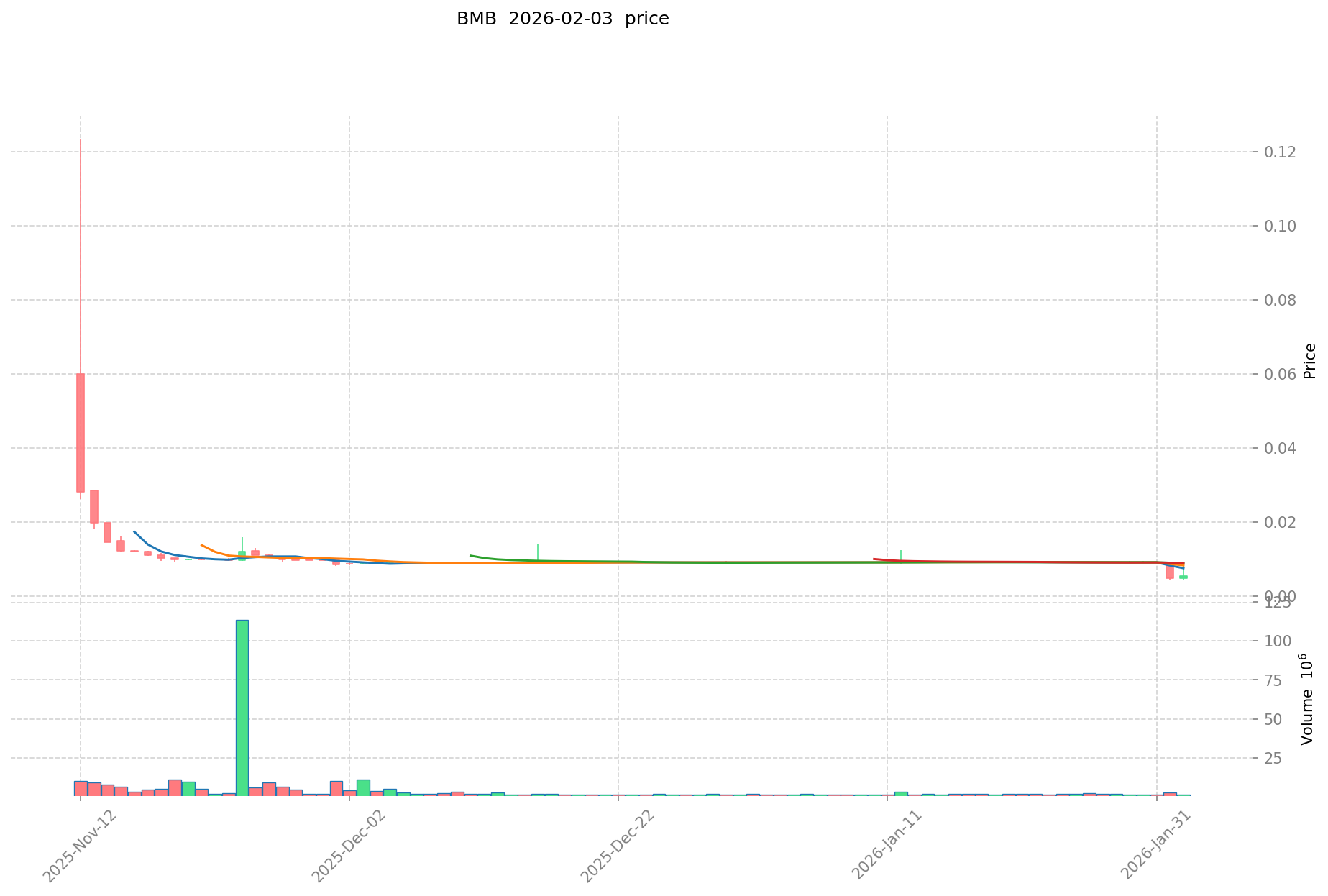
- November 2025: BMB reached a notable price level of $0.12349 during its early trading period, reflecting initial market interest following its launch on Gate.com.
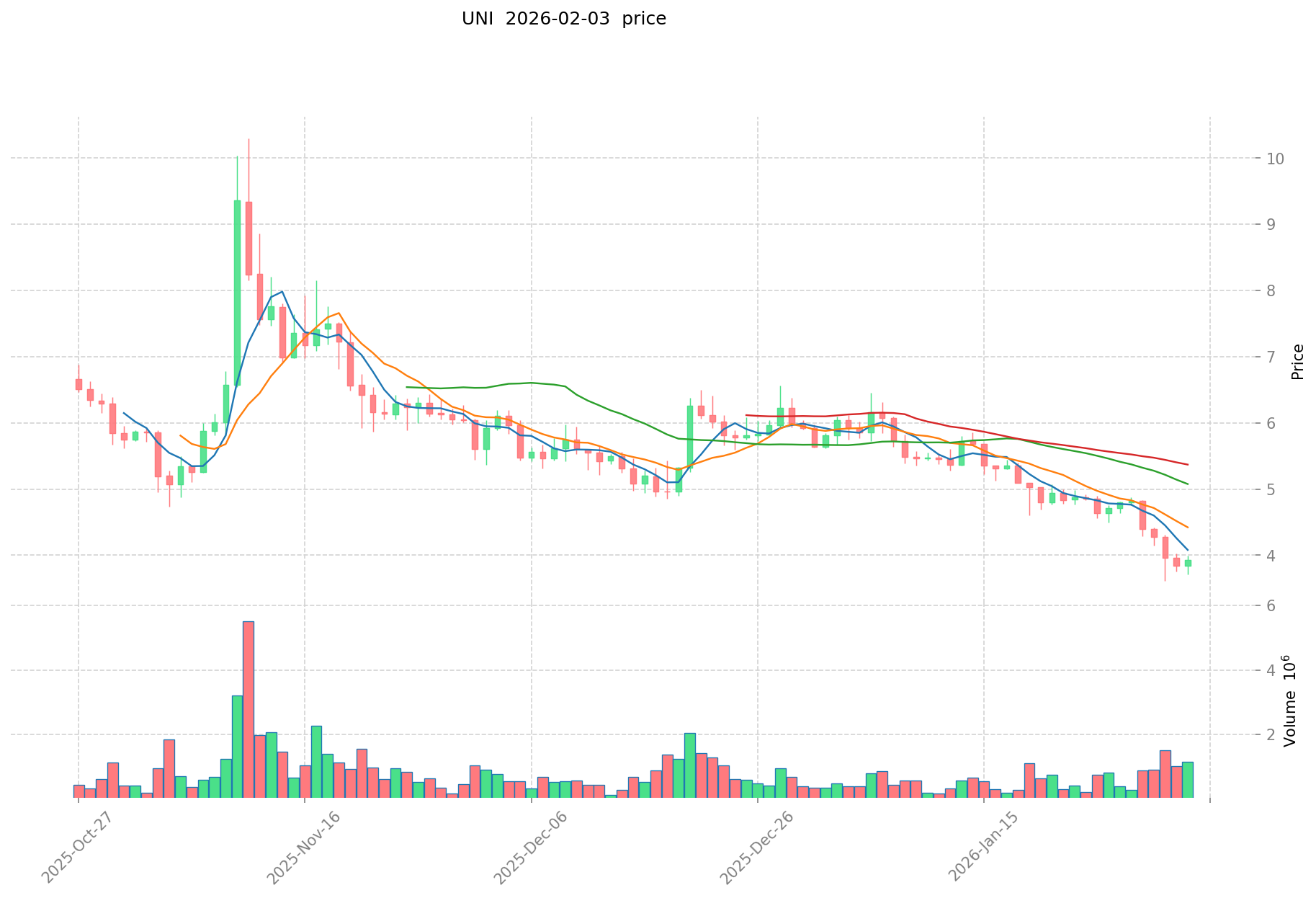
- May 2021: UNI experienced significant growth driven by the DeFi boom, reaching an all-time high of $44.92 as decentralized exchange adoption accelerated.
- September 2020: UNI recorded its all-time low of $1.03 shortly after its initial distribution, before gaining traction in the broader DeFi ecosystem.
- February 2026: BMB declined to $0.004363, representing a substantial correction from its previous levels.
- Comparative Analysis: During the recent market cycle, BMB dropped from $0.12349 to $0.004363, while UNI declined from $44.92 to its current trading range, both reflecting broader market volatility.
Current Market Status (2026-02-03)
- BMB Current Price: $0.00539
- UNI Current Price: $3.925
- 24-Hour Trading Volume: BMB $10,501.59 vs UNI $3,638,628.20
- Market Sentiment Index (Fear & Greed Index): 17 (Extreme Fear)
Check real-time prices:
II. Core Factors Influencing BMB vs UNI Investment Value
Supply Mechanism Comparison (Tokenomics)
- BMB: The reference materials do not provide specific information regarding BMB's supply mechanism or tokenomics structure.
- UNI: The reference materials do not provide specific information regarding UNI's supply mechanism or tokenomics structure.
- 📌 Historical Pattern: Supply mechanisms can influence price cycles through scarcity dynamics and incentive structures, though specific historical data for these tokens is not available in the provided materials.
Institutional Adoption and Market Applications
- Institutional Holdings: The reference materials do not specify which token receives greater institutional preference.
- Enterprise Adoption: The materials indicate that Uniswap processes approximately $3.6 billion in daily trading volume and $17.1 billion in weekly volume, ranking among the top decentralized exchanges (DEX) and comparable to PancakeSwap on BMB in terms of trading data. However, specific enterprise adoption details for cross-border payments, settlements, or investment portfolios are not provided.
- National Policies: The reference materials do not contain information regarding regulatory attitudes toward these tokens across different jurisdictions.
Technology Development and Ecosystem Building
- BMB Technology Upgrades: The materials mention that BMB's value is influenced by platform growth, increasing adoption rates, and staking reward programs. Technical innovation and the macroeconomic environment are identified as key factors affecting BMB pricing.
- UNI Technology Development: The materials note that UNI's investment value depends on trading volume and market acceptance, with Uniswap maintaining substantial trading activity in the DEX sector.
- Ecosystem Comparison: The reference materials do not provide detailed comparisons of DeFi, NFT, payment systems, or smart contract implementation between the two tokens.
Macroeconomic Factors and Market Cycles
- Performance in Inflationary Environments: The reference materials do not contain specific information comparing the inflation-hedging properties of these tokens.
- Macroeconomic Monetary Policy: The materials indicate that macroeconomic factors are relevant to BMB pricing considerations, though specific impacts of interest rates or dollar index movements on either token are not detailed.
- Geopolitical Factors: The reference materials do not provide information regarding cross-border transaction demand or international situations affecting these tokens.
III. 2026-2031 Price Forecast: BMB vs UNI
Short-term Forecast (2026)
- BMB: Conservative $0.0029-$0.0054 | Optimistic $0.0054-$0.0060
- UNI: Conservative $2.32-$3.93 | Optimistic $3.93-$5.70
Mid-term Forecast (2028-2029)
- BMB may enter a gradual growth phase, with estimated price range of $0.0064-$0.0120
- UNI may enter a moderate expansion phase, with estimated price range of $3.63-$8.43
- Key drivers: institutional capital inflows, ETF developments, ecosystem expansion
Long-term Forecast (2030-2031)
- BMB: Baseline scenario $0.0058-$0.0101 | Optimistic scenario $0.0101-$0.0122
- UNI: Baseline scenario $5.03-$9.01 | Optimistic scenario $9.01-$11.99
View detailed price predictions for BMB and UNI
Disclaimer
BMB:
| Year |
Predicted High Price |
Predicted Average Price |
Predicted Low Price |
Price Change |
| 2026 |
0.00599289 |
0.005399 |
0.00291546 |
0 |
| 2027 |
0.00780344465 |
0.005695945 |
0.0041010804 |
5 |
| 2028 |
0.00978705749625 |
0.006749694825 |
0.00641221008375 |
25 |
| 2029 |
0.011989145432906 |
0.008268376160625 |
0.007028119736531 |
53 |
| 2030 |
0.011546787308312 |
0.010128760796765 |
0.005773393654156 |
87 |
| 2031 |
0.012246684679369 |
0.010837774052539 |
0.006936175393625 |
101 |
UNI:
| Year |
Predicted High Price |
Predicted Average Price |
Predicted Low Price |
Price Change |
| 2026 |
5.69995 |
3.931 |
2.31929 |
0 |
| 2027 |
6.69351025 |
4.815475 |
3.32267775 |
22 |
| 2028 |
7.42329548625 |
5.754492625 |
3.62533035375 |
46 |
| 2029 |
8.4337843912 |
6.588894055625 |
3.953336433375 |
67 |
| 2030 |
10.5158749127775 |
7.5113392234125 |
5.032597279686375 |
91 |
| 2031 |
11.98809740056635 |
9.013607068095 |
6.94047744243315 |
129 |
IV. Investment Strategy Comparison: BMB vs UNI
Long-term vs Short-term Investment Strategies
- BMB: May appeal to investors focused on emerging decentralized infrastructure projects within the Solana ecosystem, particularly those interested in early-stage opportunities with platform growth potential and staking reward mechanisms.
- UNI: May suit investors seeking exposure to established decentralized finance infrastructure, with emphasis on governance participation in one of the leading automated market-making protocols on Ethereum.
Risk Management and Asset Allocation
- Conservative Investors: BMB 15-20% vs UNI 80-85%
- Aggressive Investors: BMB 35-45% vs UNI 55-65%
- Hedging Tools: Stablecoin allocation, options strategies, cross-asset diversification
V. Potential Risk Comparison
Market Risk
- BMB: Exposure to heightened volatility due to early-stage market positioning, with recent price movements showing substantial fluctuations from $0.12349 to $0.004363, reflecting sensitivity to broader market conditions and liquidity constraints.
- UNI: Subject to market cycles affecting decentralized exchange adoption rates, with price performance influenced by overall DeFi sector sentiment and trading volume fluctuations across decentralized platforms.
Technical Risk
- BMB: Scalability considerations and network stability factors associated with platform development stages.
- UNI: Protocol security considerations and smart contract implementation challenges inherent to decentralized exchange infrastructure.
Regulatory Risk
- Global regulatory frameworks may affect these assets differently based on their classification, with governance tokens and infrastructure platforms potentially subject to varying degrees of scrutiny across jurisdictions.
VI. Conclusion: Which Is the Better Buy?
📌 Investment Value Summary:
- BMB Advantages: Early-stage positioning within decentralized compute infrastructure, staking reward opportunities, and potential for platform growth as adoption increases.
- UNI Advantages: Established market presence as a governance token for a leading DEX protocol, substantial trading volume indicating sustained market acceptance, and proven infrastructure within the DeFi ecosystem.
✅ Investment Recommendations:
- New Investors: Consider prioritizing UNI for exposure to established DeFi infrastructure with greater liquidity and market depth, while allocating a smaller portion to BMB for diversification if risk tolerance permits.
- Experienced Investors: Evaluate portfolio allocation based on risk appetite and market cycle positioning, with potential to balance established protocols against emerging infrastructure opportunities.
- Institutional Investors: Focus on liquidity profiles, governance mechanisms, and ecosystem maturity when determining allocation strategies between established and emerging crypto assets.
⚠️ Risk Disclosure: The cryptocurrency market exhibits high volatility. This content does not constitute investment advice.
VII. FAQ
Q1: What are the key differences in market positioning between BMB and UNI?
BMB represents an emerging decentralized compute infrastructure project launched in 2025 on the Solana ecosystem, while UNI is an established governance token for one of the pioneering automated market-making protocols on Ethereum since 2020. The fundamental difference lies in their market maturity and application focus: BMB targets decentralized compute capital markets as an alternative to centralized cloud infrastructure, whereas UNI serves as the governance mechanism for Uniswap's decentralized exchange protocol that processes approximately $3.6 billion in daily trading volume. This positions UNI as a mature DeFi infrastructure asset with proven market acceptance, while BMB represents an early-stage opportunity within the emerging decentralized compute sector.
Q2: How have the historical price movements of BMB and UNI reflected market conditions?
Both assets have experienced significant volatility, though at different scales and timeframes. BMB declined from $0.12349 in November 2025 to $0.004363 by February 2026, representing a substantial correction during its early trading period. UNI reached an all-time high of $44.92 in May 2021 during the DeFi boom and has since corrected to current levels around $3.925. These price movements reflect broader market cycles, with UNI's trajectory spanning multiple years of market evolution while BMB's price history remains limited to its recent launch period. The current market sentiment index stands at 17 (Extreme Fear), affecting both assets within the context of overall crypto market conditions.
Q3: What factors should investors consider when choosing between BMB and UNI?
Investors should evaluate several critical dimensions: liquidity profiles (UNI's 24-hour volume of $3.64 million versus BMB's $10,501.59), market maturity (UNI's established position since 2020 versus BMB's 2025 launch), ecosystem positioning (Ethereum DeFi infrastructure versus Solana compute markets), and risk tolerance. UNI offers exposure to proven decentralized exchange infrastructure with substantial trading activity and governance participation opportunities, while BMB provides early-stage access to decentralized compute capital markets with staking reward mechanisms. Conservative investors may favor the 80-85% UNI allocation recommended in the analysis, whereas aggressive investors might consider 55-65% UNI with higher BMB exposure for growth potential.
Q4: What are the projected price ranges for BMB and UNI through 2031?
According to the forecast models, BMB shows conservative projections ranging from $0.0029-$0.0054 in 2026, potentially growing to $0.0058-$0.0101 by 2030-2031 under baseline scenarios, with optimistic scenarios reaching $0.0122. UNI's conservative projections range from $2.32-$3.93 in 2026, potentially expanding to $5.03-$9.01 by 2030-2031 under baseline scenarios, with optimistic projections reaching $11.99. These forecasts suggest that UNI maintains higher absolute price levels reflecting its established market position, while BMB projections indicate percentage growth potential from a smaller base. Key drivers include institutional capital inflows, ETF developments, and ecosystem expansion, though these remain speculative estimates subject to market volatility.
Q5: What are the primary risks associated with investing in BMB versus UNI?
BMB faces heightened volatility risks due to its early-stage positioning, demonstrated by substantial price fluctuations from $0.12349 to $0.004363, along with liquidity constraints and platform development uncertainties. UNI's risks center on market cycles affecting DeFi adoption rates, trading volume fluctuations across decentralized platforms, and protocol security considerations inherent to smart contract infrastructure. Both assets face regulatory risk, though potentially with different intensities based on their classification as infrastructure tokens versus governance tokens. Additionally, BMB carries scalability and network stability considerations associated with emerging platforms, while UNI must navigate the competitive landscape of established decentralized exchanges and maintain protocol relevance amid evolving DeFi infrastructure.
Q6: How do the staking mechanisms differ between BMB and UNI?
BMB's value proposition includes staking reward programs as a core mechanism for platform participants, with rewards serving as an incentive structure tied to platform growth and adoption rates. However, the reference materials do not provide specific details regarding UNI's staking mechanisms or tokenomics structure, limiting direct comparison. The presence of staking rewards in BMB's ecosystem represents a yield-generating component that may appeal to investors seeking passive income opportunities alongside potential price appreciation, though the sustainability and rates of these rewards depend on platform development and adoption trajectories. Investors should evaluate staking opportunities within the context of overall token utility and ecosystem maturity.
Q7: Which asset is more suitable for institutional investors?
Institutional investors should prioritize UNI based on several factors: greater liquidity ($3.64 million daily volume versus $10,501.59 for BMB), established market presence since 2020, proven infrastructure within the DeFi ecosystem, and governance mechanisms for one of the leading decentralized exchange protocols. UNI's substantial trading volume indicates sustained market acceptance and provides institutional-grade liquidity for larger position sizes. However, institutions with higher risk tolerance and interest in emerging decentralized infrastructure may allocate a smaller portfolio portion to BMB for diversification and exposure to early-stage compute capital market opportunities. The decision ultimately depends on institutional mandates, risk parameters, and strategic objectives regarding exposure to established versus emerging crypto infrastructure assets.
Q8: How might macroeconomic conditions affect BMB and UNI differently?
The reference materials indicate that macroeconomic factors influence BMB pricing considerations, including technical innovation and the broader economic environment. Both assets may respond to macroeconomic monetary policy shifts, though specific sensitivities to interest rates or dollar index movements are not detailed in the available materials. UNI's performance likely correlates with overall DeFi sector activity, which may fluctuate based on risk appetite influenced by macroeconomic conditions. BMB, as an emerging infrastructure project, may exhibit greater sensitivity to capital flows into speculative crypto assets during favorable economic conditions. However, without specific inflation-hedging data or detailed macroeconomic impact analyses for either token, investors should monitor how broader market cycles and regulatory developments affect established DeFi infrastructure versus emerging decentralized compute platforms.
* The information is not intended to be and does not constitute financial advice or any other recommendation of any sort offered or endorsed by Gate.