BST vs FIL: A Comparative Analysis of Blockchain Storage Technologies

Introduction: Investment Comparison of BST vs FIL
In the cryptocurrency market, the comparison between Blocksquare (BST) vs Filecoin (FIL) has been an unavoidable topic for investors. The two not only show significant differences in market cap ranking, application scenarios, and price performance but also represent different positioning in the crypto asset landscape.
Blocksquare (BST): Since its launch in 2018, it has gained market recognition for its focus on real estate tokenization and blockchain-based infrastructure.
Filecoin (FIL): Introduced in 2017, it has been hailed as a decentralized storage network, becoming one of the most traded and valuable cryptocurrencies globally.
This article will provide a comprehensive analysis of the investment value comparison between BST and FIL, focusing on historical price trends, supply mechanisms, institutional adoption, technological ecosystems, and future predictions, attempting to answer the question most crucial to investors:
"Which is the better buy right now?"
I. Price History Comparison and Current Market Status
BST and FIL Historical Price Trends
- 2021: FIL reached its all-time high of $237.73 on April 1st due to increased adoption and market hype.
- 2025: BST hit its all-time low of $0.058 on April 11th, likely due to broader market downturn.
- Comparative analysis: In the recent bear market cycle, BST dropped from its high of $0.9842 to a low of $0.058, while FIL declined from $237.73 to a low of $0.848008 in June 2025.
Current Market Situation (2025-10-13)
- BST current price: $0.07007
- FIL current price: $1.65
- 24-hour trading volume: BST $33,289 vs FIL $9,871,120
- Market Sentiment Index (Fear & Greed Index): 38 (Fear)
Click to view real-time prices:
- Check BST current price Market Price
- Check FIL current price Market Price
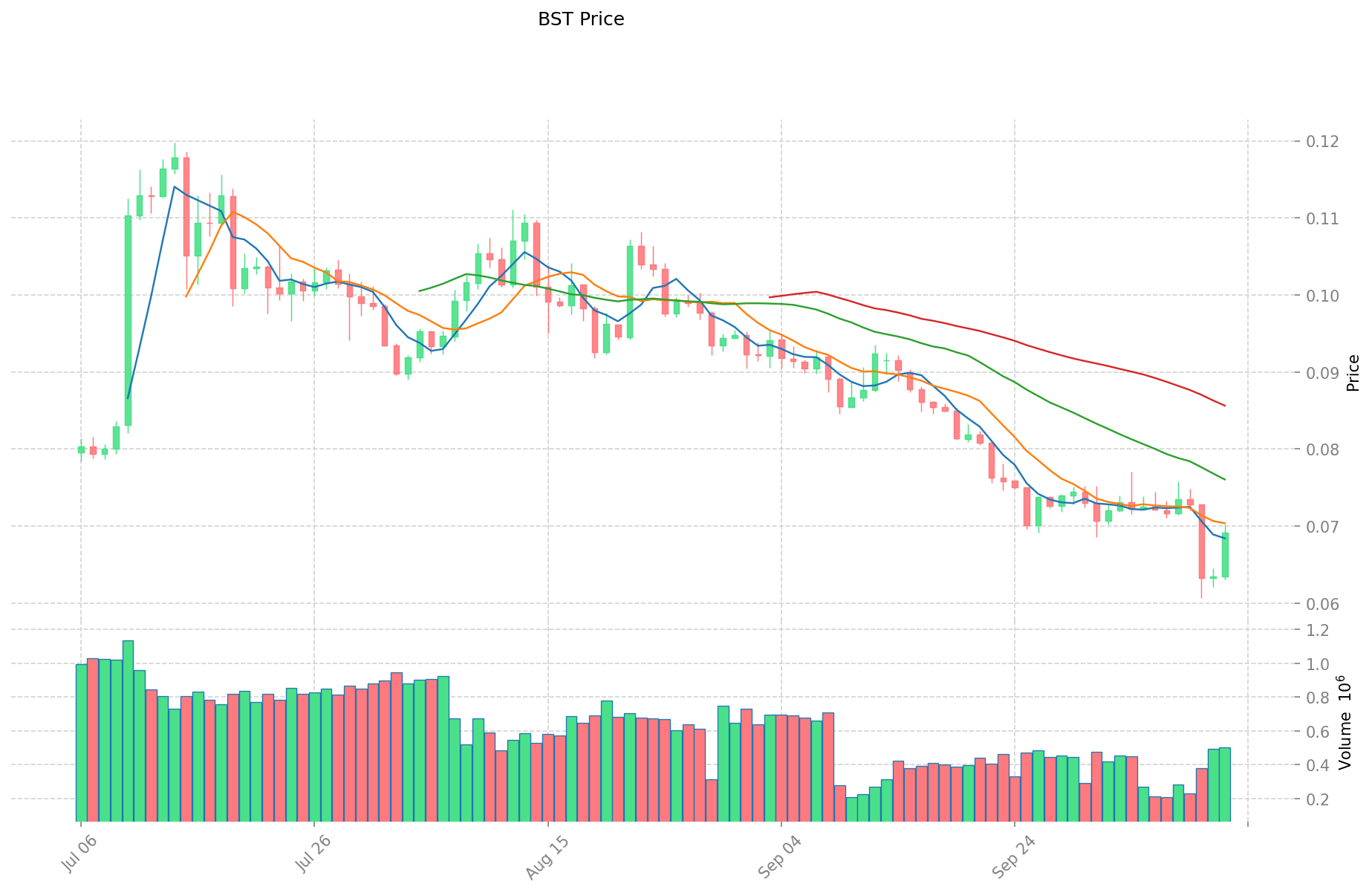
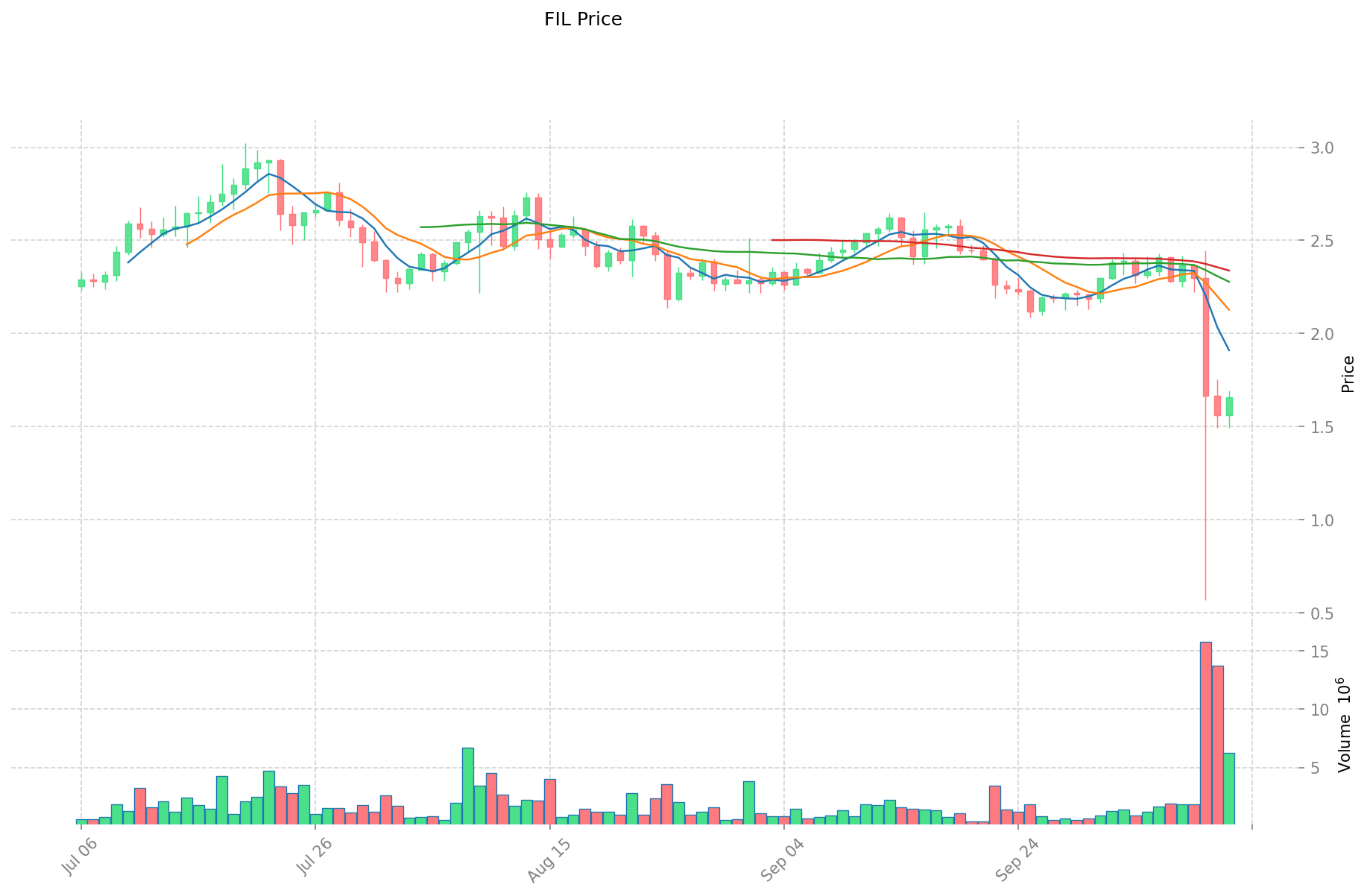
II. Core Factors Affecting BST vs FIL Investment Value
Supply Mechanisms Comparison (Tokenomics)
- BST: Robust core operational model with strategic sales in smaller secondary markets to gain pricing power
- FIL: Management team focuses on streamlining investment portfolios by eliminating low-value business segments
- 📌 Historical Pattern: Supply mechanisms drive price cycles through predictable debt structures with moderate and foreseeable repayment requirements and minimal refinancing dependencies.
Institutional Adoption and Market Applications
- Institutional Holdings: Stable credit ratings require debt structures with moderate and predictable servicing requirements and minimal refinancing dependencies
- Enterprise Adoption: Pricing serves as a core profitability factor, supporting companies that rely on export financing solutions
- Regulatory Attitudes: Open business environments with transparent legal frameworks contribute to asset management industry strength
Technical Development and Ecosystem Building
- BST Technical Upgrades: Management team's strategic decisions to streamline investment portfolios by eliminating low-value business operations
- FIL Technical Development: Focus on pricing models and driving factors that support future outlook and competitive strategy analysis
- Ecosystem Comparison: Expected investment approaches focus on analyzing value triggers (sales, costs, or investments) that have the greatest impact on stock prices
Macroeconomic Factors and Market Cycles
- Inflation Performance: Impact investment approaches consider both financial returns and sustainable development factors
- Macroeconomic Policy Impact: Higher tariffs affect exports, though global trade structures have evolved
- Geopolitical Factors: ESG responsibility management incorporates environmental, social and governance factors into investment decisions through ownership rights and influence III. 2025-2030 Price Prediction: BST vs FIL
Short-term Prediction (2025)
- BST: Conservative $0.044-$0.070 | Optimistic $0.070-$0.095
- FIL: Conservative $1.428-$1.641 | Optimistic $1.641-$2.297
Mid-term Prediction (2027)
- BST may enter a growth phase, with prices estimated at $0.093-$0.110
- FIL may enter a consolidation phase, with prices estimated at $1.950-$2.599
- Key drivers: Institutional capital inflow, ETFs, ecosystem development
Long-term Prediction (2030)
- BST: Base scenario $0.117-$0.133 | Optimistic scenario $0.133-$0.158
- FIL: Base scenario $1.570-$2.907 | Optimistic scenario $2.907-$3.431
Disclaimer
BST:
| 年份 | 预测最高价 | 预测平均价格 | 预测最低价 | 涨跌幅 |
|---|---|---|---|---|
| 2025 | 0.0947648 | 0.06968 | 0.0438984 | 0 |
| 2026 | 0.120044704 | 0.0822224 | 0.060022352 | 17 |
| 2027 | 0.11023557168 | 0.101133552 | 0.09304286784 | 44 |
| 2028 | 0.142674158484 | 0.10568456184 | 0.0908887231824 | 50 |
| 2029 | 0.14156447058468 | 0.124179360162 | 0.07823299690206 | 77 |
| 2030 | 0.158117579294274 | 0.13287191537334 | 0.116927285528539 | 89 |
FIL:
| 年份 | 预测最高价 | 预测平均价格 | 预测最低价 | 涨跌幅 |
|---|---|---|---|---|
| 2025 | 2.2974 | 1.641 | 1.42767 | 0 |
| 2026 | 2.36304 | 1.9692 | 1.08306 | 19 |
| 2027 | 2.599344 | 2.16612 | 1.949508 | 31 |
| 2028 | 2.7401418 | 2.382732 | 2.28742272 | 44 |
| 2029 | 3.253024863 | 2.5614369 | 1.844234568 | 55 |
| 2030 | 3.43053244017 | 2.9072308815 | 1.56990467601 | 76 |
IV. Investment Strategy Comparison: BST vs FIL
Long-term vs Short-term Investment Strategies
- BST: Suitable for investors focused on real estate tokenization and blockchain infrastructure potential
- FIL: Suitable for investors interested in decentralized storage networks and broader market adoption
Risk Management and Asset Allocation
- Conservative investors: BST 20% vs FIL 80%
- Aggressive investors: BST 40% vs FIL 60%
- Hedging tools: Stablecoin allocation, options, cross-currency combinations
V. Potential Risk Comparison
Market Risks
- BST: Lower liquidity and trading volume may lead to higher price volatility
- FIL: Susceptible to broader cryptocurrency market trends and sentiment
Technical Risks
- BST: Scalability, network stability
- FIL: Mining power concentration, potential security vulnerabilities
Regulatory Risks
- Global regulatory policies may have differing impacts on both tokens, with BST potentially facing more scrutiny in real estate-related regulations
VI. Conclusion: Which Is the Better Buy?
📌 Investment Value Summary:
- BST advantages: Focus on real estate tokenization, potential for growth in niche market
- FIL advantages: Established position in decentralized storage, higher liquidity and market adoption
✅ Investment Advice:
- New investors: Consider a small allocation to FIL as part of a diversified crypto portfolio
- Experienced investors: Explore BST for potential growth while maintaining a larger position in FIL
- Institutional investors: Evaluate FIL for broader market exposure and BST for targeted real estate blockchain exposure
⚠️ Risk Warning: The cryptocurrency market is highly volatile, and this article does not constitute investment advice. None
VII. FAQ
Q1: What are the key differences between BST and FIL? A: BST focuses on real estate tokenization and blockchain infrastructure, while FIL is a decentralized storage network. BST has a lower market cap and trading volume, while FIL is more widely traded and adopted.
Q2: Which token has performed better historically? A: FIL has shown higher price peaks, reaching an all-time high of $237.73 in April 2021. However, both tokens have experienced significant price declines in the recent bear market.
Q3: What are the main factors affecting the investment value of BST and FIL? A: Key factors include supply mechanisms, institutional adoption, technical development, ecosystem building, and macroeconomic factors such as inflation and geopolitical events.
Q4: What are the price predictions for BST and FIL in 2030? A: For BST, the base scenario predicts $0.117-$0.133, with an optimistic scenario of $0.133-$0.158. For FIL, the base scenario predicts $1.570-$2.907, with an optimistic scenario of $2.907-$3.431.
Q5: How should investors allocate their portfolio between BST and FIL? A: Conservative investors might consider 20% BST and 80% FIL, while aggressive investors might opt for 40% BST and 60% FIL. However, individual risk tolerance and investment goals should be considered.
Q6: What are the main risks associated with investing in BST and FIL? A: Risks include market volatility, technical challenges such as scalability and security, and regulatory uncertainties. BST may face additional scrutiny related to real estate regulations.
Q7: Which token is considered a better buy for different types of investors? A: New investors might consider a small allocation to FIL as part of a diversified portfolio. Experienced investors could explore BST for growth potential while maintaining a larger position in FIL. Institutional investors might evaluate FIL for broader market exposure and BST for targeted real estate blockchain exposure.
Share
Content
How to Buy Cryptocurrency


Trending Cryptocurrencies



Detailed Analysis of the Top 10 RWA Cryptocurrencies in 2025

Benefits of RWAs in Crypto

How to Earn with The RWA DePin Protocol in 2025
Detailed Analysis of RWA in Crypto Assets
Rexas Finance: A Blockchain-Powered Real-World Asset Tokenization Ecosystem
SIX Token (SIX): Core Logic, Use Cases and 2025 Roadmap Analysis

How Web 2.0 and Web 3.0 Differ: A Comprehensive Analysis

10 Ways to Get Cryptocurrency for Free (and Steer Clear of Scammers)

What Are Meme Coins? 7 Top Picks

What is a non-custodial wallet and how do you use it

Types of Cryptocurrencies and Tokens – Guide