The Cryptocurrency Fear and Greed Index is a vital sentiment analysis tool that measures market psychology on a 0-100 scale, combining volatility, trading volume, social media sentiment, Bitcoin dominance, and search trends. This comprehensive guide explains how investors interpret different zones—from extreme fear (0-24) signaling potential buying opportunities to extreme greed (75-100) indicating possible corrections. The index helps traders understand emotional market cycles and make informed entry/exit decisions, though it works best alongside technical analysis and on-chain tools. Learn its components, real-world applications, and limitations to navigate cryptocurrency markets more effectively. Perfect for traders seeking to balance emotional discipline with data-driven strategies on platforms like Gate.
Why Emotion Indices Are Necessary
The cryptocurrency market is characterized by high volatility, and investor emotions significantly influence investment decisions. Investors often make decisions based on their feelings, which can cause unexpected market fluctuations. The Fear and Greed Index serves as a crucial indicator for measuring investor sentiment and reflecting the psychological flow of the market.
Current cryptocurrency indices provide abundant predictive data, but they fail to measure investor emotions and the psychology surrounding the market. The cryptocurrency Fear and Greed Index was developed to bridge this gap. It is not merely a financial tool but a market indicator that analyzes emotions and investment psychology. Through this index, investors can identify states of excessive fear or greed in the market and predict potential price reversals in cryptocurrencies.
Understanding the Cryptocurrency Fear and Greed Index
The cryptocurrency Fear and Greed Index is a tool used to analyze the thoughts, emotions, and reactions of market participants. It collects and analyzes sentiment data related to specific cryptocurrencies from various sources and calculates them into an indicator. This comprehensive approach provides investors with valuable insights into market psychology that traditional financial metrics cannot capture.
The index operates on a scale from 0 to 100, where different numerical ranges indicate varying levels of market sentiment. Understanding these ranges helps investors make more informed decisions about when to enter or exit positions in the cryptocurrency market.
History and Development
The Fear and Greed Index was originally developed by CNN Money in 2012 to measure various emotions and sentiments in the stock market. The concept proved so valuable that it was later adapted for cryptocurrency analysis by Alternative.me, a cryptocurrency analytics firm. This adaptation was necessary because the cryptocurrency market exhibits unique characteristics that differ significantly from traditional stock markets.
The index analyzes multiple market indicators and assigns a value between 0 and 100. A value of "0" represents extreme fear, while "100" indicates extreme greed. This numerical representation provides a clear and quantifiable measure of market sentiment that investors can easily interpret and act upon. The methodology has been refined over the years to better capture the nuances of cryptocurrency market psychology.
Key Components of the Index
When the Fear and Greed Index reaches 100, it indicates that investors are extremely optimistic about the future and are rushing to invest. Subsequently, investors may realize profits, causing the Fear and Greed Index to decline. This cyclical pattern is common in cryptocurrency markets and understanding it can help investors time their trades more effectively.
As prices fall and the Fear and Greed Index approaches below 40, panic and despair grip the market. At this point, investors recognize the index decline as a buying opportunity and discover hope in the market. This contrarian approach has proven successful for many long-term cryptocurrency investors who understand that extreme fear often presents the best entry points.
How the Cryptocurrency Fear and Greed Index Is Calculated
The Fear and Greed Index considers multiple market indicators and divides the data according to predetermined weights, displaying it as a number between 0 and 100. Each component contributes differently to the overall calculation, creating a comprehensive view of market sentiment.
Volatility (25% Weight)
Volatility is a core indicator and is given a 25% weight in the Fear and Greed Index calculation. This indicator examines Bitcoin withdrawals and current market volatility. High volatility instills fear in investors, but sometimes it is interpreted as their investment enthusiasm.
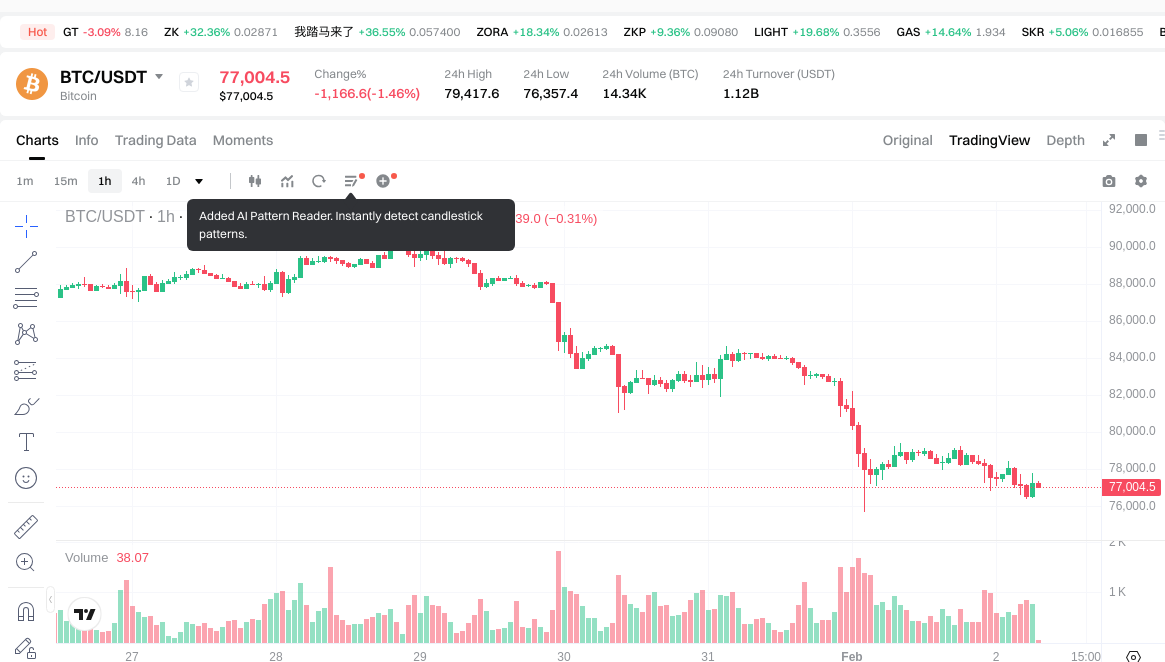 The volatility component compares current price movements with average historical movements to determine whether the market is experiencing unusual turbulence.
Market Momentum and Volume (25% Weight)
This indicator represents the trading volume component of the cryptocurrency Fear and Greed Index, with a weight of 25%. It compares monthly and quarterly trading volume averages. High trading volume means that greed dominates the market. When trading volumes surge significantly above historical averages, it often indicates that market participants are acting on strong emotions rather than rational analysis.
This component measures how many cryptocurrency-related posts are published on social media platforms. The weight of this indicator is 15%. It measures hashtags and social reactions, among other factors. Social media has become an increasingly important factor in cryptocurrency markets, as viral trends and influencer opinions can rapidly shift market sentiment and drive significant price movements.
Bitcoin Dominance (10% Weight)
Bitcoin dominance carries a weight of 10%. An increase in Bitcoin's dominance means reduced greed for altcoins. Therefore, when Bitcoin's dominance grows, the altcoin market may move toward fear. This inverse relationship is important for investors to understand, as it can signal shifts in where market participants are allocating their capital and confidence.
Search Trends (10% Weight)
The Fear and Greed Index pulls search results from search engines to check search volume for each coin. Changes in search volume are reflected in this index value, with a weight of 10%. Increased search interest typically indicates growing public attention and potential new market participants, which can drive prices higher as more people become aware of and interested in specific cryptocurrencies.
Advantages and Disadvantages of the Fear and Greed Index
Advantages
The Fear and Greed Index offers several significant benefits for cryptocurrency investors. It can provide diverse perspectives on unstable markets, helping investors understand the broader sentiment context. The index does not change rapidly and moves slowly in a specific direction, which helps filter out short-term noise and focus on meaningful trends.
Additionally, it includes important data such as price volatility, dominance, and search volume, which can save time in market analysis. The index can provide useful information when assets are undervalued or in a bubble state. It can offer a balanced market outlook during bull and bear markets, and by understanding market atmosphere, investors can capture dangerous moments before they fully materialize.
Disadvantages
Despite its usefulness, the Fear and Greed Index has several limitations that investors should consider. While it can capture short-term investment psychology, it does not provide a macroscopic perspective necessary for long-term investment strategies. Volatility and search volume are irregular data yet are given significant weights, which can sometimes skew the index.
When the index is close to neutral, it does not provide meaningful insights, leaving investors without clear guidance. The index can change significantly without major price movements, creating potential confusion. Furthermore, it does not consider whale activity, exchange inflows, or trading intensity, which are important factors in cryptocurrency markets. Making investment decisions based solely on social media mention volume is not recommended, as social media sentiment can be easily manipulated or may not reflect actual market conditions.
How Traders Use the Fear and Greed Index
Dividing the Index Into Four Zones
The Fear and Greed Index can be divided into four distinct zones, each representing different market conditions and potential trading opportunities:
Extreme Fear or Orange Zone (0-24): Zone 1 represents extreme fear. This may indicate the best buying opportunity or that a price reversal is imminent. When the index reaches these levels, it often signals that the market has overreacted to negative news and prices may be at or near a bottom.
Fear or Yellow Zone (25-49): Zone 2 is the fear zone. This occurs at the beginning of a bear market when prices begin to fall sharply. Investors become increasingly cautious and may start reducing their positions or moving to stablecoins.
Greed or Light Green Zone (50-74): Prices begin to recover in Zone 3. Moreover, volatility is lowest in this zone. This represents a relatively stable market condition where neither extreme fear nor extreme greed dominates trading decisions.
Extreme Greed or Dark Green Zone (75-100): Zone 4 is when there is the most buying activity in the market. Price reversals or corrections can occur in this zone, as extreme optimism often precedes market tops. Experienced traders often use these signals to take profits or reduce their exposure.
Can You Trust the Fear and Greed Index?
Just because the index shows "fear" during a bear market does not mean it is the bottom. It may simply indicate increasing chaos and price volatility. The reliability of the Fear and Greed Index depends on how it is used and what other analysis tools are employed alongside it.
In bear markets, "greed" can actually trigger selling rather than buying, as traders rush to lock in profits before the market turns. The index does not represent major price movements very well on its own, and emotions can be somewhat exaggerated during bull or bear markets. Market participants may overreact to both positive and negative news, causing the index to reach extreme levels that do not necessarily correspond to actual market fundamentals.
The Fear and Greed Index is somewhat reliable, especially when used in conjunction with technical analysis indicators. It helps identify short-term investment psychology and can provide valuable context for trading decisions. However, it may not be suitable for long-term market analysis, as it focuses primarily on current sentiment rather than fundamental value or long-term trends.
Conclusion: Navigating Fear and Greed
In conclusion, the cryptocurrency Fear and Greed Index is a valuable tool for predicting overall market sentiment and understanding the psychological state of market participants. However, it is not advisable to focus solely on this index when conducting investment analysis. The index should be viewed as one component of a comprehensive trading strategy rather than a standalone decision-making tool.
The perfect combination involves examining broader buying and selling zones, using the Fear and Greed Index to track market atmosphere, and employing on-chain and chart tools to analyze the finer details of each item. This multi-faceted approach increases the probability of investment success by providing a more complete picture of market conditions. Successful cryptocurrency investors understand that no single indicator can predict market movements with certainty, and they use the Fear and Greed Index as part of a broader analytical framework that includes fundamental analysis, technical analysis, and risk management strategies.
FAQ
What is the Cryptocurrency Fear and Greed Index and how is it calculated?
The Fear and Greed Index measures market sentiment on a scale from extreme fear to extreme greed. It's calculated by analyzing market volatility (25%), trading volume (25%), social media sentiment (15%), Bitcoin dominance (10%), and Google trends (10%). Extreme fear may signal buying opportunities, while extreme greed may indicate a market correction.
How to interpret different values of the Fear and Greed Index? What do 0-100 represent?
0 indicates extreme fear, 100 indicates extreme greed. Scores between 40-60 represent neutral market sentiment. Lower values suggest bearish conditions while higher values indicate bullish momentum.
What does the Fear and Greed Index help with in cryptocurrency investment decisions?
The Fear and Greed Index helps investors gauge market sentiment and timing for buy or sell decisions. When the index shows extreme fear, it signals potential buying opportunities, while extreme greed may indicate overbought conditions and possible price corrections. Combined with other analysis tools, it enhances decision-making effectiveness.
In what situations should you buy or sell based on the Fear and Greed Index?
Buy when the index shows extreme fear, indicating undervalued assets with growth potential. Sell when it shows extreme greed, signaling overheated markets. This contrarian approach helps capture opportunities while avoiding herd mentality driven losses.
What are the limitations of the Fear and Greed Index? Can it accurately predict market trends?
The Fear and Greed Index cannot predict exact market turning points. Markets may remain fearful or greedy longer than expected. It works best as a risk filter and emotional discipline tool alongside technical analysis, not as a standalone trading system.
You can access real-time fear and greed index data through MCP Server. Connect via MCP client using command line or code integration to retrieve instant market sentiment data.
How has the Fear and Greed Index performed during major market events in history?
Historically, the Fear and Greed Index reaches extreme lows during market crashes, often dropping below 10 during panic selling. Conversely, it spikes to extreme highs during bull markets, signaling potential market bubbles. These extremes typically coincide with major economic events, policy shifts, and significant price corrections.
* The information is not intended to be and does not constitute financial advice or any other recommendation of any sort offered or endorsed by Gate.