This comprehensive analysis examines FIR versus FIL as investment opportunities in the cryptocurrency market, serving investors seeking to understand the distinction between two projects with fundamentally different positioning. FIR, launched in 2025 as a decentralized music creation platform powered by AI and blockchain, contrasts with FIL, an established decentralized storage infrastructure built on IPFS since 2020. The article evaluates critical investment factors including historical price trends, market capitalization rankings, supply mechanisms, institutional ecosystem adoption, and technical development trajectories. FIL demonstrates significantly stronger market presence with $2.19 million daily trading volume and partnerships across 70+ projects including MetaMask and OpenSea, while FIR exhibits higher volatility reflecting its nascent market position. Through detailed tokenomics comparison, risk assessment, and allocation strategies suitable for conservative to aggressive investors, this guide addre
Introduction: FIR vs FIL Investment Comparison
In the cryptocurrency market, the comparison between FIR and FIL has consistently been a topic that investors cannot overlook. The two differ significantly in market cap ranking, application scenarios, and price performance, representing distinct positioning within crypto assets.
Fireverse (FIR): Since its launch in 2025, it has gained market attention through its positioning as a decentralized music creation platform powered by AI and blockchain, offering AI music generation, professional promotion, blockchain-based copyright protection, and token incentives.
Filecoin (FIL): Since its launch in 2020, it has been positioned as a decentralized storage network built on IPFS, rewarding miners who contribute idle hard drive capacity, making it one of the prominent projects in the decentralized storage sector.
This article will provide a comprehensive analysis of the investment value comparison between FIR and FIL, covering historical price trends, supply mechanisms, institutional adoption, technological ecosystems, and future predictions, attempting to answer the question most concerning to investors:
"Which is the better buy right now?"
I. Historical Price Comparison and Current Market Status
Historical Price Trends of FIR (Coin A) and FIL (Coin B)
- 2021: FIL reached a price of $236.84 on April 1, 2021, marking a significant milestone during the bull market cycle.
- 2025: FIR launched in October 2025 at an initial price of $0.081, entering the market during a period of heightened volatility.
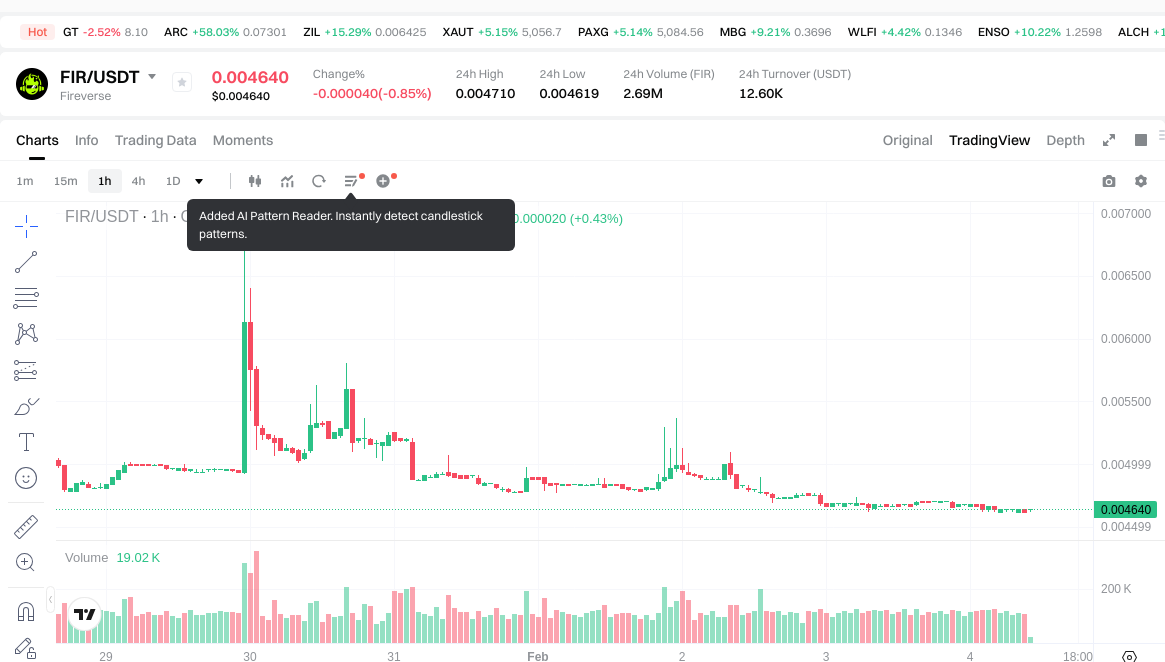
- 2025-2026: FIR experienced notable fluctuations, declining from its peak of $0.13662 in August 2025 to a low of $0.004254 in January 2026.
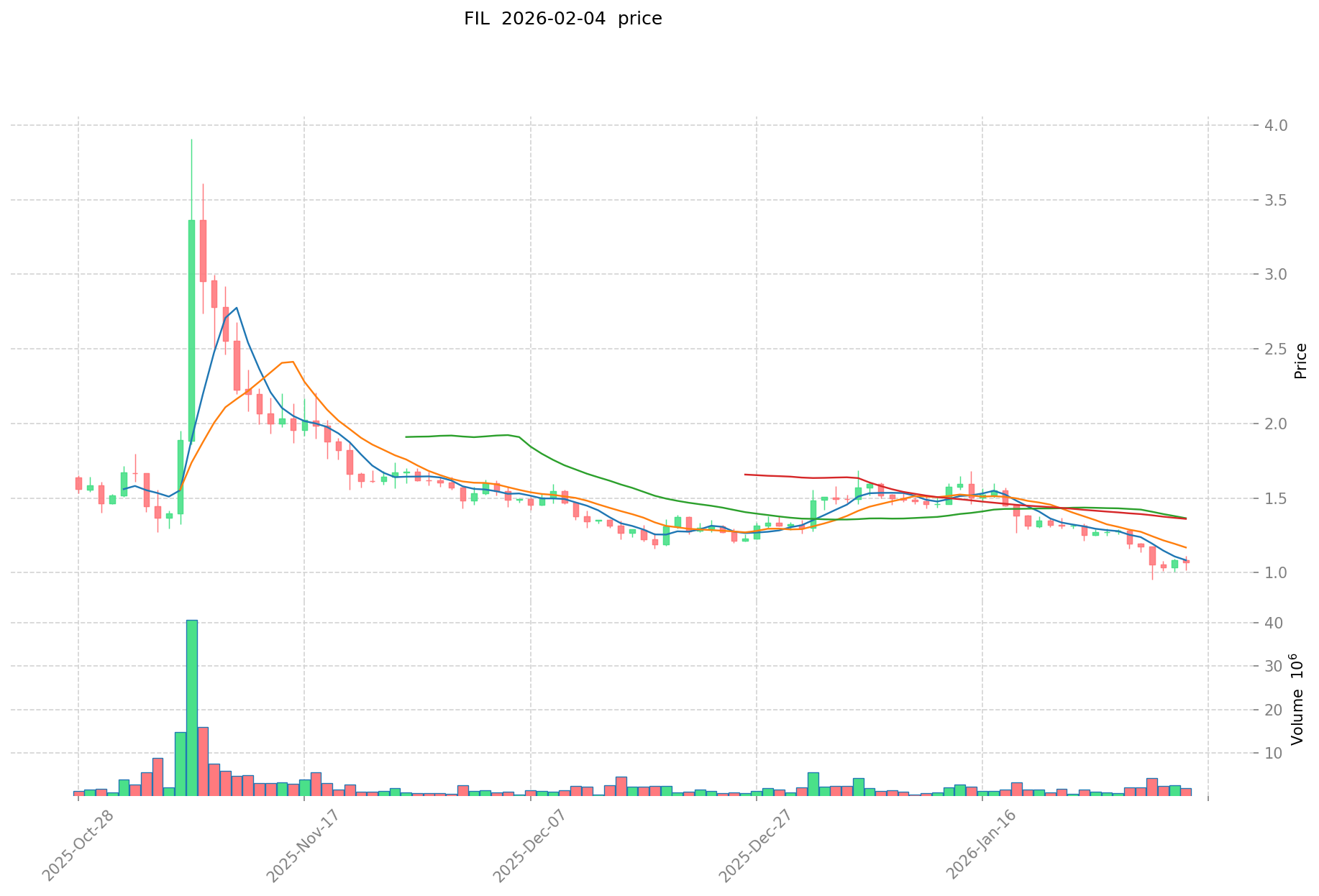
- Comparative Analysis: During the current market cycle, FIR has declined from its high of $0.13662 to $0.00462, while FIL has decreased from its historical high of $236.84 to $1.084, reflecting broader market corrections.
Current Market Situation (February 4, 2026)
- FIR Current Price: $0.00462
- FIL Current Price: $1.084
- 24-Hour Trading Volume: FIR at $12,603.04 vs FIL at $2,189,912.67
- Market Sentiment Index (Fear & Greed Index): 14 (Extreme Fear)
View real-time prices:
II. Core Factors Influencing FIR vs FIL Investment Value
Supply Mechanism Comparison (Tokenomics)
- FIL: Filecoin employs a deflationary supply model with block rewards that decrease over time. The network's storage capacity has surpassed the exabyte (EB) level, with node counts reaching 358,000 in Q1 2025, providing fundamental support for its value.
- FIR: Information regarding FIR's supply mechanism is not available in the provided materials.
- 📌 Historical Pattern: Supply mechanisms can influence price cycles through changes in token issuance rates and market circulation dynamics.
Institutional Adoption and Market Applications
- Institutional Holdings: Available data does not provide comparative information on institutional preferences between FIR and FIL.
- Enterprise Adoption: FIL has established notable presence in data storage applications, particularly in NFT metadata storage. The OpenSea platform utilizes IPFS (InterPlanetary File System) for storing NFT metadata. Additionally, Filecoin has garnered support from over 70 projects including Opera Browser, MetaMask, and Uniswap, forming significant components of its ecosystem.
- Regulatory Environment: Different jurisdictions have implemented varied approaches to cryptocurrency mining and trading. Mining operations, including those for FIL, have faced regulatory constraints in certain regions, which has impacted market dynamics.
Technological Development and Ecosystem Building
- FIL Technical Upgrades: In January 2023, Filecoin introduced the Filecoin Virtual Machine (FVM), an EVM-compatible virtual machine designed to facilitate developer ecosystem expansion. The project continues development in smart contracts, distributed data processing systems, and retrieval markets. The network demonstrates technical differentiation through proprietary mechanisms including the BitSwap module for data exchange and distribution, along with Proof of Replication (PoRep) and Proof of Spacetime (PoST) consensus mechanisms.
- FIR Technical Development: Technical development information for FIR is not available in the provided materials.
- Ecosystem Comparison: FIL has established applications across multiple sectors, with particular strength in decentralized storage for NFT metadata. The project's ecosystem encompasses DeFi integrations and various application layer developments.
Macroeconomic Factors and Market Cycles
- Performance in Inflationary Environments: Available materials do not provide specific comparative analysis of inflation hedging properties between FIR and FIL.
- Macroeconomic Monetary Policy: Cryptocurrency markets, including FIL, tend to correlate with broader market trends influenced by interest rates and macroeconomic conditions. FIL's price movements have shown linkage to overall cryptocurrency market dynamics.
- Geopolitical Factors: Cross-border transaction requirements and international developments may influence demand patterns, though specific comparative impacts on FIR versus FIL are not detailed in available materials.
III. 2026-2031 Price Forecast: FIR vs FIL
Short-term Forecast (2026)
- FIR: Conservative $0.0044544 - $0.00464 | Optimistic $0.00464 - $0.0068672
- FIL: Conservative $0.84552 - $1.084 | Optimistic $1.084 - $1.26828
Mid-term Forecast (2028-2029)
- FIR may enter a gradual growth phase, with estimated price ranging from $0.003509696 to $0.01027621728 by 2028, and potentially reaching $0.0068204023056 to $0.0108781100064 by 2029
- FIL may enter a steady expansion phase, with estimated price ranging from $1.188019014 to $1.605783942 by 2028, and potentially reaching $1.23730222035 to $1.73222310849 by 2029
- Key drivers: institutional capital inflows, ETF developments, ecosystem expansion
Long-term Forecast (2031)
- FIR: Baseline scenario $0.0099157598745 - $0.011804476041072 | Optimistic scenario $0.011804476041072 - $0.017116490259554
- FIL: Baseline scenario $0.968635144048036 - $1.64175448143735 | Optimistic scenario $1.64175448143735 - $1.69100711588047
View detailed price predictions for FIR and FIL
Disclaimer: Price predictions are based on historical data analysis and market trends, and do not constitute investment advice. Cryptocurrency markets are highly volatile and subject to various risks. Past performance does not guarantee future results.
FIR:
| Year |
Predicted High Price |
Predicted Average Price |
Predicted Low Price |
Price Change |
| 2026 |
0.0068672 |
0.00464 |
0.0044544 |
0 |
| 2027 |
0.008227648 |
0.0057536 |
0.003509696 |
24 |
| 2028 |
0.01027621728 |
0.006990624 |
0.00678090528 |
51 |
| 2029 |
0.0108781100064 |
0.00863342064 |
0.0068204023056 |
86 |
| 2030 |
0.013853186758944 |
0.0097557653232 |
0.00536567092776 |
111 |
| 2031 |
0.017116490259554 |
0.011804476041072 |
0.0099157598745 |
155 |
FIL:
| Year |
Predicted High Price |
Predicted Average Price |
Predicted Low Price |
Price Change |
| 2026 |
1.26828 |
1.084 |
0.84552 |
0 |
| 2027 |
1.4348908 |
1.17614 |
1.0232418 |
8 |
| 2028 |
1.605783942 |
1.3055154 |
1.188019014 |
20 |
| 2029 |
1.73222310849 |
1.455649671 |
1.23730222035 |
34 |
| 2030 |
1.6895725731297 |
1.593936389745 |
0.87666501435975 |
47 |
| 2031 |
1.69100711588047 |
1.64175448143735 |
0.968635144048036 |
51 |
IV. Investment Strategy Comparison: FIR vs FIL
Long-term vs Short-term Investment Strategies
- FIR: May appeal to investors interested in emerging decentralized music creation platforms and AI-blockchain integration applications, though current market data shows limited trading volume and significant price volatility
- FIL: May suit investors seeking exposure to decentralized storage infrastructure, with established ecosystem partnerships across multiple sectors including NFT metadata storage and DeFi integrations
Risk Management and Asset Allocation
- Conservative Investors: FIR 10-15% vs FIL 85-90%
- Aggressive Investors: FIR 30-40% vs FIL 60-70%
- Hedging Tools: Stablecoin allocation for portfolio stability, options contracts for downside protection, cross-asset diversification strategies
V. Potential Risk Comparison
Market Risks
- FIR: Exhibits heightened volatility with 24-hour trading volume of $12,603.04, representing a relatively nascent market position with limited liquidity depth compared to established projects
- FIL: Subject to broader cryptocurrency market correlations and storage sector dynamics, with 24-hour trading volume of $2,189,912.67 indicating more established market presence
Technical Risks
- FIR: Technical development information and network scalability metrics are not available in current materials
- FIL: Network architecture involves specialized consensus mechanisms including Proof of Replication (PoRep) and Proof of Spacetime (PoST), with ongoing development requirements for maintaining storage network stability and efficiency
Regulatory Risks
- Mining operations, including those supporting the Filecoin network, have encountered regulatory considerations in various jurisdictions, which may influence network participation and token dynamics
- Cryptocurrency trading and holding regulations vary significantly across different regions, potentially affecting market access and liquidity for both assets
VI. Conclusion: Which Is the Better Buy?
📌 Investment Value Summary:
- FIR Advantages: Positioned in the emerging intersection of AI, blockchain, and music creation, entering the market during 2025 with potential for ecosystem development in decentralized content creation
- FIL Advantages: Established decentralized storage infrastructure with network capacity exceeding the exabyte level, institutional ecosystem support from over 70 projects including Opera Browser and MetaMask, technical developments including the Filecoin Virtual Machine (FVM) for smart contract capabilities
✅ Investment Recommendations:
- Novice Investors: Consider prioritizing established projects with demonstrated network utility and ecosystem adoption, implementing position sizing appropriate to risk tolerance and market experience level
- Experienced Investors: May evaluate portfolio allocation strategies incorporating both infrastructure-focused assets and emerging platform projects, with consideration for risk-adjusted return profiles and correlation dynamics
- Institutional Investors: May assess fundamental factors including network metrics, developer activity, enterprise adoption patterns, and regulatory clarity when evaluating decentralized infrastructure investments
⚠️ Risk Warning: Cryptocurrency markets exhibit high volatility. This content does not constitute investment advice.
VII. FAQ
Q1: What is the fundamental difference between FIR and FIL's core business models?
FIR is positioned as a decentralized music creation platform integrating AI and blockchain technology for music generation, copyright protection, and creator incentives, while FIL is a decentralized storage network built on IPFS that rewards miners for contributing storage capacity. The fundamental distinction lies in their application domains: FIR targets the creative content and entertainment sector with AI-powered tools, whereas FIL provides essential data storage infrastructure for Web3 applications, including NFT metadata storage for platforms like OpenSea and integration with over 70 projects including Opera Browser and MetaMask.
Q2: Which cryptocurrency demonstrates stronger institutional adoption and ecosystem maturity?
FIL exhibits significantly stronger institutional adoption and ecosystem maturity compared to FIR. Filecoin has established partnerships with over 70 projects including major platforms like Opera Browser, MetaMask, and Uniswap, with network storage capacity exceeding the exabyte level and 358,000 nodes as of Q1 2025. Additionally, FIL introduced the Filecoin Virtual Machine (FVM) in January 2023 for EVM-compatible smart contract capabilities. In contrast, available data on FIR's institutional partnerships and ecosystem development remains limited, with the project having launched in October 2025.
Q3: How do the liquidity profiles and trading volumes compare between FIR and FIL?
FIL demonstrates substantially higher liquidity with a 24-hour trading volume of $2,189,912.67 compared to FIR's $12,603.04 as of February 4, 2026. This approximately 174-fold difference in trading volume indicates FIL's more established market presence and deeper liquidity pools, which typically translates to reduced slippage for larger transactions and lower execution risk. FIR's limited trading volume reflects its nascent market position since launching in October 2025, presenting higher liquidity risk for investors seeking to enter or exit positions.
Q4: What are the key technical differentiators between FIR and FIL's blockchain architectures?
FIL employs proprietary consensus mechanisms including Proof of Replication (PoRep) and Proof of Spacetime (PoST) designed specifically for verifying storage capacity and data retention over time. The network incorporates the BitSwap module for data exchange and distribution, alongside the Filecoin Virtual Machine (FVM) for smart contract execution. Technical architecture information for FIR is not comprehensively available in current materials, though the project is described as utilizing blockchain for copyright protection and AI for music generation capabilities. This technical differentiation reflects FIL's infrastructure-focused development versus FIR's application-layer positioning.
Q5: How have regulatory considerations affected FIL, and what implications might this have for investors?
Mining operations supporting the Filecoin network have encountered regulatory considerations in various jurisdictions, which has influenced network participation dynamics and operational constraints in certain regions. These regulatory factors may impact token economics through effects on mining supply dynamics and network security distribution. Cryptocurrency trading regulations vary significantly across different regions, potentially affecting market access and liquidity for both FIL and FIR. Investors should evaluate regulatory clarity in their jurisdiction and consider how evolving policy frameworks for cryptocurrency mining and trading may influence their investment thesis.
Q6: What price volatility patterns distinguish FIR from FIL, and what does this indicate about risk profiles?
FIR has exhibited extreme volatility since launch, declining from a peak of $0.13662 in August 2025 to $0.004254 in January 2026—representing approximately a 97% drawdown—before the current price of $0.00462. FIL has declined from its historical high of $236.84 in April 2021 to $1.084, reflecting broader multi-year market correction patterns. FIR's compressed volatility timeframe and limited price history suggest higher speculative risk and less established price discovery mechanisms, whereas FIL's extended price history across multiple market cycles provides more historical data for volatility assessment and risk modeling.
Q7: For portfolio diversification purposes, how should investors consider allocating between FIR and FIL?
Portfolio allocation strategies should reflect individual risk tolerance and investment objectives. Conservative investors might consider a 10-15% FIR allocation versus 85-90% FIL weighting, emphasizing FIL's established infrastructure position and ecosystem maturity. Aggressive investors potentially could allocate 30-40% to FIR versus 60-70% to FIL, accepting higher volatility exposure in exchange for potential upside from FIR's emerging platform positioning. Both allocation frameworks should incorporate hedging tools including stablecoin positions for portfolio stability, options contracts for downside protection, and cross-asset diversification strategies to manage cryptocurrency-specific risks.
Q8: What are the long-term growth catalysts for FIL versus emerging opportunities for FIR?
FIL's long-term growth catalysts include expanding demand for decentralized data storage driven by Web3 application growth, continued ecosystem expansion through FVM-enabled smart contract applications, potential institutional adoption for data archival solutions, and network effects from increasing storage provider participation. For FIR, potential growth catalysts relate to the convergence of AI-generated content and blockchain-based intellectual property protection, growth in decentralized creator economies, and mainstream adoption of tokenized music rights—though these opportunities remain speculative given FIR's early-stage development. Price forecasts suggest FIL reaching $1.64-$1.69 by 2031 (baseline to optimistic scenarios) compared to FIR's projected $0.0099-$0.017 range, reflecting different market capitalization trajectories and maturity levels.
* The information is not intended to be and does not constitute financial advice or any other recommendation of any sort offered or endorsed by Gate.