HINT vs FIL: A Comprehensive Comparison of Two Innovative Blockchain Storage Solutions

Introduction: Investment Comparison Between HINT and FIL
In the cryptocurrency market, the comparison between HINT vs FIL has become a topic of interest for investors. The two assets demonstrate notable differences in market capitalization ranking, application scenarios, and price performance, representing distinct positioning within the crypto asset landscape.
HIVE Intelligence (HINT): Launched in 2025, this asset has positioned itself as an infrastructure layer for AI agents, providing unified API access for real-time blockchain data to eliminate fragmentation in on-chain queries and interactions.
Filecoin (FIL): Since its launch in 2020, it has been recognized for its decentralized storage network approach, rewarding contributors of idle hard drive capacity through a proof-of-work mechanism and maintaining its position as one of the established projects in the distributed storage sector.
This article will examine historical price movements, supply mechanisms, institutional adoption patterns, technical ecosystems, and future outlook to provide a comprehensive analysis of HINT vs FIL investment considerations, addressing a key question for market participants:
"Which asset presents more compelling characteristics for current market conditions?"
I. Historical Price Comparison and Current Market Status
HINT and FIL Historical Price Trends
-
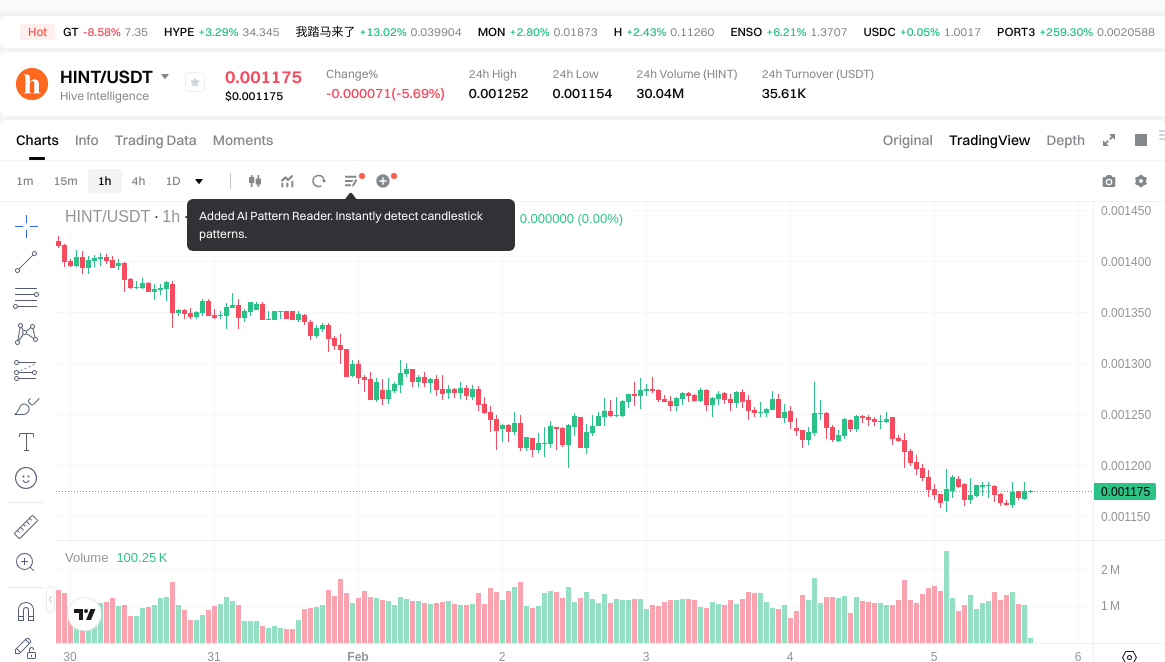
2025: HINT experienced notable volatility following its launch in January 2025, with the token reaching a peak of $0.044 on January 9, 2025. However, the price declined substantially in subsequent weeks, reflecting early-stage market dynamics and broader sentiment shifts in the crypto asset sector.
-
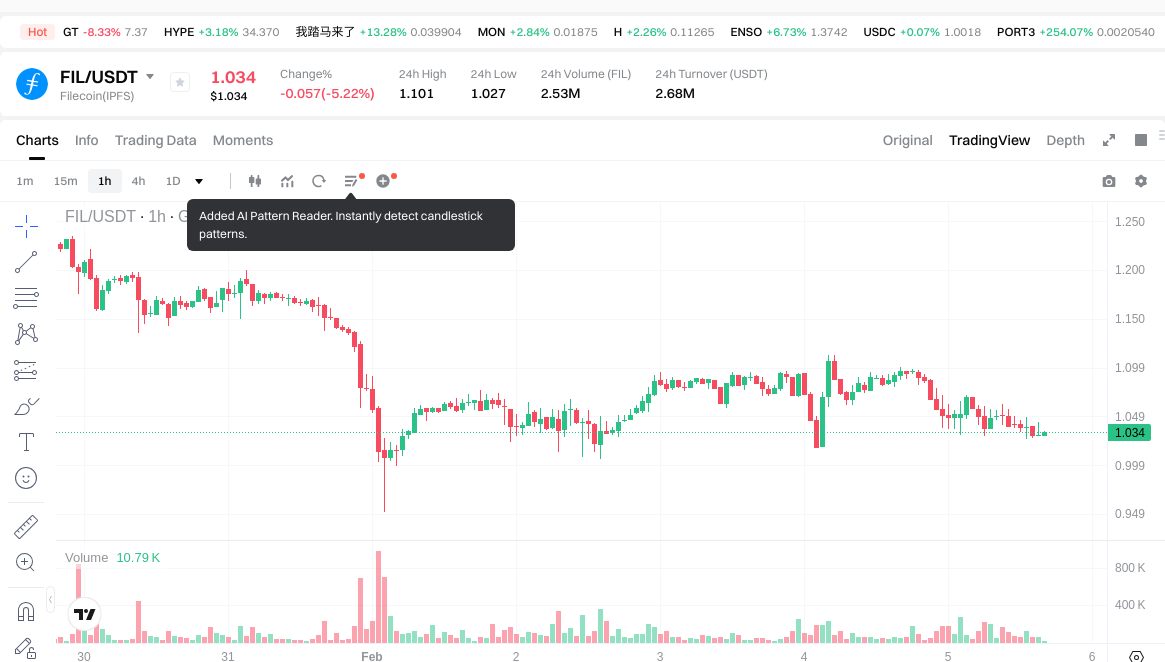
2021: FIL witnessed a significant price surge in early 2021, reaching an all-time high of $236.84 on April 1, 2021, driven by heightened interest in decentralized storage solutions and the broader bull market cycle. Since then, the token has experienced a prolonged downtrend, with prices declining over multiple years.
-
Comparative Analysis: During the recent market cycle, HINT declined from its peak of $0.044 to approximately $0.001176, representing a sharp correction of over 97%. In contrast, FIL has decreased from its historical high of $236.84 to around $1.03, marking a decline of approximately 99.5%. Both tokens have demonstrated substantial price retracements from their respective highs, reflecting broader market pressures and shifts in investor sentiment.
Current Market Status (February 5, 2026)
- HINT Current Price: $0.001176
- FIL Current Price: $1.03
- 24-Hour Trading Volume: HINT recorded approximately $35,716 in trading volume, while FIL reported around $2.68 million, indicating significantly higher liquidity and market activity for FIL.
- Market Sentiment Index (Fear & Greed Index): 12 (Extreme Fear)
View real-time prices:
- Check HINT current price Market Price
- Check FIL current price Market Price
II. Core Factors Influencing HINT vs FIL Investment Value
Supply Mechanism Comparison (Tokenomics)
- FIL: Filecoin implements a mining-based token distribution model where tokens are released through storage mining rewards. Miners contribute storage capacity and computational resources to earn FIL tokens, with the release schedule designed to incentivize long-term network participation.
- HINT: Information regarding HINT's supply mechanism was not available in the provided materials.
- 📌 Historical Pattern: Supply mechanisms in crypto assets have shown correlation with price cycles, where controlled token release schedules may influence market dynamics over time.
Institutional Adoption and Market Application
- Institutional Holdings: The provided materials did not contain specific comparative data on institutional holdings between HINT and FIL.
- Enterprise Adoption: FIL's value proposition centers on decentralized storage infrastructure through IPFS and Filecoin technology, targeting data storage and retrieval use cases. Information on HINT's enterprise applications was not available in the reference materials.
- Regulatory Environment: The materials did not provide specific information on regulatory stances toward either HINT or FIL across different jurisdictions.
Technology Development and Ecosystem Building
- FIL Technology: Filecoin's technical foundation includes IPFS (InterPlanetary File System) protocol for decentralized storage, with mining operations requiring both hardware components (computation and storage capacity) and software optimization. The value framework emphasizes the importance of understanding mining principles and core operational elements.
- HINT Technology: Technical development information for HINT was not available in the provided materials.
- Ecosystem Comparison: The reference materials did not contain specific comparative analysis of DeFi, NFT, payment solutions, or smart contract implementations for either asset.
Macroeconomic Factors and Market Cycles
- Performance in Inflationary Environments: The materials did not provide comparative analysis of HINT and FIL performance characteristics during different inflation scenarios.
- Macro Monetary Policy: Information on how interest rate changes, US dollar index movements, or other monetary policy factors specifically affect HINT versus FIL was not available in the reference materials.
- Geopolitical Considerations: The provided materials did not contain analysis of cross-border transaction demand or international developments impacting either asset's investment value.
III. 2026-2031 Price Forecast: HINT vs FIL
Short-term Forecast (2026)
- HINT: Conservative $0.001047 - $0.001176 | Optimistic $0.001176 - $0.001482
- FIL: Conservative $0.754 - $1.033 | Optimistic $1.033 - $1.333
Mid-term Forecast (2028-2029)
- HINT may enter a consolidation phase with estimated price range of $0.001280 - $0.001896 by 2028, potentially reaching $0.001478 - $0.001839 by 2029
- FIL may enter a growth phase with estimated price range of $0.923 - $1.673 by 2028, potentially reaching $1.118 - $1.901 by 2029
- Key drivers: institutional capital inflows, ETF developments, ecosystem expansion
Long-term Forecast (2030-2031)
- HINT: Base scenario $0.001583 - $0.002491 by 2030 | Optimistic scenario $0.001366 - $0.002626 by 2031
- FIL: Base scenario $1.492 - $2.297 by 2030 | Optimistic scenario $1.132 - $2.702 by 2031
Disclaimer
Price predictions are based on historical data analysis and market modeling. Actual results may vary significantly due to market volatility, regulatory changes, technological developments, and macroeconomic factors. This information is for reference purposes only and does not constitute investment advice.
HINT:
| Year | Predicted High Price | Predicted Average Price | Predicted Low Price | Price Change |
|---|---|---|---|---|
| 2026 | 0.00148176 | 0.001176 | 0.00104664 | 0 |
| 2027 | 0.0017541216 | 0.00132888 | 0.0006777288 | 13 |
| 2028 | 0.001896045984 | 0.0015415008 | 0.001279445664 | 31 |
| 2029 | 0.00183908752944 | 0.001718773392 | 0.00147814511712 | 46 |
| 2030 | 0.002490502645008 | 0.00177893046072 | 0.00158324811004 | 51 |
| 2031 | 0.002625701360022 | 0.002134716552864 | 0.001366218593832 | 81 |
FIL:
| Year | Predicted High Price | Predicted Average Price | Predicted Low Price | Price Change |
|---|---|---|---|---|
| 2026 | 1.33257 | 1.033 | 0.75409 | 0 |
| 2027 | 1.2774078 | 1.182785 | 0.8989166 | 14 |
| 2028 | 1.672931104 | 1.2300964 | 0.9225723 | 19 |
| 2029 | 1.90148301512 | 1.451513752 | 1.11766558904 | 40 |
| 2030 | 2.2968027854772 | 1.67649838356 | 1.4920835613684 | 62 |
| 2031 | 2.701844794945296 | 1.9866505845186 | 1.132390833175602 | 92 |
IV. Investment Strategy Comparison: HINT vs FIL
Long-term vs Short-term Investment Strategies
-
HINT: May appeal to investors with higher risk tolerance who are interested in emerging AI infrastructure projects and willing to accept significant volatility in early-stage assets. The token's recent launch and substantial price correction suggest it remains in an early developmental phase.
-
FIL: May be considered by investors interested in decentralized storage infrastructure with a longer operational history. The project has demonstrated sustained network activity since 2020, though it has experienced considerable price decline from historical peaks.
Risk Management and Asset Allocation
-
Conservative Investors: HINT 5-10% vs FIL 90-95% - Conservative portfolios might favor FIL due to its longer operational history, higher trading volume, and more established market presence.
-
Aggressive Investors: HINT 30-40% vs FIL 60-70% - More risk-tolerant portfolios might allocate a higher percentage to HINT while maintaining FIL as a core holding for relative stability within the allocation.
-
Hedging Tools: Stablecoin reserves for volatility management, options strategies where available, and cross-asset diversification across different crypto sectors may be considered as part of broader risk management approaches.
V. Potential Risk Comparison
Market Risk
-
HINT: The token exhibits characteristics common to newly launched assets, including limited liquidity with 24-hour trading volume of approximately $35,716, substantial price volatility with a decline of over 97% from its peak, and limited historical data for performance analysis.
-
FIL: While possessing higher liquidity with approximately $2.68 million in 24-hour trading volume, FIL has experienced an extended downtrend with approximately 99.5% decline from its historical high of $236.84, reflecting both project-specific factors and broader market cycle dynamics.
Technical Risk
-
HINT: Information regarding specific technical risks, scalability considerations, or network stability factors was not available in the reference materials.
-
FIL: The decentralized storage model involves technical considerations related to mining infrastructure requirements, storage capacity management, and network coordination mechanisms. The mining-based distribution model requires both computational and storage resources.
Regulatory Risk
- Global regulatory frameworks for crypto assets continue to evolve, with varying approaches across different jurisdictions. Both HINT and FIL may be subject to regulatory developments affecting trading, custody, and institutional participation, though specific regulatory positions toward either asset were not detailed in the available materials.
VI. Conclusion: Which Is the Better Buy?
📌 Investment Value Summary:
-
HINT Characteristics: Represents an early-stage project with positioning in AI infrastructure for blockchain data access, though with limited operational history, low liquidity, and substantial recent price volatility.
-
FIL Characteristics: Offers longer operational track record since 2020, higher market liquidity, established decentralized storage use case through IPFS technology, though with significant price decline from historical peaks.
✅ Investment Considerations:
-
Novice Investors: May benefit from prioritizing assets with longer operational histories, higher liquidity, and more established market presence before allocating to early-stage projects. Understanding fundamental concepts of decentralized storage and AI infrastructure applications is advisable before making allocation decisions.
-
Experienced Investors: Could consider portfolio diversification strategies that incorporate both established projects like FIL and emerging opportunities like HINT, with allocation sizes reflecting individual risk tolerance and market outlook. Continuous monitoring of project developments and market dynamics is recommended.
-
Institutional Investors: May focus on assets with sufficient liquidity for larger position sizes, established operational frameworks, and clearer regulatory pathways. Due diligence regarding custody solutions, counterparty risk, and compliance considerations is essential.
⚠️ Risk Disclosure: The cryptocurrency market exhibits extreme volatility and carries substantial risks including potential loss of capital. This analysis is for informational purposes only and does not constitute investment advice. Market participants should conduct independent research and consult qualified financial advisors before making investment decisions.
VII. FAQ
Q1: What are the main differences between HINT and FIL's supply mechanisms?
FIL employs a mining-based token distribution model where tokens are released through storage mining rewards, incentivizing long-term network participation by miners who contribute storage capacity and computational resources. In contrast, specific information about HINT's supply mechanism was not available in the reference materials, making direct comparison of tokenomics challenging for investors conducting due diligence.
Q2: Which asset demonstrates higher market liquidity for institutional-sized positions?
FIL exhibits significantly higher liquidity with approximately $2.68 million in 24-hour trading volume compared to HINT's $35,716. This substantial difference indicates that FIL can accommodate larger position sizes with reduced slippage risk, making it more suitable for institutional investors or traders requiring efficient entry and exit capabilities. HINT's limited liquidity suggests it remains in an early developmental stage with constrained market depth.
Q3: How have HINT and FIL performed relative to their historical price peaks?
Both assets have experienced substantial declines from their respective peaks. HINT has declined approximately 97% from its January 2025 peak of $0.044 to the current price of $0.001176, while FIL has decreased approximately 99.5% from its April 2021 all-time high of $236.84 to around $1.03. These significant retracements reflect both project-specific factors and broader market cycle pressures affecting the cryptocurrency sector.
Q4: What are the primary use cases differentiating HINT from FIL?
FIL's value proposition centers on decentralized storage infrastructure through IPFS technology, targeting data storage and retrieval applications where network participants contribute storage capacity to earn rewards. HINT positions itself as an infrastructure layer for AI agents, providing unified API access for real-time blockchain data to address fragmentation in on-chain queries. These distinct use cases represent different technological approaches within the crypto ecosystem.
Q5: What risk factors should investors consider when comparing HINT versus FIL?
HINT presents risks associated with early-stage projects including limited liquidity, substantial price volatility, and limited operational history since its January 2025 launch. FIL carries risks related to prolonged price decline from historical peaks, mining infrastructure requirements, and technical considerations for decentralized storage networks. Both assets face broader market risks including regulatory uncertainty and macroeconomic factors affecting cryptocurrency valuations.
Q6: Which investment allocation strategy is appropriate for different investor profiles?
Conservative investors might consider allocating 5-10% to HINT versus 90-95% to FIL, prioritizing the latter's longer operational history and higher liquidity. Aggressive investors with higher risk tolerance could potentially allocate 30-40% to HINT while maintaining 60-70% in FIL for relative stability. These allocation frameworks should be adjusted based on individual risk tolerance, investment horizon, and comprehensive due diligence of each project's fundamentals.
Q7: What are the projected price ranges for HINT and FIL through 2031?
Short-term forecasts for 2026 estimate HINT's conservative range at $0.001047-$0.001176 and optimistic range at $0.001176-$0.001482, while FIL's conservative range is projected at $0.754-$1.033 and optimistic range at $1.033-$1.333. Long-term projections for 2031 estimate HINT's base scenario at $0.001583-$0.002491 and FIL's base scenario at $1.492-$2.297. However, these predictions carry substantial uncertainty due to market volatility, regulatory developments, and technological changes.
Q8: What technical infrastructure supports FIL's decentralized storage model?
FIL's technical foundation incorporates IPFS (InterPlanetary File System) protocol for decentralized storage operations, with mining activities requiring both hardware components including computation and storage capacity, as well as software optimization. The mining-based distribution model necessitates coordination mechanisms for storage capacity management and network stability. Understanding these technical requirements is essential for evaluating FIL's operational framework and long-term sustainability.
Share
Content
Introduction: Investment Comparison Between HINT and FIL
I. Historical Price Comparison and Current Market Status
II. Core Factors Influencing HINT vs FIL Investment Value
III. 2026-2031 Price Forecast: HINT vs FIL
IV. Investment Strategy Comparison: HINT vs FIL
V. Potential Risk Comparison
VI. Conclusion: Which Is the Better Buy?
VII. FAQ
How to Buy Cryptocurrency


Trending Cryptocurrencies



Top 10 DePIN Crypto Projects to Invest in 2025

How to Participate in a DePIN Project
What is DePIN?How Does DePIN Work?

What Does Onyxcoin's DApp Ecosystem Look Like in 2025?

How to Earn with The RWA DePin Protocol in 2025

TrendX (XTTA): An Innovative Investment Platform Integrating AI and DePIN

How does macroeconomic policy impact HBAR crypto price movements in 2026?
What Is a Physical Bitcoin and What Is Its Worth?
What is Bitcoin Cash price volatility: BCH price analysis from $548.88 with 3.67% 24-hour fluctuation

How to Analyze On-Chain Data: Active Addresses, Transaction Volume, and Whale Distribution in 2026

Leading NFT Artists Worth Watching