How do competing cryptocurrencies compare in market cap, performance, and user adoption in 2026?
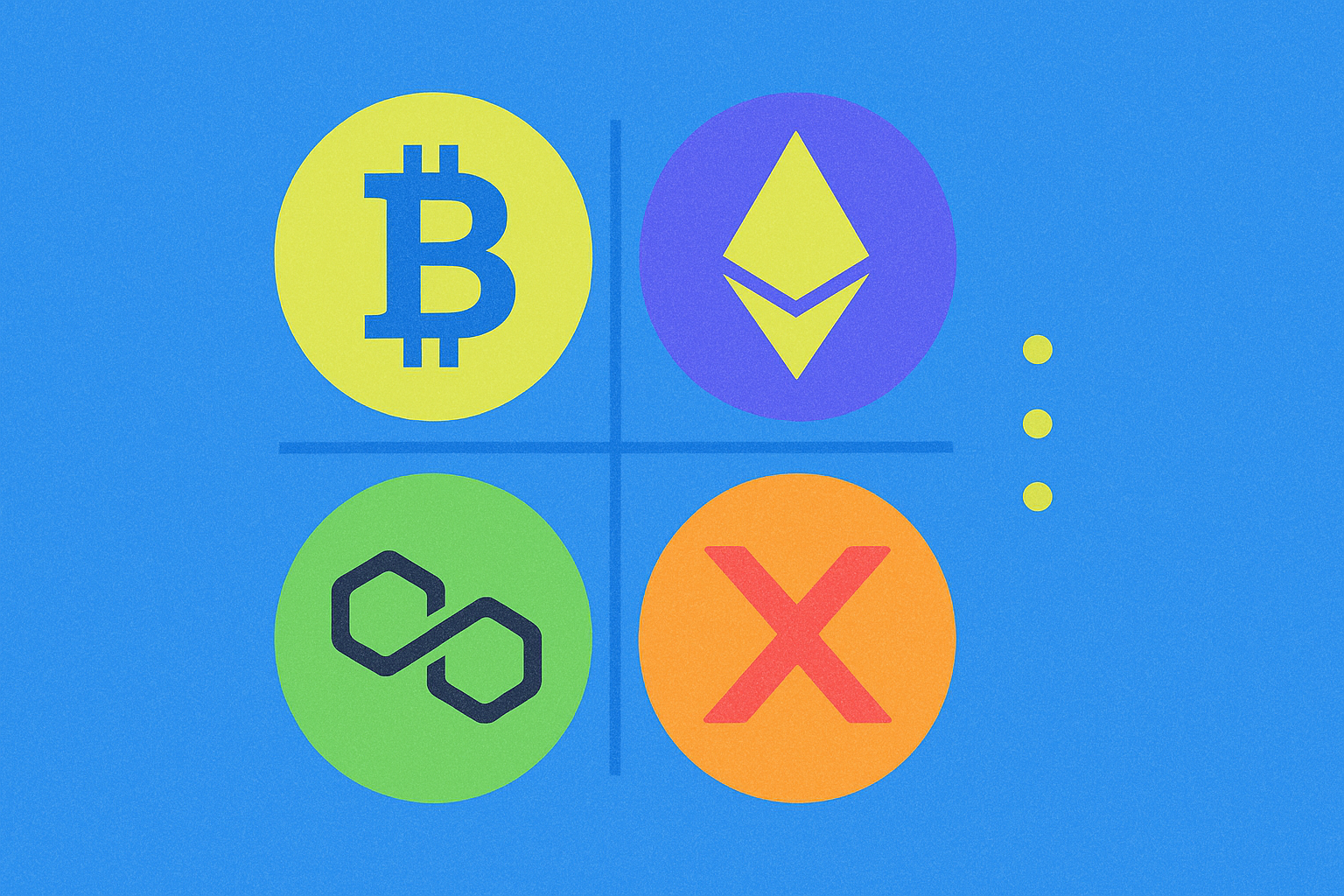
Market Capitalization and Dominance: Bitcoin and Ethereum maintain 60-70% combined market share despite emerging competitors
Bitcoin and Ethereum's iron grip on the cryptocurrency market reflects fundamental shifts in capital flows and institutional participation throughout 2026. With Bitcoin maintaining dominance near 59% and the two largest cryptocurrencies commanding 60-70% of total market capitalization, the concentration underscores how the market has restructured around institutional players and exchange-traded fund mandates. Rather than organic market dynamics, this dominance stems from how capital now routes primarily through Bitcoin and Ethereum via ETFs and Digital Asset Trusts, creating what market analysts describe as "walled gardens" that restrict natural capital rotation into alternative cryptocurrencies.
The consequence is striking: altcoins find themselves systematically disadvantaged. Average cryptocurrency rally durations have compressed from 60 days in 2024 to just 19 days in 2025-2026, as liquidity concentration tightens around established tokens. For emerging competitors to challenge this market share distribution, three catalysts would need to materialize: ETF mandates expanding to include broader asset classes, a significant bull run in major tokens that triggers broader investor participation, or a meaningful shift in retail capital returning to cryptocurrencies from traditional equities. Until then, Bitcoin and Ethereum's combined market capitalization dominance appears structurally supported by the very infrastructure—institutional adoption, regulatory clarity, and ETF frameworks—designed to bring cryptocurrency into mainstream finance.
Performance Metrics and Adoption Rates: Layer-2 solutions and alternative L1 chains show 300-500% transaction growth in 2026
The explosive expansion of transaction activity across Layer-2 solutions and alternative L1 chains has fundamentally reshaped blockchain performance metrics throughout 2026. Networks operating on Layer-2 infrastructure experienced 300-500% growth in transaction volume, representing a watershed moment for blockchain scalability and user adoption. This remarkable surge reflects the maturation of off-chain processing technologies that maintain mainnet security while dramatically increasing throughput capacity.
Polygon and Immutable X emerged as primary drivers of this adoption wave, with Polygon establishing itself across DeFi, gaming, and real-world payment applications, while Immutable X captured explosive NFT and gaming demand through its zero-fee trading mechanism. These alternative L1 chains and Layer-2 platforms achieved transaction speeds measured in thousands per second, reducing fees from dollars to fractions of cents—a transformation that made blockchain technology genuinely practical for mass adoption. The performance metrics illustrate this tangible shift: faster confirmation times, reduced capital requirements for users, and sustainable economics for developers created a virtuous cycle driving ecosystem growth.
Adoption rates accelerated as these networks demonstrated genuine utility beyond speculation. Stablecoin settlements, high-volume DeFi transactions, and NFT marketplaces migrated to Layer-2 solutions precisely because blockchain scalability improvements enabled efficient execution at scale. Total value locked in these ecosystems expanded proportionally with transaction growth, confirming that increased activity reflected authentic user demand rather than artificial metrics. This performance-driven adoption positioned Layer-2 solutions and alternative L1 chains as essential competitive forces reshaping how cryptocurrencies capture market share and user engagement in 2026.
Competitive Differentiation: Staking yields, transaction speed, and developer ecosystems become primary competitive advantages
In 2026, cryptocurrency projects distinguish themselves through three critical performance metrics that directly influence market competitiveness and user adoption. Staking yields have become essential revenue streams for token holders, offering passive income opportunities that incentivize long-term participation and network security. Projects providing competitive staking yields attract investors seeking returns, creating a feedback loop that strengthens ecosystem liquidity and user retention.
Transaction speed represents another fundamental differentiator affecting user experience and market viability. Faster blockchain networks enable more efficient DeFi operations, gaming interactions, and cross-chain functionality, making transaction speed a key factor in adoption rates. Users increasingly prefer platforms processing transactions at scale without congestion, directly impacting which projects capture market share.
Developer ecosystems form the backbone of innovation and ecosystem growth. Robust development infrastructure, comprehensive documentation, and accessible tools encourage builders to create applications on these platforms. Projects investing in developer support foster network effects that compound over time, generating new use cases and strengthening competitive positioning.
MAGIC exemplifies this differentiation strategy within its ecosystem. Operating at the intersection of DeFi, NFT, and gaming, MAGIC provides yield mechanisms through gaming participation and Bridgeworld engagement, enabling holders to transform NFT assets into productive, revenue-generating resources. The interconnected resource model linking MAGIC, NFT treasures, and player legions demonstrates how integrated design creates competitive advantages. With 317.7 million tokens in circulation and an active holder base exceeding 412,000, MAGIC's ecosystem reflects growing user adoption through these combined competitive factors, positioning it distinctly within the broader cryptocurrency landscape.
Market Share Evolution: Altcoins capture increased institutional adoption while meme coins face regulatory headwinds
The cryptocurrency landscape in 2026 reveals a stark bifurcation between altcoins gaining mainstream institutional traction and meme coins struggling under regulatory pressure. Institutional investors now employ a structured portfolio framework allocating 60-80% to Bitcoin as core holdings, 15-25% to Ethereum as secondary exposure, and 5-10% to altcoins as satellite positions. This institutional-grade approach has dramatically reshaped market dynamics, with altcoins benefiting from accelerating ETF inflows and venture capital investments targeting DeFi tokens, tokenized assets, and ecosystem tokens.
Conversely, meme coins face significant headwinds. The issuance of over 13 million memecoins in 2025 exposed regulatory gaps, prompting calls for frameworks like the Digital Asset Market Clarity Act. While meme coins demonstrated a 23% market cap increase in early 2026, only 12% of investors remained optimistic about their returns, reflecting persistent speculation concerns and selling pressures. Regulatory clarity and institutional-grade custody solutions—such as qualified custodians with $100M+ insurance and multi-party computation platforms—have become differentiators for altcoin adoption among sophisticated investors.
This divergence underscores how institutional maturation reshapes market share dynamics. Altcoins with genuine utility and compliance infrastructure attract diversified portfolio allocations, while meme coins remain confined to retail speculation without regulatory protection or institutional backing.
FAQ
What are the top ten cryptocurrencies by market cap ranking in 2026, and what changes have occurred compared to 2024?
In 2026, Bitcoin and Ethereum maintain leadership positions. Stablecoins expanded significantly, now ranking among top assets. Emerging DeFi tokens, tokenized US treasuries, and Layer 2 solution tokens entered top rankings. Compared to 2024, stablecoins surged beyond $300B, RWA tokens grew substantially, and L2 ecosystems strengthened considerably.
What are the differences between Bitcoin, Ethereum, and other mainstream cryptocurrencies in transaction speed, fees, and scalability?
Bitcoin processes 3-7 transactions per second with lower but fixed fees, suited for large transfers. Ethereum handles 15-30 TPS with variable fees, enhanced by Layer 2 solutions like Rollups. Other cryptocurrencies vary widely in speed and scalability. Ethereum offers superior programmability for complex applications.
Which cryptocurrencies are growing fastest in user adoption and real-world applications by 2026?
By 2026, Ethereum 2.0, Solana, and Bitcoin layer-2 solutions lead in user adoption and real-world applications. These networks drive growth through enhanced scalability, lower transaction fees, and expanding DeFi, NFT, and payment ecosystems.
What is the predicted total market cap of the cryptocurrency market in 2026, and what are the main growth drivers?
The crypto market is projected to reach approximately 2.8 trillion USD by 2026. Key growth drivers include institutional investment adoption, improved regulatory frameworks, Bitcoin maturation as a digital store of value, ETF expansion, and mainstream enterprise blockchain integration.
What competitive advantages do different blockchain projects like Solana, Cardano, and Polkadot have compared to Ethereum?
Solana excels in high throughput and low transaction fees, Cardano emphasizes scientific rigor and decentralization with 3000 stake pools, while Polkadot offers cross-chain interoperability. Each challenges Ethereum's dominance through distinct scalability and architectural innovations.
Which emerging cryptocurrencies have potential to enter the top ten market cap rankings in 2026, and why?
Ethereum, Solana, and Chainlink lead emerging contenders through superior technology and scalability. Arbitrum, Filecoin, and Celestia gain traction via layer-two solutions, decentralized storage, and modular architecture. Real-world asset tokenization and institutional adoption drive their market cap growth in 2026.
How will institutional investment and mainstream adoption impact the competitive landscape of cryptocurrencies in 2026?
Institutional investment and mainstream adoption will accelerate hybrid finance models combining traditional finance with blockchain, drive stablecoin payment adoption, expand tokenized assets from 20 billion to 400 billion USD, and shift competition toward platforms with quantum resistance, regulatory clarity, and developer ecosystems.
Share
Content
Market Capitalization and Dominance: Bitcoin and Ethereum maintain 60-70% combined market share despite emerging competitors
Performance Metrics and Adoption Rates: Layer-2 solutions and alternative L1 chains show 300-500% transaction growth in 2026
Competitive Differentiation: Staking yields, transaction speed, and developer ecosystems become primary competitive advantages
Market Share Evolution: Altcoins capture increased institutional adoption while meme coins face regulatory headwinds
FAQ
How to Buy Cryptocurrency


Trending Cryptocurrencies



How to Mine Ethereum in 2025: A Complete Guide for Beginners
Ethereum 2.0 in 2025: Staking, Scalability, and Environmental Impact

What is Ethereum: A 2025 Guide for Crypto Enthusiasts and Investors

How does Ethereum's blockchain technology work?

What are smart contracts and how do they work on Ethereum?

Ethereum Price Analysis: 2025 Market Trends and Web3 Impact

What is PAX Gold (PAXG)? A Complete Fundamentals Analysis Guide for 2026

Comprehensive Guide to Flash Loans

How to Use MACD, RSI, and Bollinger Bands for Technical Indicators Analysis in Crypto Trading

How Active Is Sui's Community and Ecosystem With 470K Daily Active Addresses and $7.85B DeFi TVL?
Top Cryptocurrency Platforms for Registration Bonuses and Welcome Rewards