How to Withdraw Cash from a Bitcoin ATM: A Comprehensive Guide

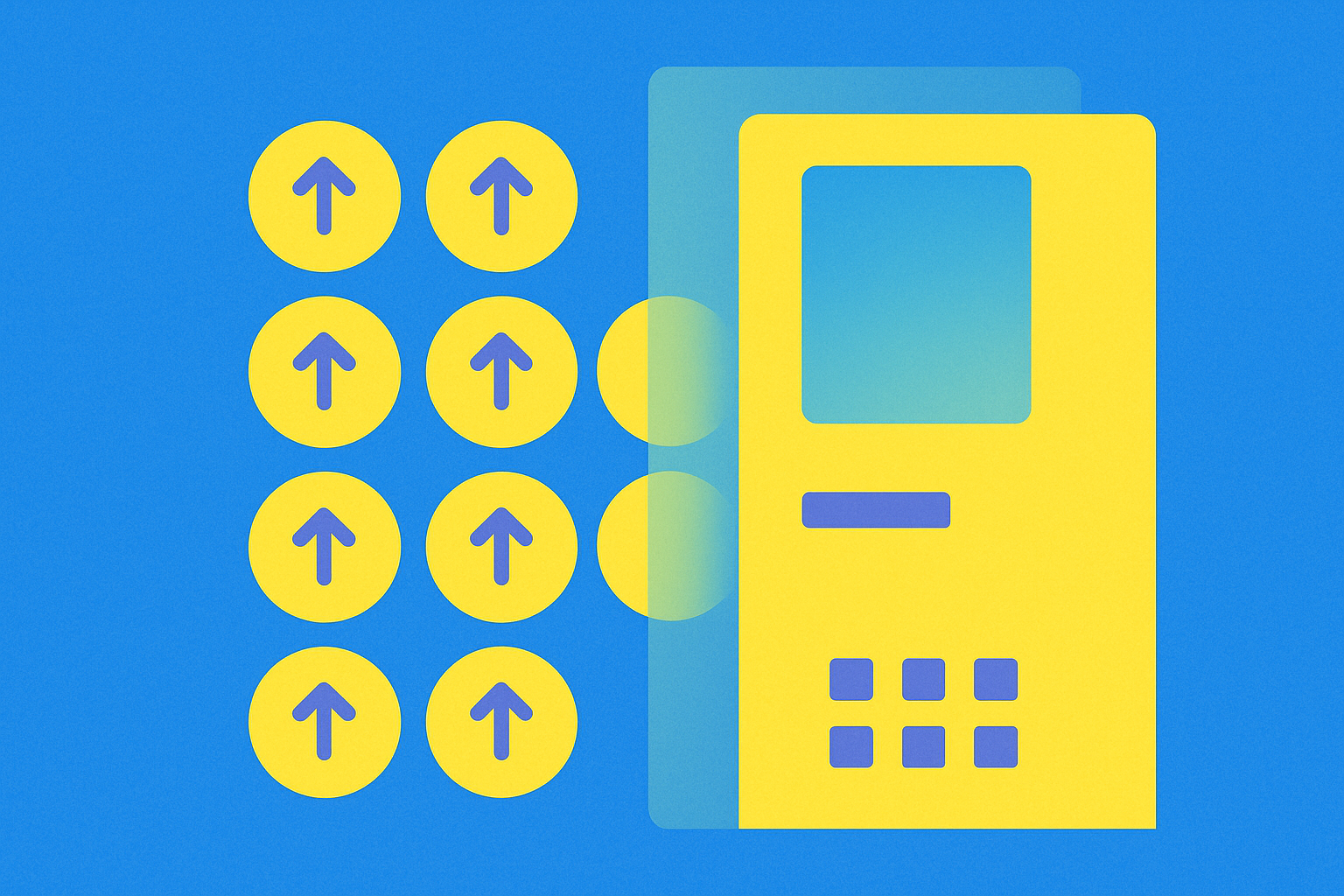
How to Withdraw Cash Anonymously at a Bitcoin ATM (Cryptomat)
Bitomat cryptomats provide a higher level of privacy than traditional exchange platforms. For certain transaction limits, they require only minimal verification, in line with local anti-money laundering regulations. This makes them an appealing choice for users who prioritize privacy in their financial activities.
Withdrawing funds from a cryptomat is straightforward and intuitive:
- Locate your nearest Bitomat Bitcoin ATM and select “Sell Cryptocurrency” on the terminal screen.
- Take the printed receipt with a QR code. Scan it in your crypto wallet app to initiate the transaction.
- Wait for blockchain confirmation—this usually takes a few minutes up to half an hour, depending on network congestion.
- Once confirmed on the blockchain, return to the ATM and scan the barcode on your earlier receipt.
- Collect your cash and keep the receipt for your records.
- The receipt may be necessary if you experience technical issues or need to contact support.
- Alternative method: You can also initiate a cryptocurrency sale online via the official website. Follow the site instructions, then bring the issued receipt to your nearest Bitomat cryptomat to complete the transaction and receive cash.
How to Buy Bitcoin Anonymously at a Bitcoin ATM (Cryptomat)
Using a Bitcoin ATM to buy cryptocurrency is a fast and relatively anonymous way to acquire digital assets with cash. The process is streamlined for maximum user convenience:
- Find your nearest Bitomat ATM using the map on the official website or a dedicated cryptomat locator.
- Insert cash into the terminal’s bill acceptor. Ensure your bills are undamaged and meet ATM requirements.
- Open your crypto wallet app and generate a QR code in the “Receive” section.
- Scan your wallet’s QR code at the ATM using the built-in scanner.
- Wait for blockchain confirmation. Your cryptocurrency will be credited after the required number of network confirmations.
- Collect the printed receipt with transaction details and keep it in case you need to contact support or verify the operation.
Types of Bitcoin ATMs (Cryptomats)
The crypto ATM industry has advanced significantly in recent years, offering a variety of devices. Functionally, there are two main types of Bitcoin ATMs: one-way and two-way machines.
One-way ATMs allow only a single operation—either buying cryptocurrency with cash or selling digital assets for fiat currency. These machines are generally simpler and less expensive to maintain.
Two-way cryptomats are more versatile, enabling both buying and selling of cryptocurrency. This makes them more convenient for users.
Available features may vary depending on the manufacturer, operator, and location. This includes the list of supported cryptocurrencies (Bitcoin, Ethereum, Litecoin, USDT, and others), transaction limits, identity verification requirements, and fee levels.
How Bitcoin ATMs (Cryptomats) Work
Bitcoin ATMs operate differently from traditional bank terminals. Instead of linking to the banking system, the ATM connects directly to a crypto exchange or the operator’s reserves. In this setup, your Bitcoin wallet replaces a debit or credit card.
When you buy or sell cryptocurrency at these ATMs, you’re essentially executing an exchange trade, with the machine acting as an intermediary. The process is as follows:
- To buy: You deposit cash, the ATM sends a request to the exchange or uses its own reserves, and the cryptocurrency is transferred to your specified wallet.
- To sell: You send cryptocurrency to the address provided by the ATM, and once blockchain confirmation is received, the machine dispenses cash.
Most transactions are completed in a few minutes to half an hour, depending on how quickly the selected cryptocurrency’s blockchain processes confirmations.
Advantages and Disadvantages of Bitcoin ATMs (Cryptomats)
Bitcoin ATMs have notable strengths and weaknesses to consider when choosing how to interact with cryptocurrency. According to Coin ATM Radar, average cryptomat transaction fees range from 8% to 15% or higher. However, some providers—such as Bitomat—offer lower rates, charging about 3–4% per transaction.
| Advantages | Disadvantages |
|---|---|
| Simple, accessible way to buy crypto for those without banking access or who prefer cash | KYC (identity verification) may be needed if you exceed certain limits |
| Transactions are nearly instant compared to bank transfers | Fees are relatively high versus direct trading on exchanges |
| Highly convenient for cash transactions without a bank account | Maximum transaction amounts are restricted by regulators and operators |
| Usually feature an intuitive interface that doesn’t require technical expertise | Limited geographic presence—cryptomats aren’t available in all cities or regions |
| Great for those who don’t want to register with exchanges or provide bank data | Ethereum and some other crypto transactions may require extra preparation beforehand |
How to Find a Nearby Bitcoin ATM (Cryptomat)
Online platforms have made finding a nearby crypto ATM much easier. Services like Coin ATM Radar help you quickly locate a suitable terminal in your area.
On the Coin ATM Radar website, you can filter for ATMs by various criteria:
- Geographic location (country, city, district)
- Supported cryptocurrencies (Bitcoin, Ethereum, Litecoin, etc.)
- Available services (buy only, sell only, or both)
- Identity verification requirements
- Fee amounts
Other options include searching Google Maps for “bitcoin ATM” or “cryptomat,” as well as checking the official website of an operator such as Bitomat.com, which maintains an up-to-date map of all active network terminals.
How Much Can You Withdraw From a Bitcoin ATM?
Maximum withdrawal amounts at crypto ATMs are determined by several factors. Local anti-money laundering (AML) and counter-terrorism financing laws play a major role. Operators may also set additional limits for security and liquidity management.
Bitomat.com’s Bitcoin ATM network has the following country-specific limits:
- Turkey: Up to 185,000 Turkish lira without mandatory KYC
- Ukraine: Single transaction limit is 30,000 hryvnias
- Poland: Up to 15 transactions without KYC, maximum €1,000 each
- Bosnia and Herzegovina: Up to 29,990 Bosnian marks without mandatory verification
- Peru: Up to 29,990 Peruvian soles without KYC
- Bulgaria: Up to 9,750 Bulgarian levs without identity verification
- Romania: Up to 10,000 Romanian lei without mandatory KYC
- Slovakia: Up to €10,000 without KYC; per transaction limit €5,000
- Spain: Daily withdrawal limit without verification is €1,000
- Slovenia: KYC required for all operations; per transaction limit €4,990
- Cyprus: Up to €1,000 without mandatory verification
- Chile: Up to $990 without KYC
- Italy, South Africa, Greece, Brazil, Macedonia: KYC is mandatory for all transactions, regardless of amount
Is It Legal to Withdraw Cryptocurrency at a Cryptomat?
The legality of using crypto ATMs is a concern for many potential users. In most countries, withdrawing bitcoin and other digital assets at specialized ATMs is fully legal.
In almost all regions where digital assets are permitted, buying and selling crypto through ATMs is legal. Operators comply with local laws and regulatory requirements, including anti-money laundering (AML) rules and know-your-customer (KYC) procedures.
There are a few exceptions: some countries, such as Bolivia and Algeria, have completely banned cryptocurrency use, which makes legal cryptomat operation impossible in those jurisdictions. Always check your country’s current digital asset regulations before using a Bitcoin ATM.
What Are the Fees at Bitcoin ATMs?
Crypto ATM fee structures differ significantly from those at bank ATMs. Instead of a flat cash withdrawal fee, Bitcoin ATMs typically charge a percentage of the transaction amount.
According to Coin ATM Radar, global average cryptomat fees are about 8–15%, and can sometimes be higher. These fees typically include:
- Operator’s administrative costs
- Blockchain network fees
- Buy-sell price spread
- Liquidity provision costs
Some operators offer more competitive rates. For example, Bitomat charges about 3–4% per transaction—substantially lower than the industry average—which appeals to frequent crypto users.
Maximum Withdrawal Amount at a Bitcoin ATM
Maximum withdrawal limits at crypto ATMs depend on several key factors: local fiat currency, the type of cryptocurrency used, and local anti-money laundering and KYC requirements.
Bitomat cryptomats operate under these parameters:
Customer verification levels:
- Basic: €0 or up to €1,000 without mandatory verification, depending on jurisdiction
- Advanced: Up to €15,000 per day after KYC completion
Supported fiat currencies:
- Main: EUR (euro), GBP (British pound), USD (US dollar)
- National currencies of each country
Supported cryptocurrencies:
- Bitcoin (BTC)
- Ethereum (ETH)
- Tether (USDT)
- USD Coin (USDC)
- Litecoin (LTC)
- Tron (TRX)
- Dash (DASH)
Geographic coverage:
- Over 260 locations across three continents (Europe, Africa, South America)
Are Bitcoin ATMs Anonymous?
Anonymity is one of the most discussed topics around crypto ATMs. The degree of privacy depends on several factors, and varies widely by jurisdiction and operator.
Many countries impose strict requirements, which may include:
- Mandatory KYC for all transactions or those above a set threshold
- Video surveillance at ATM locations
- Operator requirements to store user data for a legally defined period
- Providing transaction data to regulators upon request
Some cryptomat operators use tiered verification policies. With these systems, users only need to provide personal details and complete identification for large transactions exceeding set limits.
For small transactions under the KYC threshold, many cryptomats allow operations with minimal verification—sometimes only requiring a phone number for confirmation. This ensures a basic level of privacy for users making smaller crypto trades.
What Happens When You Sell Bitcoin at a Cryptomat?
Selling bitcoin at a crypto ATM involves several technical steps handled behind the scenes. When you start a sale, the ATM automatically sends your request to a crypto exchange or the operator’s reserve.
The ATM acts purely as a technical intermediary between you and the exchange, where buy and sell orders are executed. Here’s how it works:
- You scan the ATM’s QR code in your wallet app
- You send the indicated bitcoin amount to the operator’s address
- The operator receives your transaction and waits for the required number of blockchain confirmations (usually one to six)
- Once confirmed, the operator either sells the bitcoin on an exchange at the current market rate or adds it to its reserve
- The ATM dispenses the cash equivalent, minus any applicable fees
The full operation usually takes 10 to 30 minutes, depending on Bitcoin network congestion.
Bitcoin ATMs (Cryptomats) in Kyiv: How to Find Them
Several Bitcoin ATMs are located in Kyiv, providing convenient access to crypto transactions. All Kyiv terminals follow the same rules: identity verification is required only for transactions above 30,000 hryvnias. The maximum daily limit is 400,000 hryvnias, with a per-transaction cap of 49,999 hryvnias.
Location 1: Les Kurbas Avenue
- Address: 03194, Kyiv, Les Kurbas Ave., 19A
- Location: Second floor of the shopping center, near the lottery kiosk and Ukrzoloto jewelry store
- Hours: Daily, 7:00–23:00, no holidays
- Features: Convenient location, easy to reach by public transport
Location 2: Ocean Plaza Shopping Center
- Address: Antonovycha St., 176, Kyiv, 03150
- Location: Ground floor of the shopping center, next to the Pazzolini boutique
- Hours: Monday–Sunday, 10:00–22:00
- Features: In one of Kyiv’s largest malls with excellent amenities
Both terminals handle Ukrainian hryvnia—accepting cash for purchases and dispensing cash for sales. For the latest operating hours, check the operator’s official website before your visit.
FAQ
What Is a Bitcoin ATM and How Does It Work?
A Bitcoin ATM is a self-service terminal that lets you exchange cash or cards for bitcoin and other cryptocurrencies. Users enter transaction details, complete identity verification, and finalize the exchange. The machine stores crypto assets in a secure vault.
How Do I Find a Bitcoin ATM Near Me?
Use Google Maps and search for “bitcoin ATM near me.” Filter results by service (buy or sell). Check supported cryptocurrencies and hours before your visit.
What Fees Will I Pay to Withdraw Cash at a Bitcoin ATM?
Withdrawal fees at Bitcoin ATMs are typically 7%–20% of the transaction amount. The exact percentage depends on the operator and device.
What Are the Steps to Withdraw at a Bitcoin ATM?
Insert cash into the ATM. Scan the QR code printed by the machine using your trading app. Bitcoins are credited to your account at the current exchange rate.
What Risks and Security Measures Should I Be Aware Of When Withdrawing at a Bitcoin ATM?
Major risks include physical attacks and device hacking. Safeguard your personal information, inspect the ATM before use, and choose secure, reputable locations. Check for tampering or damage before starting your transaction.
Are There Limits on Withdrawal Amounts at Bitcoin ATMs?
Yes, Bitcoin ATMs have withdrawal limits. These vary by region and operator, typically ranging from a few hundred to several thousand dollars per transaction.
How Does a Bitcoin ATM Differ From a Traditional Bank Terminal?
A Bitcoin ATM exchanges cryptocurrency for cash without a bank account, operates independently from the banking system, and typically charges higher fees and processes transactions more slowly than a conventional ATM.
Share
Content
How to Withdraw Cash Anonymously at a Bitcoin ATM (Cryptomat)
How to Buy Bitcoin Anonymously at a Bitcoin ATM (Cryptomat)
Types of Bitcoin ATMs (Cryptomats)
How Bitcoin ATMs (Cryptomats) Work
Advantages and Disadvantages of Bitcoin ATMs (Cryptomats)
How to Find a Nearby Bitcoin ATM (Cryptomat)
How Much Can You Withdraw From a Bitcoin ATM?
Is It Legal to Withdraw Cryptocurrency at a Cryptomat?
What Are the Fees at Bitcoin ATMs?
Maximum Withdrawal Amount at a Bitcoin ATM
Are Bitcoin ATMs Anonymous?
What Happens When You Sell Bitcoin at a Cryptomat?
Bitcoin ATMs (Cryptomats) in Kyiv: How to Find Them
FAQ
How to Buy Cryptocurrency


Trending Cryptocurrencies



Where to Buy Labubu in Japan: Top Stores and Online Shops 2025

How to Trade Bitcoin in 2025: A Beginner's Guide

Quick Beginner’s Guide: How to Buy Crypto Fast
How to Earn NXPC Tokens on Gate Launchpool in 2025
How to Buy Crypto Assets: A Comprehensive Guide for Every Investor

Zero-risk Investment: Steps and Precautions for Buying Crypto Assets

Cryptocurrency Halving Explained: The Comprehensive Guide
Top Cold Wallets for Cryptocurrency: Rankings
Home Bitcoin Mining: A Beginner’s Guide
Comprehensive Guide to Cronos Price Predictions and Investment Analysis

Comprehensive Guide to Corporate Bankruptcy Restructuring: John J. Ray III's Proven Strategies