This comprehensive analysis compares INSP and GRT as investment strategies within modern portfolio management. INSP, launched in 2023 as a Layer 2 social ecosystem solution, trades at $0.001984 with lower liquidity. GRT, an established decentralized blockchain indexing protocol since 2020, trades at $0.02989 with superior trading volume. The article examines historical price trends, tokenomics, institutional adoption, and technical ecosystems. Price forecasts through 2031 indicate GRT projecting higher absolute values while INSP shows greater percentage upside potential. Investment recommendations vary by profile: conservative investors favor GRT's liquidity and stability, while experienced investors may diversify between both assets. Current market conditions show extreme fear sentiment (index: 14), presenting potential opportunities for strategic positioning. Access real-time pricing on Gate for informed decision-making.
Introduction: Investment Comparison Between INSP and GRT
In the cryptocurrency market, the comparison between INSP vs GRT has always been a topic that investors cannot avoid. The two not only show significant differences in market cap ranking, application scenarios, and price performance, but also represent different crypto asset positioning.
INSP (Inspect): Launched in 2023, it has gained market recognition as a Layer 2 solution empowering users within social ecosystems like X (Twitter) with tools and insights for navigating cryptocurrencies and NFTs.
GRT (The Graph): Since its launch in 2020, it has been regarded as a decentralized protocol for indexing and querying blockchain data, and is one of the widely adopted infrastructure projects in the crypto space.
This article will provide a comprehensive analysis of the investment value comparison between INSP vs GRT, focusing on historical price trends, supply mechanisms, institutional adoption, technical ecosystems, and future predictions, and attempt to answer the question that investors are most concerned about:
"Which is the better buy right now?"
I. Price History Comparison and Market Status
INSP (Coin A) and GRT (Coin B) Historical Price Trends
- 2024: INSP reached a notable price level of $0.4 in March 2024, representing a significant peak during its early trading period.
- 2021: GRT experienced substantial growth during the broader crypto market expansion, reaching $2.84 in February 2021, driven by increased adoption of its decentralized indexing protocol.
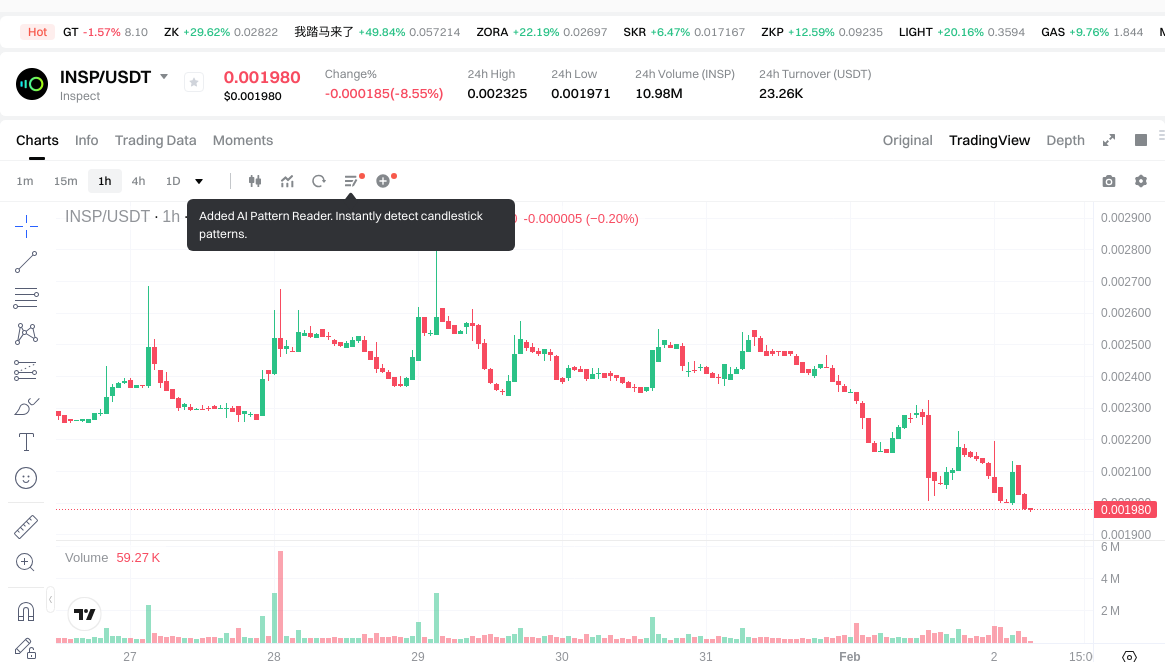
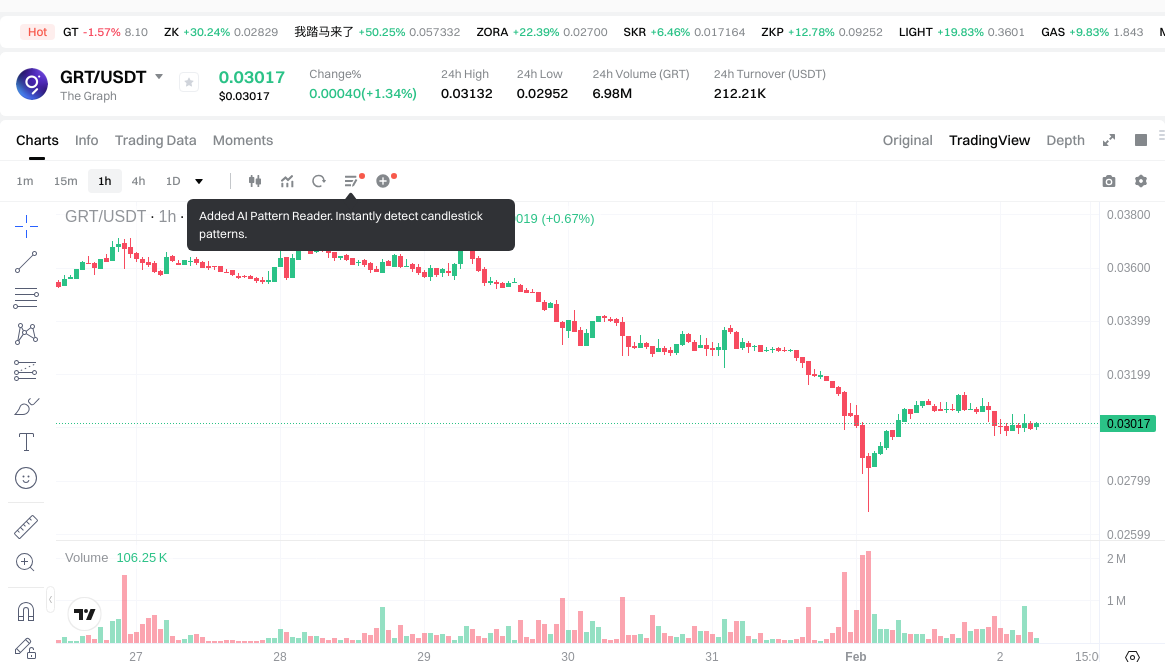
- Comparative Analysis: During the recent market cycle, INSP declined from $0.4 to $0.001971, while GRT decreased from $2.84 to $0.02834245, showing both assets faced significant downward pressure.
Current Market Status (2026-02-02)
- INSP Current Price: $0.001984
- GRT Current Price: $0.02989
- 24-Hour Trading Volume: INSP $23,374.12 vs GRT $210,671.86
- Market Sentiment Index (Fear & Greed Index): 14 (Extreme Fear)
View Real-Time Prices:
II. Core Factors Influencing INSP vs GRT Investment Value
Supply Mechanism Comparison (Tokenomics)
- INSP: The provided materials do not contain information regarding INSP's supply mechanism or tokenomics structure.
- GRT: The provided materials do not contain information regarding GRT's supply mechanism or tokenomics structure.
- 📌 Historical Pattern: Supply mechanisms may influence price cycles through scarcity dynamics and emission schedules, though specific data for these assets is not available in the reference materials.
Institutional Adoption and Market Application
- Institutional Holdings: The reference materials mention that INSP's fair value estimate stands at 226 USD based on discounted cash flow analysis, with analyst target prices around 214 USD, suggesting potential institutional interest. However, specific institutional holding data for either asset is not provided.
- Enterprise Adoption: The materials do not contain comparative information on INSP or GRT's applications in cross-border payments, settlements, or investment portfolios.
- National Policies: The reference materials do not discuss regulatory attitudes toward these assets across different jurisdictions.
Technology Development and Ecosystem Building
- INSP Technology Upgrades: The provided materials focus on INSP's valuation methodology using two-stage free cash flow models but do not detail specific technology upgrades or their potential impacts.
- GRT Technology Development: No information regarding GRT's technological development is available in the reference materials.
- Ecosystem Comparison: The materials do not provide comparative analysis of DeFi, NFT, payment systems, or smart contract implementations for either asset.
Macroeconomic Environment and Market Cycles
- Performance Under Inflation: The reference materials discuss monetary time value and future cash flow considerations in valuation models but do not specifically address inflation-hedging properties of either asset.
- Macroeconomic Monetary Policy: While the materials reference currency time value factors in investment analysis, they do not explicitly discuss how interest rates or dollar index movements affect INSP or GRT.
- Geopolitical Factors: The provided materials do not contain information on cross-border transaction demand or international situation impacts on these assets.
III. 2026-2031 Price Forecast: INSP vs GRT
Short-term Forecast (2026)
- INSP: Conservative $0.00172086 - $0.001978 | Optimistic $0.001978 - $0.00223514
- GRT: Conservative $0.0288288 - $0.03003 | Optimistic $0.03003 - $0.0417417
Medium-term Forecast (2028-2029)
- INSP may enter a gradual growth phase, with projected price range of $0.001812492828 - $0.004085786784007
- GRT may enter a consolidation and expansion phase, with projected price range of $0.0379762007625 - $0.06488122205565
- Key drivers: institutional capital inflows, ETF developments, ecosystem expansion
Long-term Forecast (2030-2031)
- INSP: Baseline scenario $0.002638332528917 - $0.003471490169628 | Optimistic scenario $0.004217860556099 - $0.004964230942569
- GRT: Baseline scenario $0.045246660627449 - $0.056119889150325 | Optimistic scenario $0.060328880836599 - $0.076014389854115
View detailed price predictions for INSP and GRT
Disclaimer
INSP:
| Year |
Predicted High Price |
Predicted Average Price |
Predicted Low Price |
Price Change |
| 2026 |
0.00223514 |
0.001978 |
0.00172086 |
0 |
| 2027 |
0.0029281323 |
0.00210657 |
0.0015588618 |
6 |
| 2028 |
0.0031970359605 |
0.00251735115 |
0.001812492828 |
26 |
| 2029 |
0.004085786784007 |
0.00285719355525 |
0.0022857548442 |
44 |
| 2030 |
0.004964230942569 |
0.003471490169628 |
0.002638332528917 |
74 |
| 2031 |
0.004386574978342 |
0.004217860556099 |
0.00215110888361 |
112 |
GRT:
| Year |
Predicted High Price |
Predicted Average Price |
Predicted Low Price |
Price Change |
| 2026 |
0.0417417 |
0.03003 |
0.0288288 |
0 |
| 2027 |
0.0534699165 |
0.03588585 |
0.033014982 |
20 |
| 2028 |
0.05003922924 |
0.04467788325 |
0.0379762007625 |
49 |
| 2029 |
0.06488122205565 |
0.047358556245 |
0.03741325943355 |
58 |
| 2030 |
0.064537872522873 |
0.056119889150325 |
0.046018309103266 |
87 |
| 2031 |
0.076014389854115 |
0.060328880836599 |
0.045246660627449 |
101 |
IV. Investment Strategy Comparison: INSP vs GRT
Long-term vs Short-term Investment Strategies
- INSP: May appeal to investors focused on early-stage projects with potential growth trajectories, though specific use case details are limited in available materials
- GRT: May suit investors interested in blockchain infrastructure projects with established market presence since 2020
Risk Management and Asset Allocation
- Conservative Investors: INSP 20-30% vs GRT 70-80%
- Aggressive Investors: INSP 40-50% vs GRT 50-60%
- Hedging Tools: Stablecoin allocation, options strategies, cross-asset portfolio diversification
V. Potential Risk Comparison
Market Risk
- INSP: Lower liquidity reflected in 24-hour trading volume of $23,374.12, which may result in higher price volatility and execution challenges
- GRT: Higher trading volume of $210,671.86 indicates relatively improved liquidity, though still subject to broader market sentiment fluctuations
Technical Risk
- INSP: Limited information available regarding scalability, network stability, or infrastructure development in reference materials
- GRT: As a decentralized indexing protocol, potential considerations include network performance and data query efficiency, though specific technical risk details are not provided in materials
Regulatory Risk
- Both assets may face varying regulatory approaches across different jurisdictions, potentially affecting accessibility, trading venues, and institutional adoption pathways
VI. Conclusion: Which Is the Better Buy?
📌 Investment Value Summary:
- INSP Advantages: Early-stage positioning with lower entry price point ($0.001984), potential for higher percentage gains if adoption increases
- GRT Advantages: Established market presence since 2020, higher current trading volume suggesting better liquidity, longer operational track record
✅ Investment Recommendations:
- Beginner Investors: Consider GRT for relatively established market position and higher liquidity, start with smaller position sizes to manage exposure
- Experienced Investors: May evaluate portfolio allocation between both assets based on risk tolerance, with GRT representing more established infrastructure exposure and INSP offering early-stage project participation
- Institutional Investors: GRT may align with infrastructure investment theses, though comprehensive due diligence on technical architecture, adoption metrics, and regulatory compliance is recommended
⚠️ Risk Disclosure: Cryptocurrency markets exhibit substantial volatility. This content does not constitute investment advice. Conduct thorough research and consult qualified financial professionals before making investment decisions.
VII. FAQ
Q1: What are the key differences in market positioning between INSP and GRT?
INSP positions itself as a Layer 2 solution within social ecosystems like X (Twitter), launched in 2023, while GRT serves as a decentralized protocol for blockchain data indexing since 2020. INSP represents an early-stage social finance tool with a current price of $0.001984, whereas GRT functions as established blockchain infrastructure priced at $0.02989. The fundamental difference lies in their market maturity—GRT has a 6-year operational track record with daily trading volume of $210,671.86, while INSP's $23,374.12 trading volume reflects its emerging market status.
Q2: How do the price forecasts for 2026-2031 compare between these two assets?
GRT demonstrates significantly higher projected price ranges across all timeframes. For 2026, INSP forecasts range from $0.00172086 to $0.00223514, while GRT projects $0.0288288 to $0.0417417—approximately 15-20 times higher. By 2031, INSP's optimistic scenario reaches $0.004964, representing a 112% cumulative increase, whereas GRT's optimistic target of $0.076014 reflects a 101% growth from 2026 baseline. The absolute price differential persists throughout the forecast period, though percentage growth rates show INSP potentially achieving marginally higher relative gains due to its lower base price.
Q3: What liquidity considerations should investors evaluate when choosing between INSP and GRT?
Liquidity represents a critical distinction between these assets. GRT's 24-hour trading volume of $210,671.86 exceeds INSP's $23,374.12 by approximately 9 times, indicating substantially deeper market depth. Lower liquidity in INSP creates several implications: wider bid-ask spreads potentially increasing transaction costs, greater price impact from moderate-sized orders, and increased vulnerability to volatile price movements during low-volume periods. Investors requiring frequent position adjustments or managing larger capital allocations may find GRT's superior liquidity provides more efficient execution and reduced slippage risk.
Q4: How should different investor profiles approach allocation between INSP and GRT?
Investment allocation strategies vary based on risk tolerance and experience level. Conservative investors may consider a 20-30% INSP allocation versus 70-80% GRT weighting, prioritizing GRT's established infrastructure positioning and higher liquidity profile. Aggressive investors might increase INSP exposure to 40-50% alongside 50-60% GRT allocation, accepting higher volatility for potential early-stage growth participation. Beginner investors should favor GRT for its longer operational history and better trading liquidity, starting with smaller position sizes. Experienced and institutional investors can evaluate diversified approaches incorporating both assets, with GRT providing infrastructure exposure and INSP offering early-stage project participation.
Q5: What are the primary risks associated with investing in INSP versus GRT?
Both assets face distinct risk profiles requiring careful evaluation. INSP's primary concerns include significantly lower liquidity ($23,374.12 daily volume) creating execution challenges, limited historical operational data since its 2023 launch, and minimal publicly available information regarding tokenomics or technical infrastructure. GRT encounters infrastructure-specific risks related to decentralized indexing protocol performance and data query efficiency, though its higher trading volume ($210,671.86) and 6-year track record provide relatively more stability. Both assets remain subject to broader cryptocurrency market volatility, with the current Fear & Greed Index at 14 (Extreme Fear) indicating challenging market sentiment, and face uncertain regulatory landscapes across different jurisdictions affecting accessibility and institutional adoption pathways.
Q6: What factors should be monitored for future price performance of these assets?
Several critical indicators warrant continuous monitoring. For INSP, tracking adoption metrics within social ecosystems like X (Twitter), liquidity development reflected in trading volume trends, and any announced tokenomics or technology infrastructure details will prove essential. GRT performance depends on blockchain data indexing demand growth, protocol usage statistics across Web3 applications, and technological developments enhancing query efficiency. Macro factors affecting both include institutional capital inflows into cryptocurrency markets, potential ETF product developments, regulatory clarity across major jurisdictions, and broader market cycle positioning. The current extreme fear sentiment (index of 14) suggests monitoring sentiment indicators for potential reversal signals that could trigger recovery phases.
Q7: Can these assets serve as effective inflation hedges in investment portfolios?
Available reference materials provide limited specific data on inflation-hedging characteristics for either asset. Traditional inflation hedge evaluation considers supply scarcity mechanisms, historical performance during inflationary periods, and adoption as store-of-value alternatives to fiat currencies. While cryptocurrency markets broadly position digital assets as potential inflation hedges due to predetermined supply schedules and decentralized characteristics, neither INSP nor GRT has sufficient historical data during sustained inflationary environments to establish definitive hedging effectiveness. Investors seeking inflation protection should conduct comprehensive analysis of tokenomics structures, historical correlation with inflation metrics, and consider these assets as complementary portfolio components rather than primary inflation hedge instruments.
Q8: What timeline considerations apply when investing in INSP versus GRT?
Investment timeline significantly influences asset selection between these options. Short-term traders (2026 horizon) face INSP's higher volatility due to lower liquidity and early-stage status, while GRT offers relatively more stable trading conditions with established market presence. Medium-term investors (2028-2029) may benefit from INSP's projected 44% price change versus GRT's 58% growth, though absolute price levels remain substantially different. Long-term holders (2030-2031) should evaluate INSP's 112% cumulative growth potential against GRT's 101% projection, recognizing that INSP's higher percentage gains reflect its lower base price requiring significantly larger adoption increases to achieve forecast targets. Risk-adjusted returns favor longer holding periods for both assets, allowing fundamental developments and ecosystem expansion to materialize while reducing impact of short-term volatility.
* The information is not intended to be and does not constitute financial advice or any other recommendation of any sort offered or endorsed by Gate.