This comprehensive analysis compares LANDSHARE and RUNE, two distinct blockchain platforms operating in cryptocurrency markets. LANDSHARE tokenizes real-world real estate assets on Binance Smart Chain, enabling fractional property investment from $50, while RUNE functions as THORChain's native token facilitating decentralized cross-chain liquidity protocols. The article examines historical price trends, tokenomics, market adoption, technological ecosystems, and investment strategies for both tokens. Current market data shows LANDSHARE at $0.242 and RUNE at $0.467, with RUNE demonstrating higher trading volume and liquidity. Price projections through 2031 indicate differentiated growth trajectories based on real estate tokenization adoption versus DeFi infrastructure expansion. The analysis addresses key investment questions through risk assessment, institutional adoption patterns, and portfolio allocation recommendations tailored to various investor profiles on Gate exchange.
Introduction: LANDSHARE vs RUNE Investment Comparison
In the cryptocurrency market, the comparison between LANDSHARE and RUNE has been a topic of ongoing interest for investors. The two tokens differ significantly in market capitalization ranking, application scenarios, and price performance, representing distinct positioning within the crypto asset landscape.
LANDSHARE (LANDSHARE): Launched in August 2021, the token has gained attention for its focus on tokenizing real-world real estate assets on the Binance Smart Chain, enabling fractional property investment with low entry barriers starting from $50.
RUNE (RUNE): Introduced in July 2019, RUNE serves as the native token of THORChain, a decentralized cross-chain liquidity protocol designed to facilitate seamless multi-chain asset swaps without centralized intermediaries.
This article will provide a comprehensive analysis of the LANDSHARE vs RUNE investment value comparison, examining historical price trends, supply mechanisms, adoption patterns, technical ecosystems, and future outlook, while addressing the key question investors frequently ask:
"Which is the better buy right now?"
I. Historical Price Comparison and Current Market Status
LANDSHARE (Coin A) and RUNE (Coin B) Historical Price Trends
- 2021: LANDSHARE experienced notable price activity during its initial market entry period, with the token launching in August 2021 at $0.018366, subsequently showing price movements characteristic of early-stage tokens.
- 2021: RUNE reached notable price levels in May 2021, with the token achieving $20.87, reflecting the broader market momentum during that period.
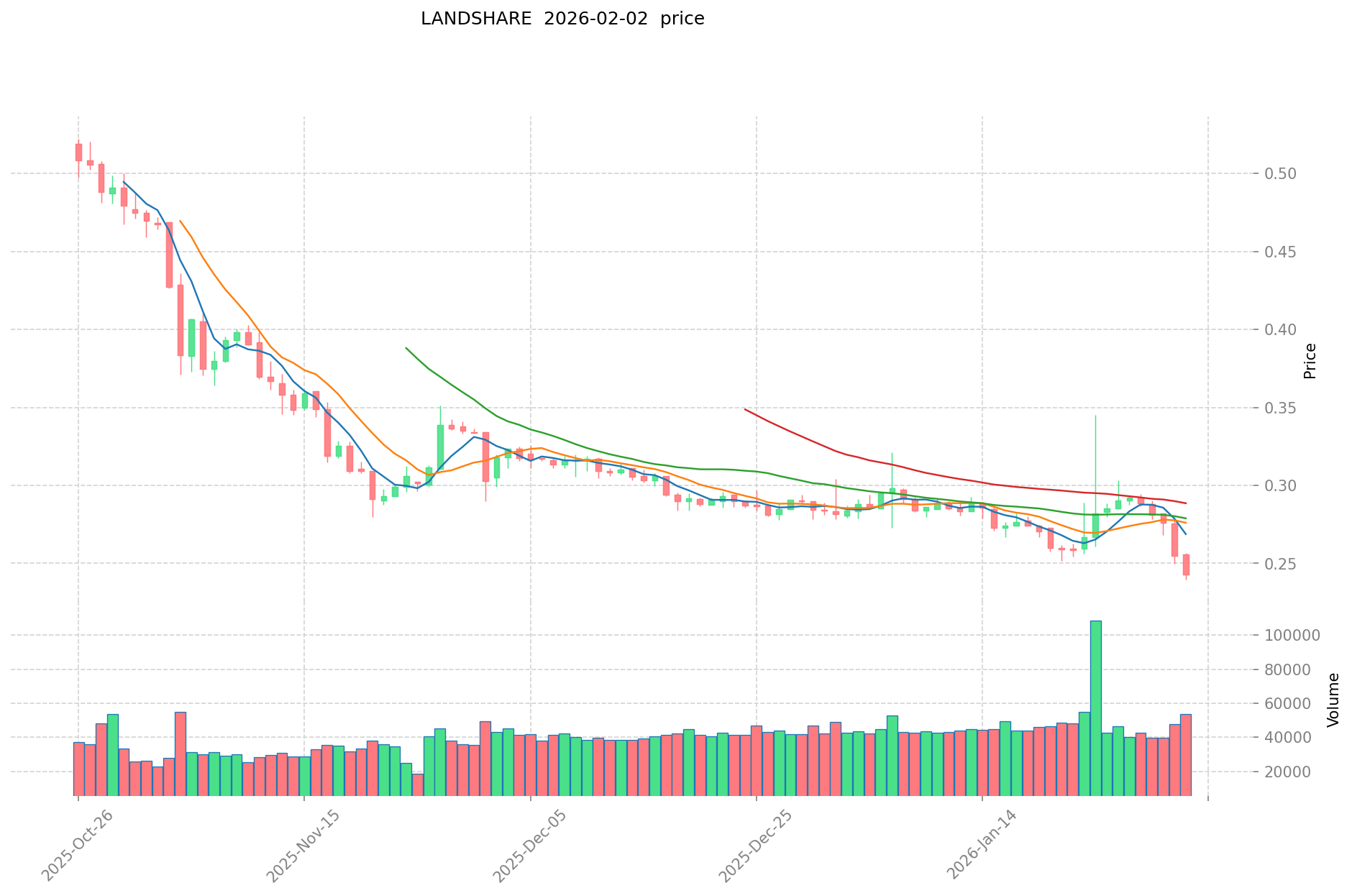
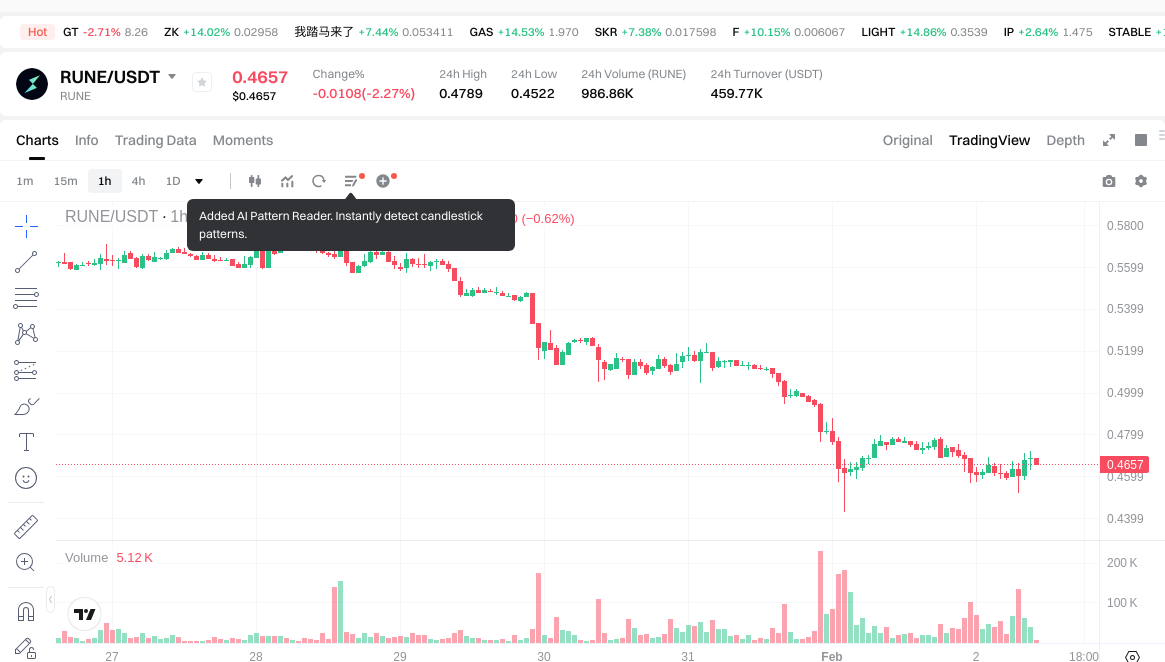
- Comparative Analysis: During the 2021-2026 market cycle, LANDSHARE moved from $12.19 to a low of $0.23764, while RUNE declined from $20.87 to $0.00851264, with both tokens experiencing significant price adjustments over the period.
Current Market Situation (2026-02-02)
- LANDSHARE Current Price: $0.242
- RUNE Current Price: $0.467
- 24-Hour Trading Volume: $13,539.46 (LANDSHARE) vs $459,622.09 (RUNE)
- Market Sentiment Index (Fear & Greed Index): 14 (Extreme Fear)
View real-time prices:
II. Core Factors Influencing LANDSHARE vs RUNE Investment Value
Tokenomics Comparison
- LANDSHARE: Operates as a tokenized real estate investment platform on Binance Smart Chain, with token economics designed to facilitate fractional ownership of real estate assets through blockchain-based fund structures.
- RUNE: Functions as a governance and utility token within decentralized finance ecosystems, with mechanisms supporting liquidity provision and cross-chain asset exchange.
- 📌 Historical Pattern: Supply mechanisms and tokenomics models influence price cycles through their interaction with platform adoption rates and ecosystem development.
Institutional Adoption and Market Application
- Institutional Holdings: LANDSHARE targets retail investors seeking exposure to tokenized real estate, while RUNE appeals to participants in DeFi protocols and liquidity providers.
- Enterprise Adoption: LANDSHARE enables small-scale investors to participate in real estate markets through tokenization, creating accessible entry points for property investment. RUNE facilitates decentralized exchange infrastructure and cross-chain liquidity solutions.
- Regulatory Landscape: Both projects operate within evolving regulatory frameworks for digital assets, with LANDSHARE facing additional considerations related to real estate tokenization compliance.
Technology Development and Ecosystem Building
- LANDSHARE Technology: Leverages blockchain infrastructure to tokenize real estate assets, simplifying portfolio creation and enabling fractional ownership models for property investment.
- RUNE Technology: Provides foundational infrastructure for decentralized finance operations, supporting cross-chain asset transfers and liquidity mechanisms.
- Ecosystem Comparison: LANDSHARE focuses on real-world asset tokenization within the real estate sector, while RUNE emphasizes DeFi protocol integration and decentralized exchange functionality.
Macroeconomic Context and Market Cycles
- Inflation Environment: LANDSHARE's connection to real estate assets may provide exposure to tangible asset appreciation dynamics, while RUNE's DeFi utility depends on broader cryptocurrency market conditions.
- Macroeconomic Policy: Interest rate movements and monetary policy adjustments influence both real estate valuations and DeFi protocol activity, affecting the respective value propositions of both tokens.
- Geopolitical Factors: Cross-border transaction requirements and international regulatory developments impact adoption patterns for blockchain-based real estate platforms and decentralized financial infrastructure.
III. 2026-2031 Price Prediction: LANDSHARE vs RUNE
Short-term Forecast (2026)
- LANDSHARE: Conservative $0.189-$0.242 | Optimistic $0.242-$0.264
- RUNE: Conservative $0.318-$0.467 | Optimistic $0.467-$0.486
Medium-term Forecast (2028-2029)
- LANDSHARE may enter a consolidation phase, with estimated prices ranging from $0.159 to $0.457
- RUNE may enter a moderate growth phase, with estimated prices ranging from $0.379 to $0.677
- Key drivers: institutional capital flows, ETF developments, ecosystem expansion
Long-term Forecast (2030-2031)
- LANDSHARE: Baseline scenario $0.339-$0.491 | Optimistic scenario $0.545-$0.587
- RUNE: Baseline scenario $0.514-$0.686 | Optimistic scenario $0.780-$0.823
View detailed price predictions for LANDSHARE and RUNE
Disclaimer
LANDSHARE:
| Year |
Predicted High Price |
Predicted Average Price |
Predicted Low Price |
Price Change |
| 2026 |
0.26378 |
0.242 |
0.18876 |
0 |
| 2027 |
0.3692194 |
0.25289 |
0.1643785 |
4 |
| 2028 |
0.351491811 |
0.3110547 |
0.158637897 |
28 |
| 2029 |
0.45715709259 |
0.3312732555 |
0.202076685855 |
36 |
| 2030 |
0.58738060932705 |
0.394215174045 |
0.3784465670832 |
62 |
| 2031 |
0.544785659771487 |
0.490797891686025 |
0.338650545263357 |
102 |
RUNE:
| Year |
Predicted High Price |
Predicted Average Price |
Predicted Low Price |
Price Change |
| 2026 |
0.48568 |
0.467 |
0.31756 |
0 |
| 2027 |
0.5096838 |
0.47634 |
0.3524916 |
2 |
| 2028 |
0.517662495 |
0.4930119 |
0.448640829 |
5 |
| 2029 |
0.67715184465 |
0.5053371975 |
0.379002898125 |
8 |
| 2030 |
0.780442767819 |
0.591244521075 |
0.54985740459975 |
26 |
| 2031 |
0.8230123733364 |
0.685843644447 |
0.51438273333525 |
46 |
IV. Investment Strategy Comparison: LANDSHARE vs RUNE
Long-term vs Short-term Investment Strategies
- LANDSHARE: Suitable for investors seeking exposure to tokenized real estate assets and blockchain-based property investment models, with focus on real-world asset integration
- RUNE: Suitable for investors interested in decentralized finance infrastructure and cross-chain liquidity protocols, with emphasis on DeFi ecosystem participation
Risk Management and Asset Allocation
- Conservative Investors: LANDSHARE 30% vs RUNE 70%
- Aggressive Investors: LANDSHARE 60% vs RUNE 40%
- Hedging Tools: stablecoin allocation, options instruments, cross-asset portfolio combinations
V. Potential Risk Comparison
Market Risk
- LANDSHARE: Price movements influenced by real estate market conditions, tokenization adoption rates, and regulatory developments affecting digital asset representations of physical properties
- RUNE: Price volatility connected to DeFi protocol activity, cross-chain liquidity demand, and broader cryptocurrency market sentiment cycles
Technical Risk
- LANDSHARE: Scalability considerations, network stability on Binance Smart Chain infrastructure
- RUNE: Protocol security considerations, smart contract vulnerability assessments
Regulatory Risk
- Global regulatory frameworks affect both tokens differently, with LANDSHARE facing real estate tokenization compliance requirements and RUNE subject to DeFi protocol regulations across multiple jurisdictions
VI. Conclusion: Which Is the Better Buy?
📌 Investment Value Summary:
- LANDSHARE Advantages: Provides access to tokenized real estate markets with lower entry barriers, connects blockchain technology to tangible asset investment opportunities
- RUNE Advantages: Offers utility within decentralized finance ecosystems, supports cross-chain liquidity infrastructure and protocol integration
✅ Investment Recommendations:
- New Investors: Consider diversified exposure to both tokens based on risk tolerance, with emphasis on understanding tokenized real estate and DeFi protocol fundamentals
- Experienced Investors: Evaluate portfolio allocation based on real estate market outlook and DeFi ecosystem development trajectories, incorporating technical analysis and on-chain metrics
- Institutional Investors: Assess regulatory compliance frameworks, liquidity profiles, and long-term adoption potential within respective market segments
⚠️ Risk Disclaimer: Cryptocurrency markets exhibit significant volatility. This content does not constitute investment advice.
VII. FAQ
Q1: What are the fundamental differences between LANDSHARE and RUNE tokens?
LANDSHARE focuses on tokenizing real-world real estate assets on Binance Smart Chain, enabling fractional property investment starting from $50, while RUNE serves as the native token of THORChain, facilitating decentralized cross-chain liquidity and asset swaps. The core distinction lies in their application domains: LANDSHARE bridges blockchain technology with tangible real estate markets, whereas RUNE provides infrastructure for decentralized finance protocols and multi-chain asset exchange operations.
Q2: Which token shows better price performance potential for 2026-2031?
Based on current projections, RUNE demonstrates relatively stronger growth potential, with estimated prices ranging from $0.467-$0.823 by 2031 (representing approximately 46%-76% potential growth from current levels), compared to LANDSHARE's projected range of $0.242-$0.587 (representing approximately 142% potential growth). However, these projections depend heavily on adoption rates, regulatory developments, and broader market conditions specific to each token's ecosystem—real estate tokenization for LANDSHARE and DeFi protocol expansion for RUNE.
Q3: How do market conditions affect LANDSHARE and RUNE differently?
LANDSHARE's price movements correlate with real estate market dynamics, tokenization adoption rates, and regulatory frameworks governing digital asset representations of physical properties. Interest rate changes and property market valuations directly influence its value proposition. RUNE, conversely, responds to DeFi protocol activity, cross-chain liquidity demand, and cryptocurrency market sentiment cycles. During periods of high DeFi adoption, RUNE typically benefits from increased protocol usage, while LANDSHARE gains value when real estate investment interest rises and tokenization frameworks mature.
Q4: What risk factors should investors consider when choosing between these tokens?
For LANDSHARE, primary risks include real estate market volatility, regulatory compliance challenges related to property tokenization, and adoption rates of blockchain-based real estate investment models. RUNE faces risks associated with DeFi protocol security, smart contract vulnerabilities, cross-chain bridge exploits, and regulatory uncertainties surrounding decentralized exchange infrastructure. Both tokens experience cryptocurrency market volatility, but their risk profiles differ based on their underlying use cases—tangible asset exposure versus protocol utility.
Q5: Which token suits different investor profiles better?
Conservative investors seeking tangible asset exposure may favor LANDSHARE (30% allocation) combined with RUNE (70% allocation) to balance real estate tokenization with established DeFi infrastructure. Aggressive investors comfortable with emerging markets might increase LANDSHARE allocation (60%) versus RUNE (40%) to capitalize on real estate tokenization growth potential. Institutional investors should evaluate LANDSHARE for real-world asset portfolio diversification and RUNE for DeFi ecosystem participation, considering regulatory compliance requirements, liquidity profiles, and long-term adoption trajectories specific to each market segment.
Q6: How does current market sentiment impact investment decisions between LANDSHARE and RUNE?
The current Fear & Greed Index at 14 (Extreme Fear) indicates significant market pessimism, which historically creates potential accumulation opportunities for long-term investors. LANDSHARE's 24-hour trading volume of $13,539.46 versus RUNE's $459,622.09 reflects substantially lower liquidity in LANDSHARE, suggesting higher price volatility risk but potentially greater upside during market recovery phases. In extreme fear conditions, RUNE's established DeFi ecosystem and higher liquidity may provide more stable entry points, while LANDSHARE's lower market depth could amplify both downside risks and recovery gains.
Q7: What technological developments could influence the comparative value of these tokens?
LANDSHARE's value proposition depends on advancements in real estate tokenization infrastructure, regulatory clarity for blockchain-based property ownership, and integration with traditional real estate markets. Key developments include automated compliance frameworks, expanded property portfolios, and institutional adoption of tokenized real estate models. RUNE's technological trajectory centers on cross-chain interoperability improvements, liquidity pool optimization, protocol security enhancements, and integration with emerging blockchain networks. Successful implementation of these developments could significantly alter the relative investment attractiveness of each token within their respective market segments.
Q8: How should investors approach portfolio allocation between LANDSHARE and RUNE?
Portfolio allocation should align with investment objectives, risk tolerance, and market outlook for each sector. Investors bullish on real estate tokenization and tangible asset digitization should consider higher LANDSHARE allocation, while those favoring DeFi infrastructure growth should emphasize RUNE. A balanced approach might include 40-50% allocation to each token for diversified exposure across real-world asset tokenization and decentralized finance sectors. Complementary hedging through stablecoin positions, options strategies, and correlation analysis with broader cryptocurrency markets can enhance risk-adjusted returns while managing sector-specific volatility inherent in both tokenized real estate and DeFi protocol tokens.
<>
* The information is not intended to be and does not constitute financial advice or any other recommendation of any sort offered or endorsed by Gate.