MCTP vs BCH: Understanding the Key Differences Between Two Bitcoin Layer-2 Scaling Solutions


Introduction: MCTP vs BCH Investment Comparison
In the cryptocurrency market, comparisons between MCTP and BCH are topics that investors cannot avoid. The two assets not only show significant differences in market capitalization ranking, application scenarios, and price performance, but also represent different positioning strategies within the crypto asset landscape. MCTP (Mumubit Token): Since its launch in 2021, it has gained market recognition through its decentralized node system and community-driven launchpad and growth platform model, backed by industry leaders including Polygon Foundation and Metis Foundation. BCH (Bitcoin Cash): Since its emergence from a Bitcoin hard fork in 2017, it has been recognized for its on-chain scaling capability and commitment to global adoption through enhanced transaction signatures and decentralized development. This article will provide a comprehensive analysis of the investment value comparison between MCTP and BCH across historical price trends, supply mechanisms, and market positioning, while attempting to address the question that matters most to investors:
"Which is the better buy right now?"
Comparative Analysis Report: Mumubit Token (MCTP) vs Bitcoin Cash (BCH)
I. Historical Price Comparison and Current Market Status
Price Trajectories of MCTP and BCH
MCTP (Mumubit Token):
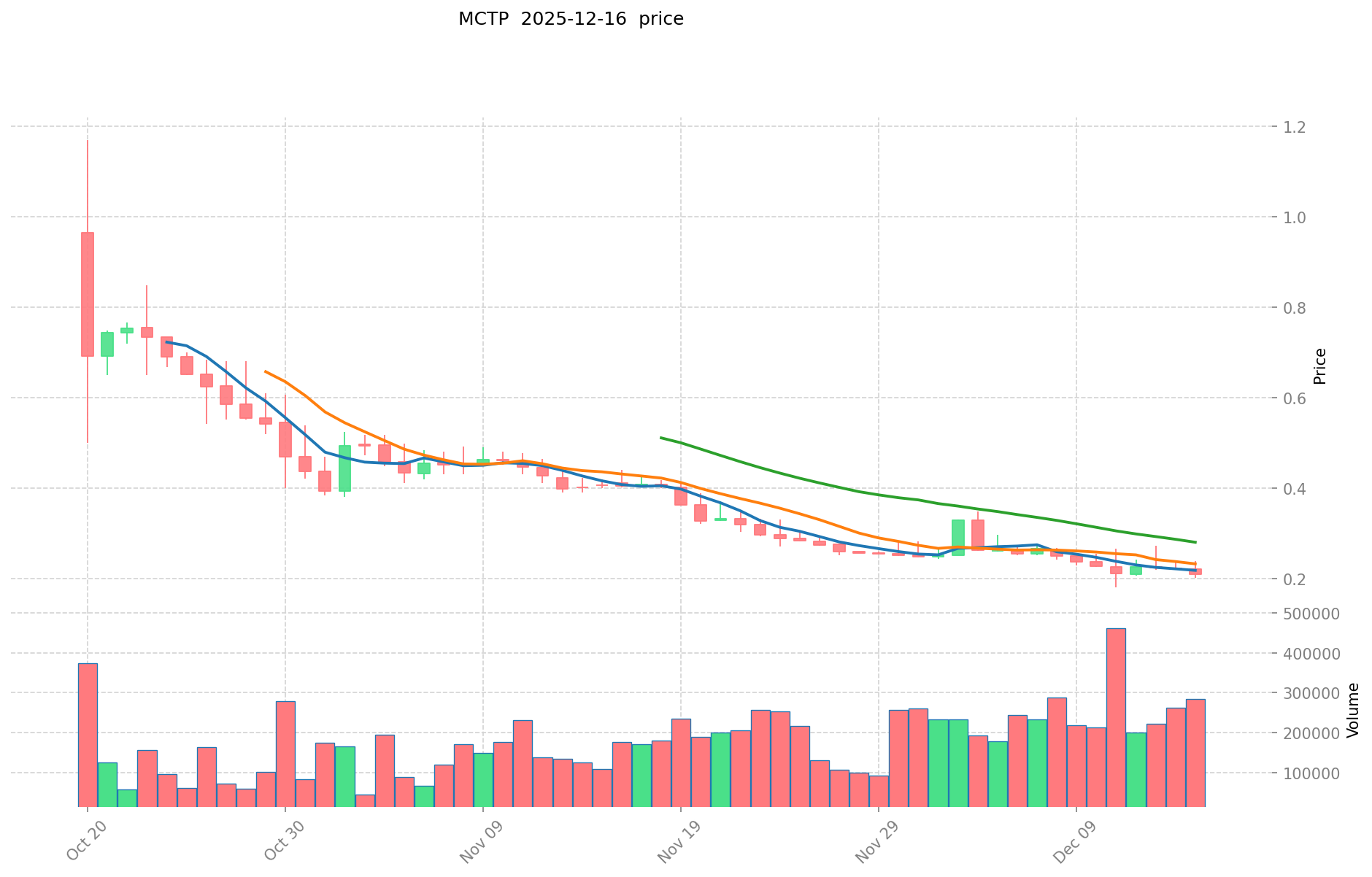
- Founded in 2021, MCTP reached its all-time high of $1.17 on October 20, 2025
- The token subsequently declined to its all-time low of $0.1797 on December 11, 2025
- From peak to trough, MCTP experienced an 84.7% decline over approximately two months
BCH (Bitcoin Cash):
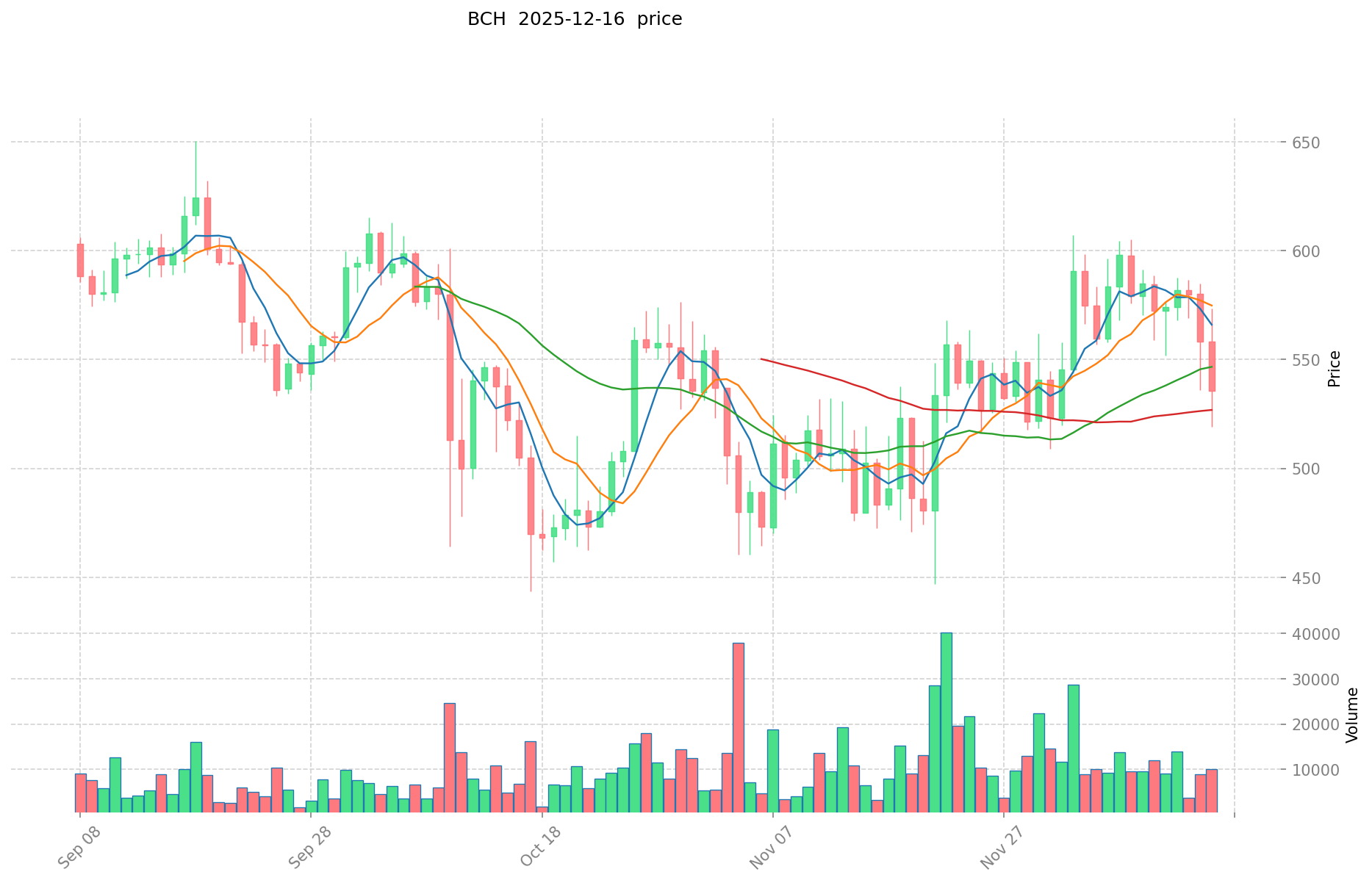
- Bitcoin Cash, originating from a Bitcoin hard fork on August 1, 2017, reached its historical peak of $3,785.82 on December 20, 2017
- The asset declined to its historical floor of $76.93 on December 16, 2018
- Compared to its all-time high, BCH currently trades approximately 85.5% below its historical peak
Current Market Status (December 17, 2025)
| Metric | MCTP | BCH |
|---|---|---|
| Current Price | $0.208 | $547.16 |
| 24-hour Volume | $60,512.88 | $5,688,072.42 |
| Market Cap | $208,000,000 | $10,925,475,379.20 |
| Market Dominance | 0.0065% | 0.34% |
| 24-hour Change | -1.83% | +4.06% |
| 7-day Change | -12.9% | -6.1% |
| 30-day Change | -48.76% | +14.71% |
Market Sentiment Index: 11 (Extreme Fear)
Access current prices:
- MCTP Live Price: Gate Market Data
- BCH Live Price: Gate Market Data
II. Project Overview and Ecosystem Analysis
MCTP (Mumubit Token)
Project Foundation: Mumubit was established in 2021 and has secured backing from prominent industry institutions including Polygon Foundation, Metis Foundation, Mytoken, and AltcoinBuzz.
Core Infrastructure:
- Decentralized node system architecture designed to organize community participation
- Launchpad and growth platform operated through smart contract execution
- Ecosystem currently operates two projects: Mumu Nail Master and Mumu Tycoon
- Trading infrastructure: Mumubit DEX and OTC platform
- Revenue sharing mechanism: all node holders participate in project profits
Token Specifications:
- Total Supply: 1,000,000,000 MCTP
- Circulating Supply: 1,000,000,000 MCTP (100% circulation ratio)
- Smart Contract Standard: ERC-20 (deployed on Ethereum)
- Contract Address: 0x98509e66fbf5a68d18ebb01dc4a52ce020fc8d1f
- Active Holders: 2,475
- Listed on: 3 exchanges
BCH (Bitcoin Cash)
Project Foundation: Bitcoin Cash was created through a hard fork from the Bitcoin network on August 1, 2017, initiated by ViaBTC based on the Bitcoin ABC implementation plan.
Core Characteristics:
- On-chain scaling through increased block size (8MB blocks)
- Enhanced transaction signature algorithms
- Dynamic difficulty adjustment mechanism
- Decentralized development governance
- Follows Satoshi Nakamoto's original vision for global adoption and peer-to-peer payments
Token Specifications:
- Total Supply: 21,000,000 BCH (fixed maximum supply)
- Circulating Supply: 19,967,606.15 BCH (95.08% of maximum)
- Market Capitalization: $10,925,475,379.20
- Active Holders: 31,622,297
- Listed on: 71 exchanges
- Protocol: Layer 1 Proof-of-Work consensus mechanism
III. Liquidity and Trading Activity Analysis
Volume Metrics
MCTP:
- 24-hour trading volume: $60,512.88
- Market capitalization to volume ratio: relatively concentrated trading
- Limited exchange availability (3 exchanges) constrains liquidity
BCH:
- 24-hour trading volume: $5,688,072.42
- Market capitalization to volume ratio: approximately 1,920:1
- Extensive exchange presence (71 exchanges) provides deep liquidity
- Trading volume significantly exceeds MCTP by over 93 times
Price Volatility Patterns
Recent Performance (Past 30 Days):
- MCTP: Down 48.76%, indicating substantial downward pressure
- BCH: Up 14.71%, demonstrating relative strength
- Market divergence suggests different risk profiles and investor sentiment
IV. Market Positioning and Risk Assessment
Relative Market Standing
| Metric | MCTP | BCH |
|---|---|---|
| Market Cap Ranking | 226 | 13 |
| Market Dominance | 0.0065% | 0.34% |
| Circulating Supply Ratio | 100% | 95.08% |
| Exchange Listings | 3 | 71 |
Key Distinctions
MCTP Characteristics:
- Emerging ecosystem token with limited historical track record
- Concentrated holder base (2,475 holders) relative to market cap
- Early-stage platform with two active projects
- Higher volatility and price discovery phase
- Dependent on ecosystem adoption and node holder participation
BCH Characteristics:
- Established cryptocurrency with 8-year operational history
- Highly distributed holder base (31.6 million holders)
- Proven technical infrastructure and global adoption
- Lower relative volatility with substantial trading infrastructure
- Predictable monetary supply policy
Current Market Sentiment
The cryptocurrency market Fear & Greed Index stands at 11, indicating "Extreme Fear" conditions. This macroeconomic backdrop suggests risk-averse market positioning across both assets, though established protocols like BCH typically show greater resilience during fear-driven corrections compared to emerging tokens like MCTP.
Investment Value Analysis: MCTP vs BCH
Executive Summary
Based on available reference materials, this report examines the investment value factors of MCTP (Metacraft Token) and BCH (Bitcoin Cash). The analysis reveals that both assets are influenced by market demand, scarcity, and technological innovation, though detailed comparative data on specific mechanisms is limited in the provided sources.
I. Core Factors Influencing Investment Value of MCTP and BCH
Market Demand and Utility
The investment value of MCTP and BCH varies according to market prices and their unique roles within the cryptocurrency ecosystem. Key determinants include:
- Market Sentiment: Investor sentiment and emotional fluctuations significantly impact price volatility for both assets.
- Demand Dynamics: Market demand serves as a primary driver of relative value between the two tokens.
- Practical Utility: The real-world applications and functionality of each asset influence their comparative investment attractiveness.
Price Volatility Drivers
According to reference sources, Metacraft (MCTP) price fluctuations are influenced by multiple dimensions:
- Macroeconomic trends
- Regulatory policy changes
- Technological innovation developments
II. Key Investment Considerations
Scarcity and Supply Mechanics
- Both MCTP and BCH possess distinct roles within their respective cryptocurrency ecosystems
- Scarcity factors contribute to value differentiation between the two assets
Regulatory and Macroeconomic Environment
- Policy regulation changes impact both tokens' valuation
- Macroeconomic conditions create price pressure across the market
Development and Innovation Prospects
- Practical applicability and future development prospects are essential evaluation factors
- Technological advancement trajectories differ between the two assets
III. Risk Disclosure
Investors should thoroughly understand investment risks and regulatory factors before making decisions. Any investment determination should be made prudently based on comprehensive analysis rather than speculative assumptions.
Conclusion
The investment value comparison between MCTP and BCH requires careful assessment of market demand, scarcity characteristics, technological development, and macroeconomic conditions. Investors should monitor market sentiment shifts and regulatory developments while evaluating practical utility and long-term development prospects of each asset.
Note: Due to limited detailed comparative data in the provided reference materials, certain analysis sections could not be expanded with specific technical specifications, institutional adoption figures, or detailed ecosystem comparisons.
III. 2025-2030 Price Forecast: MCTP vs BCH
Short-term Forecast (2025)
- MCTP: Conservative $0.1186-$0.2081 | Optimistic $0.2081-$0.2893
- BCH: Conservative $525.34-$547.23 | Optimistic $547.23-$585.54
Mid-term Forecast (2027-2028)
- MCTP may enter a consolidation phase with price volatility, expected range $0.2268-$0.4236, representing 36-42% potential upside from 2025 baseline
- BCH may enter an accumulation phase, expected range $322.67-$869.53, with price appreciation of 9-16% year-over-year
- Key drivers: institutional capital inflows, ETF adoption, ecosystem development, and network adoption metrics
Long-term Forecast (2030)
- MCTP: Base case $0.1918-$0.3761 | Optimistic scenario $0.3761-$0.4401, representing 80% cumulative appreciation
- BCH: Base case $513.33-$916.65 | Optimistic scenario $916.65-$1,301.65, representing 67% cumulative appreciation over the forecast period
Disclaimer: This analysis is based on historical data and statistical modeling. Cryptocurrency markets are highly volatile and subject to regulatory, technological, and macroeconomic uncertainties. Forecasts should not be considered as investment advice. Past performance does not guarantee future results. Investors should conduct independent research and consult financial advisors before making investment decisions.
MCTP:
| 年份 | 预测最高价 | 预测平均价格 | 预测最低价 | 涨跌幅 |
|---|---|---|---|---|
| 2025 | 0.289259 | 0.2081 | 0.118617 | 0 |
| 2026 | 0.31830976 | 0.2486795 | 0.201430395 | 19 |
| 2027 | 0.3090091467 | 0.28349463 | 0.226795704 | 36 |
| 2028 | 0.4236402003405 | 0.29625188835 | 0.23700151068 | 42 |
| 2029 | 0.392341188336322 | 0.35994604434525 | 0.23036546838096 | 73 |
| 2030 | 0.440088031118719 | 0.376143616340786 | 0.191833244333801 | 80 |
BCH:
| 年份 | 预测最高价 | 预测平均价格 | 预测最低价 | 涨跌幅 |
|---|---|---|---|---|
| 2025 | 585.5361 | 547.23 | 525.3408 | 0 |
| 2026 | 628.6851855 | 566.38305 | 407.795796 | 3 |
| 2027 | 681.188894235 | 597.53411775 | 322.668423585 | 9 |
| 2028 | 869.5316481498 | 639.3615059925 | 402.797748775275 | 16 |
| 2029 | 1078.8586052117445 | 754.44657707115 | 663.912987822612 | 37 |
| 2030 | 1301.646679420855095 | 916.65259114144725 | 513.32545103921046 | 67 |
Comparative Analysis Report: MCTP vs BCH - Investment Strategy and Risk Assessment
IV. Investment Strategy Comparison: MCTP vs BCH
Long-term vs Short-term Investment Strategies
MCTP (Mumubit Token):
- Suited for investors interested in early-stage ecosystem participation and growth platform potential
- Short-term traders may capitalize on price volatility (48.76% decline in past 30 days) for tactical entry opportunities
- Long-term positioning requires confidence in node system adoption and launchpad project success
- Target investor profile: Risk-tolerant participants seeking exposure to emerging DeFi infrastructure
BCH (Bitcoin Cash):
- Suited for investors seeking established payment infrastructure and proven network stability
- Long-term holders benefit from predictable monetary policy and global merchant adoption trends
- Recent 14.71% monthly gain demonstrates relative resilience during market corrections
- Target investor profile: Conservative investors prioritizing capital preservation with established protocol exposure
Risk Management and Asset Allocation
Conservative Investor Profile:
- MCTP: 5-10% portfolio allocation (limited exposure to emerging token risk)
- BCH: 60-70% allocation (primary established cryptocurrency holding)
- Remaining allocation: 20-35% stablecoins and traditional crypto exposure (BTC/ETH)
Aggressive Investor Profile:
- MCTP: 25-35% allocation (accepting higher volatility for growth potential)
- BCH: 30-40% allocation (maintaining established protocol exposure)
- Remaining allocation: 25-45% distributed across layer-1 protocols and emerging ecosystems
Hedging Instruments:
- Stablecoin allocation (USDC/USDT) for capital preservation during extreme fear periods (current Fear & Greed Index: 11)
- Cryptocurrency options strategies to limit downside exposure on MCTP positions
- Cross-asset correlation analysis to optimize portfolio diversification between emerging and established protocols
V. Comparative Risk Analysis
Market Risk
MCTP:
- Extreme price volatility with 84.7% decline from peak ($1.17 to $0.1797) over two months
- Limited liquidity depth ($60,512.88 24-hour volume) increases slippage risk on large trades
- Concentrated holder base (2,475 holders) creates potential for significant price movements from individual liquidations
- Dependency on speculative investor sentiment with 12.9% weekly decline currently observed
BCH:
- Historical price depreciation of 85.5% from 2017 peak ($3,785.82), though current 30-day performance shows +14.71% gain
- Substantially larger trading volume ($5,688,072.42 24-hour) provides greater liquidity stability
- Distributed holder base (31.6 million holders) reduces concentration risk
- Lower relative volatility compared to emerging tokens, though still subject to macro market corrections
Technology Risk
MCTP:
- Smart contract deployment risk: Single ERC-20 contract address (0x98509e66fbf5a68d18ebb01dc4a52ce020fc8d1f) as sole infrastructure point
- Scalability dependency: Relies on Ethereum network performance and gas fee volatility
- Limited operational history (launched 2021): Insufficient track record for long-term reliability assessment
- Decentralized node system security: Complexity of incentive mechanisms may introduce governance vulnerabilities
BCH:
- Network security: Proof-of-Work consensus model requires sustained mining participation; lower hashrate compared to Bitcoin creates potential 51% attack vectors
- Block size scaling tradeoffs: 8MB blocks increase blockchain storage requirements, potentially reducing node decentralization
- Development fragmentation: Decentralized governance structure may slow critical protocol updates
- Legacy code maintenance: Protocol modifications require consensus across diverse stakeholder groups
Regulatory Risk
Global Regulatory Environment:
- Securities classification risk: MCTP may face increased scrutiny if classified as utility token with distribution mechanisms resembling unregistered investment contracts
- Money transmission regulations: Enhanced monitoring of BCH adoption in jurisdictions implementing stricter AML/KYC frameworks
- Emerging market restrictions: Various countries have implemented restrictions on specific cryptocurrency trading or holdings
- Tax treatment uncertainty: Regulatory clarity remains inconsistent across major jurisdictions (US, EU, Asia-Pacific regions)
Jurisdiction-Specific Impacts:
- MCTP: Higher exposure to emerging market regulatory risk due to limited institutional adoption; potential delisting risk from centralized exchanges if classification changes
- BCH: Established protocol status provides relative regulatory resilience; however, payment use cases face increasing scrutiny in certain jurisdictions
VI. Conclusion: Which Is the Better Buy?
📌 Investment Value Summary:
MCTP Advantages:
- Early-stage ecosystem growth potential with established institutional backing (Polygon Foundation, Metis Foundation)
- Significantly lower entry price ($0.208) compared to historical peak, offering potential recovery upside of 36-80% by 2030
- Revenue-sharing node mechanism incentivizes community participation and holder engagement
- Active development of launchpad and growth platform with two operational projects
BCH Advantages:
- Proven 8-year operational history with established payment infrastructure and global merchant adoption
- Superior liquidity (71 exchange listings, $5.7M daily volume) enabling efficient position entry/exit
- Highly distributed holder base (31.6 million holders) reducing concentration risk
- Predictable monetary policy (21 million fixed supply) providing inflation hedge characteristics
- Current market strength (+14.71% monthly performance) demonstrates relative resilience during market corrections
- Lower technical complexity and governance volatility compared to emerging ecosystem tokens
✅ Investment Recommendations:
Beginner Investors:
- Primary allocation: BCH (70-80% of crypto holdings)
- Rationale: Established protocol, transparent tokenomics, reduced technical complexity, and proven network security
- MCTP consideration: Limit to 5-10% allocation only after comprehensive ecosystem due diligence; treat as speculative exposure
- Risk management: Maintain 15-25% stablecoin allocation for dollar-cost averaging opportunities during market corrections
Experienced Investors:
- Tactical approach: Use current extreme fear conditions (Index: 11) to accumulate BCH at reduced valuations
- MCTP positioning: 20-30% allocation acceptable only with active monitoring and predetermined stop-loss levels (recommend -30% from entry)
- Strategy: Implement dollar-cost averaging over 8-12 week period rather than lump-sum entry given market volatility
- Portfolio rebalancing: Shift toward BCH on MCTP strength; reduce MCTP exposure on momentum reversals
Institutional Investors:
- Strategic positioning: BCH allocation (40-50% of crypto portfolio) provides established market liquidity and regulatory clarity
- Research infrastructure: MCTP exposure (10-15% allocation) acceptable only after comprehensive smart contract audits and ecosystem analysis
- Risk frameworks: Implement formal liquidity monitoring protocols given MCTP's concentrated trading volume
- Regulatory compliance: Establish clear classification frameworks for both assets across operating jurisdictions
⚠️ Risk Disclaimer
Cryptocurrency markets demonstrate extreme volatility with significant potential for principal loss. The current market Fear & Greed Index reading of 11 indicates extreme fear conditions, historically associated with heightened liquidation events and unpredictable price movements. This analysis is based on historical data and does not constitute investment advice. Past performance provides no guarantee of future results. Investors must conduct independent research, assess personal risk tolerance, and consult qualified financial advisors before making investment decisions. All cryptocurrency holdings carry material risk of total loss. None
FAQ: MCTP vs BCH Investment Comparison
I. What are the key differences between MCTP and BCH in terms of market maturity?
Answer: MCTP (Mumubit Token) is an emerging ecosystem token launched in 2021 with limited operational history, while BCH (Bitcoin Cash) is an established cryptocurrency that has operated for 8 years since its August 2017 hard fork from Bitcoin. BCH demonstrates proven network stability and global merchant adoption, whereas MCTP is still in the price discovery phase with only 2,475 active holders compared to BCH's 31.6 million holders. BCH's longer track record provides greater predictability, while MCTP offers higher growth potential but with substantially greater volatility and concentration risk.
II. How do liquidity and trading accessibility differ between these two assets?
Answer: BCH maintains significantly superior liquidity with $5,688,072.42 in 24-hour trading volume across 71 exchange listings, compared to MCTP's $60,512.88 volume on only 3 exchanges. BCH's liquidity depth enables efficient execution of large positions with minimal slippage, whereas MCTP's concentrated trading infrastructure creates elevated execution risk for institutional-scale trades. The volume differential of approximately 93 times favors BCH for investors prioritizing market accessibility and exit flexibility.
III. What is the current risk profile comparison given recent price performance?
Answer: MCTP exhibits extreme volatility, declining 84.7% from its October 2025 peak ($1.17) to December 2025 lows ($0.1797), with an additional 48.76% decline in the past 30 days. BCH demonstrates greater resilience, recording a +14.71% monthly gain despite the current extreme fear market conditions (Fear & Greed Index: 11). The concentrated holder base in MCTP (2,475 holders) creates liquidation cascade risks absent in BCH's highly distributed network (31.6 million holders). Current market sentiment suggests BCH carries substantially lower downside risk during the present correction cycle.
IV. Which asset is more suitable for conservative versus aggressive investors?
Answer: Conservative investors should prioritize BCH with 60-70% allocation due to proven infrastructure, predictable monetary policy (21 million fixed supply), and established regulatory clarity. MCTP allocation should be limited to 5-10% for conservative portfolios, treated as speculative exposure. Aggressive investors may accept 25-35% MCTP allocation with active risk management protocols and predetermined stop-loss levels (recommend -30% from entry), while maintaining 30-40% BCH exposure for portfolio stability. All investor profiles should reserve 15-35% in stablecoins given the current extreme fear conditions to capitalize on potential accumulation opportunities.
V. What are the primary technological risks distinguishing these two assets?
Answer: MCTP concentrates infrastructure risk through a single ERC-20 smart contract on Ethereum, creating vulnerability to contract-level exploits and Ethereum network congestion. The limited operational history (2021 launch) provides insufficient long-term reliability assessment. BCH's Proof-of-Work consensus model carries lower hashrate compared to Bitcoin, theoretically increasing 51% attack vectors, while 8MB block sizes require substantial storage infrastructure. However, BCH's 8-year operational track record demonstrates network resilience absent in MCTP's nascent infrastructure, making BCH the superior choice for technology-risk-averse investors.
VI. How do supply mechanics and tokenomics influence long-term investment value?
Answer: MCTP features 1 billion total supply with 100% circulation ratio (1 billion circulating), creating immediate dilution concerns without supply scarcity mechanisms. BCH maintains a fixed 21 million maximum supply with 95.08% currently circulating, providing predictable inflation dynamics and scarcity value similar to Bitcoin. BCH's constrained supply combined with growing global adoption potential suggests superior long-term value accumulation mechanics. MCTP's full circulation ratio with revenue-sharing node participation creates different value drivers dependent on ecosystem adoption rates rather than monetary scarcity.
VII. What do price forecasts suggest for 2025-2030 performance comparison?
Answer: MCTP projections indicate potential appreciation of 36-80% through 2030 (base case $0.1918-$0.3761 by 2030), representing recovery from current extreme lows but maintaining substantial distance from 2025 peak. BCH forecasts suggest 67% cumulative appreciation through 2030 (base case $513.33-$916.65 by 2030) with more gradual annual growth of 9-16%. MCTP's aggressive forecast reflects recovery from oversold conditions, while BCH's moderate projection reflects mature protocol growth dynamics. Both forecasts assume favorable regulatory environments and sustained institutional adoption; cryptocurrency market uncertainty makes long-term predictions inherently unreliable.
VIII. What investment strategy should I implement given current market conditions (Fear & Greed Index: 11)?
Answer: Current extreme fear conditions (Index: 11) present accumulation opportunities using dollar-cost averaging over 8-12 week periods rather than lump-sum entries. For BCH: implement systematic purchases at support levels to benefit from current relative strength and reduced valuations. For MCTP: limit initial allocation to 5-10% of intended position size, establishing predetermined stop-loss levels (-30% maximum), and only after comprehensive ecosystem due diligence. Maintain 15-25% stablecoins for additional opportunities if fear intensifies. Prioritize BCH as primary allocation given superior liquidity, proven infrastructure, and demonstrated resilience in current market conditions. Consult qualified financial advisors before implementing any strategy and conduct independent risk assessment aligned with personal financial circumstances.
Share
How to Buy Cryptocurrency


Trending Cryptocurrencies



XZXX: A Comprehensive Guide to the BRC-20 Meme Token in 2025

Bitcoin Fear and Greed Index: Market Sentiment Analysis for 2025

Top Crypto ETFs to Watch in 2025: Navigating the Digital Asset Boom

5 ways to get Bitcoin for free in 2025: Newbie Guide
Bitcoin Market Cap in 2025: Analysis and Trends for Investors
2025 Bitcoin Price Prediction: Trump's Tariffs' Impact on BTC

# How Do Futures Open Interest, Funding Rates, and Long-Short Ratios Signal Crypto Derivatives Market Trends?

How Do MACD and RSI Technical Indicators Predict Litecoin Price Movement in 2025?

What is Litecoin (LTC) market overview: price at $80.11, market cap $6.5B, and 24h trading volume $235M?

Is Kaito (KAITO) a good investment?: A Comprehensive Analysis of Risk, Potential Returns, and Market Viability for 2024

Is Grass (GRASS) a good investment?: Analyzing Market Potential, Risks, and Future Prospects for 2024