Profitability Analysis of Cryptocurrency Mining: Miner and Altcoin Selection in Recent Years

Is Cryptocurrency Mining Profitable?
Unfortunately, determining whether all cryptocurrency mining is profitable is extremely difficult and requires careful analysis. Miners must thoroughly research the coins they intend to mine and consider multiple critical factors including electricity costs for operating mining equipment, equipment prices, and mining difficulty levels.
Given the inherent volatility of cryptocurrencies, miners must also stay informed about current cryptocurrency prices. When the price of a specific cryptocurrency falls below a certain threshold, mining operations may no longer generate profits, potentially resulting in net losses. This dynamic nature of profitability requires constant monitoring and strategic decision-making.
Electricity Costs
Mining equipment operates extensively and continuously, consuming significant amounts of electrical power. This translates directly into expensive electricity bills that can dramatically impact overall profitability. If electricity rates in your mining location are high, you may need to spend substantial amounts on power consumption alone.
The electricity cost factor becomes even more critical as mining difficulty increases over time. Miners in regions with lower electricity rates have a significant competitive advantage, as their operational costs remain manageable even during periods of lower cryptocurrency prices. Some professional miners even relocate their operations to areas with cheaper electricity or renewable energy sources to maximize profitability.
Mining Difficulty
Hash rate serves as the primary method for measuring cryptocurrency mining difficulty. As more computing power is deployed to obtain the same amount of cryptocurrency, the hash rate increases correspondingly. This represents the network's self-adjusting mechanism to maintain consistent block generation times.
Higher mining difficulty means that individual miners need more powerful equipment and consume more electricity to compete effectively. This creates a continuous arms race in the mining industry, where staying profitable requires regular hardware upgrades and optimization of mining operations.
Equipment Costs
Equipment and installation costs must be paid upfront, representing a significant initial investment barrier. Graphics cards can cost over $700 each, and a basic mining rig setup can require approximately $3,000 or more in initial capital.
Beyond the initial purchase, miners must also factor in maintenance costs, cooling systems, and potential equipment replacement due to wear and tear. The return on investment (ROI) period can vary significantly based on cryptocurrency prices, mining difficulty, and operational efficiency. Professional miners often calculate detailed ROI projections before committing to large-scale mining operations.
Mining Pools
Cryptocurrency mining pools consist of groups of miners who work together to mine blocks and share rewards proportionally. This collaborative approach has become increasingly popular as individual mining has become less viable for most cryptocurrencies.
Key Mining Pool Types:
- Proportional Mining: Provides miners with rewards proportional to their effort in finding blocks. This method ensures fair distribution based on contributed hash power during each mining round.
- Pay-Per-Share Mining: Distributes payments according to the total mining capacity of the pool. This method offers more predictable and stable earnings, though typically with slightly lower overall returns due to pool fees.
Mining pools significantly reduce the variance in mining rewards, providing more consistent income streams for participants. However, miners should carefully evaluate pool fees, payout methods, and pool reliability before joining.
What Is Cryptocurrency Mining?
Cryptocurrency mining is the fundamental process used by Proof-of-Work blockchains to validate new blocks and generate new coins. This computational process serves as the backbone of blockchain security and transaction verification.
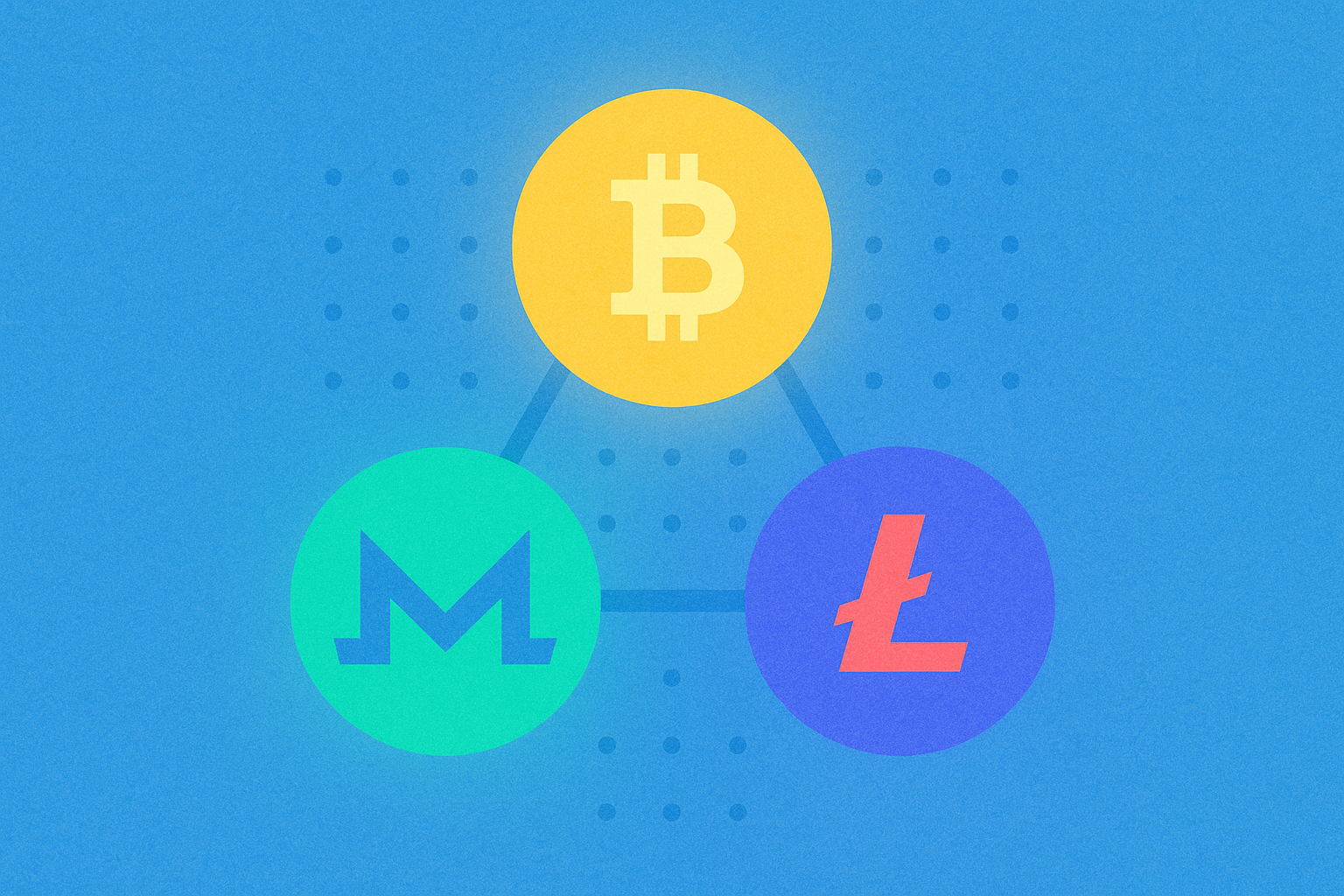
Altcoins that can be generated through mining include Monero, Litecoin, Zcash, and Ethereum Classic, among many others. Each of these cryptocurrencies employs different mining algorithms and difficulty adjustments, creating diverse opportunities for miners with various hardware capabilities.
Blockchain technology relies on a distributed network of computers worldwide that validate and secure blockchain transactions. Mining serves the dual purpose of transaction verification and new coin distribution, creating economic incentives for network security. The decentralized nature of mining ensures that no single entity can control the network, maintaining the fundamental principles of cryptocurrency.
Bitcoin Mining and Profitability
Bitcoin mining involves validating cryptocurrency transactions on the blockchain and receiving block rewards as compensation. Miners can achieve profitability when Bitcoin prices exceed their mining costs, including electricity, hardware depreciation, and operational expenses.
The profitability calculation for Bitcoin mining has become increasingly complex over time. Factors such as network hash rate, mining difficulty adjustments every 2,016 blocks, and Bitcoin price volatility all significantly impact potential returns. Professional miners often use sophisticated profitability calculators and monitoring tools to optimize their operations.
Earning Through Block Rewards
Block rewards consist of newly issued cryptocurrency in specific amounts determined by the network protocol. The Bitcoin blockchain generates a new block approximately every 10 minutes, maintaining a predictable issuance schedule.
Bitcoin's block reward undergoes halving approximately every four years, an event known as Bitcoin halving. This mechanism controls the total supply and creates a deflationary economic model. In the past few years, the block reward was reduced to 3.125 BTC, significantly impacting miner economics and requiring greater operational efficiency to maintain profitability.
The halving events create cyclical market dynamics, often influencing Bitcoin prices and mining profitability. Miners must adapt their strategies around these scheduled reductions, sometimes consolidating operations or upgrading to more efficient hardware to remain competitive.
What Is Hash Rate?
Hash rate serves as a key metric for evaluating the strength and security of a blockchain network. It measures the total computing power used to validate and confirm blockchain transactions, representing the network's overall processing capacity.
Higher hash rates indicate stronger network security, as attacking the network becomes exponentially more difficult and expensive. The hash rate also reflects miner confidence and investment in the network's future.
Hash Rate Measurement Units:
- Kilohash – KH/s (thousands of hashes per second)
- Megahash – MH/s (millions of hashes per second)
- Gigahash – GH/s (billions of hashes per second)
- Terahash – TH/s (trillions of hashes per second)
- Petahash – PH/s (quadrillions of hashes per second)
Understanding these measurement units helps miners compare hardware performance and calculate expected mining returns. Modern Bitcoin mining operations typically measure hash rates in terahash or petahash ranges, reflecting the massive scale of computational power deployed globally.
Bitcoin Mining Hardware
Cryptocurrency mining requires specialized equipment designed for intensive computational tasks. To mine Bitcoin effectively, miners need ASICs (Application-Specific Integrated Circuits), which are specialized computers engineered exclusively for cryptocurrency mining.
ASIC miners offer significantly higher hash rates and energy efficiency compared to general-purpose computing hardware. However, they represent substantial investments and have limited resale value due to their specialized nature. The rapid advancement in ASIC technology means that mining hardware can become obsolete relatively quickly, requiring miners to continuously evaluate upgrade opportunities to maintain competitive advantages.
Is Altcoin Mining Profitable?
Numerous altcoins can be mined, each presenting different profitability profiles and technical requirements. When selecting profitable altcoins for mining, consider the following critical factors:
- The number of cryptocurrency exchanges supporting the altcoin, which affects liquidity and ease of trading
- Verification that the cryptocurrency is legitimate with active development and community support
- Assessment of long-term viability for mining equipment usage, considering algorithm changes and network upgrades
- Possibility of withdrawing the altcoin to fiat currency through reliable exchanges and payment processors
Altcoin mining often provides opportunities for miners with less powerful hardware, as many altcoins use mining algorithms resistant to ASIC dominance. This creates a more level playing field for individual miners using GPU-based systems. However, thorough research is essential, as altcoin markets can be highly volatile and some projects may fail entirely.
Miners should also consider factors such as community size, development activity, real-world use cases, and competitive positioning when evaluating altcoin mining opportunities. Diversifying mining efforts across multiple promising altcoins can help mitigate risks associated with individual project failures or market downturns.
Is Cryptocurrency Mining Profitable in Recent Years?
Mining was a highly profitable activity during the early days of Bitcoin and cryptocurrency when competition was limited and block rewards were larger. Currently, individual miners must conduct thorough cost-benefit analyses before participating in mining activities, carefully considering variables such as electricity costs, equipment efficiency, cryptocurrency prices, and mining difficulty.
The cryptocurrency mining landscape has evolved significantly, becoming increasingly professionalized and competitive. Large-scale mining operations with access to cheap electricity and the latest hardware dominate the industry, making it challenging for small-scale miners to compete effectively.
However, opportunities still exist for profitable mining, particularly for those who can access low-cost electricity, invest in efficient hardware, or focus on less competitive altcoins. Success in cryptocurrency mining requires continuous learning, strategic planning, and the ability to adapt to rapidly changing market conditions. Miners must also consider regulatory developments, as some jurisdictions have implemented restrictions or special taxation on mining activities.
The future profitability of cryptocurrency mining will likely depend on factors including cryptocurrency adoption rates, technological innovations in mining hardware, energy costs, and regulatory environments. Prospective miners should approach the activity as a serious business venture, conducting thorough due diligence and maintaining realistic expectations about potential returns.
FAQ
How profitable is cryptocurrency mining in 2024? Is mining still worth investing in?
2024 mining profitability depends on Bitcoin price, electricity costs, and hardware efficiency. Large-scale operations maintain advantages, while individual miners face challenges. Mining remains viable with strategic planning and market analysis, though competition intensifies significantly.
What are the key parameters to focus on when selecting mining machines (such as hash rate, power consumption, and cost)?
When selecting mining machines, prioritize algorithm compatibility, hash rate, and power consumption efficiency. Calculate power efficiency ratio (G/W) to compare machines fairly. Lower power consumption per hash rate improves profitability. Consider cost per terahash and brand reputation for reliable after-sales support.
Currently, which cryptocurrencies are most worth mining? How to evaluate mining profitability of different altcoins?
Monero (XMR), Litecoin (LTC), and VerusCoin (VRSC) offer strong profitability. Evaluate altcoins by analyzing block rewards, network difficulty, hardware efficiency requirements, and electricity costs versus potential returns.
What are the main costs of cryptocurrency mining? How to calculate break-even period and actual profit rate?
Mining costs include ASIC miner investment and operational expenses like electricity, pool fees, and maintenance. Break-even period equals total investment divided by monthly net profit. Actual profit rate depends on Bitcoin price, mining difficulty, and electricity costs in your region.
ASIC miners and GPU miners are respectively suitable for mining which coins? How do their advantages and disadvantages compare?
ASIC miners excel at mining Bitcoin and similar proof-of-work coins with superior efficiency and hash rates. GPU miners suit multiple altcoins, offering flexibility and lower costs with reduced noise and heat. ASIC provides higher profitability for specific coins; GPU provides versatility and accessibility for diverse mining options.
What are the main risks faced by cryptocurrency mining and how can these risks be mitigated?
Cryptocurrency mining faces risks including malware, network attacks, hardware failure, and centralized pool vulnerabilities. Mitigation strategies include deploying robust security tools, diversifying mining pools, enabling two-factor authentication, using cold wallets, encrypting network traffic with SSL/TLS, and establishing physical security measures.
Share
Content
How to Buy Cryptocurrency


Trending Cryptocurrencies



How to Mine Ethereum in 2025: A Complete Guide for Beginners

Exploring the Crypto World: The Ultimate Mining Guide and Profit Secrets

From Zero to Hero – Mining Technology and Trends Analysis

Mining Strategies – Building Your Digital Gold Factory

Pi Network (PI): Mobile-Friendly Cryptocurrency for Global Adoption
Pi Network 2025: Latest Mining Updates and Mainnet Launch Progress

Is GameonForge (GO4) a good investment?: A Comprehensive Analysis of Tokenomics, Market Potential, and Risk Factors

Is Eesee (ESE) a good investment?: A Comprehensive Analysis of Risk, Market Potential, and Future Prospects

Is Lamina1 (L1) a good investment?: A Comprehensive Analysis of Its Technology, Market Position, and Investment Potential in 2024
Is Retard Finder Coin (RFC) a good investment?: A Comprehensive Analysis of Risks, Market Potential, and Investment Considerations for 2024

Is EARNM (EARNM) a good investment?: A Comprehensive Analysis of Risk, Potential Returns, and Market Outlook for 2024