Top-Ranked Cryptocurrencies with Growth Potential and Key Indicators for Identification
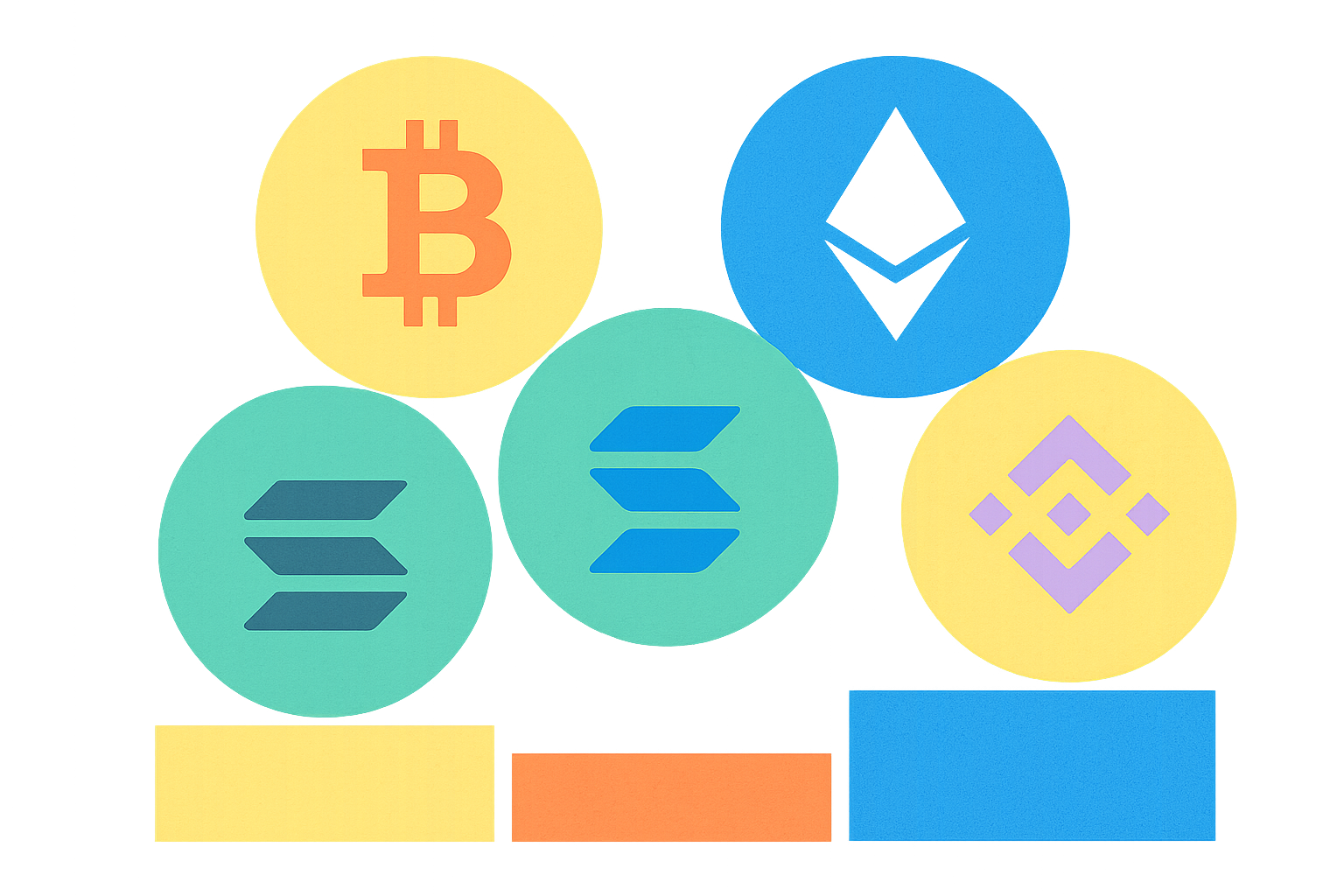
In recent years, cryptocurrencies (digital assets) have drawn substantial interest as investment options. This momentum stems from rising skepticism toward centralized financial systems and breakthrough developments in blockchain technology. Distributed ledger advancements are driving new levels of transparency, security, and efficiency that traditional finance couldn’t achieve, fueling persistent growth in cryptocurrency market demand.
This article ranks the most promising cryptocurrencies and explains key criteria for evaluating assets with solid investment potential. If you’re interested in crypto investing or searching for high-potential projects, this guide offers essential insights.
Top 5 Cryptocurrencies with Strong Growth Prospects
We’ll review five leading cryptocurrencies with outstanding growth potential, examining each project’s distinctive features and investment merits. These assets consistently earn high marks for their technical superiority, adoption, and active community support.
Top Pick #1: Bitcoin (BTC)
Launched in 2009 by Satoshi Nakamoto, Bitcoin is the original cryptocurrency. Built on blockchain technology, it’s a decentralized currency that enables direct peer-to-peer transactions without banks or government intermediaries.
Bitcoin’s defining trait is its scarcity: the supply is strictly capped at 21 million coins, which curbs inflation and reinforces its status as “digital gold.” This limited supply is central to Bitcoin’s role as a long-term store of value.
Global recognition of Bitcoin’s value has surged, with more nations and companies trading and holding it. Notably, leading asset managers have filed for Bitcoin ETFs, driving greater institutional interest and strengthening Bitcoin’s position as a core investment asset.
The Bitcoin network, supported by miners worldwide, offers unmatched security and reliability compared to other cryptocurrencies. This robust infrastructure is a key reason why Bitcoin is seen as “digital gold.”
Top Pick #2: Ethereum (ETH)
Ethereum is a pioneering platform for decentralized applications (DApps), with ETH as its native token. Its signature feature is smart contracts—self-executing agreements triggered when preset conditions are met, streamlining traditional contracting and business processes.
On Ethereum-based decentralized finance (DeFi) platforms, smart contracts automate settlements, lending, and interest payments, delivering efficient and transparent financial services without conventional intermediaries.
Transactions and smart contract executions on Ethereum require ETH “gas fees,” which fluctuate based on network traffic. ETH has consistently ranked as the world’s second-largest cryptocurrency by market cap and drives innovation across DeFi, NFTs, and the metaverse.
Ethereum is continually upgraded for better scalability and energy efficiency, ensuring its continued leadership in the crypto sector.
Top Pick #3: Solana (SOL)
Solana is a next-generation blockchain platform built for high-performance decentralized application development. Its top strengths include lightning-fast transaction speeds and ultra-low costs. Solana can handle 3,000–5,000 transactions per second, making it ideal for large-scale apps.
Solana’s transaction fees are exceptionally low—about $0.00025 per transaction—making it a go-to platform for frequent users and apps, including those needing micropayments or high-frequency trading.
The platform’s breakthrough is its unique Proof of History (PoH) consensus algorithm, which cryptographically verifies transaction order and overcomes traditional blockchain scalability challenges. PoH streamlines consensus, enabling fast, secure transactions across the network.
Solana is already widely adopted for NFT marketplaces, DeFi protocols, and gaming platforms, with companies and developers leveraging its technology—further boosting its growth outlook.
Top Pick #4: Ripple (XRP)
Ripple (XRP) operates on the XRP Ledger, a decentralized technology developed by a US tech firm. Ripple’s core mission is to accelerate and reduce the cost of international payments, aiming to solve persistent problems in cross-border transactions.
Traditional international transfers often require multiple intermediaries and take several days, with high fees. Ripple solves these issues by settling transfers in seconds at much lower costs.
Ripple’s developer provides On-Demand Liquidity (ODL) services to financial institutions using XRP. With ODL, institutions don’t need to pre-fund foreign currencies; they can exchange via XRP as needed, significantly lowering liquidity costs.
As more financial institutions worldwide adopt ODL, demand for XRP is likely to rise. Growing international payment needs in emerging markets and the digitalization of cross-border transactions will make Ripple’s technology increasingly vital.
Top Pick #5: Binance Coin (BNB)
Binance Coin is the proprietary token issued by the operator of one of the world’s largest crypto exchanges. It serves as the platform’s main currency, widely used for trading fees and accessing platform benefits.
BNB’s utility extends to Binance Smart Chain (BSC), a smart contract platform compatible with Ethereum. BSC delivers faster, lower-cost transactions, attracting developers and projects and creating a thriving ecosystem.
The exchange’s ecosystem now spans wallets, lending services, DeFi protocols, NFT marketplaces, and more. As this ecosystem grows, BNB’s utility and value continue to expand.
Regular token burns reduce BNB’s supply, increasing its scarcity and supporting its value. With both ecosystem growth and supply reduction, BNB’s potential continues to draw attention.
Three Key Advantages of Cryptocurrency Investing
Crypto investing brings unique benefits beyond traditional financial products. Here are three main advantages in detail.
Advantage #1: Strong Potential for Price Growth
Since Bitcoin’s debut in 2009, cryptocurrencies have grown at an unprecedented pace, interacting with legacy financial systems. Several major factors drive this phenomenon.
First, distrust in centralized finance is rising. Global concerns about crises and policy decisions have fueled demand for decentralized stores of value independent of governments and central banks. Cryptocurrencies uniquely address this need.
Second, blockchain technology keeps advancing. Improvements in security, scalability, and user experience have made crypto more accessible. New applications, including smart contracts and DeFi, are expanding practical use cases.
Third, regulatory clarity is improving worldwide. Well-defined rules encourage institutional investment and help mature the market. Together, these factors support continued demand and long-term price appreciation for cryptocurrencies.
Nevertheless, crypto prices are volatile. Careful risk management and financial planning are essential. Focus on long-term investment strategies instead of reacting to short-term market swings.
Advantage #2: Direct Access to Next-Generation Financial Services
Cryptocurrencies are powered by blockchain technology, which promises to resolve numerous challenges faced by traditional finance. Blockchain brings faster, cheaper payments, robust security, and transaction transparency.
Legacy finance often means slow, expensive global transfers. Crypto enables direct transactions without intermediaries, slashing fees and settling transfers in minutes or hours. The ability to send money worldwide, 24/7, is a significant advantage.
With the rise of DeFi, users can now access services previously available only through banks, often at lower costs. Lending platforms, for example, allow peer-to-peer transactions with the potential for higher yields.
Beyond finance, blockchain’s benefits extend to supply chain management, digital identity, and intellectual property. Investing in crypto gives early access to these transformative technologies and services.
Advantage #3: Increased Awareness and Access to Information
The crypto sector evolves quickly, driven by constant innovation and shifting trends. By investing, individuals naturally stay abreast of the latest in economics, finance, blockchain, and global markets.
This continuous learning benefits not only investment decisions, but also business and career growth. Understanding blockchain and Web3.0 gives professionals a competitive edge. Keeping up with global market and regulatory changes enables better, broader decision-making.
Joining crypto communities connects you with investors, developers, and entrepreneurs worldwide—unlocking new opportunities and valuable professional networks.
Over the long term, the “information sensitivity effect” can be even more valuable than investment returns. Cryptocurrency investing helps you anticipate and prepare for changes in society, work, and lifestyle—making it much more than just asset management.
Risks of Cryptocurrency Investing
While crypto investing offers compelling benefits, it’s vital to understand and manage key risks. Recognize these risks and take appropriate steps before investing.
Risk #1: High Price Volatility
Extreme price swings are a hallmark of the crypto market. Double-digit moves are common, and prices may surge or drop dramatically in a single day. This volatility means potential for quick gains, but equally large losses.
Several factors drive this volatility: the market is still developing and smaller than traditional financial markets, making it susceptible to big investor moves. Crypto trades around the clock, so global news and events immediately impact prices.
Regulatory changes are also major price drivers. New rules or legal actions can trigger sharp moves. Technical issues, security breaches, and comments from public figures or major investors also influence prices.
To manage risk, invest only surplus funds and avoid using money needed for living expenses or emergencies. Dollar-cost averaging—investing smaller amounts periodically—helps reduce volatility risk.
Risk #2: Hacking and Cybersecurity Threats
As digital assets traded online, cryptocurrencies are always at risk of hacking or cyberattacks. Security is a top concern for any crypto investor.
History shows several major hacks—one exchange lost about $580 million worth of crypto to a cyberattack, for example. Other dangers include wallet theft, DeFi protocol exploits, and NFT scams.
Protect yourself by choosing platforms with strong security records and few past incidents. Avoid leaving large sums on exchanges; transfer assets to wallets you control.
Use cold wallets (hardware wallets) for long-term storage, as they’re safer than online hot wallets. Always enable two-factor authentication, use strong passwords, and keep private keys and recovery phrases secure.
Beware of phishing and social engineering: don’t click suspicious links, confirm official URLs, and never share your private keys or passwords.
How to Identify Cryptocurrencies with Strong Potential
With thousands of crypto projects out there, it’s tough to pick those with real staying power. Here are the key factors for evaluating high-value digital assets.
Factor #1: Clear Project Purpose and Vision
Successful crypto projects articulate clear goals and visions—focusing not just on short-term profit, but on meaningful social challenges and a defined future.
Bitcoin, for example, was created to address distrust in centralized finance, offering a decentralized store of value. Its clear philosophy has attracted global support and established its status.
Ethereum aims to provide a decentralized platform for smart contracts, enabling automated, transparent services that previously required central oversight. This vision has earned backing from developers and enterprises.
When evaluating projects, read the white paper and roadmap carefully, and check:
- Is the problem clearly defined and truly in demand?
- Is the solution technically viable and better than alternatives?
- Is there a concrete long-term vision and actionable plan?
- Does the team have relevant experience and a strong track record?
If you can’t understand or agree with a project’s purpose or vision, it’s wise to avoid investing. Long-term success is most likely with projects you understand and support.
Factor #2: Active Community and Ecosystem
A thriving community and ecosystem are critical to a crypto project’s success. Even the best technology won’t succeed without engaged supporters.
Bitcoin’s global community—developers, miners, investors, and users—keeps its network strong and growing. This decentralized structure functions as the world’s largest DAO, ensuring ongoing growth without central control.
Ethereum also boasts a vibrant community and ecosystem, with developers building apps, companies experimenting with new models, and researchers advancing technology. This depth supports Ethereum’s continued evolution and rising value.
Assess communities and ecosystems by looking at:
- Development activity and contributor numbers on sites like GitHub
- Social media followers and engagement
- Frequency of community events and conferences
- Quantity and quality of apps/services built on the platform
- Partnerships with major companies or institutions
- Quality of developer documentation and support systems
Projects with strong communities and ecosystems are best positioned for long-term growth, regardless of short-term price swings. Community strength is a key signal of sustainability.
Factor #3: Market Demand, Liquidity, and Capitalization
Quantitative market data is essential for judging a cryptocurrency’s prospects. These metrics reveal whether a project is genuinely accepted by the market.
Market capitalization is the basic measure of a cryptocurrency’s value. High market cap means broad investor trust. But look at the trend over time—steady, long-term growth suggests a sustainable business model and robust community.
Liquidity is also crucial. Highly liquid assets can be traded quickly and easily, lowering investor risk. Look for projects with high trading volumes and listings on major exchanges.
Other demand indicators include:
- Trends in active wallet addresses
- Growth in on-chain transaction volume
- Amount of staked or locked tokens (shows long-term holders)
- Rate of new user growth
- Expanding real-world use cases and adoption
New projects with very low market caps may face market manipulation and liquidity problems. Beginners should start with top-cap assets with solid track records and reliability.
Don’t rely on market cap alone. Consider the project’s maturity and future potential. Large, established projects and smaller, promising ones offer different risk-reward profiles. Match your choices to your investment strategy and risk tolerance.
FAQ
What makes a cryptocurrency promising, and how do you identify those worth investing in?
Leading cryptocurrencies feature robust technology, vibrant communities, and talented teams. Evaluate the quality of the white paper, practical use cases, growth in transaction volume, clear roadmaps, and market demand.
Besides Bitcoin and Ethereum, which projects stand out in the rankings?
Ripple (XRP), Tether (USDT), Binance Coin (BNB), and Solana (SOL) all have notable market caps and trading volumes. Review each project’s technical foundation and market trends before investing.
What are the key factors for assessing a cryptocurrency’s future prospects (technology, use cases, team, community, etc.)?
Focus on unique blockchain technology, active development, strong community support, and market adoption. Consider GitHub updates, developer count, trading volume, social media activity, and project implementation progress.
What risks should you watch for when investing in new cryptocurrencies, and how can you avoid scams and "air coins"?
Carefully review project transparency and the team, and scrutinize the white paper. Verify trading volume and liquidity, and beware of guaranteed returns or celebrity endorsements—they’re common scam signals. Check community activity, GitHub code updates, and regulatory status.
What are fundamental and technical analyses in crypto, and how do they help assess future potential?
Fundamental analysis examines technology, team, and adoption; technical analysis uses price charts to spot trends. Using both gives you a more complete view of a cryptocurrency’s growth prospects and market opportunities.
Share
Content
How to Buy Cryptocurrency


Trending Cryptocurrencies



How to Mine Ethereum in 2025: A Complete Guide for Beginners

Ethereum 2.0 in 2025: Staking, Scalability, and Environmental Impact

What is Ethereum: A 2025 Guide for Crypto Enthusiasts and Investors
How does Ethereum's blockchain technology work?
What are smart contracts and how do they work on Ethereum?

Ethereum Price Analysis: 2025 Market Trends and Web3 Impact

What is Ethereum's fundamental analysis: how smart contracts, DeFi, and Layer 2 technology drive ETH's $357.8 billion valuation in 2026

How to measure Bitcoin and crypto community activity: Twitter followers, Telegram members, and developer contributions in 2026

10 Ways to Get Cryptocurrency for Free in 2025 (and Avoid Scammers)
Six Cryptocurrencies That Have Achieved Over 1,000x Growth
Cloud Mining: A Comprehensive Review of Leading Platforms for Remote Cryptocurrency Mining