Rise in Bitcoin and Ethereum's Market Share Amid Altcoin Challenges: Key Insights on Leading Cryptocurrencies

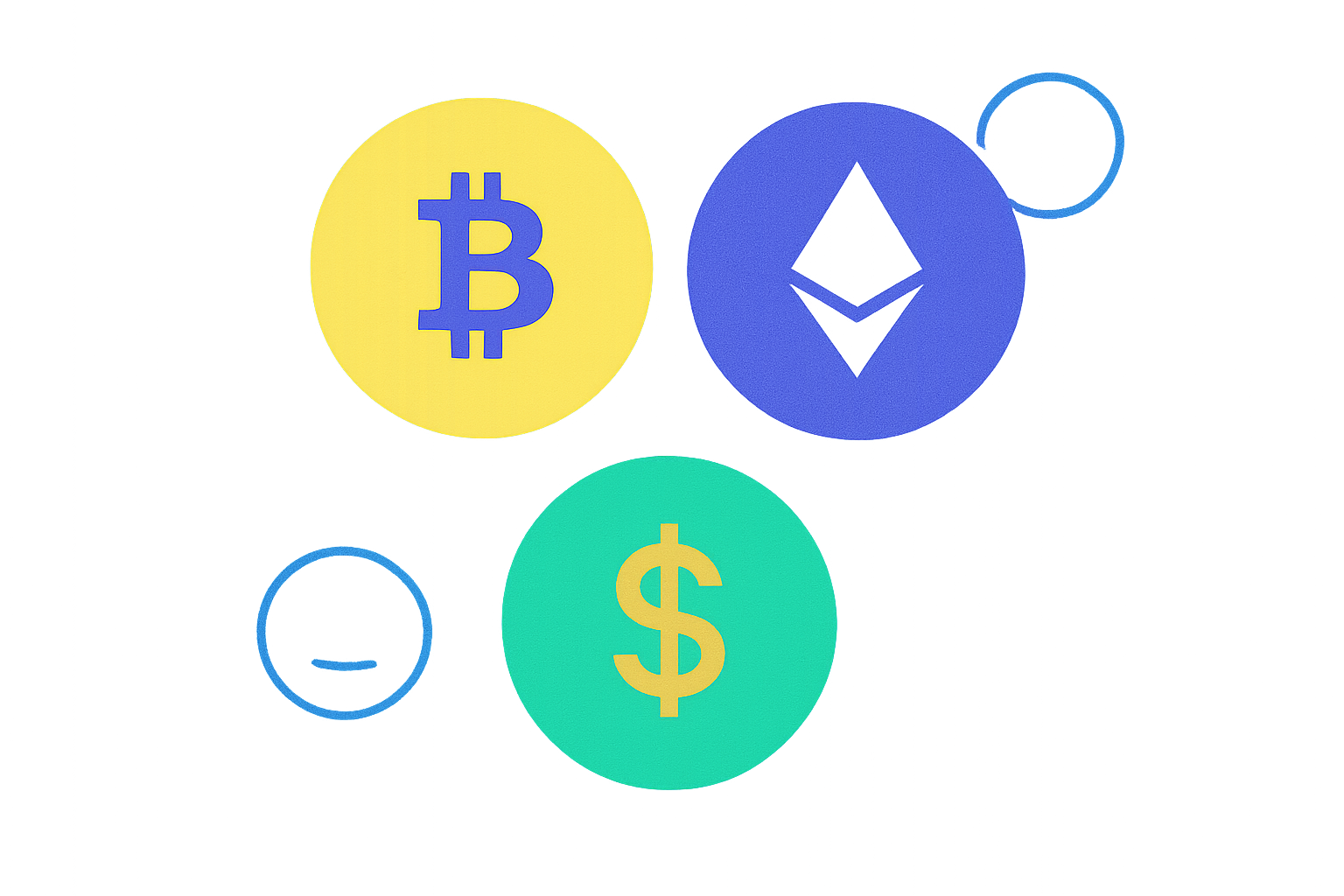
Bitcoin and Ethereum Dominance Surge As Altcoin Struggle: Crypto Market Analysis
The cryptocurrency market has undergone a significant transformation, marked by the strengthening dominance of the big 3 crypto assets while alternative cryptocurrencies face considerable challenges. This comprehensive analysis explores the current state of the digital asset ecosystem, examining the factors contributing to the market concentration and its implications for various cryptocurrency segments.
BTC and ETH Domination
Bitcoin continues to demonstrate its position as the undisputed leader of the cryptocurrency market, commanding a substantial portion of the total market capitalization. As the first and largest cryptocurrency by market value, Bitcoin's dominance reflects sustained investor confidence and institutional adoption. The cryptocurrency's resilience stems from several factors, including its established network security, brand recognition, and perception as "digital gold."
Ethereum maintains its position as the second-largest cryptocurrency among the big 3 crypto assets. The platform's smart contract capabilities and its role as the foundation for decentralized finance (DeFi) and non-fungible tokens (NFTs) continue to attract developers and investors alike. The combined strength of Bitcoin and Ethereum represents a flight to quality, as market participants gravitate toward established projects with proven track records, robust developer communities, and substantial liquidity. This concentration of capital in the top cryptocurrencies indicates a maturing market where investors prioritize security and reliability over speculative opportunities.
Altcoin Bleeding
The altcoin sector faces significant headwinds as capital flows increasingly favor the big 3 crypto leaders. Many alternative cryptocurrencies have experienced substantial value erosion, struggling to maintain their market positions amid changing investor sentiment. This phenomenon, often referred to as "altcoin bleeding," reflects a broader risk-off sentiment in the cryptocurrency space.
Cardano (ADA) exemplifies these challenges despite its technological innovations and academic approach to blockchain development. Similarly, Chainlink (LINK), a crucial infrastructure project for connecting smart contracts with real-world data, faces downward price pressure while maintaining its position as a fundamental protocol. These examples illustrate that even projects with strong fundamentals and utility experience challenges when market preference shifts toward the big 3 crypto assets. The struggles of altcoins can be attributed to several factors: reduced risk appetite among investors, concerns about regulatory scrutiny affecting smaller projects, and the realization that many altcoins lack sustainable value propositions beyond speculative trading.
Rise of Stablecoins
Amidst market volatility and uncertainty, stablecoins have emerged as a significant beneficiary and are increasingly considered among the big 3 crypto categories alongside Bitcoin and Ethereum. Collectively achieving substantial market capitalization representing a significant percentage of the total cryptocurrency market, stablecoins demonstrate investors' desire for stability and liquidity preservation within the digital asset ecosystem.
Leading stablecoins such as Tether (USDT) and USD Coin (USDC) have gained substantial traction by offering price stability typically pegged to the U.S. dollar. These assets serve multiple purposes: they provide a safe haven during market downturns, facilitate trading between different cryptocurrencies without converting to fiat currency, and enable participation in DeFi protocols while minimizing exposure to volatile assets. The increasing market share of stablecoins reflects a more mature market where participants seek tools for capital preservation alongside growth opportunities, rather than purely speculative vehicles.
Price Movements and Trends
Price action across the cryptocurrency market reveals divergent trends among different asset classes. Bitcoin demonstrates relative stability as it continues to consolidate its position as the premier digital asset. This price behavior suggests market maturation as participants evaluate the long-term value proposition of established cryptocurrencies.
Ethereum shows resilience and maintains positive market sentiment, reflecting its central role in the expanding DeFi and NFT ecosystems. The platform's ongoing development and utility continue to support its position among the big 3 crypto assets. Stablecoins maintain their intended stability, confirming their effectiveness as stable value stores and their growing importance in the digital asset landscape.
In contrast, altcoins face ongoing pressure as capital continues concentrating in the big 3 crypto categories. Projects across various sectors experience challenges maintaining valuation as investors demonstrate preference for established assets with proven utility and security. These market movements underscore the current dynamics where capital concentrates in Bitcoin, Ethereum, and stablecoins while flowing out of alternative projects.
Conclusion
The current cryptocurrency market landscape is characterized by a clear flight to quality, with the big 3 crypto assets—Bitcoin, Ethereum, and stablecoins—solidifying their dominant positions while altcoins face substantial challenges. Bitcoin's market dominance and Ethereum's strong positioning as the second-largest cryptocurrency reflect investor preference for established, liquid, and fundamentally sound digital assets. Meanwhile, the altcoin sector experiences significant value erosion as investors reduce exposure to higher-risk assets, with projects like Cardano and Chainlink struggling despite their technological merits.
The rise of stablecoins to become a major market force highlights the growing demand for stability and capital preservation tools within the cryptocurrency ecosystem. This trend, combined with the concentration of value in the big 3 crypto categories, suggests a maturing market where participants increasingly differentiate between speculation and investment. As the cryptocurrency market continues to evolve, this bifurcation between established leaders and struggling alternatives persists, leading to further consolidation and a more selective investment environment where only projects with genuine utility and strong fundamentals can thrive alongside the dominant cryptocurrencies. Understanding what are the big 3 crypto assets—Bitcoin, Ethereum, and stablecoins—remains essential for navigating this evolving landscape.
FAQ
What is big 3 in crypto?
The big 3 in crypto are Bitcoin, Ethereum, and Tether. They lead by market capitalization and transaction volume, representing the most influential cryptocurrencies in the digital asset ecosystem.
What are the three main crypto coins?
The three main crypto coins are Bitcoin, Ethereum, and XRP. Bitcoin is the largest by market capitalization, Ethereum powers decentralized applications, and XRP facilitates cross-border payments.
What is the market cap of the big 3 cryptocurrencies?
As of December 2025, the market caps of the top three cryptocurrencies are: Bitcoin ($600 billion), Ethereum ($200 billion), and Tether ($180 billion).
How do the big 3 crypto coins differ from each other?
Bitcoin is the original decentralized currency focusing on payments. Ethereum enables smart contracts and decentralized applications. Litecoin offers faster transaction speeds. Each serves distinct purposes within the crypto ecosystem.
Share
Content
How to Buy Cryptocurrency


Trending Cryptocurrencies



How Does Competitor Analysis Help Crypto Projects Gain Market Share in 2025?

Movement (MOVE) Price Analysis: Volatility Comparison with BTC and ETH in 2025

Mubarak Price Analysis: Volatility Comparison with BTC and ETH

why is crypto crashing and will it recover ?

Crypto Crash or Just a Correction?

Will Crypto Recover ?

Understanding NFTs: What They Really Mean

Exploring the Benefits of Helium Integration on the Solana Network
Guide to Purchasing Tether (USDT) with INR in India

Can Shiba Inu's Price Hit 1 Rupee? Future Predictions for SHIB
Bitcoin Rainbow Chart: Summary and Applications