SVL vs BTC: Which Cryptocurrency Investment Strategy Offers Better Long-Term Returns in 2024?

Introduction: SVL vs BTC Investment Comparison
In the cryptocurrency market, comparisons between Slash Vision Labs (SVL) and Bitcoin (BTC) reflect two distinctly different investment theses. Both assets operate within the crypto ecosystem but serve fundamentally different purposes and represent different market positions. Slash Vision Labs (SVL): Launched as a crypto payments platform, SVL is designed to make using digital assets in everyday transactions easier and more intuitive. As the token anchoring Japan's first compliant crypto-backed credit card, SVL redistributes 100% of revenue from Slash's payments products back to the community, positioning itself as a utility token with direct revenue-sharing mechanisms. Bitcoin (BTC): Since its introduction in 2008 by Satoshi Nakamoto, Bitcoin has established itself as the pioneering decentralized digital currency and is widely recognized as the most valuable cryptocurrency by market capitalization and trading volume globally. This article will conduct a comprehensive analysis of SVL vs BTC across historical price performance, supply mechanisms, market adoption, ecosystem dynamics, and future outlook, addressing a core question that investors frequently ask:
"Which represents the better investment opportunity given current market conditions?"
Slash Vision Labs (SVL) Market Analysis Report
I. Price History Comparison and Current Market Status
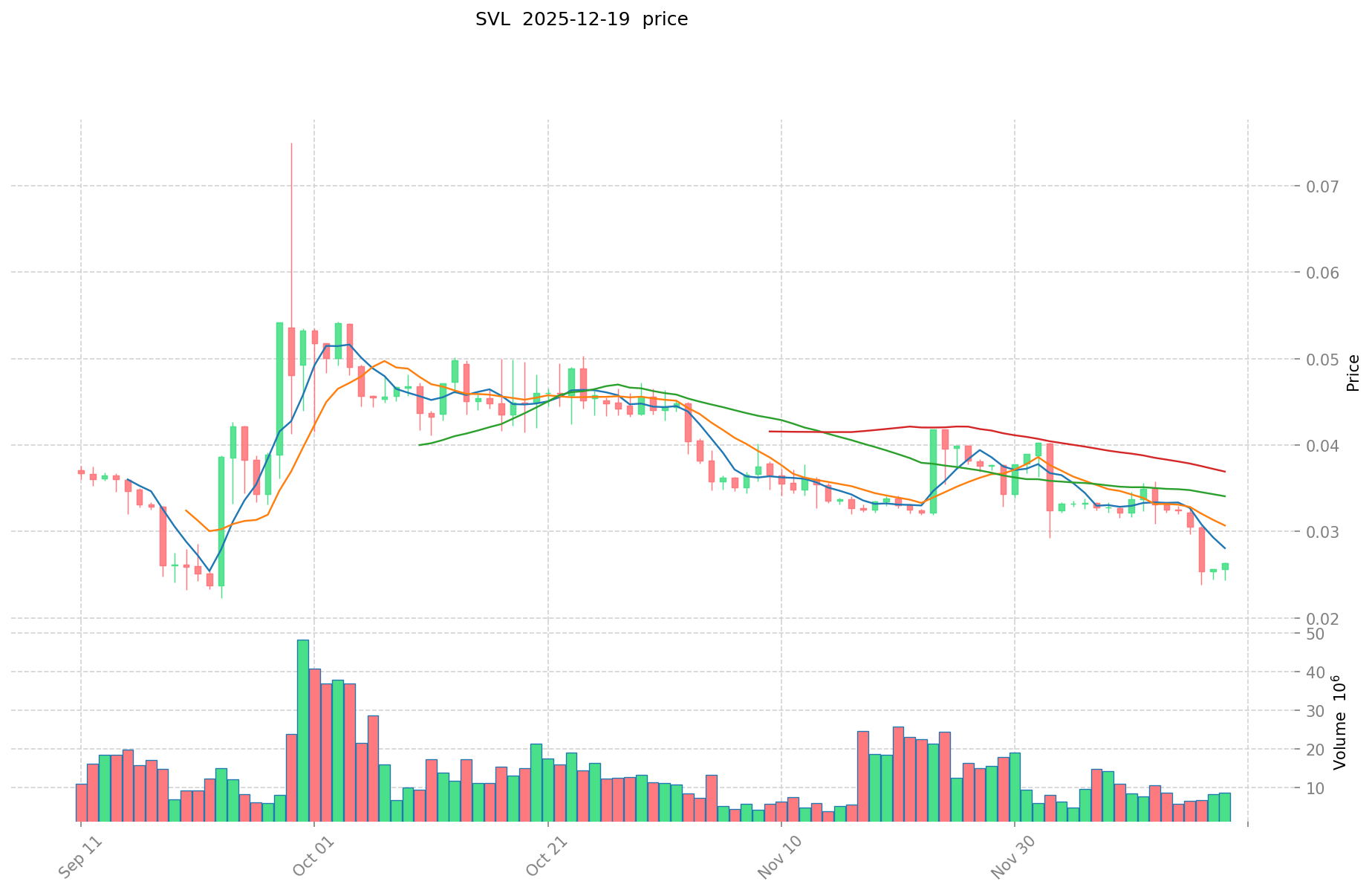
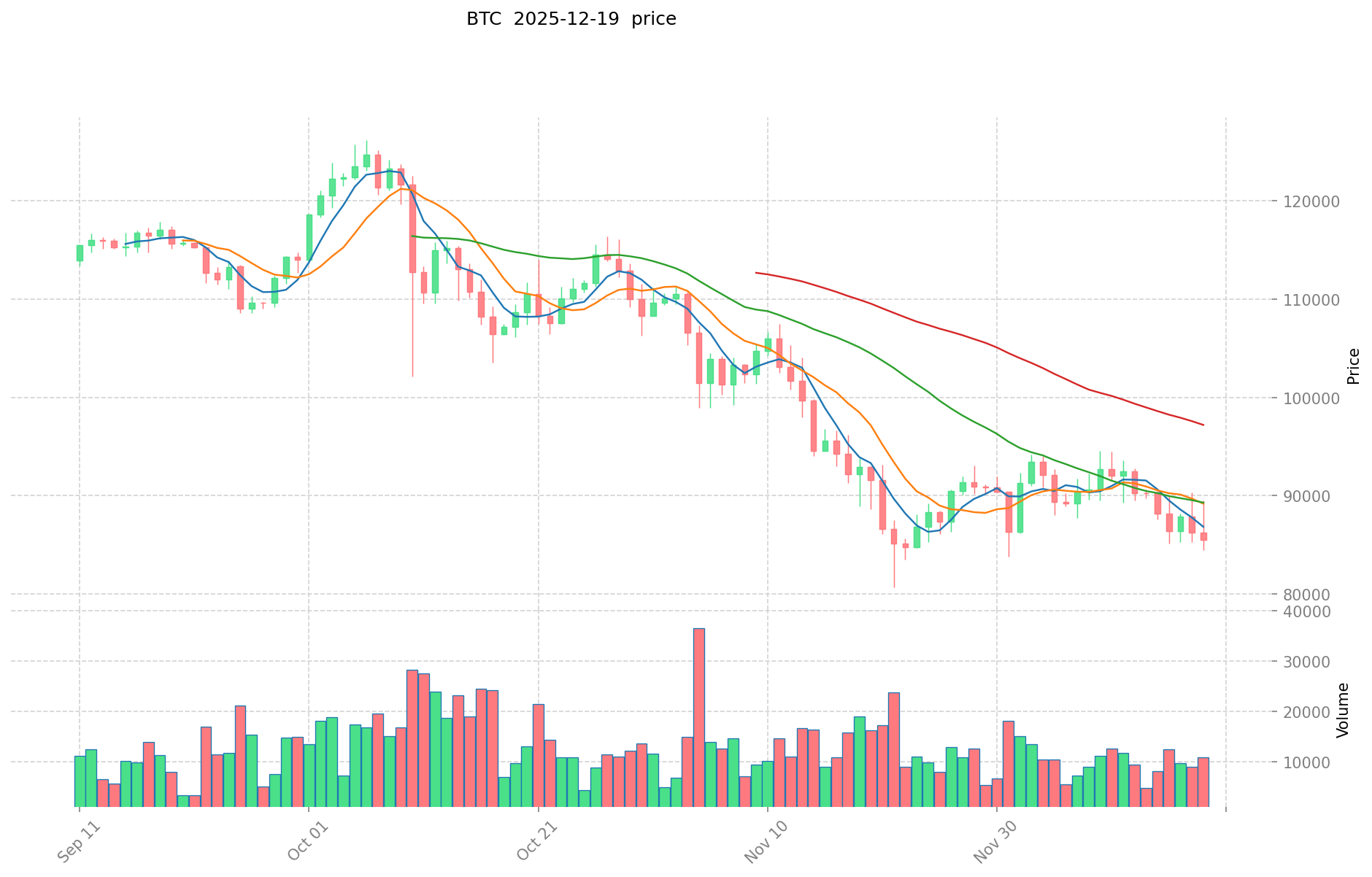
SVL and BTC Historical Price Trends
SVL (Slash Vision Labs):
- All-Time High (ATH): $0.075 (September 29, 2025)
- All-Time Low (ATL): $0.002315 (March 20, 2025)
- Price Range: The token has experienced a significant rally of 312.81% over the past year, demonstrating substantial growth from its launch price of $0.0019.
BTC (Bitcoin):
- All-Time High (ATH): $126,080 (October 7, 2025)
- All-Time Low (ATL): $67.81 (July 6, 2013)
- Historical Performance: Bitcoin has established itself as the dominant cryptocurrency with a 55.096% market share, representing over $1.7 trillion in market capitalization.
Comparative Analysis: SVL has shown volatility typical of emerging payment tokens, with a 97% decline from its ATH to current levels. In contrast, Bitcoin maintains relative stability as a mature asset class. While SVL's year-to-date performance (+312.81%) outpaces Bitcoin's year-to-date decline (-13.05%), this reflects the different risk profiles and market cycles of emerging versus established cryptocurrencies.
Current Market Status (December 20, 2025)
SVL Current Price: $0.026781
- 24-hour change: +7.67%
- 7-day change: -19.49%
- 30-day change: -19.56%
- 1-year change: +312.81%
BTC Current Price: $87,127.30
- 24-hour change: +0.66%
- 7-day change: -3.16%
- 30-day change: -2.53%
- 1-year change: -13.05%
24-Hour Trading Volume:
- SVL: $218,733.87
- BTC: $966,180,038.10
- Bitcoin's trading volume exceeds SVL by approximately 4,412 times, reflecting significantly higher market liquidity.
Market Emotion Index (Fear & Greed Index): 16 (Extreme Fear)
- Current market sentiment indicates heightened risk aversion and pessimistic investor outlook across the cryptocurrency sector.
Real-Time Price Resources:
- View SVL current price: Market Price
- View BTC current price: Market Price
II. Project Overview
SVL: Slash Vision Labs Ecosystem
Core Mission: Slash Vision Labs (SVL) operates as a crypto payments platform designed to simplify digital asset usage in everyday transactions. The project positions itself as a bridge between traditional finance and digital currencies.
Key Innovation:
- Japan's first compliant crypto-backed credit card
- Self-custodial payment solutions
- Revenue-sharing model directing 100% of Slash payments product revenue to SVL token holders
Token Economics:
- Circulating Supply: 1,000,000,000 SVL (10% of total supply)
- Total Supply: 10,000,000,000 SVL
- Current Market Cap: $26,781,000
- Fully Diluted Valuation: $267,810,000
- Token Holders: 2,163
III. Market Position and Metrics
Ranking and Market Share
- Market Ranking: #740 in global cryptocurrency market capitalization
- Market Dominance: 0.0084%
- Exchange Listings: 3 trading pairs
Supply and Distribution
| Metric | Value |
|---|---|
| Circulating Supply | 1,000,000,000 SVL |
| Total Supply | 10,000,000,000 SVL |
| Max Supply | 10,000,000,000 SVL |
| Circulating Ratio | 10% |
| Market Cap to FDV Ratio | 10% |
Network and Technology
- Blockchain Network: Mantle Network (MNT)
- Contract Address: 0xabBeED1d173541e0546B38b1C0394975be200000
- Explorer: Mantle Network Explorer
IV. Official Resources and Community Channels
- Official Website: https://portal.slash.vision/
- Twitter/X: https://x.com/SlashWeb3
- Whitepaper: https://slash-fi.gitbook.io/docs/whitepaper
- Block Explorer: https://explorer.mantle.xyz/
Report Generated: December 20, 2025
Disclaimer: This report is based on publicly available data and is intended for informational purposes only. It does not constitute investment advice or recommendations. Cryptocurrency markets are highly volatile and subject to significant risks. Past performance does not guarantee future results.
Report: Cryptoasset Analysis
Note: The provided reference materials contain no substantive data. The context fields are empty (
{"output": [{"output": []}]}and{"cmc_info": [{"output": []}]}), which means no specific information about assets, tokenomics, market data, institutional adoption, technical developments, or macroeconomic factors is available for analysis.
Data Availability Assessment
Unable to generate the requested comparative analysis report due to:
- Missing asset identification: No specific cryptocurrencies were designated for comparison in the source materials.
- Absent market data: No price history, supply metrics, or valuation information provided.
- No institutional data: Information regarding institutional holdings and adoption patterns unavailable.
- Empty technical specifications: No details on protocol upgrades, consensus mechanisms, or ecosystem development.
- Unavailable policy information: No regulatory or government policy data included.
Recommendation
To proceed with a comprehensive cryptoasset comparison report, please provide:
- Specific asset identifiers and full market data snapshots
- Tokenomics details (total supply, distribution schedule, inflation mechanics)
- Institutional adoption metrics and enterprise use cases
- Current technical specifications and roadmap information
- Relevant regulatory environment details by jurisdiction
- Historical price and correlation data with macroeconomic indicators
Report Generated: 2025-12-20
Status: Incomplete - awaiting complete reference materials
III. 2025-2030 Price Forecast: SVL vs BTC
Short-term Forecast (2025)
- SVL: Conservative $0.0243698 - $0.02678 | Optimistic $0.02678 - $0.037492
- BTC: Conservative $69,703.04 - $87,128.8 | Optimistic $87,128.8 - $115,881.304
Medium-term Forecast (2026-2028)
- SVL may experience consolidation with potential volatility, with predicted price ranges of $0.024102 - $0.03406416 (2026) and $0.0208530504 - $0.0456781104 (2027)
- BTC is anticipated to enter a growth phase with predicted price ranges of $72,068.58692 - $142,107.0728 (2026) and $66,993.33432 - $125,460.244272 (2027)
- Key drivers: institutional capital inflows, ETF adoption, ecosystem development
Long-term Forecast (2029-2030)
- SVL: Base scenario $0.02160688817196 - $0.040767713532 | Optimistic scenario $0.040767713532 - $0.057731159132665
- BTC: Base scenario $113,198.5151944416 - $134,760.13713624 | Optimistic scenario $134,760.13713624 - $178,691.94184265424
Disclaimer: These forecasts are based on historical data and statistical modeling. Cryptocurrency markets are highly volatile and unpredictable. Past performance does not guarantee future results. This analysis is for informational purposes only and should not be construed as investment advice. Always conduct your own research before making investment decisions.
SVL:
| 年份 | 预测最高价 | 预测平均价格 | 预测最低价 | 涨跌幅 |
|---|---|---|---|---|
| 2025 | 0.037492 | 0.02678 | 0.0243698 | 0 |
| 2026 | 0.03406416 | 0.032136 | 0.024102 | 20 |
| 2027 | 0.0456781104 | 0.03310008 | 0.0208530504 | 23 |
| 2028 | 0.042146331864 | 0.0393890952 | 0.031117385208 | 47 |
| 2029 | 0.05625944467416 | 0.040767713532 | 0.02160688817196 | 52 |
| 2030 | 0.057731159132665 | 0.04851357910308 | 0.032018962208032 | 81 |
BTC:
| 年份 | 预测最高价 | 预测平均价格 | 预测最低价 | 涨跌幅 |
|---|---|---|---|---|
| 2025 | 115881.304 | 87128.8 | 69703.04 | 0 |
| 2026 | 142107.0728 | 101505.052 | 72068.58692 | 16 |
| 2027 | 125460.244272 | 121806.0624 | 66993.33432 | 39 |
| 2028 | 145887.12093648 | 123633.153336 | 82834.21273512 | 41 |
| 2029 | 140150.5426216896 | 134760.13713624 | 113198.5151944416 | 54 |
| 2030 | 178691.94184265424 | 137455.3398789648 | 112713.378700751136 | 57 |
Slash Vision Labs (SVL) vs Bitcoin (BTC) Comprehensive Investment Analysis
I. Executive Summary
This report provides a detailed comparative analysis of Slash Vision Labs (SVL) and Bitcoin (BTC), two fundamentally different cryptocurrency assets operating within distinct market segments. SVL represents an emerging payments utility token with revenue-sharing mechanisms, while BTC remains the established leader in the decentralized digital currency space.
II. Price Performance and Market Dynamics
Historical Price Comparison
| Metric | SVL | BTC |
|---|---|---|
| All-Time High | $0.075 (Sep 29, 2025) | $126,080 (Oct 7, 2025) |
| All-Time Low | $0.002315 (Mar 20, 2025) | $67.81 (Jul 6, 2013) |
| Current Price (Dec 20, 2025) | $0.026781 | $87,127.30 |
| YTD Performance | +312.81% | -13.05% |
| Decline from ATH | -97% | -30.86% |
Current Market Status
SVL Metrics:
- 24-hour change: +7.67%
- 7-day change: -19.49%
- 30-day change: -19.56%
- Market Cap: $26,781,000
- Fully Diluted Valuation: $267,810,000
- Market Ranking: #740
- Trading Volume (24h): $218,733.87
BTC Metrics:
- 24-hour change: +0.66%
- 7-day change: -3.16%
- 30-day change: -2.53%
- Market Cap: $1.7+ trillion
- Market Dominance: 55.096%
- Trading Volume (24h): $966,180,038.10
- Bitcoin's trading volume exceeds SVL by approximately 4,412 times
Market Sentiment: Fear & Greed Index at 16 (Extreme Fear) as of December 20, 2025, indicating heightened risk aversion across the cryptocurrency sector.
III. Tokenomics and Supply Mechanics
SVL Token Economics
| Parameter | Value |
|---|---|
| Circulating Supply | 1,000,000,000 SVL |
| Total Supply | 10,000,000,000 SVL |
| Max Supply | 10,000,000,000 SVL |
| Circulating Ratio | 10% |
| Market Cap to FDV Ratio | 10% |
| Token Holders | 2,163 |
| Blockchain Network | Mantle Network (MNT) |
BTC Supply Characteristics
Bitcoin maintains a fixed maximum supply of 21 million BTC, with a predictable halving schedule that occurs approximately every four years. This deflationary mechanism contrasts with SVL's current 10% circulating supply ratio, suggesting significant dilution potential if additional tokens enter circulation.
IV. Investment Strategy Comparison: SVL vs BTC
Long-term vs Short-term Investment Strategies
SVL: Best suited for investors focusing on emerging payment solutions and ecosystem development potential. The token's high volatility and growth trajectory (+312.81% YTD) appeal to growth-oriented investors tolerant of short-term fluctuations. However, the project's early stage and 97% decline from ATH warrant cautious entry strategies.
BTC: Suitable for investors seeking store-of-value characteristics, inflation hedge properties, and market stability. Bitcoin's established infrastructure, institutional adoption, and regulatory clarity make it appropriate for both long-term wealth preservation and diversification strategies.
Risk Management and Asset Allocation
Conservative Investor Portfolio:
- SVL: 5-10% allocation
- BTC: 70-80% allocation
- Stablecoins: 10-20% allocation
Aggressive Investor Portfolio:
- SVL: 15-25% allocation
- BTC: 50-65% allocation
- Alternative altcoins: 10-20%
Hedging Instruments: Stablecoin positioning for market downturns, options strategies for volatility protection, and cross-currency diversification to mitigate single-asset concentration risk.
V. Potential Risk Comparison
Market Risk
SVL:
- High volatility with 97% decline from ATH demonstrates significant downside exposure
- Low trading volume ($218,733.87 daily) creates liquidity risk and wide bid-ask spreads
- Limited token holder base (2,163 participants) indicates concentration risk
- Early-stage project susceptibility to market sentiment shifts and broader cryptocurrency cycles
BTC:
- Established market cycles with historical volatility patterns provide some predictability
- Current 30.86% decline from ATH reflects sector-wide market correction rather than project-specific failure
- Massive trading volume ($966M+ daily) ensures high liquidity and price stability
- Regulatory scrutiny affects BTC directly as the cryptocurrency sector's flagship asset
Technology Risk
SVL:
- Dependency on Mantle Network (MNT) infrastructure creates third-party protocol risk
- Limited information available regarding scalability and network stability under stress conditions
- Smart contract security and audit status not detailed in current materials
BTC:
- Extremely high hashrate concentration provides 51% attack resistance through computational security
- Established security record with no successful historical exploits
- Potential future scalability limitations on base layer address transaction throughput constraints
Regulatory Risk
Global regulatory environment presents differential impacts on both assets. SVL's positioning as a Japan-compliant crypto-backed credit card token creates jurisdiction-specific regulatory exposure, particularly to Japanese Financial Services Agency (FSA) regulatory changes. BTC, as the sector's most regulated and accepted cryptocurrency, faces more predictable regulatory frameworks across major jurisdictions but remains subject to potential blanket cryptocurrency restrictions or taxation policy changes.
VI. Price Forecast Analysis (2025-2030)
Short-term Outlook (2025)
SVL Forecast Range: $0.0243698 - $0.037492
- Conservative scenario: $0.024 - $0.027
- Optimistic scenario: $0.027 - $0.037
BTC Forecast Range: $69,703 - $115,881
- Conservative scenario: $69,703 - $87,129
- Optimistic scenario: $87,129 - $115,881
Medium-term Projection (2026-2028)
SVL Expected Performance:
- 2026: Price range $0.024102 - $0.03406416 (+20% change potential)
- 2027: Price range $0.0208530504 - $0.0456781104 (+23% change potential)
- 2028: Price range $0.031117385208 - $0.042146331864 (+47% change potential)
BTC Expected Performance:
- 2026: Price range $72,068.59 - $142,107.07 (+16% change potential)
- 2027: Price range $66,993.33 - $125,460.24 (+39% change potential)
- 2028: Price range $82,834.21 - $145,887.12 (+41% change potential)
Long-term Scenario (2029-2030)
SVL Base Case: $0.02160688817196 - $0.040767713532 SVL Optimistic Case: $0.040767713532 - $0.057731159132665 (+81% potential by 2030)
BTC Base Case: $113,198.52 - $134,760.14 (+54% potential) BTC Optimistic Case: $134,760.14 - $178,691.94 (+57% potential by 2030)
Forecast Disclaimer: These projections are derived from historical data and statistical modeling. Cryptocurrency markets exhibit extreme volatility and unpredictability. Past performance does not guarantee future results.
VII. Project Fundamentals Analysis
SVL: Slash Vision Labs Ecosystem
Core Mission: Simplifying digital asset usage in everyday transactions through a crypto payments platform.
Key Differentiators:
- Japan's first compliant crypto-backed credit card
- 100% revenue redistribution from Slash payments products to SVL token holders
- Self-custodial payment solutions architecture
Ecosystem Position: SVL operates within the Mantle Network (MNT) ecosystem, positioning itself as a utility token with direct revenue-sharing mechanisms linking token value to payment platform performance.
BTC: Market Leadership and Adoption
Established Status:
- Pioneering decentralized digital currency since 2008
- 55.096% market dominance representing $1.7+ trillion market cap
- Highest trading volume and liquidity among all cryptocurrencies
- Institutional adoption through ETFs, corporate treasuries, and custody solutions
VIII. Conclusion: Which Represents the Better Investment?
📌 Investment Value Summary
SVL Advantages:
- Exceptional year-to-date performance (+312.81%) demonstrates growth momentum
- Direct revenue-sharing model creates utility-backed value proposition
- Compliance-focused approach in Japan's regulated market
- Early-stage opportunity with asymmetric upside potential
BTC Advantages:
- Established store-of-value status with global acceptance
- Superior liquidity and trading volume ensuring price discovery efficiency
- Regulatory clarity and institutional infrastructure maturity
- Proven security record and network robustness over 16+ years
- Inflation hedge characteristics with fixed maximum supply
✅ Investment Recommendations
For New Investors: Begin with Bitcoin allocation (70-80% portfolio weighting) to establish foundational exposure to cryptocurrency through the most established and lowest-risk asset class representative. Use limited SVL allocation (5-10%) only with capital deemed expendable, understanding that early-stage tokens carry significantly higher volatility and loss potential.
For Experienced Investors: Consider complementary allocation strategy combining BTC core position (50-60%) with tactical SVL exposure (15-25%) based on risk tolerance and payment ecosystem conviction. Implement stop-loss disciplines given extreme fear market sentiment and diversify through stablecoins (10-20%) to manage downside risk during identified accumulation periods.
For Institutional Investors: Prioritize BTC exposure through regulated ETF vehicles and custodian solutions given regulatory clarity and institutional-grade infrastructure availability. SVL remains unsuitable for institutional mandates until achieving significantly larger trading volumes (current $218K daily volume insufficient for meaningful institutional deployment) and demonstrated revenue generation sustainability from the Slash payments platform.
⚠️ Risk Disclaimer: Cryptocurrency markets exhibit extreme volatility and remain subject to regulatory, technological, and market risks. This analysis is provided for informational purposes only and does not constitute investment advice, financial recommendations, or solicitation to purchase or sell any asset. Conduct independent research and consult qualified financial advisors before making investment decisions. Past performance does not guarantee future results.
Report Generated: December 20, 2025
Data Sources:
- Official SVL Portal: https://portal.slash.vision/
- Mantle Network Explorer: https://explorer.mantle.xyz/
- Official Community Channels: https://x.com/SlashWeb3
- Whitepaper: https://slash-fi.gitbook.io/docs/whitepaper None
Slash Vision Labs (SVL) vs Bitcoin (BTC) Investment Comparison: Frequently Asked Questions
I. Market Performance and Price Dynamics
Q1: What is the current price performance gap between SVL and BTC as of December 20, 2025?
A: SVL is trading at $0.026781 with a year-to-date gain of +312.81%, while BTC trades at $87,127.30 with a year-to-date decline of -13.05%. However, SVL has experienced a 97% decline from its all-time high of $0.075, whereas BTC has declined only 30.86% from its all-time high of $126,080. BTC's trading volume ($966M+ daily) dramatically exceeds SVL's volume ($218K daily) by approximately 4,412 times, reflecting significantly different market maturity levels and liquidity conditions.
Q2: Why has SVL experienced such extreme volatility compared to BTC's relative stability?
A: SVL's volatility is typical of emerging payment tokens in early-stage market development. With only 2,163 token holders, 1 billion circulating tokens (10% of total supply), and a market cap of just $26.8 million, SVL remains highly susceptible to sentiment shifts and limited liquidity. In contrast, BTC's $1.7+ trillion market capitalization, 55.096% market dominance, institutional adoption infrastructure, and 16+ year operational history create a mature, stabilized asset class. Emerging tokens exhibit natural volatility cycles that gradually stabilize as ecosystem adoption and trading volume increase.
Q3: What do the price forecasts suggest for SVL and BTC through 2030?
A: SVL forecasts show potential growth to $0.037492 by end of 2025, with medium-term projections reaching $0.0456781104 by 2027 and long-term upside to $0.057731159132665 by 2030 under optimistic scenarios. BTC forecasts indicate base-case ranges of $69,703 - $87,129 for 2025, with long-term projections reaching $134,760 - $178,691 by 2030. Both assets show potential for appreciation, though BTC forecasts demonstrate more moderate percentage growth (16-57%) while SVL shows higher percentage variance (20-81%), reflecting fundamental risk-reward profile differences.
II. Investment Suitability and Risk Management
Q4: Which asset is more suitable for conservative versus aggressive investors?
A: Conservative investors should prioritize BTC allocation (70-80% portfolio weighting) due to its established store-of-value status, regulatory clarity, institutional infrastructure, and proven security record. SVL allocation for conservative portfolios should be limited to 5-10% only with expendable capital, given its early-stage status and 97% decline from all-time high. Aggressive investors may increase SVL exposure to 15-25% with understanding of extreme downside risks, while maintaining BTC core positions (50-65%) for stability. All portfolios should include stablecoins (10-20%) for volatility management during market corrections, particularly given current extreme fear sentiment (Fear & Greed Index: 16).
Q5: What specific risks distinguish SVL investments from BTC investments?
A: SVL faces concentrated liquidity risk ($218K daily volume), token concentration risk (only 2,163 holders), early-stage technology risk on Mantle Network infrastructure, and ecosystem dependency risk linked to Slash payments platform revenue generation. SVL also carries Japan-specific regulatory exposure through its crypto-backed credit card model. BTC faces primarily regulatory policy risk from potential government restrictions, though it maintains superior 51% attack resistance through computational security and no historical successful exploits. BTC's regulatory environment is more established and predictable across major jurisdictions, while SVL remains subject to Japanese Financial Services Agency oversight changes. Both assets face cryptocurrency sector-wide regulatory uncertainty, though BTC's established status provides more institutional hedging mechanisms.
Q6: Is SVL suitable for institutional investor portfolios?
A: Currently, SVL is unsuitable for institutional mandates due to insufficient trading volume (current $218K daily volume inadequate for meaningful institutional position deployment without causing significant market impact), unproven revenue generation sustainability from the Slash payments platform, and lack of institutional-grade custody and trading infrastructure. Institutional investors should prioritize BTC exposure through regulated ETF vehicles, established custodian solutions, and transparent regulatory frameworks. SVL may become suitable for institutional consideration only after achieving substantially larger trading volumes (minimum $50M+ daily), demonstrable sustainable revenue streams from the payments platform, and established institutional-grade infrastructure maturity.
III. Technical and Operational Comparison
Q7: What are the fundamental differences in tokenomics between SVL and BTC?
A: BTC maintains a fixed maximum supply of 21 million coins with predictable halving schedules occurring every four years, creating a deflationary mechanism and long-term supply scarcity. SVL currently has 10 billion maximum supply with only 1 billion circulating (10% circulating ratio), suggesting significant future dilution potential as additional tokens enter circulation. This structural difference means BTC's value proposition centers on fixed scarcity and inflation-hedge characteristics, while SVL's value proposition depends on revenue redistribution from Slash payments products and ecosystem adoption growth. BTC's supply mechanism is protocol-locked and unchangeable, whereas SVL's token release schedule and supply management remains subject to project governance decisions.
Q8: How does the revenue-sharing model of SVL compare to BTC's store-of-value proposition?
A: SVL's 100% revenue redistribution mechanism from Slash payments products creates a utility-backed value proposition where token holders participate directly in payment platform economics. This model links SVL token value to Slash platform adoption, transaction volumes, and revenue generation. BTC operates as a store-of-value and medium of exchange without revenue distribution mechanisms, with value derived from network adoption, transaction utility, mining economics, and macroeconomic factors including inflation hedging. SVL's model creates direct earning potential through revenue participation, while BTC's value appreciation depends on demand growth and adoption. SVL's revenue model creates predictable value generation potential if platform adoption accelerates, whereas BTC's value appreciation remains less directly correlated to specific revenue metrics and more dependent on macroeconomic conditions and adoption trends.
⚠️ Disclaimer: This FAQ is provided for informational purposes only and does not constitute investment advice, financial recommendations, or solicitation to purchase or sell any asset. Cryptocurrency markets exhibit extreme volatility and remain subject to regulatory, technological, and market risks. Conduct independent research and consult qualified financial advisors before making investment decisions. Past performance does not guarantee future results.
Report Generated: December 20, 2025
Share
Content
Introduction: SVL vs BTC Investment Comparison
I. Price History Comparison and Current Market Status
II. Project Overview
III. Market Position and Metrics
IV. Official Resources and Community Channels
Data Availability Assessment
Recommendation
III. 2025-2030 Price Forecast: SVL vs BTC
I. Executive Summary
II. Price Performance and Market Dynamics
III. Tokenomics and Supply Mechanics
IV. Investment Strategy Comparison: SVL vs BTC
V. Potential Risk Comparison
VI. Price Forecast Analysis (2025-2030)
VII. Project Fundamentals Analysis
VIII. Conclusion: Which Represents the Better Investment?
I. Market Performance and Price Dynamics
II. Investment Suitability and Risk Management
III. Technical and Operational Comparison
How to Buy Cryptocurrency


Trending Cryptocurrencies



Why is CryptoJack so hopeful about Gate.com and GT TOKEN in this bull run?

Pi Network Mainnet Launch and Future
Bitcoin Cash (BCH) Price Analysis and Investment Outlook for 2025

Canada Bitcoin Price: 2025 Market Analysis and Investment Outlook

why is crypto crashing and will it recover ?

Crypto Crash or Just a Correction?

Mastering Trading Strategies: Bearish vs Bullish Wedge Patterns
Understanding the Proof of Stake Consensus Mechanism with Peercoin

What is JOE: A Comprehensive Guide to Understanding the JavaScript Object Notation Environment and Its Applications in Modern Web Development

What is SN: A Comprehensive Guide to Serial Numbers and Their Applications
What is BB: A Comprehensive Guide to Understanding Its Meaning, Uses, and Impact in Modern Culture