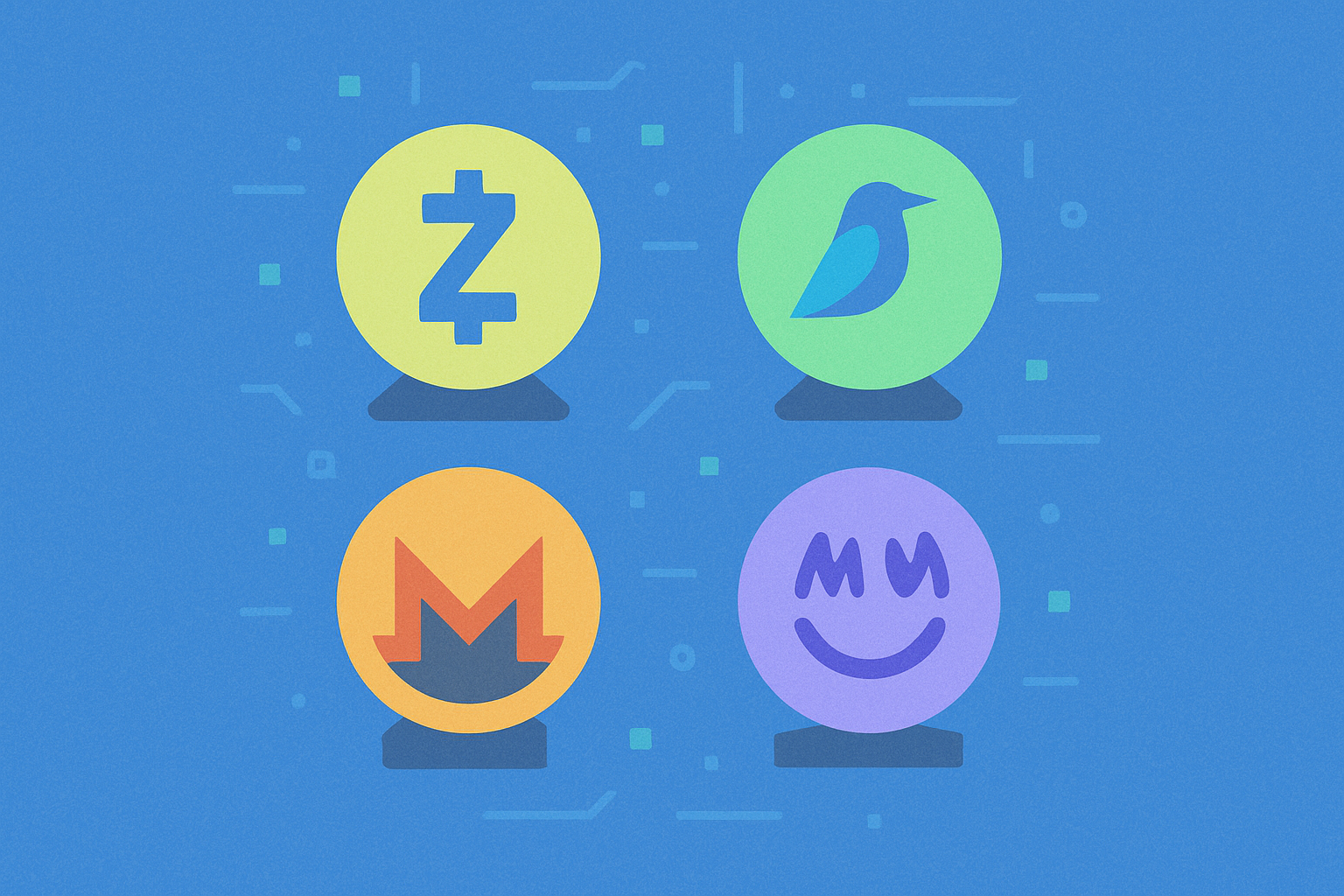
This comprehensive guide explores the most profitable cryptocurrencies to mine in 2024, helping investors maximize returns through informed decisions. The article covers five mining methods—CPU, ASIC, GPU, and cloud mining—each with distinct advantages and profitability profiles. Key selection criteria include asset price stability, legal compliance, and comprehensive cost analysis. Featured profitable mining options include Zcash (ZEC), Ravencoin (RVN), Monero (XMR), and Grin (GRIN), offering diverse opportunities for different mining setups. The guide addresses critical factors affecting profitability, such as electricity costs, mining difficulty, and equipment requirements, while providing actionable insights through detailed FAQs. Whether you're a beginner or experienced miner, this resource delivers essential strategies for selecting optimal cryptocurrencies and maximizing mining returns in the current market environment.
What is Cryptocurrency Mining?
Cryptocurrency mining is the process of creating new digital assets while simultaneously validating transactions on a blockchain network. Taking Bitcoin as an example, miners play two crucial roles in the ecosystem. First, they verify transactions and generate new bitcoins through complex computational processes. Second, they confirm every cryptocurrency transaction on the blockchain whenever someone sends digital assets to another person.
Miners validate transactions by collecting them from the memory pool and organizing them into blocks. The memory pool functions as a waiting room within the blockchain network where transactions are temporarily stored before being included in a block. During this stage, all pending transactions await verification. Subsequently, the protocol rewards miners with newly issued cryptocurrency as compensation for their computational work and network security contributions.
The mining process is fundamental to maintaining the fairness, stability, and security of blockchain networks. Miners invest in high-performance specialized computers to process cryptocurrency transactions efficiently. They accomplish this by solving complex mathematical problems that link transaction blocks together. Once a miner verifies transactions and adds them to the blockchain, those transactions become immutable and irreversible, which is directly connected to the network's security infrastructure.
Mining ensures the integrity of the blockchain by preventing double-spending and maintaining consensus across the distributed network. The protocol rewards miners approximately every 10 minutes with newly minted bitcoins, and this issuance is explicitly defined in the code. The only way to mine cryptocurrency is by verifying transactions and including them in blocks, making miners essential participants in the decentralized ecosystem.
Methods of Cryptocurrency Mining
There are several approaches to acquiring cryptocurrency through mining, each with distinct characteristics, advantages, and limitations. Understanding these methods helps miners choose the most suitable option based on their resources, technical expertise, and profitability goals.
CPU Mining
CPU mining utilizes a computer's Central Processing Unit to mine cryptocurrencies. In the early days of cryptocurrency, CPU mining was the predominant method, but its efficiency has declined significantly with the development of GPU and ASIC equipment. Nevertheless, CPU mining remains relevant for certain specialized cryptocurrencies, small-scale mining operations, and educational purposes. To maximize profitability, miners should select cryptocurrencies and mining pools that are optimized for small-scale CPU mining.
CPU mining offers several advantages including low initial costs, as miners can utilize existing computer hardware without purchasing specialized equipment. The accessibility factor makes it suitable for anyone to start mining with minimal investment, particularly for personal or small-scale operations. Additionally, CPUs provide flexibility in adapting to various algorithms, enabling miners to mine different types of cryptocurrencies without hardware changes.
However, CPU mining has notable disadvantages. The computational power of CPUs is significantly lower compared to GPUs and ASICs, resulting in reduced competitiveness in hash rate calculations. Power efficiency is also a concern, as CPUs consume relatively high amounts of electricity while producing lower mining output, potentially reducing profitability. Furthermore, prolonged high-load operations can cause CPU overheating, leading to performance degradation and requiring additional cooling systems.
Cryptocurrencies suitable for CPU mining include Monero (XMR), which uses the RandomX algorithm specifically designed to favor CPU mining and resist ASIC dominance. VerusCoin (VRSC) employs CPU-optimized algorithms, making it popular among CPU mining enthusiasts. Other options include various privacy-focused coins that intentionally maintain ASIC resistance to promote decentralization.
ASIC Mining
ASIC (Application-Specific Integrated Circuit) mining employs specialized chips designed exclusively for cryptocurrency mining. These devices are custom-engineered to process specific algorithms, making them highly effective for mining Proof of Work cryptocurrencies like Bitcoin. ASICs excel at hash computations, delivering performance far superior to GPUs and CPUs in terms of both speed and efficiency.
The advantages of ASIC mining are substantial. These devices offer exceptional performance because they are designed to handle specific computational tasks, allowing them to mine much faster than general-purpose hardware. Energy efficiency is another significant benefit, as ASICs require relatively less power to perform the same amount of computational work, thereby reducing electricity costs. The superior performance translates to higher profitability, particularly for mining established cryptocurrencies like Bitcoin where mining difficulty is substantial.
However, ASIC mining comes with considerable disadvantages. The initial investment cost is high, as ASIC miners are expensive and can only be used for specific cryptocurrencies, limiting their versatility. Once purchased, an ASIC designed for Bitcoin cannot be repurposed for other cryptocurrencies, representing a lack of flexibility. Additionally, as mining difficulty increases, newer and more powerful ASIC models are released, causing older equipment to become obsolete and unprofitable over time.
Cryptocurrencies suitable for ASIC mining include Bitcoin, which uses the SHA-256 algorithm and represents the most prominent example of ASIC-mineable cryptocurrency. Litecoin employs the Scrypt algorithm and is among the popular altcoins suitable for ASIC mining. Bitcoin Cash, sharing the same algorithm as Bitcoin, also supports ASIC mining operations.
GPU Mining
GPU (Graphics Processing Unit) mining leverages graphics cards to mine cryptocurrencies and remains highly effective for altcoin mining. GPUs possess superior parallel processing capabilities compared to standard CPUs, enabling them to perform multiple calculations simultaneously, which is advantageous for mining operations. This characteristic makes GPUs particularly suitable for cryptocurrency mining that requires extensive hash computations.
The advantages of GPU mining include higher computational power than CPUs, allowing for faster resolution of complex hash problems. Flexibility is another key benefit, as GPUs can mine various cryptocurrencies and adapt easily to new mining algorithms without hardware replacement. Scalability is achievable through using multiple GPUs simultaneously, maximizing mining performance and potential returns.
Disadvantages of GPU mining include significant power consumption and heat generation, necessitating robust cooling systems and increasing long-term operational costs. High-performance GPUs are expensive, resulting in substantial initial investment requirements. Additionally, GPU mining faces increasing competition and difficulty, particularly when competing against ASIC miners in certain cryptocurrency networks.
Cryptocurrencies suitable for GPU mining include Ravencoin, Bitcoin Gold, and Ergo, which utilize ASIC-resistant algorithms specifically designed to maintain GPU mining viability and promote network decentralization.
Cloud Mining
Cloud mining operates similarly to investing through a brokerage service, where intermediaries handle the operational aspects while investors receive returns. In cloud mining, participants rent mining equipment and expertise from specialized service providers. These providers charge fees for maintenance and monitoring services, and investors receive profits after the contracted period concludes.
Cloud mining has become a popular method for participating in cryptocurrency mining without purchasing physical equipment. Cloud mining service providers maintain professionally managed mining facilities with multiple high-performance mining rigs, optimizing operations and maximizing output. Different service providers offer various pricing plans with diverse cost structures, with cloud mining contracts typically starting from around $300.
Depending on the operational efficiency and market price of the mined assets, investors may reach break-even points within 9 to 14 months, though this calculation assumes stable market prices and consistent mining difficulty. When selecting a service provider, careful consideration should be given to contract duration, allocated mining capacity, and maintenance costs, as these factors significantly determine profitability and return on investment.
Reputable cloud mining companies operate in the industry, though specific platform names should be researched independently. The advantages of cloud mining include no equipment management requirements, making it accessible for beginners without technical expertise. Lower initial costs compared to purchasing mining hardware directly, with no burden of equipment failure or replacement. Flexible contract terms allow users to choose preferred contract durations and hash rates according to their investment capacity.
However, cloud mining has disadvantages including uncertain profitability, as returns fluctuate based on mining difficulty, cryptocurrency prices, and electricity costs, with potential risks of not recovering initial investments. Fraud risks are significant in an industry with many unreliable operators, making due diligence essential. Fixed costs during the contract period limit flexibility in responding to changes in mining difficulty or cryptocurrency prices.
Cryptocurrencies suitable for cloud mining include Bitcoin, the most commonly offered cryptocurrency in cloud mining services, with numerous providers specializing in Bitcoin mining contracts. Other options include Litecoin, Dash, and Bitcoin Cash, which are also available through various cloud mining platforms.
How to Select Suitable Cryptocurrencies for Mining
Determining whether a cryptocurrency is suitable for mining depends on multiple factors, but profitability remains the primary concern for most investors. Unless mining as a hobby, investing time and capital into mining requires reasonable profit expectations and sustainable returns.
Asset Price Considerations
Cryptocurrencies exhibit high volatility with frequent price fluctuations, making it essential to verify whether the cost of mining one coin exceeds its current market price. While this principle is not absolute, as some miners acquire and hold cryptocurrencies anticipating future price appreciation, immediate profitability analysis remains crucial. Although this strategy may not guarantee instant success, considering the volatile nature of cryptocurrency markets, bull markets historically emerge periodically, potentially validating long-term holding strategies.
Miners must conduct thorough cost-benefit analyses, calculating electricity expenses, hardware depreciation, and maintenance costs against current and projected cryptocurrency values. Market timing and price trend analysis become critical factors in mining profitability assessments.
Legal Compliance
Owning and mining cryptocurrency must be legal within the jurisdiction where operations occur. Some countries impose restrictions on mining activities, while others maintain minimal or no regulations regarding cryptocurrency mining. In countries where cryptocurrency mining is legal, miners can operate without fear of regulatory enforcement, often benefiting from lower electricity costs. For power-intensive assets like Bitcoin, lower electricity rates directly translate to higher profit margins and improved mining economics.
Regulatory environments vary significantly across jurisdictions, with some governments actively supporting blockchain technology and cryptocurrency mining through favorable policies and tax incentives. Miners should thoroughly research local regulations, licensing requirements, and potential legal risks before establishing mining operations.
Cost Analysis
Successful mining requires financial capability to cover electricity expenses and investment in high-performance mining equipment. All mining operations necessitate appropriate hardware, ranging from standard computers for CPU mining to sophisticated ASIC miners costing $3,000 or more. The scale of investment depends on mining objectives, chosen cryptocurrencies, and expected profitability.
Beyond hardware investments, software costs and ongoing maintenance expenses must be considered. Mining software, monitoring tools, and security measures require financial resources and technical knowledge. However, if traditional mining appears too complex, alternative options exist, such as participating in mining pools or exploring cloud mining services. These alternatives provide accessible entry points into cryptocurrency mining without requiring extensive technical expertise or substantial capital investment, allowing newcomers to begin mining while managing risk exposure.
Most Profitable Coins for Mining
Selecting the right cryptocurrency for mining significantly impacts profitability and return on investment. The following cryptocurrencies have demonstrated strong mining profitability characteristics, though market conditions and mining difficulty continuously evolve.
Zcash (ZEC)
Zcash commenced operations in 2016 and has established itself as one of the most privacy-focused cryptocurrencies in the market. Beyond its impressive privacy features, one notable characteristic is its substantial mining rewards, making it attractive for miners seeking profitable opportunities.
Zcash operates using the Equihash algorithm, which is incompatible with ASIC mining equipment. This means miners do not require expensive ASIC devices to mine Zcash, representing good news for those concerned about initial mining costs. Instead, GPU or CPU hardware suffices for Zcash mining operations. While CPUs can be acquired at lower costs, miners must address cooling requirements to maintain optimal performance. GPU mining requires higher equipment investment but typically offers better hash rates and efficiency.
Zcash is available for purchase on most major cryptocurrency exchanges and maintains consistent trading volume. The cryptocurrency utilizes Proof of Work mining technology, with mining rewards set at 10 ZEC per block. The privacy features, combined with reasonable mining accessibility, make Zcash an attractive option for miners seeking alternatives to Bitcoin while maintaining profitability potential.
Ravencoin (RVN)
Ravencoin represents one of many cryptocurrencies derived from the original Bitcoin protocol, but with specific modifications focused on asset transfer capabilities. Ravencoin employs the X16R algorithm through Proof of Work mining techniques. This algorithm alternates between SHA512 and X15 mining algorithms, with the sequence determined by the hash of the previous block, creating a unique mining environment.
Miners can begin Ravencoin mining by purchasing graphics cards from major hardware manufacturers. The cryptocurrency facilitates seamless exchange across various platforms, providing liquidity and accessibility for miners. Ravencoin focuses on asset transfer functionality, building upon Bitcoin and Ethereum foundations while introducing innovations in tokenization and asset management.
Ravencoin maintains active development and community support, with block rewards set at 5,000 RVN per block. The relatively accessible mining requirements and focus on real-world asset applications contribute to Ravencoin's appeal among miners seeking alternatives to mainstream cryptocurrencies.
Monero (XMR)
Monero exhibits excellent compatibility characteristics while offering superior privacy levels compared to Bitcoin, representing its most significant advantage. Monero ranks as a valuable cryptocurrency with substantial market capitalization, and its value has demonstrated consistent growth over recent years, attracting both investors and miners.
Monero does not require ASIC equipment for mining, resulting in lower initial mining costs and broader accessibility. Currently, Monero miners receive 4.99 XMR for validating transactions on the blockchain, with transaction fees averaging 0.06573 XMR. The cryptocurrency employs Proof of Work mining technology but adjusts the mining algorithm to enable miners to use both GPUs and CPUs for mining operations, promoting decentralization and accessibility.
Monero is available for purchase on most major exchanges, maintaining strong liquidity and trading volume. The privacy-focused features, combined with ASIC resistance and reasonable mining rewards, position Monero as a compelling option for miners prioritizing both profitability and supporting privacy-preserving cryptocurrency ecosystems.
Grin (GRIN)
Grin represents a relatively recent cryptocurrency based on the Mimblewimble consensus algorithm, which ensures transaction privacy through innovative cryptographic techniques. GRIN features an unlimited coin supply, making it attractive for miners seeking long-term mining opportunities without supply constraints.
Mining difficulty varies according to network hash rate, and the asset operates on Proof of Work mining technology. Written in the Rust programming language, GRIN utilizes the Equihash algorithm with strong ASIC resistance, requiring hard forks approximately every six months to maintain ASIC immunity. GPU hardware from major manufacturers facilitates the mining process effectively.
Mining rewards are set at 60 GRIN per block, providing substantial incentives for miners. GRIN is available on mainstream cryptocurrency platforms, ensuring adequate liquidity for miners to convert their mining rewards. The combination of privacy features, ASIC resistance, and consistent block rewards makes GRIN an interesting option for miners exploring alternative cryptocurrencies beyond established options.
FAQ
What is cryptocurrency mining? What is the basic principle of mining?
Cryptocurrency mining is the process of validating transactions and adding them to the blockchain by solving complex mathematical problems. Miners secure the network and earn rewards for their computational work, ensuring decentralization and transaction authenticity.
How to calculate the actual profitability rate of cryptocurrency mining? What cost factors need to be considered?
Mining profitability equals daily revenue minus total costs. Key cost factors include electricity expenses, hardware maintenance, equipment depreciation, and cooling system costs. Daily profit = (hash rate × block reward) / network difficulty - (power consumption × electricity rate).
Which cryptocurrencies had the highest mining profitability in 2024? Why are these coins more profitable to mine?
Bitcoin (BTC), Ethereum (ETH), and Litecoin (LTC) were the most profitable mining coins in 2024. Their profitability stems from stable prices, moderate mining difficulty, lower electricity costs, and strong market demand, making them ideal for miners seeking consistent returns.
What hardware equipment is needed for mining? What are the differences in hardware requirements for different cryptocurrencies?
Bitcoin mining requires ASIC miners for optimal efficiency. Ethereum and similar coins use GPUs(graphics cards)like NVIDIA RTX or AMD Radeon series with 6GB+ VRAM. Different coins demand specific hardware: ASIC for SHA-256 algorithms, GPU for memory-intensive ones. CPU mining is rarely profitable today.
How significant is the impact of electricity costs on mining profitability?
Electricity costs are critical to mining profitability, often consuming 40-50% of mining revenue. Miners with access to cheap power sources maintain competitive advantages, while rising energy costs directly compress profit margins. In essence, profitability depends almost entirely on securing ultra-low-cost electricity.
Can individual small-scale mining still be profitable? What are the advantages and disadvantages compared to mining pool mining?
Yes, individual mining can be profitable but carries higher risks. Solo mining keeps all rewards but requires advanced equipment and technical skills. Mining pools offer stable, predictable income with lower barriers to entry, though they charge fees and centralize mining power.
What are the main risks of mining? How to mitigate these risks?
Mining risks include price volatility, hardware failure, and electricity costs. Mitigate by budgeting operational expenses, maintaining equipment regularly, and diversifying mining assets to reduce exposure.
How do mining difficulty and profitability compare among mainstream cryptocurrencies like Bitcoin, Ethereum, and Litecoin?
Bitcoin uses PoW with highest difficulty and energy consumption; Ethereum shifted to PoS with lower energy use; Litecoin employs Scrypt algorithm with faster block times (2.5 minutes vs Bitcoin's 10 minutes), enabling lower fees and higher transaction throughput for daily use.
* The information is not intended to be and does not constitute financial advice or any other recommendation of any sort offered or endorsed by Gate.