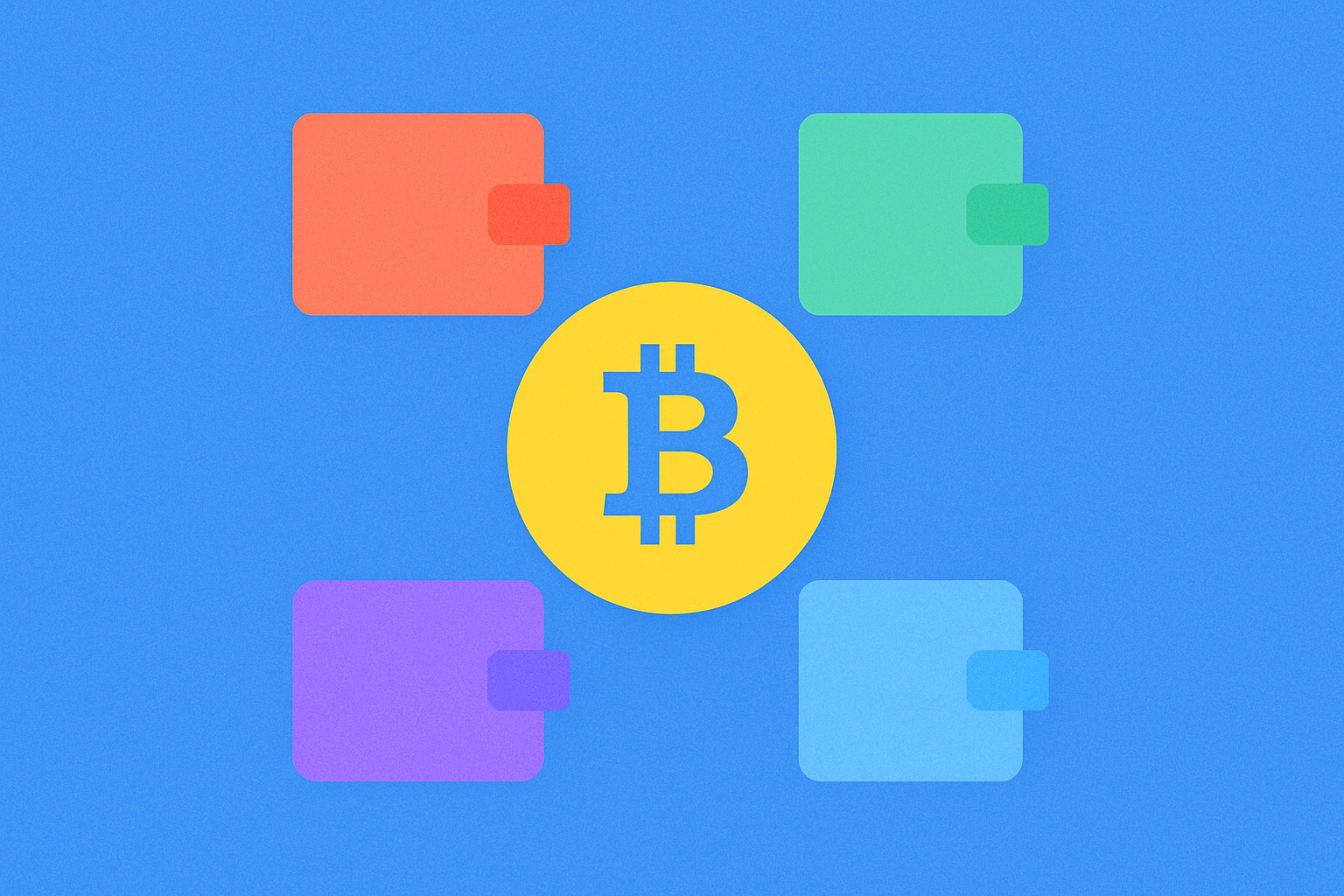
A thorough beginner’s guide to selecting a Bitcoin wallet. This guide compares the features, security, and ease of use of five top wallets—including Bitkey. It also covers essential security factors and the latest Japanese regulatory developments, offering a complete resource to help you choose a wallet with confidence.
What Is a Bitcoin Wallet? Types and Fundamental Concepts
A Bitcoin-only wallet is a wallet designed exclusively for Bitcoin’s on-chain transactions, without supporting other altcoins. Compared to multi-currency wallets, these wallets are streamlined for speed and simplicity, and they come equipped with essential Bitcoin-native features such as SegWit, multi-signature, and cold storage integration.
In recent years, high-profile exchange failures have highlighted the risks of centralized exchanges, making the axiom “Not your keys, not your coins” widely accepted. As a result, there is a growing emphasis on self-managed (self-custody) wallets, where users must control their own keys to ensure true ownership of their assets.
By retaining your private key, you avoid third-party risks like exchange hacks. However, you also assume full responsibility for key loss, demanding thorough backup and secure management. When choosing a Bitcoin wallet, it’s not just about security and usability—your ability to self-manage your assets is essential for protection.
The Importance of Lightning Network (LN) Support
The Lightning Network (LN) enables instant, low-fee Bitcoin transfers and is gaining significant attention. An LN-compatible wallet allows for much faster and cheaper transactions than traditional on-chain transfers.
While LN support is a valuable feature, it can be complex for beginners. Start by getting comfortable with on-chain transactions, and add LN as needed. Since LN usage requires extra knowledge—such as opening and managing channels—a gradual learning approach is recommended.
Types of Bitcoin Wallets
Bitcoin wallets are categorized by management method and connection type. Each type has unique characteristics, making it important to select one that fits your intended use and security needs.
Hardware Wallets
Hardware wallets are physical devices—like USB drives—that store private keys offline (“cold wallets”). By keeping keys entirely disconnected from the internet, they offer very high security and are ideal for long-term storage.
While they protect assets from hacking and malware, hardware wallets involve upfront costs and carry risks of physical loss or damage. Popular examples include Ledger and Trezor, which are widely used worldwide.
Software Wallets
Software wallets are available as smartphone apps or PC applications and are typically hot wallets connected to the internet. They are highly convenient and ideal for everyday small-value transactions or short-term use.
Transfers are seamless and can be managed on the go. However, because they are always connected to the internet, software wallets present higher security risks than hardware wallets. Regular software updates and choosing products from reputable developers are essential.
Custodial Wallets
Custodial wallets are managed by a third party, such as an exchange, which holds your private keys. They are simple to use—just log in—making them convenient for beginners.
However, you must trust the custodian and accept risks such as exchange hacks or service outages. Mainstream domestic exchange accounts are typical examples. Custodial wallets are not recommended if you require total control over your assets.
Non-Custodial Wallets (Self-Custody)
Non-custodial wallets let users manage their own private keys. Most hardware and software wallets fall into this category. While there is no third-party risk, losing your key is solely your responsibility, making backup management extremely important.
Non-custodial wallets provide true asset ownership, but users bear full responsibility for security management.
Key Considerations for Wallet Selection
Consider the following points when choosing a Bitcoin wallet:
- For long-term holding or significant assets: Use a hardware wallet for secure offline storage.
- For short-term or small-value use: Choose a software wallet for convenience.
- For beginners prioritizing simplicity: Start with a custodial wallet and gradually transition to a self-custody solution.
To securely “be your own bank,” ultimately, a self-custody wallet is indispensable. Take ownership of your assets and select a wallet that fits your needs.
Criteria for Evaluating Bitcoin Wallets
When selecting a Bitcoin wallet, it’s crucial to assess multiple criteria. Below, we break down the key evaluation points.
Security (Safety)
Protecting your Bitcoin assets is paramount. The wallet’s security features and the provider’s reliability are crucial evaluation factors.
Specifically, check for:
- Cold storage (offline environment): Can private keys be isolated from the internet?
- Secure element (secure chip): Is there hardware-level encryption?
- Open-source code transparency: Is the code auditable for security transparency?
- Multi-signature and 2FA support: Does it offer multi-signature or two-factor authentication for added security?
- Hacking history: Are there past security incidents, and how were they addressed?
Evaluate these factors holistically and pick a wallet that matches your asset size and risk tolerance.
Usability (UI/UX)
Even beginners should be able to easily manage Bitcoin with a user-friendly UI/UX. Pay special attention to:
- Intuitive interface: Is the design visually clear and free of complex operations?
- Japanese language support: Does Japanese support minimize operational errors?
- Ease of sending, receiving, and backup: Can you operate smoothly without convoluted steps?
- Guides and tutorials: Are resources available for first-time users?
Wallets with high usability reduce daily stress and minimize the risk of accidental asset loss.
Device Support and Compatibility
Device and OS compatibility are also important when managing Bitcoin.
- Connection methods: Does it support USB, Bluetooth, NFC, etc.?
- Supported OS: Is it compatible with your device (iOS, Android, Windows, Mac, Linux)?
- Integration with Bitcoin-related services: Does it connect smoothly with other platforms?
- Hardware wallet compatibility: For software wallets, can they work alongside hardware wallets?
Multi-device support increases flexibility and convenience.
Bitcoin-Specific Features
Bitcoin-focused features and optimizations are also important selection factors.
- Bitcoin-only wallet: Is it exclusive to Bitcoin (no altcoin support)?
- Lightning Network support: Does it support LN for instant, low-fee transfers?
- Customizable transaction fees: Can you adjust the speed and costs yourself?
- Privacy features: Are there tools to make transaction tracking difficult?
Wallets with robust Bitcoin-specific features can meet advanced user needs.
Japanese Language Support
For Japanese users—especially beginners—language support and usability are critical. Full Japanese support significantly reduces risks due to errors or misunderstandings.
Check if support documentation and FAQs are available in Japanese as well.
Regulatory Compliance and Reliability
Compliance with Japanese law and provider reliability are also essential for wallet selection. For custodial wallets, in particular, confirm that the provider is registered with the Financial Services Agency.
Check the provider’s track record and reputation to ensure long-term peace of mind.
Customer Support
Reliable support for issues encountered during Bitcoin use is crucial. Fast, accurate customer service is important for peace of mind.
Confirm that Japanese-language support, business hours, and contact methods (email, chat, phone) are available.
Top 5 Recommended Bitcoin Wallets (Latest Edition)
The following section details Bitcoin wallets recommended for beginner to intermediate investors, categorized by type and features.
Bitkey: Next-Generation Hardware Wallet with Fingerprint Authentication & Social Recovery
Bitkey is a Bitcoin-only hardware wallet launched by a company led by a well-known entrepreneur. It features fingerprint authentication for simple operation and integrates with a smartphone app via NFC—no USB connection needed. Pricing is on par with leading hardware wallets.
Bitkey addresses the “seed phrase management burden” found in conventional hardware wallets with an innovative solution.
Bitkey Features and Security Design
Bitkey uses a 2-of-3 multi-signature model, with keys managed as follows:
- Key 1: Stored in the user’s smartphone app
- Key 2: Stored in the hardware device (accessed via fingerprint authentication)
- Key 3: Stored on the provider’s server (not used in ordinary circumstances)
Daily transactions require both the smartphone and device (Key 1 + Key 2). If both are lost, recovery is possible through “Trusted Contacts” using the server-stored key.
This method eliminates the need to manage seed phrases and dramatically reduces backup loss risk. Unlike traditional wallets that require paper seed phrase storage, Bitkey eases this burden.
Bitkey Advantages
- Combines advanced security and convenience: Hardware and biometrics make daily use easy and secure. Fingerprint authentication eliminates password entry for smooth operation.
- Seed phrase-free recovery: Either the device or smartphone allows for instant recovery, while complete loss can be recovered via social recovery—a major benefit over traditional wallets.
- Bitcoin-exclusive simplicity: The UI and settings are tailored for Bitcoin, making it friendly for beginners. By focusing on essential features, it reduces the risk of user errors.
- Future feature expansion: Planned integrations with related services and major exchanges could further increase convenience.
Bitkey Disadvantages
- Reliability yet to be established: As a new product, long-term durability and market evaluation are still unknown, making its reliability less certain than established products.
- No Japanese language support: The app UI and support are currently only available in English, which can be inconvenient for domestic users. Japanese support is planned.
- Bitcoin-only: It does not support other cryptocurrencies, so you’ll need separate wallets for multi-currency management.
- Hardware failure risk: The fingerprint sensor or built-in battery could fail or degrade, introducing risks unique to physical devices.
- Some cloud dependency: Recovery uses the provider’s server, so it’s unclear how to proceed during service outages. Users seeking total self-custody may find this a concern.
Compliance with Japanese Regulations
Bitkey is a self-custody product managed by the user and is lawful for use in Japan. However, related services and exchange integrations may be restricted for residents of Japan.
On the whole, Bitkey encourages “user-managed asset custody,” aligning well with Japanese preferences for self-custody.
BlueWallet: Feature-Rich, Bitcoin-Only Mobile Wallet
BlueWallet is an open-source, lightweight mobile wallet for Bitcoin, available for iOS and Android in over 30 languages, including Japanese. Within a single app, you can create on-chain wallets, Lightning wallets (LNDHub), multi-sig vaults, and watch-only wallets.
The highly intuitive UI is beginner-friendly, while features like PSBT (Partially Signed Bitcoin Transaction) offline signing and RBF (Replace-By-Fee) support advanced users.
BlueWallet strikes a balance between simplicity and advanced functionality, making it a well-rounded wallet.
BlueWallet Advantages
- Beginner-friendly UI: The intuitive design and full Japanese support make first-time Bitcoin transactions simple. Icons and button placement are well thought out for easy navigation.
- Versatile wallet management: Use multi-sig for long-term storage, a standard wallet for daily use, or watch-only for balance checks—all within the same app.
- Lightning Network support: With configuration, both on-chain and Lightning transactions are possible for flexible, instant payments.
- Open-source transparency and extensibility: Community-driven audits enhance security and transparency, and active development ensures continuous improvement.
BlueWallet Disadvantages
- Lightning setup complexity: No default LNDHub node means you must set up your own or connect externally, which may challenge beginners.
- No official desktop version: Primarily mobile-only, which may be a limitation for PC users.
- Not suitable for full offline storage: As a software wallet, it’s best paired with a hardware wallet for large asset storage.
- Fully self-managed with no support: All key management and backup are the user's responsibility, with no support available. Beginners should proceed with caution.
Legal Status in Japan
BlueWallet is a non-custodial (self-custody) wallet and is not subject to Japanese regulation. Japanese residents can use it without issue, though some in-app features (like BTC purchases by card) may be restricted.
Muun: Next-Generation Mobile Wallet with Lightning Integration
Muun is a mobile wallet that seamlessly integrates on-chain and Lightning Network (LN) transactions. Users only need to monitor a single balance, as the wallet automatically selects the optimal network for each transfer, enabling instant, low-fee payments without channel management complexity.
Lightning invoices are paid instantly using submarine swap technology, and incoming payments are automatically converted on-chain. Muun’s unique fee estimation keeps transactions fast and cost-effective.
Muun is praised for simplifying Lightning’s complexity, offering advanced features through an intuitive interface.
Muun Security Model and Backup Methods
Muun uses a 2-of-2 multi-signature model, with one key on the user’s smartphone and the other on the company’s server (with auto-signing in normal operation).
In emergencies, users can fully restore assets using a self-stored “emergency kit” (PDF), even if the service ends. It's best to print and keep this kit in a safe place.
Instead of a traditional seed phrase, backup uses a “recovery code” plus email authentication for a flexible, multi-layered, and user-friendly backup system that is as secure as conventional approaches.
Muun Advantages
- Integrated on-chain and LN use: The optimal network is automatically selected for transfers, so users don’t need technical knowledge for seamless operation.
- Advanced security and flexible backups: Funds can’t be moved with just the phone’s key, and seed phrase-free recovery reduces loss risk.
- Automatic fee optimization: Muun’s algorithm minimizes fees and automatically balances speed and cost for the user.
Muun Disadvantages
- Non-standard recovery method: Users familiar with seed phrases may find the “emergency kit” system complex; a solid understanding is required before use.
- Reliance on service: Transfers require a company server signature, so service outages may temporarily halt transactions.
- Bitcoin-only design: No support for other cryptocurrencies, making it unsuitable for multi-currency management.
- Higher costs for frequent LN transfers: Swapping fees may add up with frequent Lightning transactions.
Legal Status in Japan
While Muun is non-custodial, transfers require a company server signature—a “pseudo-custodial” model. Still, since users control all key information, it is not defined as an exchange service and is unregulated for use in Japan.
Blockstream Green: Secure Multi-Sig with 2FA
Blockstream Green is a multi-signature Bitcoin wallet from a prominent Bitcoin development company. It runs on both smartphones (iOS/Android) and PCs (Windows/Mac/Linux), with multi-language support including Japanese.
The flagship “Green Shield” feature uses a 2-of-2 multi-signature model: both the user’s key and a company server signature are needed for transfers, blocking unauthorized transactions. Two-factor authentication adds another layer of protection against key leaks or device compromise.
Blockstream Green is widely supported for its balance of security and usability.
Blockstream Green Advantages
- Double-layer security (multi-sig + 2FA): Both user and company server signatures are required, so assets are protected even if one side is compromised. 2FA further strengthens security.
- Features for all experience levels: The simple UI and Japanese language support are beginner-friendly, while Tor connectivity and fee customization appeal to advanced users.
- Multi-platform support: Available on both mobile and desktop, so you can use it on any device.
- Liquid sidechain support: Manage both Bitcoin and Liquid Network assets for advanced use cases.
- Hardware wallet integration: Easily connects with major hardware wallets for enhanced security.
Blockstream Green Disadvantages
- No Lightning Network support: Not suitable for instant, small payments via LN.
- Self-management of seed phrases required: Users must manage a standard BIP39 (24-word) seed phrase, and loss can mean loss of assets, requiring careful handling.
- Provider server dependence: Transfers require server response; downtime may temporarily halt transactions.
- Not fully self-custody: Jointly managed by the company and user, so it’s not suited for those seeking total self-management.
Legal Status in Japan
Blockstream Green’s co-managed key structure is similar to an exchange service under Japanese law. However, as the company does not provide exchange services domestically, it is treated as a user-initiated, non-custodial wallet.
Sparrow Wallet: Advanced Desktop Wallet for Power Users
Sparrow Wallet is an open-source desktop Bitcoin wallet (Windows/Mac/Linux) built for “financial autonomy,” highly rated by intermediate and advanced users.
While not for beginners, it excels in security, privacy, and flexibility, making it ideal for users who want to master Bitcoin’s inner workings. Features include granular UTXO management and detailed transaction editing and verification.
Sparrow Wallet is especially recommended for users who want to fully understand Bitcoin’s structure or prioritize privacy.
Sparrow Wallet Advantages
- Complete control and flexibility: UTXO management, coin control, and transaction HEX editing/verification provide full asset oversight.
- Strong security design: Fully open-source, with keys only on the user’s device. BIP39 seed phrases and an optional 25th word (passphrase) add another layer of protection.
- Advanced privacy features: PayNym protocol (prevents address reuse) and Whirlpool CoinJoin anonymize transactions, making tracking difficult and enhancing privacy.
- Multi-sig and hardware wallet integration: Works with major hardware wallets for added security.
- Basic Lightning Network support: Connects to Core Lightning (c-lightning) or LND nodes for LN features.
Sparrow Wallet Disadvantages
- Complex for beginners: The advanced feature set and UI can be overwhelming for users without a solid Bitcoin background.
- Advanced knowledge required for Lightning: LN integration requires node management expertise, making it inaccessible to most beginners.
- Sole responsibility for key management: As a fully self-custody wallet, users bear all responsibility for key management and backups, with no support available.
Legal Status and Considerations in Japan
As a fully self-managed wallet, Sparrow Wallet is legal to use in Japan. No identity verification is required, but users do not have legal protection or recourse.
Japanese translations are available, but due to the prevalence of technical terms, users should fully understand the system and proceed with care.
Latest Developments in Japanese Crypto Wallet Regulation
In Japan, crypto wallet regulation is based on the Payment Services Act, with a focus on user protection and market stability. The regulatory environment is continuously evolving, making it vital for both providers and users to stay updated.
Regulatory Overview
Custodial Wallets (Third-Party Managed)
Providers of custodial wallets must comply with these regulations:
- Mandatory registration as a crypto asset exchange service provider with the Financial Services Agency: Unregistered operation is illegal.
- Segregated asset management: Customer assets must be clearly separated from company assets and properly managed.
- Minimum capital requirements: Providers must maintain sufficient capital for financial soundness.
- AML/CFT (Anti-Money Laundering/Counter Financing of Terrorism): Customer identity verification and suspicious transaction reporting are required.
- Over 95% of customer assets must be in offline cold wallets: Hot wallets are limited to 5% to minimize hacking risk.
These regulations require custodial wallet providers to maintain high security and reliability standards.
Non-Custodial Wallets (Self-Custody)
Non-custodial wallets are generally not regulated, but note:
- The Financial Services Agency may assess each case individually: Depending on service structure, regulation may apply.
- Compliance with general laws (e.g., Consumer Protection Act, Personal Information Protection Act): Wallet providers must still follow general legal obligations.
Since users manage their own keys, non-custodial wallets are less regulated but place more responsibility on the user.
Recent Changes
Recent regulatory trends in Japan include:
- Financial Services Agency considering classifying crypto assets as financial products and introducing insider trading regulations: New regulations are expected to further enhance transparency.
- Discussion of new rules for intermediaries who facilitate transactions without holding assets: Intermediaries may also face specific regulations.
These measures aim to strengthen market soundness and investor protection.
Wallet Regulation Comparison Table
The following table compares regulatory requirements for custodial and non-custodial wallets.
| Regulatory Item |
Custodial Wallet |
Non-Custodial Wallet |
| Registration Requirement |
Mandatory (as exchange service provider) |
Not required in principle (case-by-case) |
| Asset Management |
Cold wallet 95%+, hot wallet 5%- |
Not applicable |
| AML/CFT Measures |
Mandatory |
Not applicable |
| Capital Requirements |
Mandatory |
Not applicable |
| Consumer Protection Act |
Applies |
Applies |
As shown, custodial wallets are strictly regulated, while non-custodial wallets are more flexible.
Regulatory Impact and User Guidance
When using Bitcoin wallets in Japan, keep the following in mind:
- Using custodial wallets: Only use registered, compliant providers. Check the Financial Services Agency’s website for registered firms.
- Using non-custodial wallets: Security management is your responsibility. Diligently manage your private keys and backups.
Japan’s regulatory framework is expected to keep evolving toward greater transparency and investor protection. Users and businesses should monitor regulatory trends and adapt accordingly.
Conclusion: Choose a Safe Bitcoin Wallet
For a secure and user-friendly Bitcoin wallet in today’s market, Bitkey—with robust cold storage—and BlueWallet—with its intuitive UI and rich features—are both highly recommended. Other strong options include Muun for seamless Lightning integration, Blockstream Green for robust multi-sig and 2FA security, and Sparrow Wallet for advanced privacy features.
Select a wallet that matches your skills and intended use to ensure safe Bitcoin management. For long-term holding, use a robust hardware wallet; for daily use, a user-friendly mobile wallet; and for advanced control, a feature-rich desktop wallet. Choose the best wallet for your needs.
Stay aware of Japanese regulatory updates and always manage your Bitcoin legally and securely.
FAQ
What types of Bitcoin wallets are there?
Bitcoin wallets are categorized as hot wallets and cold wallets. Hot wallets include online, mobile, and desktop wallets for convenient transfers. Cold wallets include hardware and paper wallets, providing higher security and suited for long-term storage.
Which Bitcoin wallets are recommended for beginners?
For beginners, Electrum Wallet and Exodus are recommended for ease of use and low fees. Electrum is suitable for PC, while Exodus or Cake Wallet are good for mobile.
What security factors should I consider when choosing a Bitcoin wallet?
Use a hardware wallet, enable two-factor authentication, and choose a trusted provider. Always manage your private keys, back up your wallet, and keep your security updated.
What’s the difference between hot wallets and cold wallets?
Hot wallets are internet-connected for convenience but are less secure. Cold wallets are kept offline for greater security but are slower for transactions. Using both is the best approach.
How do Bitcoin wallet fees compare?
Bitcoin wallet fees include transaction and platform fees. Bitget offers the lowest spot trading fees globally at 0.01% (maker/taker). Binance charges 0.10%, Kraken charges 0.16%–0.26%, and more platforms are now offering free transfer services.
* The information is not intended to be and does not constitute financial advice or any other recommendation of any sort offered or endorsed by Gate.