Top Cryptocurrencies to Consider Investing in for 2025

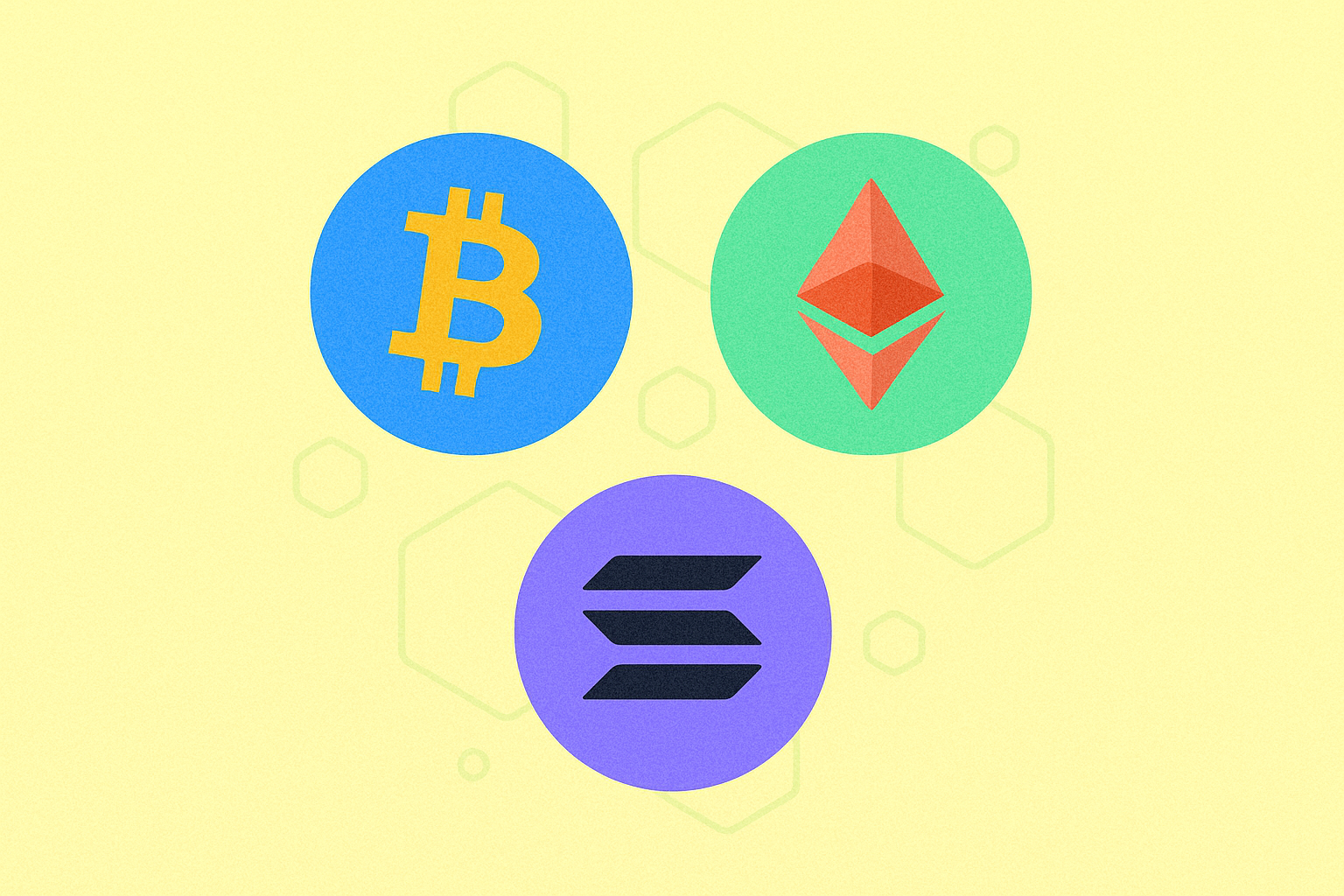
Which cryptocurrency is best to invest in 2025?
The cryptocurrency market in 2025 continues to evolve with increasing institutional adoption and technological advancements. As investors seek opportunities in the digital asset space, understanding the key characteristics and potential of leading cryptocurrencies becomes essential for making informed investment decisions. When evaluating which cryptocurrency is best, it's crucial to consider factors such as technology, adoption rates, and long-term viability. This article examines three prominent cryptocurrencies that stand out as compelling investment options, helping you determine which cryptocurrency is best suited for your investment strategy.
Bitcoin (BTC)
Bitcoin maintains its position as the preeminent cryptocurrency in the digital asset ecosystem, commonly referred to as "digital gold" due to its store of value properties. When considering which cryptocurrency is best for long-term value preservation, Bitcoin consistently emerges as a top choice. The cryptocurrency's decentralized architecture and fixed supply cap of 21 million coins have established it as a hedge against inflation and economic uncertainty. Bitcoin's market dominance has been significantly strengthened by growing institutional interest, exemplified by major financial institutions adding BTC to their balance sheets and offering crypto-related services to clients.
A particularly noteworthy development is President Donald Trump's announcement regarding the establishment of a strategic cryptocurrency reserve for the United States, with Bitcoin as a core component. This governmental recognition represents a paradigm shift in how nation-states view digital assets, potentially paving the way for broader sovereign adoption. The initiative positions the United States to become a dominant player in the global cryptocurrency industry, lending additional credibility and legitimacy to Bitcoin as an asset class. Such institutional and governmental backing enhances Bitcoin's long-term growth potential and reduces regulatory uncertainty, making it an attractive option for both institutional and retail investors seeking exposure to the cryptocurrency market.
Ethereum (ETH)
Ethereum serves as the foundational infrastructure for the decentralized application ecosystem and the rapidly expanding decentralized finance sector. For those wondering which cryptocurrency is best for accessing the smart contract ecosystem, Ethereum remains the dominant platform. As the leading smart contract platform, Ethereum enables developers to build complex applications ranging from financial protocols to gaming platforms and NFT marketplaces. The platform's extensive developer community and rich ecosystem of tools and resources have created a network effect that continues to attract innovation and capital.
The successful transition to Ethereum 2.0 represents a transformative milestone for the network, addressing previous concerns about scalability and environmental impact. The upgrade to a proof-of-stake consensus mechanism has dramatically reduced Ethereum's energy consumption by approximately 99.95%, making it more environmentally sustainable. Additionally, ongoing improvements in layer-2 scaling solutions and future upgrades such as sharding promise to enhance transaction throughput and reduce costs. These technical advancements, combined with Ethereum's established position as the primary platform for DeFi and NFTs, make it a versatile and forward-looking investment opportunity for those seeking exposure to the broader blockchain application landscape.
Solana (SOL)
Solana has distinguished itself as a high-performance blockchain platform capable of processing thousands of transactions per second with minimal latency. When evaluating which cryptocurrency is best for high-speed transactions and scalability, Solana presents a compelling case. The network's innovative proof-of-history consensus mechanism, combined with proof-of-stake validation, enables unprecedented transaction speeds while maintaining security and decentralization. This technical architecture positions Solana as an ideal platform for applications requiring high throughput, such as trading platforms, gaming platforms, and real-time payment systems.
The Solana ecosystem has experienced remarkable growth, with an expanding portfolio of decentralized applications spanning DeFi, NFTs, Web3 infrastructure, and consumer-facing products. The platform's commitment to energy efficiency addresses growing environmental concerns in the cryptocurrency space, making it attractive to environmentally conscious investors and developers. Transaction fees on Solana remain remarkably low, typically costing fractions of a cent, which enhances user experience and enables new use cases that would be economically unfeasible on higher-fee networks. Market analysts have expressed optimistic projections for Solana's future performance, reflecting confidence in the platform's technological capabilities and ecosystem growth trajectory.
Conclusion
The cryptocurrency investment landscape in 2025 presents diverse opportunities across different blockchain platforms, each offering unique value propositions. Determining which cryptocurrency is best depends largely on individual investment goals and risk tolerance. Bitcoin remains the cornerstone cryptocurrency, benefiting from institutional adoption and governmental recognition that solidify its status as a digital store of value. Ethereum continues to dominate the smart contract and decentralized application space, with ongoing technical improvements enhancing its scalability and efficiency. Solana emerges as a compelling high-performance alternative, offering speed and cost advantages that attract developers and users alike.
While all three cryptocurrencies present promising investment opportunities when considering which cryptocurrency is best, investors should conduct thorough due diligence, consider their risk tolerance, and diversify their portfolios appropriately. The cryptocurrency market remains dynamic and subject to regulatory developments, technological changes, and market sentiment shifts. A balanced approach that considers both the potential rewards and inherent risks of cryptocurrency investment will be essential for achieving long-term success. Ultimately, the answer to which cryptocurrency is best varies based on individual circumstances, investment horizons, and strategic objectives in the evolving digital asset landscape.
FAQ
Which cryptocurrency is worth mining?
Bitcoin and Ethereum are profitable to mine, but electricity costs and hardware expenses are critical factors. Currently, lower-capital cryptocurrencies like Monero may offer better returns for individual miners with limited resources.
Which cryptocurrency should I buy in 2025?
In 2025, Bitcoin (BTC), Ethereum (ETH), and Cardano (ADA) remain excellent choices. These cryptocurrencies offer strong fundamentals and significant growth potential. Select based on your investment strategy and risk tolerance.
Which is the best cryptocurrency?
Bitcoin (BTC) leads the market with highest transaction volume and adoption. Ethereum (ETH) dominates smart contracts. Solana (SOL) and Cardano (ADA) offer strong alternatives for specific use cases and growth potential.
How much is 10,000 Bitcoin worth?
10,000 Bitcoin is currently worth approximately $886,900,877.73 USD. The exact value fluctuates constantly with market conditions and real-time price movements in the cryptocurrency market.
Share
How to Buy Cryptocurrency


Trending Cryptocurrencies


# How Much SOL Are Institutions Currently Holding: 2025 Holdings & Fund Flow Analysis

Best Crypto to Invest in 2025

Leveraged Trading in Crypto
Best Crypto To Buy: List 2025

Raoul Pal: The Macro Genius Betting Big on Crypto’s Future
when a crypto coin gets an ETF..
Is Bitlayer (BTR) a good investment?: A Comprehensive Analysis of Performance, Technology, and Market Potential

Exploring Secure Web3 Wallet Solutions

Exploring Jambo: Features and Benefits of a Leading Crypto Platform
Ultimate Guide to Web3 Gaming in the Pixelverse
Earn Crypto by Playing Popular Games on Telegram