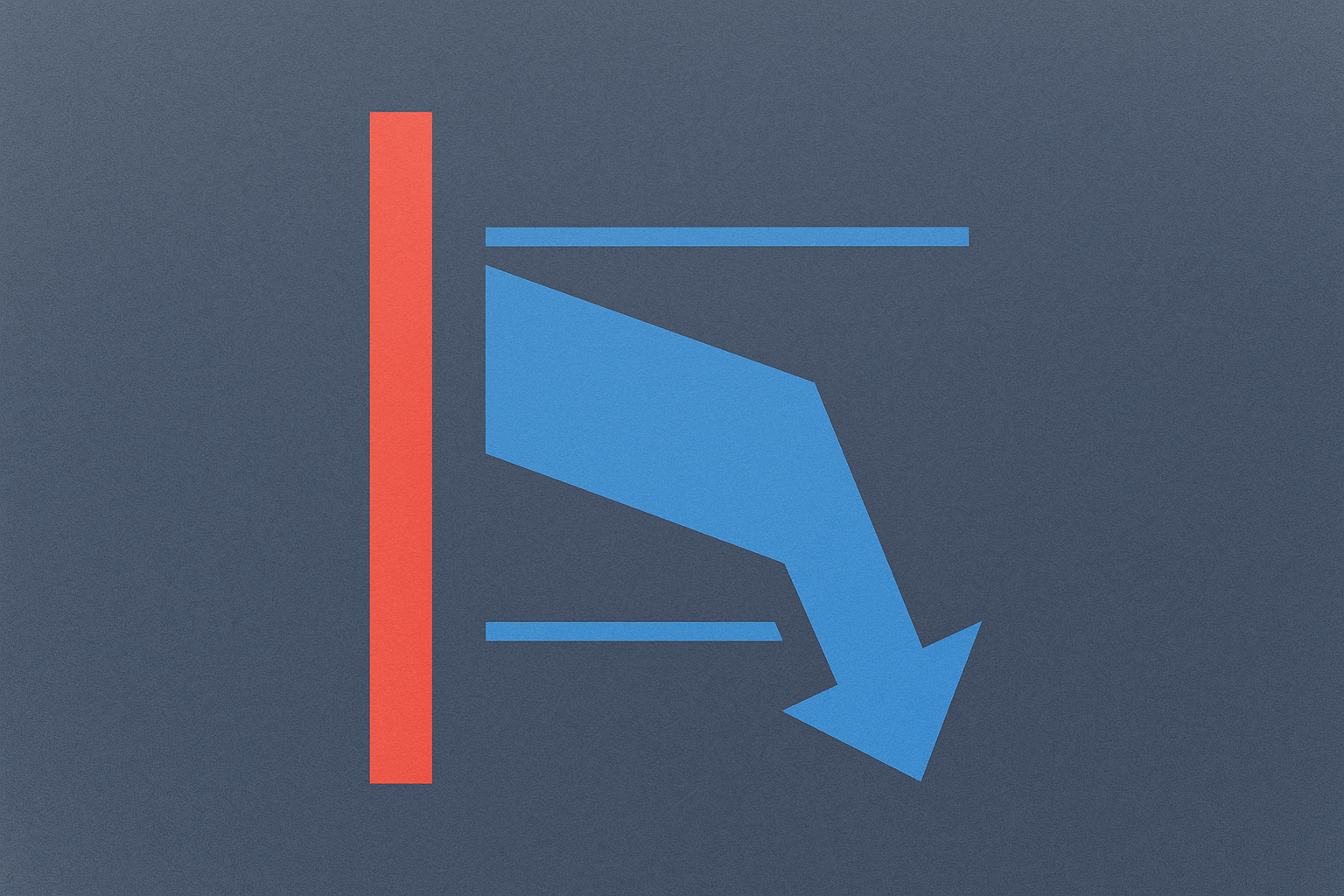
Bear Flag in Cryptocurrency Trading: An In-Depth Guide to Recognizing the Pattern, Structure, Trading Strategies, and Risk Management on Gate. Discover how to identify a flag on the chart, establish entry points, and set target prices for effective crypto asset trading.
What Is a Flag Pattern in Trading?
The flag pattern is a widely recognized and reliable trend continuation formation in technical analysis. It frequently appears during market volatility, especially when price exhibits a strong directional move. Traders use this pattern as a critical signal, indicating a temporary pause in the prevailing trend before it resumes.
The flag pattern acts as a stabilizer, smoothing out sharp price swings and stretching the trend’s progression over time. It helps market participants accurately identify entry and exit points—an essential advantage in short- and medium-term trading. The name "flag" comes from its visual resemblance to a flag on a pole: a sharp price move forms the "pole," and the subsequent consolidation creates the "flag."
This pattern’s importance lies in its strong predictive value and relative simplicity to spot on charts of various timeframes. Flags can develop in both uptrends and downtrends, offering traders opportunities in either market direction.
Bull Flag vs. Bear Flag: What’s the Difference?
There are two main types of flag patterns: bear and bull. These differ based on the direction of the preceding trend and the trading signals they generate. Understanding the distinction is essential for interpreting market conditions accurately and making sound trading decisions.
A bull flag forms during an uptrend and signals a likely continuation of price appreciation after a brief pause. Conversely, a bear flag emerges during a downtrend and indicates the decline may persist. Both patterns feature similar structures but are mirror opposites in their orientation and trading implications.
The primary difference lies not only in trend direction but also in the market psychology driving each type. Recognizing these psychological dynamics enables traders to interpret signals with greater confidence and make informed choices.
What Is a Bear Flag?
In trading, a bear flag is a technical analysis pattern that signals a potential continuation of a downtrend following a brief pause or price consolidation. This is one of the most reliable indicators of a bearish market continuation, widely used by professional traders to identify promising short entry points or selling opportunities.
A bear flag develops after a sharp price drop, when the market experiences a temporary lull—sellers pause, and buyers attempt corrective purchases. However, these recovery efforts are insufficient, and after consolidation, selling pressure returns with renewed intensity, driving the downtrend forward.
Bear Flag Structure
A bear flag consists of two primary elements, each critical to the pattern’s formation:
Pole — This is the initial and most visible element, representing a steep and rapid price decline that sets the stage for the bear flag. The pole results from a strong downward impulse, typically triggered by heavy selling or negative news. Hallmarks of a solid pole include a swift price drop, high trading volume, and a short duration. The velocity and intensity of this move provide the momentum for the trend to continue.
Flag — The second element follows the pole. After the sharp decline, a consolidation phase begins, with the asset’s price moving sideways or slightly upward within a narrow channel—visually resembling a flag on a pole. The trendlines forming the flag’s upper and lower boundaries should be parallel or nearly so, and typically slope upward, reflecting buyers’ attempts at a corrective move. During flag formation, trading volume usually falls sharply compared to the pole phase, indicating a temporary balance between sellers and buyers.
How to Trade the Bear Flag
Step 1. Identify the Bear Flag
-
Determine the Trend — Confirm that the asset is in a sustained downtrend. The bear flag generally forms in the middle of a trend, not at the beginning or end. Review prior price action and ensure the initial drop was significant and accompanied by high volume.
-
Find the Pole — Identify the sharp, high-volume price drop that precedes the flag. A quality pole typically forms over a short period and shows minimal upward corrections, signaling strong selling momentum.
-
Spot the Flag Formation — After the pole, price consolidates, forming a slightly upward-sloping channel. This channel should be relatively narrow and occur on declining volume, indicating a temporary easing of selling pressure.
Step 2. Mark Up the Chart
-
Draw Trendlines — Use charting tools to mark the upper and lower boundaries of the flag, connecting local highs and lows during consolidation. These lines should be parallel or nearly so.
-
Highlight Breakout Zones — Accurately identify where price could break the flag’s lower boundary. This level is the critical entry point for a short trade. Also note potential support levels below the flag for profit targets.
Step 3. Plan Your Entry
-
Wait for the Breakout — Enter the trade only after price closes convincingly below the flag’s lower boundary. Avoid jumping in on intraday breaks; wait for a candle or bar to close below the channel for confirmation.
-
Confirm with Volume — The breakout should coincide with a clear increase in trading volume compared to the consolidation period. Rising volume signals that active sellers have returned and are ready to push the downtrend further. A low-volume breakout may be a false signal.
Step 4. Manage Risk
-
Stop-Loss — Place your stop-loss just above the flag’s upper boundary. This limits potential losses if the pattern fails and price reverses upward. The stop size should be reasonable and aligned with your capital management plan.
-
Profit Target — To set your profit target, measure the pole’s height (from the start of the drop to the start of the flag), and project that distance downward from the breakout point. This classic method anticipates the market will often mirror the amplitude of the prior impulse.
Step 5. Monitor and Exit the Trade
-
Watch Price Action — After entering, actively monitor price and volume. If momentum lags or signs of reversal appear, be ready to adjust your plan.
-
Exit on Target — Close your position when price reaches the target based on the pole’s height. Consider partial profit-taking at intermediate support levels to secure gains even if prices reverse early.
Bear Flag Psychology
In bear markets, the flag represents a period when buyers (bulls) attempt to regain control and trigger an upward correction. However, their efforts are weak—buying volume is low and overall market enthusiasm is limited.
During this pause, sellers (bears) regroup, accumulate new short positions, and prepare for the next round of selling. Psychologically, this phase reflects a temporary balance between long holders’ fear of deeper losses and buyers’ hope for a recovery.
A break below the flag’s lower boundary signals that bears have fully reclaimed control, and bullish hopes for a reversal have faded. This often sparks a new wave of panic selling and accelerates the downtrend, as the market recognizes the correction is over and the trend continues.
What Is a Bull Flag?
In trading, a bull flag is a technical analysis pattern signaling a potential continuation of an uptrend after a brief pause or price consolidation. This pattern is the mirror image of the bear flag and is commonly used to spot attractive buying opportunities or long entries.
A bull flag forms after a sharp price rally, when the market enters a brief consolidation phase. During this period, buyers pause to take profits, while bears attempt a corrective pullback. This pullback is typically shallow and insufficient to reverse the trend; buyers then return with renewed strength and the uptrend resumes.
Bull Flag Structure
A bull flag has two main elements, similar to the bear flag but oriented in the opposite direction:
Pole — The first element is a steep, dynamic price rally that launches the bull flag. This pole results from a sudden upward impulse, driven by aggressive buying, positive news, or a breakout of key resistance. A strong pole features rapid price growth, heavy volume, and minimal downward corrections. The more vertical and forceful the pole, the higher the likelihood the trend will continue after consolidation.
Flag — The second element forms right after the pole. Following the rally, prices consolidate within a narrow, slightly downward-sloping channel. The channel’s boundaries should be parallel or nearly so, reflecting temporary profit-taking by early buyers. Importantly, trading volume drops significantly during this phase compared to the rally, indicating a lack of strong selling pressure and room for the uptrend to continue.
How to Trade the Bull Flag
Step 1. Identify the Bull Flag
-
Determine the Trend — The bull flag usually develops during a strong uptrend, typically in its midpoint. Ensure the prior move was powerful and accompanied by high volume, confirming robust buying interest.
-
Find the Pole — Identify the sharp, dynamic price advance that precedes the flag. The pole should be clear, relatively vertical, and develop quickly. A quality pole provides the energy for the subsequent rally.
-
Spot the Start of the Flag — After the pole, there should be a clearly defined period of price consolidation in a narrow downward or sideways channel. This channel forms as volume declines, confirming the pullback is likely temporary, not a reversal.
Step 2. Mark Up the Chart
-
Draw Trendlines — Use charting tools to draw two parallel lines connecting local highs and lows during the consolidation. These lines define the flag’s boundaries and guide your entry.
-
Highlight Breakout Zones — Focus on the flag’s upper boundary, as a breakout here is a long entry signal. Also note potential resistance levels above the flag, which may be profit targets or areas where price temporarily stalls.
Step 3. Plan Your Entry
-
Wait for the Breakout — Enter only after price decisively breaks and closes above the flag’s upper boundary. Avoid entering on intraday moves; wait for a candle or bar to close above the channel as confirmation.
-
Confirm with Volume — The breakout should be accompanied by a visible rise in trading volume compared to consolidation. Higher volume confirms active buyers are back and signals strong intent to push the uptrend further. A low-volume breakout may be misleading.
Step 4. Manage Risk
-
Stop-Loss — Place a stop-loss below the last significant low within the flag or just under the channel’s lower boundary. This helps limit losses if the pattern fails and price reverses. The stop size should fit your capital management plan and not exceed your risk tolerance per trade.
-
Profit Target — To set your profit target, measure the pole’s height (from the start of the rally to the start of the flag) and project that distance upward from the breakout point. This method is based on the market’s tendency to repeat the size of prior impulses.
Step 5. Monitor and Exit the Trade
-
Watch Price Action — After entering, closely monitor price and volume. If momentum wanes, reversal signals form, or the move develops slower than expected, be ready to adjust your plan.
-
Close the Position — When price reaches your target, calculated from the pole’s height, close all or part of your position. Consider using a trailing stop to protect profits and participate in continued upside if the trend proves stronger than anticipated.
Bull Flag Psychology
In a bull flag, sellers (bears) attempt to regain control and initiate a corrective pullback. Their efforts, however, are insufficient for a reversal—selling volume remains low and bearish pressure is limited.
Meanwhile, buyers (bulls) use the pause to accumulate positions at more attractive prices, regroup, and prepare for the next phase of buying. Early buyers take profits, causing temporary downward pressure, but new participants see the pullback as an opportunity to enter the trend at a better price.
A breakout above the flag’s upper boundary is a strong psychological signal that buyers have reasserted control and the bears’ reversal attempt has failed. This often sparks a new buying wave, triggers stop-losses on shorts, and activates pending buy orders, intensifying the upward impulse and accelerating the move toward targets.
What Can Be Confused with a Flag Pattern?
The flag pattern is easily mistaken for several other formations, especially by beginners. Understanding the distinguishing features is essential for interpreting the market correctly and making effective trading decisions.
Wedge
Wedges can look similar to flags, especially on first glance. The key difference lies in the geometry—the slope and convergence of trendlines:
Flag patterns feature parallel or nearly parallel consolidation boundaries. The trendlines connecting highs and lows during flag formation are roughly parallel, creating a rectangular, sloped channel. The channel’s width remains fairly constant throughout consolidation.
Wedge patterns, by contrast, have trendlines that converge, forming a narrowing angle. The consolidation channel gets tighter as the pattern progresses, creating a wedge shape. Wedges can slope up or down and often signal an impending trend reversal, unlike flags, which indicate continuation.
Rectangle
Rectangles can also resemble flags if the context and prior price action are ignored:
Flag patterns have a distinctive slope during consolidation, usually opposite the primary trend. In a bull flag, consolidation slopes downward; in a bear flag, it slopes upward. This reflects the corrective nature of the pause. Flags always follow a sharp impulse move (the pole) and form relatively quickly.
Rectangle patterns form in a purely horizontal range without a clear slope. Price fluctuates between horizontal support and resistance, reflecting equilibrium. Rectangles can form after impulse moves or in sideways markets, and often take longer to develop than flags.
Tips for Identifying Flag Patterns
To accurately spot flag patterns and distinguish them from similar formations, follow these guidelines:
-
Review the Prior Move — A flag almost always follows a strong, sharp move (the pole). If there’s no clear vertical move with high volume before the consolidation, it’s likely another pattern. A well-defined pole is a must for any true flag.
-
Check the Slope — Flags have a consolidation slope opposite the main trend. A bull flag slopes down (a corrective pullback in an uptrend), while a bear flag slopes up (a corrective rally in a downtrend). If the consolidation is flat or slopes in the trend’s direction, it’s probably not a flag.
-
Analyze Volume — Volume behavior is a key confirmation. There should be a volume surge during the pole, a significant drop during consolidation, and another spike on breakout. This sequence helps confirm a true flag versus other formations.
-
Consider Duration — Flags normally form quickly, within a few days to several weeks depending on timeframe. If consolidation drags on for months, it’s probably not a flag. Quick formation reflects the flag’s nature as a brief pause in a powerful trend, not a fundamental market shift.
FAQ
What Are Bull and Bear Flags in Trading? What Makes Them Distinct?
A bull flag is a consolidation pattern in an uptrend where price moves sideways with a downward slope before resuming higher. A bear flag forms in a downtrend with sideways price action sloping upward before continuing lower. Both signal the trend’s continuation.
How Do You Spot a Bull Flag or Bear Flag on a Chart? Which Technical Indicators Confirm the Pattern?
A bull flag forms after a strong upward move (the pole) and a sideways consolidation. A bear flag forms after a drop and upward-sloping consolidation. Key indicators: declining volume during flag formation and a sharp volume increase on breakout. A breakout with higher volume confirms the trend’s continuation.
How Should You Set Entry, Stop-Loss, and Target Prices When Trading Bull and Bear Flags?
For a bull flag, enter below the flag, set a stop-loss above the consolidation high, and target a price above the pole’s height. For a bear flag, enter above the flag, set a stop-loss below the consolidation low, and target a price below the pole’s height.
How Do Bull and Bear Flags Differ from Other Flag Patterns (Such as Ascending or Descending Flags)?
A bull flag forms in an uptrend and forecasts further gains on an upside breakout. A bear flag forms in a downtrend and signals continued losses on a downside breakout. The main difference is the direction of the prior trend and the expected breakout direction.
How Likely Is a Successful Breakout from Bull and Bear Flags? Does This Vary by Market Conditions?
Bull flag breakouts are successful more than 50% of the time, while bear flag breakouts succeed less than 30% of the time. In bull markets, bull flags work best; in bear markets, bear flags are more effective. Market conditions and trading volume have a major impact on breakout success.
What Are the Risks in Trading Bull and Bear Flags and How Can You Mitigate Them?
Main risks: unexpected market reversals and false breakouts. Reduce risk by using stop-losses at support and resistance levels and analyzing trading volume thoroughly before entering trades.
Are Bull and Bear Flag Patterns Equally Effective in Crypto and Stock Markets?
Yes, both bull and bear flag patterns work equally well in crypto and stock markets. They help traders identify corrections and pinpoint optimal entry and exit points for trend continuation.
* The information is not intended to be and does not constitute financial advice or any other recommendation of any sort offered or endorsed by Gate.