LightLink is an Ethereum Layer 2 blockchain solution launched in 2017 to address high transaction costs and network congestion, delivering instant gasless transactions for enterprises and dApps. This comprehensive guide explores LightLink's technical architecture built on optimistic rollups with Ethereum security guarantees, market performance with 4,937 token holders and $1.7M market cap, and strategic enterprise partnerships across APAC. The article examines core use cases in enterprise blockchain solutions and dApp infrastructure, analyzes competitive challenges in the Layer 2 landscape, and outlines ecosystem development roadmap. Whether exploring Layer 2 scaling technologies or enterprise blockchain integration, readers gain actionable insights into LightLink's role bridging traditional business with decentralized infrastructure, alongside practical guidance on token acquisition via Gate and ecosystem participation strategies.
LightLink's Positioning and Significance
In 2017, the LightLink team launched LightLink (LL), aiming to address high transaction costs and slow processing times on Ethereum Layer 1, which hinder mainstream adoption of decentralized applications.
As an Ethereum Layer 2 blockchain offering instant, gasless transactions, LightLink plays a critical role in enterprise blockchain solutions and dApp scalability.
As of 2026, LightLink has established itself as an innovative Layer 2 solution bridging enterprise partnerships with decentralized applications, with 4,937 holders and an active development community focused on interoperability.
This article will deeply analyze its technical architecture, market performance, and future potential.
Origin and Development History
Birth Background
LightLink was created by its founding team in 2017, aiming to solve blockchain adoption barriers for major enterprises in the APAC region, particularly regarding transaction costs and network congestion.
It was born during the expansion of Ethereum's ecosystem and growing demand for Layer 2 scaling solutions, with the goal of providing seamless blockchain integration for enterprises while maintaining Ethereum's security guarantees.
LightLink's launch brought new possibilities for enterprises seeking to implement blockchain technology without imposing gas fees on their users.
Major Milestones
- 2017: Project initiation, began developing blockchain solutions for major APAC enterprises.
- 2024: Token launch and Gate.com listing on April 24, with initial trading establishing market presence.
- 2024-2025: Strategic pivot to building a proprietary Layer 2 blockchain stack focused on broader interoperability.
- 2026: Continued ecosystem development connecting dApps with enterprise partner user bases to foster an interconnected economy.
With support from its development team and enterprise partnerships, LightLink continues to optimize its technology, security features, and real-world applications.
How LightLink Works
No Central Control
LightLink operates on a decentralized network of computers (nodes) distributed globally, free from control by banks or governments.
These nodes collaborate to validate transactions, ensuring the system remains transparent and attack-resistant, granting users greater autonomy and enhancing network resilience.
Blockchain Foundation
LightLink's blockchain is a public, immutable digital ledger recording every transaction.
Transactions are grouped into blocks and linked through cryptographic hashes to form a secure chain.
Anyone can view the records, establishing trust without intermediaries.
As a Layer 2 solution, LightLink processes transactions off the main Ethereum chain while inheriting Ethereum's security, significantly improving performance and eliminating gas fees for end users.
Ensuring Fairness
LightLink employs Ethereum's proven security model as its Layer 2 foundation to validate transactions and prevent fraudulent activities like double-spending.
The network maintains security through its proprietary optimium stack, which combines optimistic rollup principles with additional validation mechanisms.
Its innovation includes instant transaction finality and gasless user experiences while maintaining Ethereum compatibility.
Secure Transactions
LightLink uses public-private key cryptography to protect transactions:
- Private keys (like secret passwords) are used to sign transactions
- Public keys (like account numbers) are used to verify ownership
This mechanism ensures fund security while transactions maintain transparency through Ethereum's base layer.
The Layer 2 architecture provides additional security features including fraud proofs and data availability guarantees inherited from Ethereum's mainnet.
Circulation Overview
As of February 02, 2026, LightLink's circulating supply stands at 417,882,774.68 tokens, with a total supply of 1,000,000,000 LL following a fixed supply model.
The token distribution influences its supply-demand dynamics within the ecosystem.
Currently, approximately 41.79% of the total supply is in circulation, with the remaining tokens subject to release schedules.
Price Fluctuation
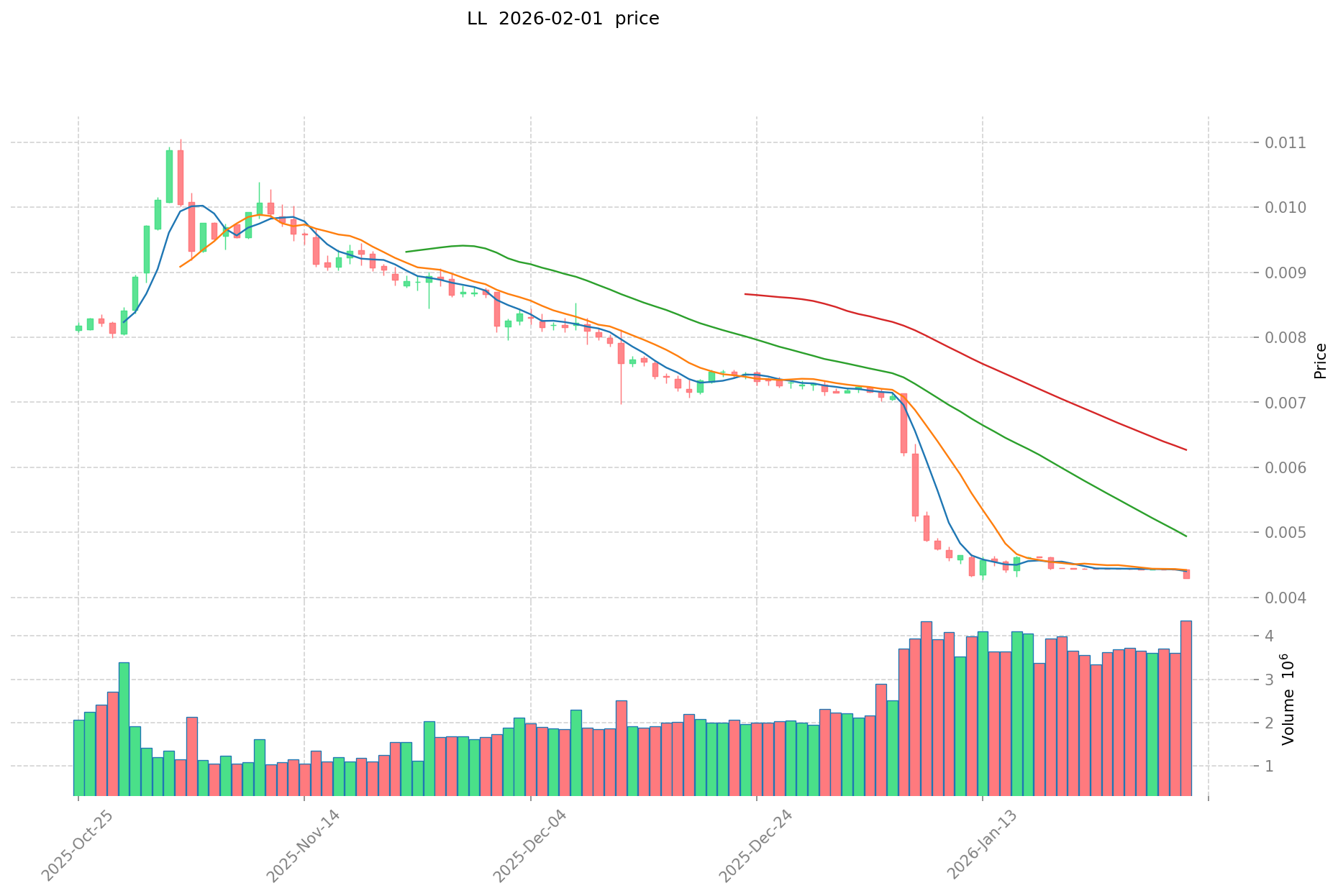
LightLink reached a notable price level of $0.3 on April 24, 2024, driven by its mainnet launch and initial market enthusiasm.
Its lowest price of $0.004129 occurred on February 01, 2026, reflecting broader market corrections and reduced trading activity.
These fluctuations demonstrate the impact of market sentiment, adoption trends, and external factors on token valuation.
Click to view current LL market price
On-Chain Metrics
- Holder Count: 4,937 addresses (indicating community participation)
- 24-Hour Trading Volume: $22,218.89 (reflecting current market activity)
- Market Capitalization: $1,728,363.16 (representing current valuation)
LightLink Ecosystem Applications and Partners
Core Use Cases
LightLink's ecosystem supports diverse applications:
- Enterprise Solutions: LightLink has been developing blockchain solutions for major enterprises in the APAC region since 2017, providing instant, gasless transactions for enterprise users.
- dApp Infrastructure: The Layer 2 blockchain connects dApps with millions of users from enterprise partners, promoting an interconnected economy.
Strategic Partnerships
LightLink has established collaborations with enterprise partners across the Asia-Pacific region, enhancing its technical capabilities and market reach.
These partnerships provide a solid foundation for LightLink's ecosystem expansion and enterprise adoption.
Challenges and Considerations
LightLink faces several considerations:
- Market Competition: As a Layer 2 solution, LightLink competes with other Ethereum scaling solutions in the blockchain ecosystem
- Adoption Path: Building bridges between enterprise partners and decentralized applications requires continued ecosystem development
- Market Volatility: Price fluctuations reflect broader market dynamics and investor sentiment
These factors shape ongoing discussions within the community and drive continuous innovation.
LightLink's community shows growing activity, with 4,937 token holders participating in the ecosystem.
On X platform, discussions around LightLink focus on its Layer 2 technology and enterprise integration approach.
Community interest centers on gasless transactions and enterprise blockchain solutions.
X platform discussions reflect varied perspectives:
- Supporters highlight LightLink's instant, gasless transaction capabilities and enterprise focus, viewing it as a practical solution for bridging enterprise and decentralized applications.
- Observers monitor market performance, adoption metrics, and ecosystem development progress.
Recent trends show community interest in the platform's technical approach and enterprise partnerships.
Discussion Topics
X users engage with LightLink regarding Layer 2 technology, enterprise blockchain adoption, and gasless transaction mechanisms,
reflecting both the potential for enterprise integration and the evolving landscape of blockchain scalability solutions.
- Official Website: Visit LightLink Official Site for features, use cases, and latest updates.
- White Paper: LightLink White Paper details its technical architecture, goals, and vision for enterprise-grade Layer 2 solutions.
- X Updates: On X platform, LightLink maintains an active presence at @LightLinkChain,
sharing updates on technical developments, ecosystem growth, and partnership announcements.
LightLink Future Roadmap
- Ecosystem Development: Expanding connections between dApps and enterprise users through the Layer 2 infrastructure
- Technical Evolution: Continuing to optimize the proprietary stack for enhanced scalability and user experience
- Long-term Vision: Establishing a comprehensive platform that fosters an interconnected economy between enterprises and decentralized applications
How to Participate in LightLink?
- Purchase Options: Acquire LL tokens on Gate.com and other supporting platforms
- Storage Solutions: Use compatible Ethereum wallets like MetaMask to securely store LL tokens (ERC-20)
- Ecosystem Engagement: Explore enterprise integration opportunities and dApp development on LightLink's Layer 2 network
- Stay Informed: Follow official channels for updates on ecosystem developments and partnership announcements
Summary
LightLink leverages Layer 2 blockchain technology to address enterprise needs, offering instant, gasless transactions and seamless integration capabilities.
Its focus on enterprise partnerships, technical innovation, and ecosystem building positions it within the blockchain scalability landscape.
Despite facing market competition and adoption challenges, LightLink's enterprise-focused approach and proprietary technology stack contribute to its role in the evolving Layer 2 ecosystem.
Whether you're exploring enterprise blockchain solutions or Layer 2 technologies, LightLink presents an interesting case study in bridging traditional business and decentralized infrastructure.
FAQ
What is Crypto LL and what does it stand for?
Crypto LL stands for Layer 2, a scaling solution built on top of main blockchains to enable faster transactions and lower fees while maintaining security and decentralization.
What are the main features and use cases of Crypto LL?
Crypto LL offers decentralized finance and smart contracts enabling philanthropy, financial inclusion for the unbanked, and women empowerment initiatives. It provides secure, transparent transactions with low barriers to entry for global users.
How does Crypto LL differ from other cryptocurrency projects?
Crypto LL is a decentralized protocol emphasizing community governance and transparency. Unlike company-backed projects, it prioritizes security and interoperability, offering true decentralization and user-driven development.
What is the tokenomics and supply structure of Crypto LL?
Crypto LL features a total supply of 1 billion tokens with fixed allocation: 50% for development, 30% for community rewards, and 20% for initial investors. No additional tokens are minted post-launch, ensuring a deflationary model.
Is Crypto LL a safe investment and what are the associated risks?
Crypto LL carries inherent volatility and market risks typical of digital assets. As an emerging token, it lacks traditional regulatory protections. Conduct thorough research, understand tokenomics, and only invest capital you can afford to lose. Market conditions and adoption rates significantly impact value.
How can I buy and store Crypto LL tokens?
Purchase Crypto LL tokens through reputable exchanges using fiat or other cryptocurrencies. Store them in secure wallets, either hardware wallets for maximum security or trusted digital wallets for convenience. Always enable two-factor authentication.
* The information is not intended to be and does not constitute financial advice or any other recommendation of any sort offered or endorsed by Gate.