What is XCV: A Comprehensive Guide to Understanding This Emerging Technology


XCarnival's Positioning and Significance
In 2021, the XCarnival team launched XCarnival (XCV), aiming to address liquidity constraints for metaverse assets, particularly NFTs and long-tail tokens.
As a collateral lending platform specifically designed for metaverse assets, XCarnival plays a key role in DeFi and the emerging metaverse economy.
As of 2026, XCarnival has established itself as a multi-chain protocol with innovative lending mechanisms and continues to develop its ecosystem. This article will explore its technical architecture, market performance, and future potential.
Origin and Development History
Birth Background
XCarnival was created by its development team in 2021, aiming to solve the lack of liquidity for non-standard assets in the metaverse, including NFTs and long-tail tokens.
It emerged during the blockchain technology boom and the rise of metaverse concepts, with the goal of providing effective value release for illiquid assets through collateral lending services.
XCarnival's launch brought new possibilities for metaverse asset holders and DeFi users seeking liquidity solutions.
Important Milestones
- 2021: Protocol launched on BSC chain, introducing peer-to-peer NFT lending through the XBroker module.
- The platform implemented a revolutionary limited-time auction liquidation mechanism for non-standard asset lending.
- The Megabox module was introduced, focusing on sub-mainstream token collateral lending with unique pooling and risk control systems.
- The team initiated preparations for deployment on Ethereum Layer 2, Polygon, and Solana to expand multi-chain capabilities.
With the support of its development team and community, XCarnival continues to refine its lending mechanisms and expand its multi-chain presence.
How XCarnival Works?
No Central Control
XCarnival operates as a decentralized protocol across blockchain networks, eliminating reliance on traditional financial institutions.
The platform enables peer-to-peer interactions where users can negotiate loan terms directly, ensuring transparency and user autonomy while maintaining system resilience.
Blockchain Foundation
XCarnival's protocol functions on public blockchains, maintaining transparent and immutable records of lending activities.
Transactions and lending agreements are recorded on-chain, allowing verification without intermediaries.
As a multi-chain protocol, the platform leverages different blockchain infrastructures to optimize performance and accessibility.
Ensuring Fairness
XCarnival implements smart contract-based mechanisms to validate lending transactions and prevent fraudulent activities.
The protocol utilizes automated liquidation processes including time-limited auctions to maintain system security and protect lender interests.
Its innovation includes flexible collateral rate models and risk management systems tailored for different asset pools.
Secure Transactions
XCarnival employs blockchain cryptographic standards to protect lending activities:
- Private keys enable users to authorize lending and borrowing operations
- Public addresses facilitate transparent verification of collateral and loan positions
This mechanism ensures asset security while maintaining transparent on-chain records.
The platform offers customizable synthetic asset templates to help users create financial products according to their needs.
XCarnival's Market Performance
Circulation Overview
As of February 07, 2026, XCarnival has a circulating supply of 790,640,622 XCV tokens, with a total supply of 1,000,000,000 tokens and a maximum supply capped at 1,000,000,000 XCV. The current circulation rate stands at approximately 79.06% of the total supply. The token distribution and release mechanism influence the supply-demand dynamics within the market ecosystem.
Price Volatility
XCarnival reached its all-time high price of $1.95 on November 18, 2021, during a period of heightened interest in metaverse-related assets and NFT lending platforms. The token experienced its lowest price point of $0.00026481 on February 04, 2025, reflecting broader market corrections and evolving sentiment in the DeFi and metaverse sectors. These price movements demonstrate the impact of market conditions, adoption trends, and external factors on XCV's valuation.
Click to view the current XCV market price
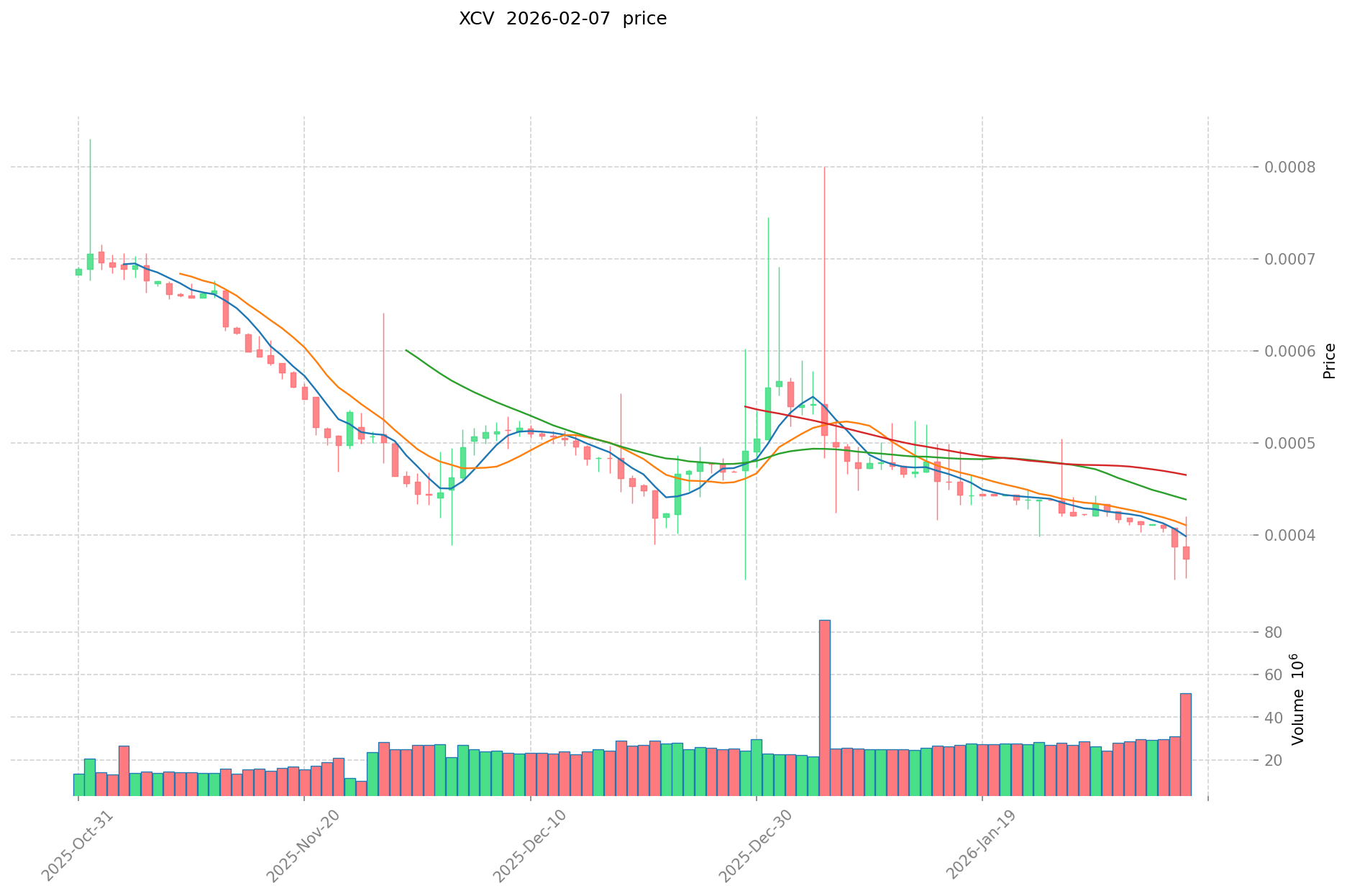
On-Chain Metrics
- Holder Count: Approximately 14,007 addresses hold XCV tokens, reflecting the level of community participation and distribution across the network.
XCarnival Ecosystem Applications and Partners
Core Use Cases
XCarnival's ecosystem supports multiple applications:
- DeFi: The XBroker module serves as a peer-to-peer NFT lending platform, providing decentralized borrowing and lending services where users can negotiate interest rates and loan amounts while collateralizing their NFT assets for liquidity.
- NFT Finance: The Megabox module focuses on sub-mainstream token collateral lending, driving innovation in long-tail asset liquidity release through its unique pooled collateral rate setting model and risk control system.
Strategic Collaborations
XCarnival operates as a multi-chain protocol initiative. The team has been preparing deployments across Ethereum Layer 2, Polygon, and Solana ecosystems. These partnerships provide a solid foundation for XCarnival's ecosystem expansion.
Controversies and Challenges
XCarnival faces the following challenges:
- Technical Issues: As a metaverse asset lending platform, maintaining liquidity for non-standard assets remains an ongoing challenge
- Market Competition: Competition from other DeFi lending platforms and NFT liquidity solutions in the rapidly evolving crypto space
- Regulatory Risks: Uncertainty surrounding DeFi regulations and NFT-backed lending mechanisms across different jurisdictions
These issues have sparked discussions within the community and market, while also driving XCarnival's continuous innovation.
XCarnival Community and Social Media Atmosphere
Community Engagement
XCarnival's community shows steady activity with 14,007 token holders as of February 7, 2026. The platform's revolutionary limited-time auction liquidation mechanism and flexible synthetic asset templates have attracted users interested in metaverse asset monetization. New protocol features and multi-chain deployment plans continue to energize the community.
Social Media Sentiment
Sentiment on X presents mixed perspectives:
- Supporters praise XCarnival's innovative approach to NFT and long-tail asset lending, recognizing it as infrastructure for the emerging metaverse economy.
- Critics focus on price volatility and challenges in establishing liquid markets for non-standard assets.
Recent trends show cautious optimism regarding the platform's multi-chain expansion strategy.
Popular Topics
X users actively discuss XCarnival's NFT collateralization mechanisms, metaverse asset valuation challenges, and multi-chain deployment progress, showcasing both its transformative potential and the obstacles toward mainstream adoption.
XCarnival Additional Information Sources
- Official Website: Visit XCarnival Official Site for features, use cases, and latest updates.
- X Updates: On X platform, XCarnival maintains an active presence through @XCarnival_Lab, with posts covering protocol upgrades, community events, and multi-chain deployment news.
- Developer Resources: Access the GitHub repository for technical documentation and code contributions.
XCarnival Future Roadmap
- Multi-chain Expansion: Launch on Ethereum Layer 2, Polygon, and Solana networks, enhancing cross-chain interoperability and user accessibility
- Ecosystem Goals: Expand NFT and long-tail asset lending services while building comprehensive metaverse financial infrastructure
- Long-term Vision: Become a foundational lending protocol for metaverse assets and non-standard digital collectibles
How to Participate in XCarnival?
- Purchase Channels: Acquire XCV on Gate.com
- Storage Solutions: Store tokens securely using Web3 wallets compatible with BSC network
- Platform Participation: Utilize the XBroker and Megabox modules for NFT lending or token collateralization
- Ecosystem Building: Visit the developer documentation to contribute to protocol development
Summary
XCarnival redefines digital asset monetization through blockchain technology, providing NFT collateralization, long-tail asset lending, and flexible synthetic asset creation. Its innovative modules, multi-chain approach, and focus on metaverse infrastructure position it uniquely in the cryptocurrency sector. Despite facing market volatility and regulatory uncertainties, XCarnival's pioneering spirit in non-standard asset lending and clear expansion roadmap secure its position in the future of decentralized finance. Whether you're a newcomer or experienced participant, XCarnival offers compelling opportunities in the evolving metaverse economy.
FAQ
What is XCV crypto and what is its main purpose?
XCV is a decentralized NFT lending protocol built on Ethereum. Its main purpose is to unlock liquidity for NFT assets by enabling users to lend and borrow against their NFTs without central intermediaries, creating efficient market access for digital collectibles.
How can I buy and store XCV tokens?
Purchase XCV tokens using a debit/credit card or bank transfer on a centralized exchange. Store them securely in a crypto wallet for safety and easy access.
What is the total supply and current price of XCV?
XCV has a total supply of 1 billion tokens with a circulating supply of 790.64 million. The token maintains a fully diluted valuation of approximately $409.20K, reflecting its current market positioning in the crypto ecosystem.
Is XCV a safe investment and what are the risks?
XCV carries significant volatility and liquidity risks as an emerging cryptocurrency. Investment safety depends on your risk tolerance and market conditions. Conduct thorough research before investing.
How does XCV differ from other cryptocurrencies?
XCV is an asset liquidity aggregator offering innovative liquidity solutions across diversified categories. Unlike traditional cryptocurrencies, XCV focuses on specialized liquidity services and unique value propositions rather than standard financial transactions.
What is the development roadmap and future potential of XCV?
XCV is advancing with strong investment and regulatory support, targeting widespread adoption by 2030. Key focus areas include scalable software architecture, enhanced safety standards, and infrastructure integration. Autonomous applications are nearing commercial viability with significant technological progress.
Share
Content
XCarnival's Positioning and Significance
Origin and Development History
How XCarnival Works?
XCarnival's Market Performance
XCarnival Ecosystem Applications and Partners
Controversies and Challenges
XCarnival Community and Social Media Atmosphere
XCarnival Additional Information Sources
XCarnival Future Roadmap
How to Participate in XCarnival?
Summary
FAQ
How to Buy Cryptocurrency


Trending Cryptocurrencies



What will be the market capitalization of USDC in 2025? Analysis of the stablecoin market landscape.
How is DeFi different from Bitcoin?

What is DeFi: Understanding Decentralized Finance in 2025
USDC stablecoin 2025 Latest Analysis: Principles, Advantages, and Web3 Eco-Applications
Development of Decentralized Finance Ecosystem in 2025: Integration of Decentralized Finance Applications with Web3

2025 USDT USD Complete Guide: A Must-Read for Newbie Investors

Is cryptocurrency mining a viable way to earn profits?
What is NFT? What Are Its Benefits and How Can You Make Money from It?
Understanding Blockchain Technology: A Clear Guide to the Fundamental System Powering Crypto Assets

How To Start NFT Staking: A Beginner's Guide

How to Avoid Slippage in Cryptocurrency Trading in Recent Years