Which Cryptocurrencies Will Skyrocket in 2025? Top Coins for Massive Growth
Which Crypto Will Explode in 2025? Top Coins Poised for Massive Growth
The cryptocurrency market has entered a robust growth phase in recent years, reigniting excitement across the space. Bitcoin has achieved significant milestones, with its price reaching notable valuations well above $100,000. The crypto bull market continues to demonstrate strength, leaving investors and enthusiasts wondering about the next phase of growth. This guide explores which cryptocurrencies show the most potential for explosive growth in 2025 and what factors drive their success.
The Criteria for a Crypto Explosion
With more than 10,000 cryptocurrencies in existence today, only a small fraction achieve genuine market success. Understanding what distinguishes successful cryptocurrencies from the rest requires examining several critical factors.
Utility stands as a foundational pillar for cryptocurrency success. Projects that offer practical value—whether through accelerating transaction speeds, reducing transaction fees, or enhancing privacy protections—tend to gain meaningful traction in the market. For example, cryptocurrencies supporting decentralized finance (DeFi) or enabling smart contract functionality demonstrate higher adoption rates due to their innovative and tangible applications that solve real-world problems.
Scalability represents another essential criterion for long-term viability. Blockchains capable of processing high volumes of transactions without experiencing performance degradation or substantial cost increases distinguish themselves in a competitive landscape. As demand for seamless digital transactions continues to grow globally, this reliability becomes increasingly valuable to both users and developers seeking robust infrastructure.
Adoption and community strength play vital roles in a cryptocurrency's trajectory. Strong community support, strategic partnerships with established organizations, and effective market positioning collectively drive adoption rates. Projects backed by transparent and experienced development teams inspire greater confidence among investors and users, fostering stronger network effects.
Decentralization versus centralization presents a fundamental consideration in cryptocurrency design. Decentralized cryptocurrencies attract users prioritizing security, privacy, and autonomous control, as no single entity concentrates power. This distributed architecture builds trust and transparency within the ecosystem. Conversely, centralized cryptocurrencies often face skepticism regarding transparency and control, as a single entity holds disproportionate power. Most users prefer decentralized systems for the autonomy and reduced manipulation risks they provide.
Without these foundational elements—utility, scalability, adoption, and decentralization—cryptocurrencies struggle to gain meaningful market presence in an increasingly crowded and competitive space.
Top Cryptocurrencies Likely to Explode in 2025
Ethereum
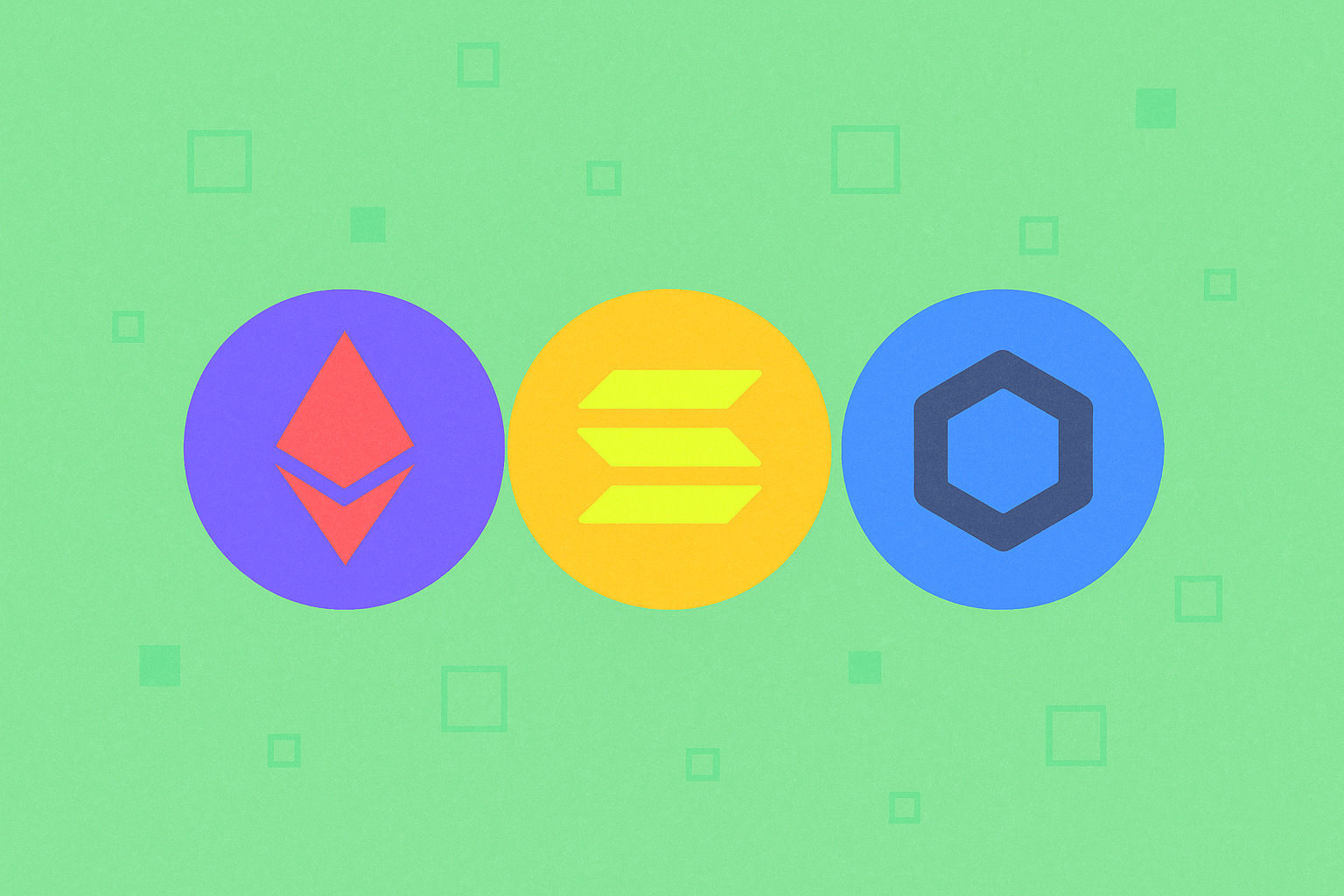
Ethereum maintains unquestionable dominance in the blockchain ecosystem, primarily due to its foundational role in powering decentralized applications and enabling smart contract functionality. The explosive growth of DeFi platforms and NFT markets has solidified Ethereum's position as an essential blockchain infrastructure layer.
The network underwent a transformative transition to Ethereum 2.0 in recent years, which fundamentally improved its scalability and energy efficiency. These upgrades enabled the network to process substantially more transactions while maintaining robust security guarantees—a critical advancement for a blockchain handling billions in daily transaction value.
Throughout 2025, anticipated network upgrades continue to enhance Ethereum's scalability capabilities. These upgrades enable the network to process increased transaction volumes and introduce innovative features such as enhanced wallet security and user accessibility. These improvements position Ethereum for sustained growth as blockchain technology expands into additional industries and use cases.
Solana
Solana (SOL) has established itself as a formidable force in the blockchain space, distinguished by its exceptional transaction speed and remarkably low transaction fees. These characteristics attract developers across diverse industries seeking efficient blockchain solutions. The network's expanding footprint in both decentralized finance and gaming sectors demonstrates its broadening utility and relevance.
Solana has undergone substantial development efforts to enhance scalability and expand developer tools. These continuous improvements strengthen the ecosystem's overall robustness and appeal. Solana's unique capacity to process transactions at high speed, combined with its steadily expanding user base and developer community, positions the network favorably for continued success and growth throughout 2025.
Chainlink
Chainlink (LINK) operates as a decentralized oracle network serving a critical function in the blockchain ecosystem—securely connecting blockchains with real-world data sources. This capability to reliably transmit external information to smart contracts makes Chainlink indispensable for blockchain applications requiring accurate off-chain data.
Chainlink's growth trajectory reflects its expanding partnership ecosystem and increasing integration within DeFi protocols and smart contract applications. The network's strategic collaborations with major technology and financial institutions—including Google Cloud, SWIFT, and the World Economic Forum—demonstrate its growing significance and mainstream acceptance.
As demand for reliable blockchain-based data services continues accelerating across industries, Chainlink's unique positioning within blockchain infrastructure creates substantial growth potential. The network's expanding adoption, particularly through its Cross-Chain Interoperability Protocol (CCIP), positions it advantageously as blockchain technology proliferates into additional sectors and applications.
Expert Predictions for 2025
Cryptocurrency analysts present diverse predictions for major digital assets throughout 2025, reflecting both optimism and the inherent unpredictability of crypto markets.
For Ethereum, expert forecasts range significantly. Moderate predictions suggest ETH could achieve substantial gains, driven by increasing institutional demand and fundamental supply constraints of the cryptocurrency. More optimistic analyses project ETH demonstrating considerable strength, fueled by substantial institutional interest and strengthening market fundamentals supported by network upgrades and expanding adoption.
Chainlink analysts present similarly varied outlooks. Conservative forecasts suggest LINK could reach notable valuations by year-end 2025, propelled by growing adoption and ongoing technological development. More bullish analysts propose substantially higher valuations within a 3-5 year timeframe, driven by widespread adoption of Chainlink's interoperability solutions and partnerships with major financial institutions.
Solana has attracted analyst attention for its high transaction throughput and economical fee structure. The network's expanding presence in DeFi and gaming sectors underscores its potential to become a leading blockchain platform. Ongoing ecosystem improvements and scalability enhancements position Solana favorably for continued success.
Risks and Considerations
Cryptocurrency investment, while potentially rewarding, carries substantial inherent risks that all investors must carefully evaluate. Even well-established projects like Ethereum, Solana, and Chainlink remain vulnerable to market turbulence, regulatory disruptions, and other external shocks. Cryptocurrency prices exhibit extreme volatility, capable of producing significant financial losses for unprepared investors.
Expert predictions, while informative, do not guarantee outcomes and should never form the sole basis for investment decisions. The cryptocurrency space historically attracts fraudulent schemes and projects lacking genuine utility, making thorough due diligence essential. Prudent investors should carefully analyze each cryptocurrency's fundamental value proposition, assess its long-term viability potential, and maintain strict discipline regarding position sizing.
Responsible investing within cryptocurrency markets requires several protective practices: never deploy capital that you cannot afford to lose entirely, diversify investments across multiple unrelated assets, avoid excessive leverage and high-risk trading strategies, and ensure cryptocurrency investments do not jeopardize overall financial health. Informed decision-making and disciplined risk management form the foundation of sustainable cryptocurrency investing.
Conclusion
As 2025 progresses, the cryptocurrency market presents opportunities alongside significant risks. Ethereum, Solana, and Chainlink emerge as leading candidates for substantial growth, supported by strong technological foundations, expanding adoption, and favorable market fundamentals. Each project addresses different aspects of blockchain infrastructure—smart contract platforms, transaction efficiency, and data connectivity—positioning them across diverse segments of the evolving cryptocurrency ecosystem.
However, cryptocurrency investment demands careful analysis and disciplined risk management. Expert predictions provide valuable guidance but cannot guarantee outcomes. Success in cryptocurrency investing requires thoroughly understanding each project's fundamentals, evaluating its long-term potential, maintaining proper portfolio diversification, and investing only capital you can afford to lose. By combining informed analysis with prudent risk management, investors can navigate the 2025 cryptocurrency landscape more effectively.
FAQ
Which crypto will skyrocket in 2025?
Bitcoin and Ethereum remain top performers with strong institutional adoption. Emerging altcoins in AI and DeFi sectors show significant growth potential. Market leaders typically outperform based on technological innovation and real-world adoption rates.
Which coin will reach $10 in 2025?
Several altcoins show strong potential to reach $10 in 2025, including Solana, Polkadot, and emerging Layer-2 solutions. Success depends on ecosystem adoption, transaction volume growth, and market sentiment. Monitor projects with strong developer activity and real-world utility.
Which crypto will go 100x in 2025?
Predicting 100x returns is highly speculative. Emerging altcoins with strong fundamentals, low market caps, and innovative use cases in AI, gaming, or DeFi could potentially achieve such gains, but success depends on adoption rates and market conditions. Always conduct thorough research before investing.
Which crypto has a big future?
Bitcoin and Ethereum remain market leaders with strong fundamentals. Emerging layer-2 solutions and AI-integrated tokens show significant growth potential. Focus on projects with real utility, active development, and growing adoption rates for sustainable future returns.
Share
Content
How to Buy Cryptocurrency


Trending Cryptocurrencies



What Is a Phantom Wallet: A Guide for Solana Users in 2025

Solana Price in 2025: SOL Token Analysis and Market Outlook

How Does Solana's Proof of History Work?
Solana (SOL) : Low Fees, Memecoins, and the way to moon
Is Solana a Good Investment?
Solana in 2025: Ecosystem Growth and DeFi Dominance

Everything You Need to Know About Sybil Attacks

Games You Can Earn From – TOP 11 Games
Phil Konieczny – Who Is He? What Is His Wealth? Why Does He Wear a Mask?
What is ZULU: A Comprehensive Guide to South Africa's Warrior Culture and Heritage

What is LANDSHARE: A Revolutionary Platform for Sustainable Agriculture and Community Land Access