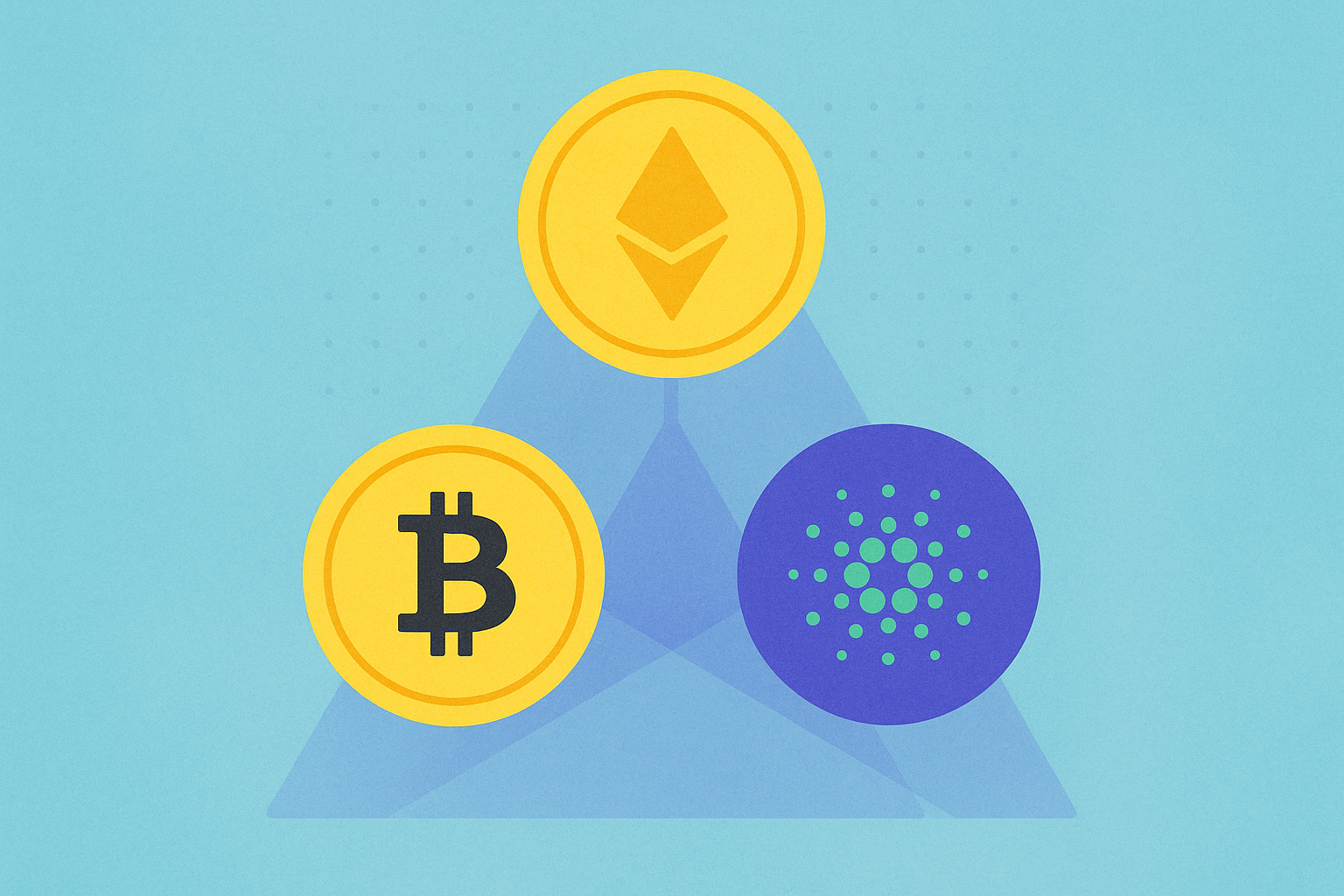
Charles Hoskinson is a pioneering mathematician and blockchain entrepreneur who co-founded Ethereum before creating Cardano, a revolutionary proof-of-stake blockchain platform. As founder and CEO of Input Output Global, Hoskinson has become one of the most influential figures in cryptocurrency, with an estimated net worth of $500-600 million primarily derived from ADA holdings. This comprehensive guide explores his educational background in analytical mathematics, early involvement in Bitcoin and Ethereum development, and motivations for building Cardano as a more sustainable and scalable blockchain solution. The article examines Cardano's vision to address blockchain trilemma challenges, Hoskinson's philanthropic contributions to academic institutions, his philosophical approach to decentralized finance, and controversies surrounding his background claims. Readers will gain insights into how Hoskinson's commitment to scientific rigor and environmental sustainability has shaped the blockchain industry and pos
Who Is Charles Hoskinson?
Charles Hoskinson is a prolific figure in the cryptocurrency industry and a pioneering blockchain developer. He stands among the original Ethereum co-founders, having worked alongside Vitalik Buterin and other visionaries to build what would become the world's second-largest cryptocurrency network. Hoskinson briefly served as Ethereum's CEO before philosophical differences led to his departure. This pivotal moment ultimately drove him to create Cardano, an innovative proof-of-stake (PoS) blockchain that addresses many limitations he perceived in earlier blockchain generations.
As an American mathematician and tech entrepreneur, Hoskinson was born in Hawaii in 1987 to a family of medical professionals. While he initially considered following his parents' footsteps into medicine, he ultimately chose to pursue his passion for mathematics, a decision that would shape the future of blockchain technology.
Educational Background and Early Career
Charles Hoskinson's academic journey began at the Metropolitan State University of Denver, where he earned a degree in analytic number theory. His mathematical prowess led him to enroll in a Master's program in Mathematics at the University of Colorado Boulder. Hoskinson later pursued doctoral studies but made the unconventional decision to leave the program before completion, choosing instead to join Ron Paul's 2008 presidential campaign.
This decision was far from random. Hoskinson was deeply influenced by Paul's libertarian philosophy and became fascinated by Austrian economics and monetary theory. These schools of thought argue that economic systems founded on fiat currency are inherently unstable—a perspective that resonated with the emerging cryptocurrency movement. This intellectual foundation would later inform his approach to building decentralized financial systems, as evidenced in his work on both Ethereum and Cardano.
Net Worth and Financial Standing
Given the volatile nature of the cryptocurrency market, determining Charles Hoskinson's exact net worth presents significant challenges. His wealth is directly tied to his substantial crypto holdings, with a considerable portion linked to the value of ADA, Cardano's native cryptocurrency. Market fluctuations can dramatically impact his net worth within short timeframes.
Most credible estimates place his net worth in the range of $500 to $600 million, though this figure remains subject to change based on Cardano's price performance and broader market conditions. Beyond his cryptocurrency holdings, Hoskinson's wealth also stems from his equity in Input Output Global (formerly IOHK) and other blockchain ventures he has founded or co-founded over the years.
Professional Achievements and Industry Impact
Hoskinson's professional accomplishments in the blockchain space are extensive and multifaceted. He has founded or co-founded three significant crypto-related companies: Ethereum, IOHK (now Input Output Global), and Invictus Innovations. As one of eight co-founders of the Ethereum network and the sole founder and CEO of Cardano, his influence on the industry's development cannot be overstated.
Beyond his entrepreneurial ventures, Hoskinson has held various influential positions in both private and public sectors. He served as the founding chairman of the Bitcoin Foundation's education committee, where he worked to promote cryptocurrency literacy and adoption. In 2013, he helped establish the Cryptocurrency Research Group, contributing to the academic study of digital assets.
Hoskinson co-founded BitShares, an early decentralized exchange platform that pioneered concepts later adopted by modern DeFi protocols. His work on BitShares demonstrated his commitment to building infrastructure that would enable peer-to-peer financial transactions without intermediaries. As the Cardano founder, he continues to lead the design, development, and research efforts for both the Cardano blockchain and its native ADA cryptocurrency, pushing the boundaries of what blockchain technology can achieve.
Philanthropic Contributions
Beyond his role as a tech entrepreneur and blockchain pioneer, Charles Hoskinson has demonstrated a strong commitment to philanthropy and educational advancement. In recent years, Hoskinson's company, IOHK, donated $500,000 in ADA cryptocurrency to the University of Wyoming, establishing a Cardano Research Lab dedicated to advancing blockchain technology research and development. This initiative supports academic exploration of blockchain applications and helps train the next generation of blockchain developers.
Subsequently, he made a substantial $20 million donation to Carnegie Mellon University to establish the Hoskinson Center for Formal Mathematics. According to the university, the center is "dedicated to using formal computational methods and new technologies for mathematical research and education," bridging the gap between pure mathematics and practical computational applications.
In the following year, IOHK contributed $4.5 million to the research hub at the University of Edinburgh, funding research on innovative projects aimed at advancing blockchain development. These donations reflect Hoskinson's belief in the importance of rigorous academic research as the foundation for technological innovation.
It's worth noting that Charles Hoskinson's IOHK rebranded to Input Output Global after relocating its headquarters from Hong Kong, China, to Wyoming, United States, reflecting the company's evolution and expanding global presence.
Current Role and Responsibilities
With over 900,000 followers on X (formerly Twitter), Charles Hoskinson maintains a prominent public presence as a mathematician and crypto entrepreneur. He is primarily known for creating Cardano, a proof-of-stake protocol that represents a third-generation blockchain designed to address the limitations of earlier networks. The Cardano blockchain features its own native cryptocurrency, ADA, which has a maximum supply of 45 billion coins, ensuring scarcity and potential long-term value.
Hoskinson serves as the CEO of Input Output Global (formerly IOHK), a company he founded alongside Jeremy Wood. The organization markets itself as "one of the world's pre-eminent blockchain infrastructure research and engineering companies," focusing on building robust, scalable blockchain solutions for various applications. His role as an Ethereum co-founder also remains a significant part of his legacy, as Ethereum has grown to become the second-largest cryptocurrency globally by market capitalization.
Before entering the cryptocurrency space as an entrepreneur, Hoskinson participated in Ron Paul's 2008 presidential campaign, where he was exposed to libertarian economic philosophy. He subsequently worked at a consultancy firm, gaining business experience that would later prove valuable in his blockchain ventures. Hoskinson has also mentioned working at the Defense Advanced Research Projects Agency (DARPA), though the institute has never formally confirmed or denied these claims.
His early involvement in Bitcoin education included serving as the founding chairman of the Bitcoin Foundation's education committee and helping to create the Cryptocurrency Research Group, both of which played crucial roles in promoting cryptocurrency understanding and adoption during the industry's formative years.
Significance in the Blockchain Industry
Charles Hoskinson has made transformative contributions to the cryptocurrency and blockchain technology industry. As detailed in previous sections, he was instrumental in creating the framework and vision for the Ethereum network during its inception. His technical expertise and strategic thinking helped shape Ethereum's architecture and governance model.
He played a crucial role in building Ethereum's highly successful initial coin offering (ICO), which raised funds to support the network's development and set a precedent for blockchain project funding. This ICO model would later be adopted by thousands of projects, fundamentally changing how blockchain startups raise capital.
Beyond Ethereum, Hoskinson created the Cardano blockchain and its native ADA coin, which has become a leading altcoin in the cryptocurrency market. Cardano represents a next-generation blockchain network and smart contract platform built with an emphasis on scalability, security, and sustainability. The network is more environmentally friendly than older blockchains due to its energy-efficient proof-of-stake consensus mechanism, addressing growing concerns about cryptocurrency's environmental impact.
Cardano has evolved into a thriving ecosystem hosting thousands of decentralized applications across various sectors, including finance, supply chain, healthcare, and education. The ADA cryptocurrency serves multiple functions within this ecosystem, including paying transaction fees, facilitating peer-to-peer payments, and enabling network governance.
ADA holders can stake their tokens to validate transactions and secure the network, earning rewards in the process. This staking mechanism not only secures the network but also democratizes participation in blockchain governance. ADA consistently ranks among the top ten cryptocurrencies by market capitalization, demonstrating sustained investor confidence and market adoption.
The Founding Story of Cardano
Before Cardano's creation, Hoskinson was deeply involved in developing the Ethereum network. In 2013, Anthony Di Iorio, another Ethereum co-founder and fellow Bitcoin enthusiast, introduced Hoskinson to Ethereum's groundbreaking whitepaper. The document outlined a vision for a blockchain platform that could execute smart contracts and support decentralized applications, extending far beyond Bitcoin's peer-to-peer payment functionality.
Intrigued by the possibilities, Hoskinson began attending early Ethereum meetings and quickly became an integral member of the founding team. While the exact scope of his role in creating Ethereum remains somewhat debated, his contributions were undeniably significant. Hoskinson helped develop and execute Ethereum's first ICO, which successfully raised funds to support the network's development. He also participated in key strategic decisions, including the choice to register the Ethereum Foundation in Switzerland, which provided legal clarity and operational flexibility.
However, philosophical differences soon emerged within the founding team. A significant faction, including Vitalik Buterin, advocated for Ethereum to operate as a non-profit organization focused on public good. Hoskinson, conversely, believed that a for-profit structure would better enable the project to scale and compete in the broader technology landscape. Additionally, Hoskinson disagreed with Ethereum's adoption of the proof-of-work (PoW) consensus mechanism, which he viewed as environmentally unsustainable and technically limiting compared to proof-of-stake alternatives.
These disagreements ultimately led to Hoskinson's departure from Ethereum. Following his exit, he took a six-month sabbatical to reflect on his next steps, briefly considering a return to pure mathematics. During this period, Jeremy Wood, another Ethereum co-founder, approached him with a proposal to establish an engineering and research firm dedicated to developing blockchain solutions for academic institutions, corporations, and government entities.
This conversation led to the founding of Input Output Hong Kong (IOHK). During discussions with a client, Hoskinson proposed developing a "Japanese version of Ethereum"—a blockchain that would incorporate the lessons learned from Ethereum while addressing its perceived shortcomings. In 2017, Hoskinson successfully launched Cardano, an open-source, decentralized smart contract protocol. While initially focused on the Japanese market, Cardano quickly expanded its operations globally, becoming one of the most prominent blockchain platforms in the industry.
Cardano has since become IOHK's most noteworthy and successful project, validating Hoskinson's vision of a more sustainable, scalable, and secure blockchain infrastructure.
The Vision Behind Cardano
Cardano represents Charles Hoskinson's most prestigious and influential venture in the blockchain space. He began developing this proof-of-stake blockchain platform alongside Jeremy Wood, with the project officially launching in 2017. Cardano was conceived as everything Hoskinson believed Ethereum should have been but wasn't during its early development.
The vision behind Cardano centered on improving functionality that was initially absent or underdeveloped in Ethereum and other first-generation blockchains. Hoskinson designed Cardano with an efficient and environmentally friendly consensus mechanism—the Ouroboros proof-of-stake protocol—to ensure it would be more sustainable than older blockchains relying on energy-intensive proof-of-work mechanisms. This environmental consciousness has become increasingly important as blockchain technology faces scrutiny over its carbon footprint.
Hoskinson aimed to address the major challenges facing other blockchain platforms, including the blockchain trilemma of decentralization, scalability, and security. He also sought to enhance smart contract functionality, making it more robust and accessible for developers. The goal was to create a platform that would be more flexible, scalable, and secure than both Bitcoin and Ethereum, incorporating lessons learned from these pioneering networks.
Hoskinson envisioned Cardano evolving into a comprehensive network for decentralized applications with numerous real-world use cases, governed democratically by ADA stakers. This vision has largely materialized, with Cardano now hosting over 1,000 projects developing web3 decentralized applications across diverse sectors including finance, healthcare, supply chain management, and digital identity.
The protocol's native coin, ADA, is named after Augusta Ada King, Countess of Lovelace, who is widely regarded as the first computer programmer. This naming choice reflects Hoskinson's appreciation for mathematical and computational history. Users can trade ADA through most cryptocurrency wallets and exchanges, similar to other major cryptocurrencies, making it accessible to a global audience.
Input Output Global (formerly IOHK) was established by Charles Hoskinson and Jeremy Wood with a clear mission to advance blockchain technology through rigorous research and engineering excellence. Founded as a research and engineering company, Input Output Global has positioned itself as a leader in the blockchain space, distinguished by its academic approach to development.
The company's primary objective is to develop blockchain projects for academic institutions, corporations, and organizations in both private and public sectors. Rather than pursuing rapid commercialization, Input Output Global emphasizes peer-reviewed research, formal methods, and scientific rigor in its development process. This approach sets it apart from many blockchain companies that prioritize speed over thoroughness.
Input Output Global's most significant and successful blockchain project is Cardano, a leading smart contract platform that has gained widespread recognition and adoption. The company continues to drive Cardano's development while also exploring other blockchain applications and contributing to the broader advancement of distributed ledger technology.
Motivation Behind Cardano's Creation
Hoskinson's motivation to develop Cardano emerged from a client's proposal to build a "Japanese version of Ethereum." However, the deeper motivation stemmed from his desire to create an improved version of first and second-generation blockchains that would address fundamental limitations he observed in Bitcoin and Ethereum.
He was particularly concerned about scalability issues that prevented these networks from processing transactions at the speed and volume required for global adoption. Security vulnerabilities and the environmental impact of proof-of-work mining also troubled him. Hoskinson believed that blockchain technology could only achieve its full potential if these foundational problems were solved through thoughtful design and rigorous engineering.
The Cardano blockchain distinguishes itself from other platforms through its diligent peer-reviewed research foundation, which aims to create a more interoperable, scalable, and secure blockchain network. Every major protocol upgrade and feature addition undergoes academic scrutiny before implementation, ensuring that the platform evolves based on proven scientific principles rather than untested assumptions.
Utilizing the proof-of-stake consensus mechanism means that Cardano is significantly more energy-efficient and sustainable than proof-of-work blockchains, addressing environmental concerns without compromising security. This design choice reflects Hoskinson's commitment to building technology that can scale globally without causing environmental harm.
Furthermore, Hoskinson was driven by a social mission: creating a protocol that would be accessible and useful to billions of people worldwide, especially the unbanked and underbanked populations who lack access to traditional financial services. He envisioned Cardano as a tool for financial inclusion, enabling people in developing countries to participate in the global economy regardless of their access to traditional banking infrastructure.
Challenges and Controversies
As a passionate public speaker and advocate for blockchain technology and cryptocurrencies, Charles Hoskinson has faced several challenges and controversies throughout his career. Some critics have accused Hoskinson of exercising excessive control over decision-making processes within the Cardano ecosystem, raising concerns about centralization in a platform designed to be decentralized. These criticisms have sparked debates about governance models in blockchain projects.
Cardano's development roadmap has also faced criticism for being overly ambitious and slow to progress. Some observers have expressed frustration with the methodical, research-driven approach, arguing that it causes Cardano to lag behind competitors in implementing new features. However, supporters counter that this careful approach ensures higher quality and more secure implementations.
One of the most significant controversies involved Laura Shin, a prominent crypto journalist, Unchained podcast host, and author of "The Cryptopians." In her book, Shin raised questions about discrepancies in Hoskinson's educational background and professional history.
The Laura Shin Controversy
The controversy began when Laura Shin suggested in her book that Charles Hoskinson may not have completed his undergraduate degree or enrolled in a PhD program as he had claimed. The dispute gained public attention on X (formerly Twitter) when a user tweeted about reading Shin's book and finding Hoskinson's early crypto years fascinating.
Hoskinson responded by calling Shin's book a "great work of fiction," dismissing her account as inaccurate. Shin countered by asking Hoskinson to address specific discrepancies in his claims about dropping out of a PhD program, noting that the universities in question stated he had only enrolled as an undergraduate student.
In her book, Shin reported that the Metropolitan State University of Denver did not offer a graduate mathematics program during the period Hoskinson claimed to have studied there. She stated that both universities confirmed Hoskinson had enrolled and studied as an undergraduate but did not graduate from either institution. These findings contradicted Hoskinson's public statements about his educational credentials.
Shin also questioned Hoskinson's claims about working at the Defense Advanced Research Projects Agency (DARPA), stating she found no evidence to support this assertion. In her tweets, Shin emphasized that she had given Hoskinson and his team ample opportunity to provide their perspective and clarify these matters, but they declined to engage with her research.
The controversy remains unresolved, with questions lingering about the precise details of Hoskinson's educational background. Regardless of these disputes, Hoskinson's practical contributions to blockchain technology and his success in building Cardano remain undeniable.
Approach, Philosophy, and Vision
Hoskinson has been notably vocal about his approach, thoughts, and views on cryptocurrencies and blockchain technology. He frequently shares his perspectives through social media, conferences, and interviews, articulating a clear vision for the future of decentralized systems.
He has expressed his philosophy regarding the purpose of digital currencies with the statement: "Crypto doesn't want to set the world on fire; it just wants to start a flame in your heart." This quote encapsulates his belief that cryptocurrency's primary value lies not in disrupting existing systems through force, but in inspiring individuals to reimagine how financial and social systems could function.
Through Input Output Global, Hoskinson has funded numerous blockchain technology research labs worldwide to accelerate blockchain and cryptocurrency adoption. These investments reflect his conviction that academic research and rigorous scientific inquiry are essential for the technology's long-term success and credibility.
Hoskinson has been particularly critical of the high energy consumption associated with older proof-of-work blockchains such as Bitcoin. He argues that for blockchain technology to achieve mainstream adoption and social acceptance, it must address environmental concerns through more sustainable consensus mechanisms like proof-of-stake.
Despite controversies and criticism, Hoskinson maintains an optimistic outlook on blockchain's potential. He believes that blockchain technology represents the future of digital infrastructure and will help create a more inclusive, transparent, and equitable world. His work continues to focus on building systems that empower individuals, particularly those in underserved communities, to access financial services and participate in the global economy.
Charles Hoskinson has made indelible contributions to the cryptocurrency sector since entering the space in 2013. As a member of the team that created the Ethereum network and the founder of Cardano, his influence on blockchain development has been profound and far-reaching.
Through Input Output Global, Hoskinson pursues an ambitious mission: to educate and provide financial services to the billions of people worldwide who lack access to equitable and transparent financial systems. His work represents a sustained effort to realize blockchain technology's potential for positive social impact, extending beyond speculative trading to address real-world problems of financial exclusion and economic inequality.
Hoskinson's legacy in the cryptocurrency industry is characterized by his commitment to scientific rigor, environmental sustainability, and social inclusion. Whether through Ethereum's smart contract capabilities or Cardano's proof-of-stake consensus mechanism, his projects have consistently pushed the boundaries of what blockchain technology can achieve. As the industry continues to evolve, Hoskinson remains a influential voice advocating for thoughtful, research-driven development that prioritizes long-term sustainability over short-term gains.
FAQ
Who is Charles Hoskinson? What is his educational background and early career experience?
Charles Hoskinson is an American entrepreneur and blockchain pioneer who co-founded Ethereum. He holds a background in mathematics and analytical chemistry. He served as an early organizer and promoter of Ethereum, playing a crucial role in advancing blockchain technology and its commercialization during the cryptocurrency industry's formative years.
Why did Charles Hoskinson create Cardano?
Charles Hoskinson founded Cardano to establish a more academically rigorous and formally verified blockchain platform. After departing from Ethereum, he pursued peer-reviewed research and scientific methodology to build a sustainable, scalable cryptocurrency with stronger theoretical foundations.
What are the differences between Cardano and other blockchain projects like Ethereum?
Cardano employs a research-driven, fully decentralized approach with lower transaction fees than Ethereum. It features Proof-of-Stake consensus, superior smart contract security through Plutus, and more sustainable energy efficiency compared to Ethereum's previous proof-of-work model.
What did Charles Hoskinson do before founding Cardano?
Charles Hoskinson co-founded Ethereum and served as its founding member before creating Cardano in 2017. He founded IOHK(Input Output)and serves as its CEO.
What is Cardano's vision and Charles Hoskinson's core philosophy?
Cardano aims to build a sustainable blockchain platform for global governance and smart contracts. Hoskinson's core philosophy is creating decentralized solutions that revolutionize governance through peer-reviewed, scientifically rigorous development.
Charles Hoskinson目前在Cardano中担任什么角色?
Charles Hoskinson is the founder and CEO of IOHK (Input Output). He leads the development and research of Cardano through IOHK, serving as the primary visionary and strategic leader behind the project.
Cardano项目目前的发展进展和未来计划是什么?
Cardano is advancing with key projects launching in Q4, focusing on scalability and interoperability. Future plans include the Basho upgrade to enhance network performance and throughput. Ada's value is expected to appreciate significantly with these developments.
* The information is not intended to be and does not constitute financial advice or any other recommendation of any sort offered or endorsed by Gate.