An in-depth look at the BitBond initiative, created to tackle the enormous U.S. government debt issue. This guide explains effective risk management strategies for Bitcoin investments, approaches to handle price fluctuations, and methods to prevent total loss. Tailored for beginners and intermediate users, it serves as a comprehensive Web3 and blockchain investment resource.
What Is the "BitBond" Solution for the U.S. Government's Massive Debt Crisis?—Matthew Pines' Vision for a New Fiscal Strategy
In a recent interview with BeInCrypto, Matthew Pines, Executive Director of the Bitcoin Policy Institute in Washington, D.C., introduced an innovative financial instrument—BitBond—as a potential breakthrough for the United States' pressing fiscal issues. BitBond represents a new form of government bond that integrates Bitcoin into the issuance process, offering a groundbreaking approach to the colossal government debt that traditional fiscal policies have struggled to resolve.
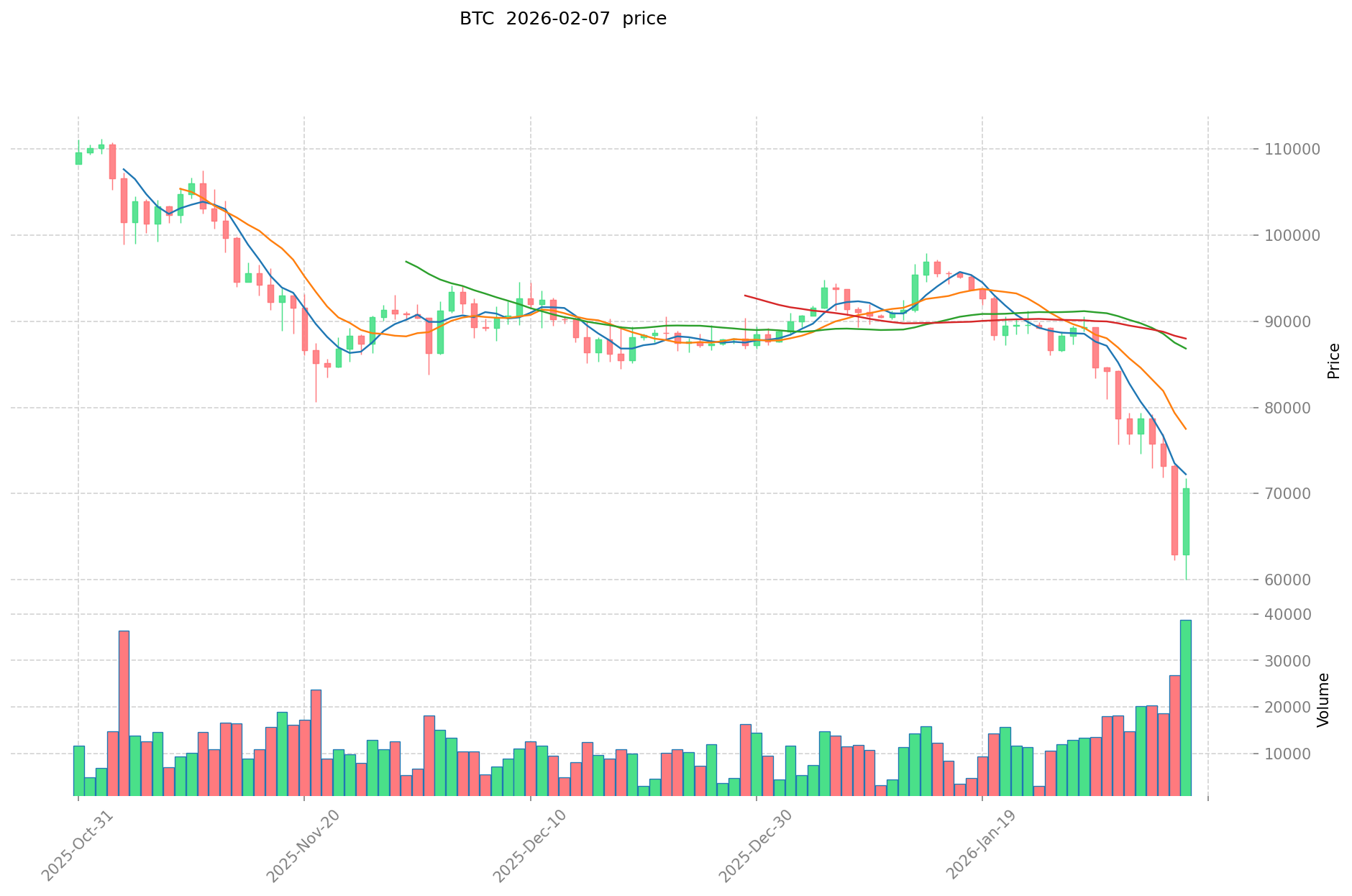
The U.S. government is grappling with a massive, long-accumulated debt and an annual deficit of roughly $1.5 trillion. Pines notes that standard remedies like spending cuts or boosting productivity are politically and economically challenging to implement given the structural nature of these issues. This is why he proposes a fiscal strategy that leverages Bitcoin as a new asset class.
BitBond works by allocating a portion of newly issued U.S. government bonds to Bitcoin. For instance, when issuing $1 billion in 10-year bonds, 10% ($100 million) would be invested in Bitcoin. Half of that ($50 million) would be added to the government's Strategic Bitcoin Reserve (SBR), while the other half would be set aside to pay Bitcoin dividends to bond investors.
This product benefits both the government and investors. Investors receive traditional interest income plus additional earnings if Bitcoin's price appreciates. The government, in turn, can attract greater demand and issue bonds at lower interest rates, which could help ease its long-term debt burden.
Pines emphasizes that BitBond is more than financial innovation—it could be a foundational solution to restoring America's fiscal health. The Bitcoin market has grown rapidly in recent years, now worth $2 trillion—making its role as a strategic national asset increasingly significant. By officially designating Bitcoin as a strategic asset, the U.S. government could assure global investors of its long-term value and drive further price growth.
Managing Bitcoin Price Volatility and Risk
One major challenge for BitBond is how to address Bitcoin's price volatility. Bitcoin is far more volatile than traditional assets, which presents risks for investors. Pines details risk mitigation strategies for this issue.
BitBond holders who keep their bonds to maturity receive a fixed Bitcoin dividend—the amount paid in Bitcoin is set in advance and does not fluctuate. While short-term market swings may occur, the bond’s structure helps keep investor risk comparable to that of standard U.S. Treasuries.
BitBond includes downside protection mechanisms designed to cap losses if Bitcoin's price falls. Even in the worst-case scenario, investors are guaranteed returns on par with regular Treasuries. This means that, even during sharp price drops, investor losses remain limited.
However, investors who sell before maturity do face risk from falling Bitcoin prices. If the market drops, bonds may trade at a discount, leading to potential unrealized losses. But if held to maturity, the original Bitcoin quantity is guaranteed—so final losses are not locked in. This dynamic is similar to how bond prices fall when interest rates rise.
Pines points out that BitBond could provide institutional investors and pension funds—who are often barred from direct Bitcoin investments or have strict operational guidelines—a rare opportunity for indirect exposure to Bitcoin. Such bond-based products allow these entities to invest in Bitcoin indirectly.
Impact of Government Bitcoin Purchases on the Market and Price Outlook
Pines offers an in-depth analysis of how BitBond could affect the Bitcoin market if adopted by the U.S. government. Large-scale government buying would naturally drive prices higher. But more important, Pines argues, is the symbolic effect: official recognition of Bitcoin as a national strategic asset would assure global investors of its long-term value and could propel prices even further.
For example, a $10 billion pilot BitBond with 10% allocated to the Strategic Bitcoin Reserve (SBR) or escrow would mean $1 billion in direct Bitcoin purchases—a sizeable force likely to push market prices upward.
Yet Pines stresses that the symbolic significance of the U.S. government officially buying Bitcoin far outweighs the direct buying pressure. Many participants see Bitcoin's future as binary—either "zero" or "millions." If the world's largest economy gives Bitcoin official recognition, expectations of long-term price gains will increase, potentially driving the price higher.
Pines notes that Bitcoin's market capitalization has jumped from $100 billion to $2 trillion in just a few years, making it a strategic asset for nations. Its position as a central bank or government reserve can no longer be ignored. The Trump administration’s executive order labeling Bitcoin as a strategic asset marks a fundamental shift in U.S. policy.
Companies like MicroStrategy have shown that investing billions in Bitcoin can move markets. If the U.S. government did the same, its impact would be exponentially greater, fundamentally reshaping Bitcoin’s market value. Pines emphasizes that the government’s official stance—recognizing Bitcoin as a strategic asset—carries much greater weight than simple buying pressure.
BitBond Policy Discussion and Political Challenges Within the U.S. Government
Pines reports that BitBond is gaining recognition as a policy option within the U.S. government but remains under review. The Trump administration outlined a policy to increase Bitcoin holdings as a strategic national asset, but actual BitBond implementation is still in its early stages.
The U.S. government has signaled its intent to treat Bitcoin as a strategic asset and grow its reserves. The Treasury and Commerce Departments are exploring ways to acquire Bitcoin without affecting the federal budget, with BitBond emerging as one possible method. A government report scheduled for July 2025 may discuss BitBond as a way to add Bitcoin to the Strategic Bitcoin Reserve (SBR) without fiscal impact.
Formal adoption will require detailed analysis, reporting, and long-term coordination with Congress and other agencies, Pines says. The U.S. Treasury is highly conservative and cautious about issuing new types of bonds. Without a thorough market impact and risk assessment, products like BitBond are unlikely to be introduced quickly. Even 20-year bonds took years to launch; BitBond, being more complex and novel, will face even more scrutiny.
Pines notes that policies like BitBond are difficult to implement in normal times but should be prepared as rapid-response options for future financial crises. He cites the Federal Reserve's actions during previous crises, including COVID-19 in 2020, as examples and suggests BitBond could be a valuable emergency policy tool.
BitBond adoption could follow two scenarios: clear political directives driving government action, or market rejection of traditional approaches prompting new solutions. In either case, thorough internal vetting and preparation would allow for rapid rollout in a crisis.
Local Governments Leading the Way and Political/Social Impact
Local governments may be more likely than the federal government to pilot BitBond. Without the ability to issue currency, local governments need flexible and fast fiscal tools.
For example, New York City Mayor Eric Adams has considered a "New York City version of BitBond." As Adams’ interest shows, local efforts could spur nationwide adoption. Because local governments must respond quickly to fiscal issues, they're well-positioned to test new financial products before the federal government.
Pines suggests that local experiments could catalyze federal and congressional debate, making BitBond a more practical policy option. If cities like New York or Miami succeed, others may follow suit, prompting a national shift. Local success stories could drive policy discussions across the country.
For citizens, the central question is whether BitBond would reduce tax burdens and improve public services. Even if the concept of Bitcoin is complex, policies that lower taxes and enhance services are likely to be widely supported. If BitBond leads to reduced taxes and better parks, schools, or police services, residents would likely support it.
Still, Pines cautions that BitBond could cause confusion if local governments implement it without proper knowledge. Rushing to adopt without understanding Bitcoin or crypto assets risks backlash and misunderstanding. Accurate information and education are essential.
Pines stresses that BitBond should be discussed as a long-term strategy for national fiscal stability, not a passing policy fad. Because bold decisions are difficult in normal times, he recommends local pilot programs to prepare for future economic or fiscal crises.
Long-Term Implications of BitBond for U.S. Fiscal Health and Geopolitics
Pines contends that BitBond could be a fundamental solution to America’s severe fiscal problems, not just a financial innovation. The U.S. is running massive peacetime deficits at levels comparable to wartime, risking a fiscal crisis if the trend continues.
Despite a strong economy, the government is recording deficits at wartime levels, exposing deep structural challenges that conventional policies can’t easily fix. Pines argues that overcoming these challenges requires new thinking—not just standard fiscal tactics or austerity.
BitBond stands out because it could ease fiscal burdens and strengthen long-term government financial stability. Pines estimates that by linking U.S. Treasuries to Bitcoin, BitBond could dramatically reduce interest payments—potentially saving trillions of dollars if Bitcoin appreciates over time.
By integrating Bitcoin into Treasuries, the U.S. government could substantially lower its long-term debt. Even conservative projections suggest savings in the trillions. Lowering rates on 10-year bonds from over 4% to 2–3% could save tens of billions in interest.
Pines also highlights the geopolitical significance. As China and Russia diversify into gold and central bank digital currencies (CBDCs), the U.S. could bolster its global influence by adopting Bitcoin as a symbol of free-market values.
With China and Russia embracing gold and CBDCs, the U.S. could expand its geopolitical reach by positioning Bitcoin as a Western asset. While Bitcoin’s market cap was insignificant at $100 billion, it's now $2 trillion and growing—making its role as a strategic asset for central banks and governments impossible to ignore.
Pines’ BitBond proposal offers an innovative solution to America's fiscal challenges, but faces political and bureaucratic hurdles. He argues that the U.S. should explore strategic use of Bitcoin to address ongoing deficits and global competition.
Conclusion: BitBond—A New Era for U.S. Fiscal Relief Through Bitcoin
Matthew Pines’ BitBond proposal, from the Bitcoin Policy Institute in Washington, D.C., aims to combine Bitcoin with U.S. Treasury issuance to ease government debt burdens and potentially stabilize and increase Bitcoin's market price.
BitBond highlights the need for new financial strategies as traditional policy tools reach their limits. While federal discussions are just beginning, local governments are already piloting BitBond and preparing to deploy it in future financial crises.
Officially recognizing Bitcoin as a strategic asset could strengthen the nation’s fiscal stability and expand its geopolitical influence. BitBond stands to reinforce bullish scenarios for Bitcoin’s future, supporting market expectations of prices in the millions rather than zero.
With Bitcoin’s market value now at $2 trillion, its role as a national strategic asset is too significant to ignore. If the U.S. adopts Bitcoin through BitBond, it could mark a turning point—not just in financial innovation, but in restoring fiscal health and global competitiveness.
FAQ
Can Bitcoin Reach Several Million Dollars, and What Would That Scenario Look Like?
Bitcoin could reach several million dollars. In a bullish scenario, inflows from institutional investors, rising adoption rates, and growing demand for inflation hedges may push Bitcoin to multi-million-dollar levels by 2050. Expansion and increased demand would drive this trend.
What Could Drive Bitcoin to Zero, and Is That a Realistic Risk?
The risk of Bitcoin going to zero is extremely low. Quantum computing, major hacks, and mining regulations are potential threats, but once the supply cap is reached, transaction fees will sustain miner rewards and the network. As global adoption grows, Bitcoin’s value retention becomes even more likely.
What Determines Bitcoin's Long-Term Value (Adoption, Regulation, Technological Advances)?
Bitcoin’s long-term value is shaped by global adoption, blockchain innovation, and regulatory clarity. Greater institutional investment and payment utility drive value, while tech improvements boost scalability. Robust regulation enhances market stability, with further gains likely between 2026 and 2030.
How Does Bitcoin's Store of Value Differ from Traditional Assets Like Gold or the Dollar?
Bitcoin is scarce and has a fixed supply, making it a strong inflation hedge. Gold and the dollar are more stable but less scarce; Bitcoin’s higher volatility could enable it to become an even better store of value in the future. Regulatory progress is expected to further strengthen Bitcoin’s store-of-value function.
How Can Investors Manage Bitcoin Risk, Especially Extreme Price Fluctuations?
Managing Bitcoin risk requires portfolio diversification and strict stop-loss rules. To handle extreme volatility, investors should stick to predetermined limits and avoid emotional decision-making. Ongoing market analysis and regular strategy reviews are also effective.
* The information is not intended to be and does not constitute financial advice or any other recommendation of any sort offered or endorsed by Gate.