ZKJ vs CRO: A Comprehensive Comparison of Two Leading Cryptocurrency Platforms

Introduction: ZKJ vs CRO Investment Comparison
In the cryptocurrency market, the comparison between Polyhedra Network (ZKJ) and Cronos (CRO) is a topic that investors cannot ignore. The two assets differ significantly in market capitalization ranking, application scenarios, and price performance, representing different positioning within the crypto asset landscape. Polyhedra Network (ZKJ): Since its launch in March 2024, it has gained market recognition through its focus on delivering the fastest Zero-Knowledge (ZK) proofs and enabling secure cross-chain interoperability through its flagship zkBridge protocol, which has facilitated over 20 million cross-chain transactions across more than 25 Layer-1 and Layer-2 blockchains. Cronos (CRO): Established as a leading blockchain ecosystem partnered with Crypto.com and over 500 application developers and contributors, representing an addressable user base of more than a hundred million people globally, with a mission to unlock the future of finance for everyone through a focus on Decentralized Finance and Gaming. This article will provide a comprehensive analysis of the investment value comparison between ZKJ and CRO across historical price trends, supply mechanisms, ecosystem adoption, and technical infrastructure, while attempting to answer the question investors care most about:
"Which is the better investment opportunity right now?"
Comparative Analysis Report: Polyhedra Network (ZKJ) vs. Cronos (CRO)
I. Price History Comparison and Current Market Status
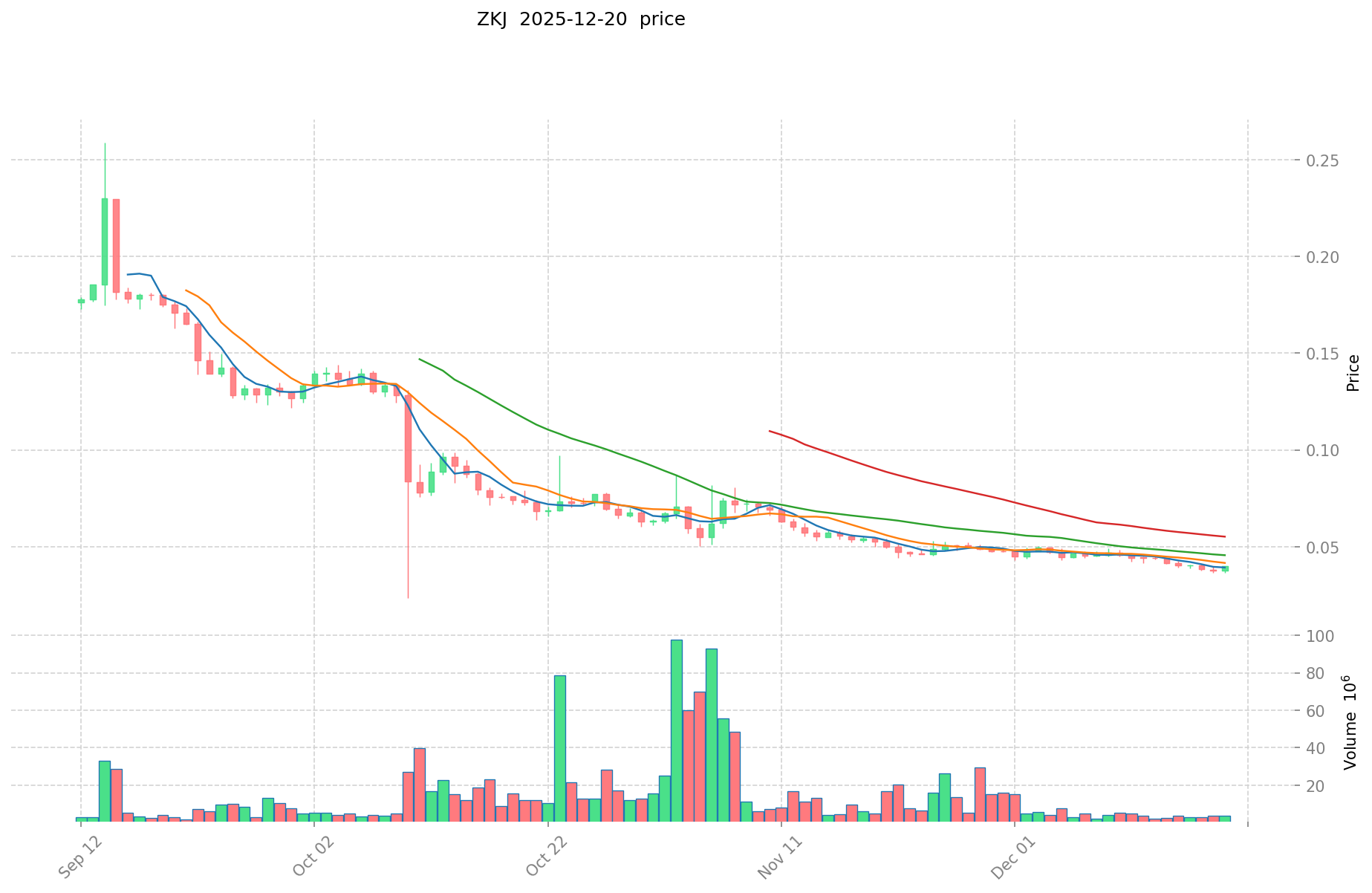
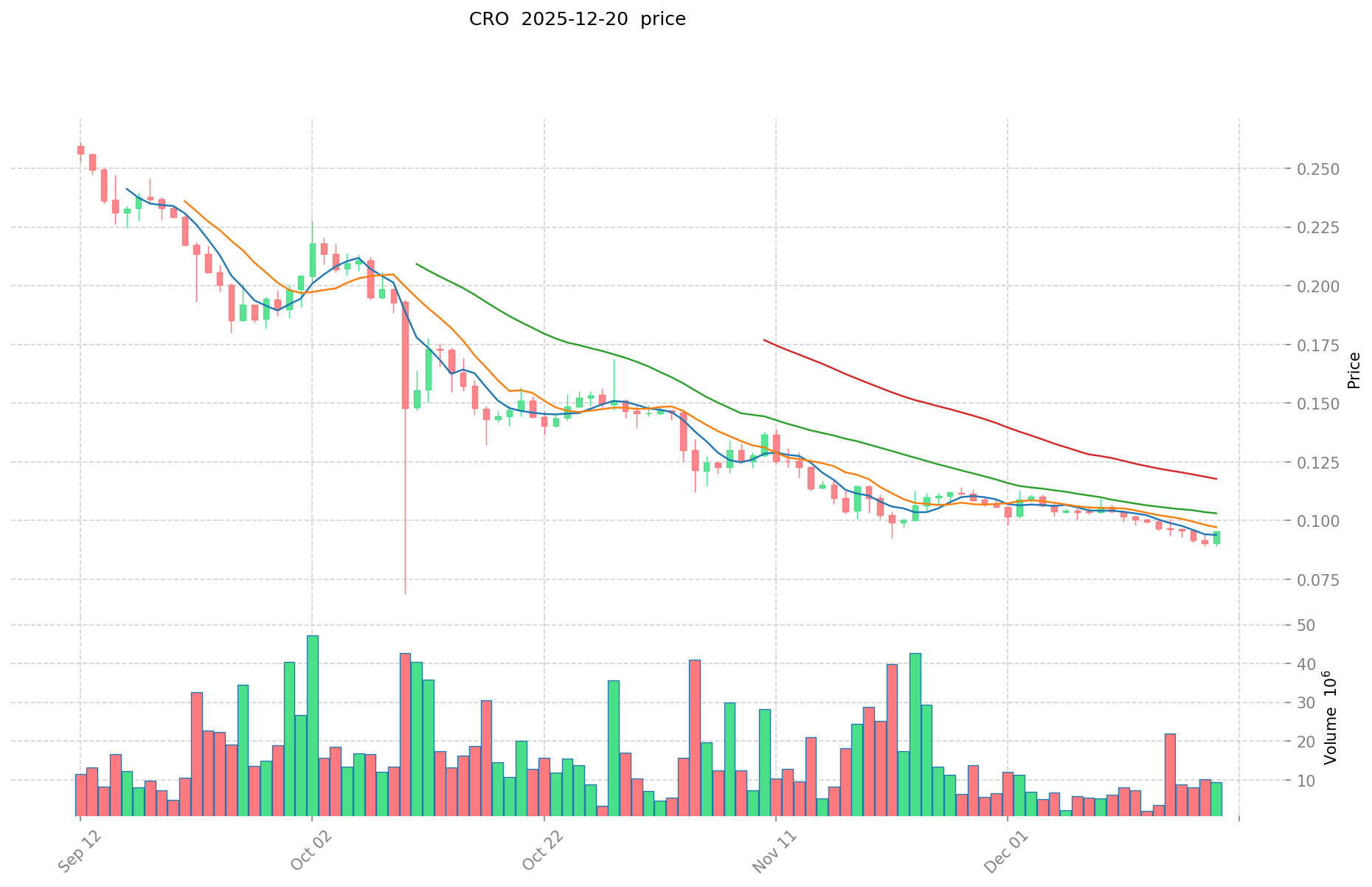
Historical Price Trajectories of ZKJ and CRO
Polyhedra Network (ZKJ):
- Published at $1.00 on March 19, 2024
- All-time high: $100.00 (March 19, 2024)
- All-time low: $0.02323 (October 10, 2025)
- Current price: $0.03978 (December 21, 2025)
Cronos (CRO):
- Published at $0.1153
- All-time high: $0.965407 (November 24, 2021)
- All-time low: $0.0121196 (February 8, 2019)
- Current price: $0.09595 (December 21, 2025)
Comparative Analysis
Both assets have experienced significant price volatility from their historical peaks. ZKJ has declined approximately 99.96% from its all-time high of $100.00, while CRO has decreased approximately 90.06% from its peak of $0.965407. However, CRO demonstrates relatively greater price stability compared to its historical trajectory, trading closer to mid-range valuations. ZKJ remains in a recovery phase following its dramatic decline in 2025.
Current Market Status (December 21, 2025)
Price Data:
- ZKJ Current Price: $0.03978
- CRO Current Price: $0.09595
- Price Differential: CRO trades at approximately 2.41x the price of ZKJ
24-Hour Trading Volume:
- ZKJ: $221,595.30
- CRO: $531,729.94
- CRO demonstrates approximately 2.40x higher trading activity
Market Capitalization:
- ZKJ Total Market Cap: $39,780,000.00
- CRO Total Market Cap: $9,427,017,983.84
- CRO dominates with a market cap approximately 237x larger than ZKJ
Market Sentiment:
- Crypto Fear & Greed Index: 20 (Extreme Fear)
- Market Status: Current conditions reflect pronounced risk aversion across cryptocurrency markets
View Real-Time Prices:
II. 24-Hour Performance Metrics
Price Movement Analysis
| Metric | ZKJ | CRO |
|---|---|---|
| 1-Hour Change | +0.15% | -0.20% |
| 24-Hour Change | +1.84% | +2.96% |
| 7-Day Change | -9.43% | -3.54% |
| 30-Day Change | -20.58% | -5.08% |
| 1-Year Change | -97.94% | -41.19% |
Key Observations
ZKJ exhibits more pronounced short-term volatility with a 1-hour decline of +0.15% offset by stronger 24-hour gains of 1.84%. However, medium to long-term performance deteriorates significantly, with 7-day and 30-day declines exceeding CRO's comparable periods. CRO demonstrates more stable performance across all timeframes, with moderate negative movements in medium-term windows but substantially better 1-year performance than ZKJ.
III. Circulating Supply and Valuation Metrics
Token Distribution Analysis
| Parameter | ZKJ | CRO |
|---|---|---|
| Total Supply | 1,000,000,000 | 100,000,000,000 |
| Circulating Supply | 417,083,333 | 38,549,297,135.75 |
| Circulation Ratio | 41.71% | 38.55% |
| Fully Diluted Valuation | $39,780,000.00 | $9,427,017,983.84 |
Supply Dynamics
CRO has a significantly larger absolute supply base (100 billion tokens vs. 1 billion for ZKJ), contributing to its lower per-token price despite substantially higher market capitalization. ZKJ's circulation ratio of 41.71% indicates approximately 58.29% of tokens remain in reserve, presenting potential dilution risks if released into circulation. CRO's 38.55% circulation ratio suggests comparable distribution concentration.
IV. Project Overview and Technical Foundation
Polyhedra Network (ZKJ)
Mission and Objectives: Polyhedra Network is designed to deliver the fastest Zero-Knowledge (ZK) proofs to the Web3 industry, with the goal of becoming the underlying infrastructure for the entire ecosystem. The project emphasizes cryptographic protocol innovation and cross-chain interoperability solutions.
Core Technology - zkBridge: The flagship invention is zkBridge, which transforms blockchain interoperability through:
- Cryptographic security mechanisms
- Fast transaction settlement
- Elimination of third-party trust requirements
- Cross-chain transaction facilitation exceeding 20 million transactions
- Coverage across more than 25 Layer-1 and Layer-2 blockchain networks
Cronos (CRO)
Mission and Ecosystem: Cronos is a leading blockchain ecosystem developed in partnership with Crypto.com and more than 500 application developers and contributors. The platform represents an addressable user base exceeding 100 million globally, with focus on decentralized finance and gaming applications.
Technical Architecture:
- EVM-compatible blockchain powered by Ethermint
- Built with Cosmos SDK infrastructure
- Inter-Blockchain Communication (IBC) protocol support
- Low-cost, high-throughput transaction processing
- Approximately 50 million daily transaction capacity
- Confirmation times of 5-6 seconds per block
V. Exchange Listings and Market Access
Trading Platform Availability
Polyhedra Network (ZKJ):
- Listed on 19 major cryptocurrency exchanges
- Primary contract addresses: ETH and BSC chains
- Token holders: 44,499 addresses
Cronos (CRO):
- Listed on 27 cryptocurrency exchanges
- Multi-chain deployment including Ethereum
- Token holders: 338,820 addresses
CRO demonstrates significantly broader exchange coverage and a substantially larger holder base, indicating greater market accessibility and community participation.
VI. Risk Assessment and Market Considerations
Volatility Factors
ZKJ Characteristics:
- Extreme historical volatility (-97.94% annual decline)
- Small market capitalization creates liquidity constraints
- Limited trading volume relative to market cap
- Concentration risk with 58.29% of tokens in reserve
CRO Characteristics:
- Moderate volatility profile (-41.19% annual decline)
- Established market capitalization providing liquidity
- Institutional backing through Crypto.com ecosystem
- Diverse application ecosystem (DeFi and gaming)
Market Context
The current Crypto Fear & Greed Index of 20 (Extreme Fear) indicates pronounced market-wide risk aversion. Both assets are trading significantly below historical peaks, with recovery dependent on broader market sentiment shifts and project-specific development milestones.
VII. Token Utility and Use Cases
ZKJ Utility Functions
ZKJ serves as the utility token for Polyhedra Network's zero-knowledge proof infrastructure, enabling participation in cross-chain bridge services and potentially providing governance and staking mechanisms within the zkBridge ecosystem.
CRO Utility Functions
CRO functions as the settlement token for the Cronos blockchain network, supporting:
- Transaction fee payments
- staking rewards for network security participation
- Decentralized application (dApp) support
- Asset migration from Ethereum and Cosmos-compatible chains
- Merchant payment settlement through Crypto.com platform integration
VIII. Disclaimer
This report presents factual market data and project information as of December 21, 2025, without constituting investment advice, recommendations, or solicitation for trading activity. Cryptocurrency markets exhibit high volatility and unpredictability, with potential for substantial capital loss. Past performance does not guarantee future results. Individuals should conduct independent research, consult qualified financial advisors, and carefully consider personal risk tolerance before making investment decisions. This analysis contains no subjective investment recommendations or political commentary.
Polyhedra Network (ZKJ) Investment Value Analysis Report
I. Executive Summary
This report analyzes the core investment value factors influencing Polyhedra Network (ZKJ) based on available market data and research findings. The analysis focuses on market dynamics, liquidity mechanisms, trading characteristics, and macroeconomic influences on ZKJ pricing.
II. Core Factors Influencing ZKJ Investment Value
Market Sentiment and Macroeconomic Cycles
ZKJ price movements demonstrate strong correlation with broader cryptocurrency market cycles and macroeconomic conditions. During bull market periods, ZKJ tends to move in tandem with Ethereum and other Layer-2 blockchain assets. Conversely, macroeconomic downturns or regulatory uncertainty can suppress investor confidence and constrain price appreciation.
Liquidity and Contract-Based Trading Mechanisms
A distinguishing characteristic of ZKJ's market structure is its availability for contract-based trading on major exchanges. This feature creates liquidity advantages compared to certain competing tokens. According to market analysis, the presence of derivatives contracts enables synchronized trading activities across both centralized exchange (CEX) and on-chain markets, which can amplify price movements in either direction.
Price Volatility Patterns
Market data indicates that ZKJ has experienced significant price pressure during certain periods. The ability to establish short positions through futures contracts on exchange platforms, combined with simultaneous on-chain selling activity, creates potential vectors for coordinated price suppression. The superior liquidity profile relative to comparable tokens facilitates these trading dynamics.
Token Distribution and Airdrops
Binance Alpha Points program distribution created allocation mechanisms for ZKJ token holders. Users accumulating 142 Binance Alpha Points or higher received ZKJ airdrop allocations, while users with 64-141 points meeting specific account criteria received supplementary lucky draw allocations of 50 ZKJ tokens. These distribution events influenced token supply dynamics and holder composition.
III. Market Dynamics and Trading Characteristics
Regulatory and Compliance Environment
ZKJ's investment value remains subject to evolving regulatory frameworks across different jurisdictions. Regulatory clarity or uncertainty directly impacts investor confidence levels and market participation rates.
Broader Market Correlation
As a Layer-2 ecosystem asset, ZKJ demonstrates systematic correlation with Ethereum network health, Layer-2 adoption metrics, and the broader cryptocurrency asset class performance during distinct market cycles.
IV. Limitations and Data Constraints
The available reference materials provide limited fundamental information regarding ZKJ's development roadmap, technology upgrades, ecosystem applications, or competitive positioning within the zero-knowledge proof infrastructure space. Comprehensive investment analysis would require additional data on:
- Technical development milestones and protocol upgrades
- Enterprise adoption metrics and DeFi/smart contract deployment activity
- Institutional holding composition and accumulation patterns
- Detailed tokenomics specifications and supply schedule transparency
Report Date: December 21, 2025
Disclaimer: This report is for informational purposes only and does not constitute investment advice, financial recommendations, or trading guidance. Cryptocurrency markets involve substantial risk, including potential total loss of investment capital.
III. 2025-2030 Price Forecasts: ZKJ vs CRO
Short-term Forecast (2025)
- ZKJ: Conservative $0.0253-$0.0396 | Optimistic $0.0527
- CRO: Conservative $0.0778-$0.0960 | Optimistic $0.1305
Mid-term Forecast (2026-2028)
- ZKJ may experience gradual consolidation with moderate growth trajectory, estimated price range $0.0397-$0.0521
- CRO may enter an accumulation phase with stronger upward momentum, estimated price range $0.0929-$0.2024
- Key drivers: institutional capital inflows, regulatory clarity, ecosystem development maturation
Long-term Forecast (2029-2030)
- ZKJ: Base case $0.0267-$0.0514 | Optimistic case $0.0745-$0.0755
- CRO: Base case $0.1328-$0.2105 | Optimistic case $0.2484-$0.2841
Disclaimer
Price forecasts are based on historical data analysis and market modeling. Cryptocurrency markets are highly volatile and unpredictable. These projections should not be considered financial advice or investment recommendations. Past performance does not guarantee future results. Investors should conduct independent research and consult with qualified financial advisors before making investment decisions. All forecasts carry significant risk of inaccuracy.
ZKJ:
| 年份 | 预测最高价 | 预测平均价格 | 预测最低价 | 涨跌幅 |
|---|---|---|---|---|
| 2025 | 0.0526414 | 0.03958 | 0.0253312 | 0 |
| 2026 | 0.051182877 | 0.0461107 | 0.039655202 | 15 |
| 2027 | 0.05253853158 | 0.0486467885 | 0.02821513733 | 22 |
| 2028 | 0.0521104398412 | 0.05059266004 | 0.0323793024256 | 27 |
| 2029 | 0.07445974741387 | 0.0513515499406 | 0.026702805969112 | 29 |
| 2030 | 0.075486778412682 | 0.062905648677235 | 0.040888671640202 | 58 |
CRO:
| 年份 | 预测最高价 | 预测平均价格 | 预测最低价 | 涨跌幅 |
|---|---|---|---|---|
| 2025 | 0.1305464 | 0.09599 | 0.0777519 | 0 |
| 2026 | 0.149514024 | 0.1132682 | 0.092879924 | 18 |
| 2027 | 0.15372760104 | 0.131391112 | 0.08671813392 | 36 |
| 2028 | 0.2024342862584 | 0.14255935652 | 0.0883868010424 | 48 |
| 2029 | 0.248395422800448 | 0.1724968213892 | 0.132822552469684 | 79 |
| 2030 | 0.284102264828012 | 0.210446122094824 | 0.176774742559652 | 119 |
Comparative Investment Analysis Report: Polyhedra Network (ZKJ) vs. Cronos (CRO)
I. Investment Strategy Comparison: ZKJ vs CRO
Long-Term vs Short-Term Investment Strategies
Polyhedra Network (ZKJ): Suited for investors focusing on zero-knowledge proof infrastructure adoption and cross-chain interoperability expansion. The project's emphasis on fastest ZK proofs and zkBridge protocol development appeals to those seeking exposure to emerging cryptographic infrastructure with potential long-term ecosystem growth. However, current extreme volatility and small market capitalization warrant caution for risk-averse investors.
Cronos (CRO): Suited for investors prioritizing ecosystem maturity, institutional backing, and established user bases. CRO benefits from Crypto.com partnership, 500+ application developers, and 100+ million addressable users globally. Long-term investors seeking exposure to DeFi and gaming applications on a relatively stable blockchain platform may find CRO's proven infrastructure more aligned with lower-risk strategies.
Risk Management and Asset Allocation
Conservative Investors:
- ZKJ: 0-5% | CRO: 10-15%
- Rationale: CRO's larger market capitalization, broader exchange listings (27 vs 19), and 338,820 token holders (vs 44,499 for ZKJ) provide superior liquidity and lower concentration risk.
Aggressive Investors:
- ZKJ: 15-25% | CRO: 10-20%
- Rationale: ZKJ's 99.96% decline from all-time high and recovery phase present higher upside potential for risk-tolerant portfolios, while CRO's stability provides portfolio balancing.
Hedging Tools:
- Stablecoin allocation (40-50%) during extreme fear market conditions (current Fear & Greed Index: 20)
- futures contracts on CRO for downside protection given established derivatives liquidity
- Cross-asset diversification combining ZKJ's infrastructure exposure with CRO's ecosystem participation
II. Potential Risk Comparison
Market Risk
ZKJ: Extreme liquidity constraints with 24-hour trading volume of $221,595.30 creates substantial slippage on large trades. Market capitalization of $39.78 million remains vulnerable to concentrated selling pressure. One-year price decline of 97.94% reflects pronounced market sentiment deterioration and recovery uncertainty.
CRO: Moderate liquidity constraints with $531,729.94 daily volume and $9.43 billion market capitalization provide greater price stability. However, 41.19% one-year decline indicates sensitivity to broader cryptocurrency market cycles and macroeconomic conditions affecting risk assets.
Technology Risk
ZKJ: Early-stage protocol development for zero-knowledge proof infrastructure carries implementation risk. Cross-chain security across 25+ Layer-1 and Layer-2 networks presents complexity in maintaining cryptographic integrity. Limited historical operational track record since March 2024 launch creates unproven long-term reliability concerns.
CRO: EVM-compatible architecture powered by Ethermint and Cosmos SDK provides established technical foundation. However, competitive pressures from alternative Layer-1 and Layer-2 solutions may impact long-term technological differentiation. Block confirmation times of 5-6 seconds and 50 million daily transaction capacity represent current operational constraints.
Regulatory Risk
ZKJ: Cryptographic protocol regulation remains evolving across jurisdictions. Zero-knowledge proof infrastructure may face scrutiny regarding privacy enhancement capabilities, particularly in regions with stringent financial surveillance requirements. Regulatory clarity delays could suppress adoption and token valuation.
CRO: Crypto.com platform association creates regulatory exposure through upstream compliance obligations. Different jurisdictional restrictions on CRO trading and custody affect market accessibility. Established regulatory engagement through Crypto.com ecosystem provides relative clarity advantage compared to nascent protocols.
III. Forecast Analysis: 2025-2030
Short-Term Outlook (2025)
ZKJ: Conservative range $0.0253-$0.0396 | Optimistic case $0.0527
- Limited upside from current $0.03978 price under conservative scenario
- Optimistic recovery implies 32.5% appreciation
CRO: Conservative range $0.0778-$0.0960 | Optimistic case $0.1305
- Downside risk to $0.0778 (-18.9% from current $0.09595)
- Optimistic scenario suggests 35.9% appreciation
Mid-Term Forecast (2026-2028)
ZKJ: Estimated consolidation range $0.0397-$0.0521 across forecast period
- Implies 31% appreciation from current price
- Moderate growth trajectory contingent on ecosystem adoption acceleration
CRO: Estimated accumulation range $0.0929-$0.2024 across forecast period
- 2028 peak forecast of $0.2024 implies 111% appreciation
- Stronger upward momentum reflecting institutional capital inflows and ecosystem maturation
Key Drivers: Institutional capital flows, regulatory framework establishment, ecosystem development advancement, and Layer-2 adoption expansion.
Long-Term Forecast (2029-2030)
ZKJ:
- Base case: $0.0267-$0.0514 | Optimistic: $0.0745-$0.0755
- 2030 optimistic scenario suggests 89.8% appreciation from current price
- Cumulative five-year return range: -32.8% to +89.8%
CRO:
- Base case: $0.1328-$0.2105 | Optimistic: $0.2484-$0.2841
- 2030 optimistic scenario suggests 196% appreciation from current price
- Cumulative five-year return range: +38.4% to +196%
IV. Conclusion: Which Is the Better Investment?
Investment Value Summary
ZKJ Advantages:
- Pioneering zero-knowledge proof infrastructure positioning within emerging cryptographic layer
- zkBridge protocol facilitation of 20+ million cross-chain transactions demonstrates functional utility
- Recovery opportunity from 99.96% all-time decline presents asymmetric risk/reward positioning
- 58.29% unreleased token reserve creates potential supply dynamics leverage
CRO Advantages:
- 237x larger market capitalization ($9.43 billion vs $39.78 million) provides institutional-grade liquidity
- Established Crypto.com partnership with 100+ million addressable users creates revenue-generating ecosystem
- 338,820 token holders demonstrate broader community participation and market acceptance
- EVM-compatible infrastructure with proven transaction throughput (50 million daily capacity)
- Superior price stability with 41.19% one-year decline vs 97.94% for ZKJ
- 2030 optimistic price forecast of $0.2841 suggests 196% long-term appreciation potential
Investment Recommendations
Beginner Investors: Prioritize CRO allocation within conservative 10-15% portfolio weighting. Established ecosystem maturity, institutional backing, and relative price stability reduce operational complexity and psychological strain from extreme volatility. Consider ZKJ exposure only after building foundational understanding of zero-knowledge proof infrastructure mechanics.
Experienced Investors: Construct diversified allocation combining CRO foundation (50-60% of crypto holdings) with ZKJ satellite position (15-25% of crypto holdings). Employ CRO as portfolio stability anchor while leveraging ZKJ's early-stage recovery potential. Actively monitor technical milestones, adoption metrics, and regulatory developments affecting both ecosystems. Implement trailing stop-losses for ZKJ given extreme volatility profile.
Institutional Investors: Focus allocation on CRO given liquidity profile supporting substantial position sizes without excessive slippage. $531,729.94 daily volume and 27 exchange listings provide operational accessibility. Establish small exploratory allocation to ZKJ infrastructure exposure for emerging technology positioning, contingent on infrastructure validation and ecosystem maturation evidence. Conduct regulatory compliance assessment regarding zero-knowledge proof protocol classification before institutional commitment.
⚠️ Risk Disclaimer
Cryptocurrency markets exhibit extreme volatility and unpredictability, with potential for substantial or total capital loss. This report presents factual market data as of December 21, 2025, without constituting investment advice, financial recommendations, or trading solicitation. Price forecasts contain significant inaccuracy risk and should not influence investment decisions. Investors must conduct independent research, consult qualified financial advisors, and carefully evaluate personal risk tolerance before making cryptocurrency investment decisions. Past performance provides no guarantee of future results. None
Polyhedra Network (ZKJ) vs. Cronos (CRO) Comparison Report
I. Frequently Asked Questions (FAQ)
Q1: What are the main differences in market capitalization between ZKJ and CRO?
A: CRO dominates significantly with a market capitalization of $9.427 billion compared to ZKJ's $39.78 million, representing approximately 237x difference. CRO's larger market cap reflects its established ecosystem backed by Crypto.com partnership and over 500 application developers, while ZKJ remains in early-stage development since its March 2024 launch. The market cap disparity directly impacts liquidity, trading volume, and price stability between the two assets.
Q2: Which asset demonstrates better price stability and lower volatility?
A: CRO exhibits substantially better price stability with a one-year decline of 41.19% compared to ZKJ's 97.94% decline. CRO's 24-hour trading volume of $531,729.94 exceeds ZKJ's $221,595.30 by approximately 2.40x, providing superior liquidity and reduced slippage on trades. CRO's 338,820 token holders versus ZKJ's 44,499 addresses further demonstrate broader market participation and price support mechanisms.
Q3: What are the primary technological differences between these two projects?
A: ZKJ focuses on delivering the fastest zero-knowledge proofs through its flagship zkBridge protocol, facilitating over 20 million cross-chain transactions across 25+ Layer-1 and Layer-2 blockchains. CRO operates as an EVM-compatible blockchain powered by Ethermint and Cosmos SDK infrastructure, supporting approximately 50 million daily transactions with 5-6 second block confirmation times. ZKJ emphasizes cryptographic infrastructure, while CRO prioritizes transaction throughput and ecosystem applications in DeFi and gaming sectors.
Q4: How do the token supply dynamics affect future price potential?
A: ZKJ has a total supply of 1 billion tokens with 41.71% circulation ratio, meaning 58.29% of tokens remain in reserve and present potential dilution risks if released. CRO has 100 billion total tokens with 38.55% circulation ratio. ZKJ's smaller absolute supply combined with lower current price ($0.03978 vs. $0.09595 for CRO) could theoretically support higher percentage appreciation, but reserve release timing and market absorption capacity create uncertainty regarding actual price impact.
Q5: What do price forecasts suggest for 2025-2030 investment returns?
A: For 2025, ZKJ's conservative forecast ranges $0.0253-$0.0396 with optimistic case at $0.0527, while CRO ranges $0.0778-$0.0960 with optimistic case at $0.1305. By 2030, ZKJ's optimistic scenario projects $0.0745-$0.0755 (89.8% appreciation), while CRO's optimistic scenario projects $0.2841 (196% appreciation). CRO forecasts consistently suggest stronger long-term appreciation potential, though all forecasts carry significant inaccuracy risk.
Q6: Which asset is more suitable for different investor risk profiles?
A: Conservative investors should prioritize CRO with 10-15% portfolio allocation due to larger market capitalization, broader exchange listings (27 vs. 19), and established institutional backing. Aggressive investors may allocate 15-25% to ZKJ for recovery potential from 99.96% all-time decline, balanced with 10-20% CRO allocation for portfolio stability. Beginner investors should focus exclusively on CRO until understanding zero-knowledge proof infrastructure mechanics. Institutional investors should prioritize CRO given superior liquidity supporting substantial position sizes.
Q7: What are the primary risk factors distinguishing ZKJ from CRO?
A: ZKJ faces extreme liquidity constraints with $39.78 million market cap vulnerable to concentrated selling, operates as early-stage protocol since March 2024 with unproven long-term reliability, and carries cryptographic regulation uncertainty regarding privacy enhancement capabilities. CRO's primary risks include competitive pressures from alternative Layer-1/Layer-2 solutions, upstream regulatory exposure through Crypto.com platform association, and sensitivity to broader cryptocurrency market cycles. Current market Fear & Greed Index of 20 (Extreme Fear) amplifies risks for both assets.
Q8: How should investors balance ZKJ and CRO within a diversified cryptocurrency portfolio?
A: Experienced investors should construct allocations combining CRO foundation (50-60% of crypto holdings) with ZKJ satellite position (15-25% of crypto holdings). Maintain 40-50% stablecoin allocation during extreme fear market conditions to capture potential entry opportunities. Employ trailing stop-losses for ZKJ given extreme volatility profile exceeding 9% weekly swings. Monitor technical development milestones, ecosystem adoption metrics, and regulatory developments quarterly to rebalance positions. Conduct regulatory compliance assessment regarding zero-knowledge proof classification before institutional commitment to either asset.
Report Date: December 21, 2025
Disclaimer: This report presents factual market data without constituting investment advice, financial recommendations, or trading solicitation. Cryptocurrency markets involve substantial capital loss risk. Investors must conduct independent research, consult qualified financial advisors, and evaluate personal risk tolerance before making investment decisions. Past performance does not guarantee future results.



Viction's Whitepaper Logic: Driving 75.6% Growth with Zero-Gas Innovations in 2025

What is AVAX: A Comprehensive Guide to Avalanche's Native Cryptocurrency

What is LA: The Ultimate Guide to Los Angeles' Culture and Attractions

2025 POL Price Prediction: Analyzing Market Trends and Potential Growth Factors

2025 MNT Price Prediction: Analyzing Market Trends and Potential Growth Factors

How Does Cronos (CRO) Token Economic Model Work in 2025?

DEGEN Token Adoption Sees Rapid Growth with 500,000 Holders in Six Months

Exclusive Referral Bonus for Crypto Enthusiasts in Pakistan 2025

WOJAK vs APT: Understanding the Key Differences Between Meme Culture and Advanced Persistent Threats in Cybersecurity

What Is Slippage in Crypto? Meaning, Causes, and How It Works

What Are Key Levels in Trading? How Smart Traders Use Them to Enter and Exit