2026 Gold Futures Trading Explained: Why More Investors Are Choosing Derivatives to Gain Exposure to Gold
Core Background of the Gold Market in 2026
As 2026 begins, global financial markets remain highly volatile. Shifts in macroeconomic cycles, central bank monetary policies, and ongoing geopolitical tensions continue to drive changes in market risk appetite. Gold, recognized as a traditional safe-haven asset, remains in the spotlight amid these persistent uncertainties.
Investor trading strategies are evolving significantly. Spot gold is no longer the sole choice. Gold contract trading, which offers greater flexibility and strategic options, is quickly becoming a mainstream entry point for capital into the precious metals market.
Gold Contract Trading Functionality Explained
The key distinction between gold contract trading and traditional spot trading is that contracts enable investors to trade directly on gold price movements without the need to own or settle physical gold.
Gold contracts deliver several core features:
1. Long and Short Positions: Two-Way Profit Mechanism
Spot gold only generates returns during price increases. In contrast, contract trading allows investors to go long in rising markets and go short in declining markets, opening up strategic opportunities across all market cycles.
2. Leverage Trading: Maximized Capital Efficiency
Contracts utilize margin mechanisms, so only a small portion of capital is required to open larger positions. This dramatically boosts capital efficiency, making it well-suited for volatile and trending markets.
3. Perpetual Mechanism: No Expiration Date
Unlike traditional futures, gold perpetual contracts have no settlement date. Investors can hold positions indefinitely, allowing for flexible strategy execution. Only funding rates and market analysis require attention.
4. Robust Risk Management Tools
Key tools include:
- Stop-loss and take-profit orders
- Margin adjustment
- Forced liquidation mechanisms
These features help investors manage risk promptly and mitigate major losses during extreme market conditions.
Why Gate XAUT_USDT Perpetual Contracts Are Popular
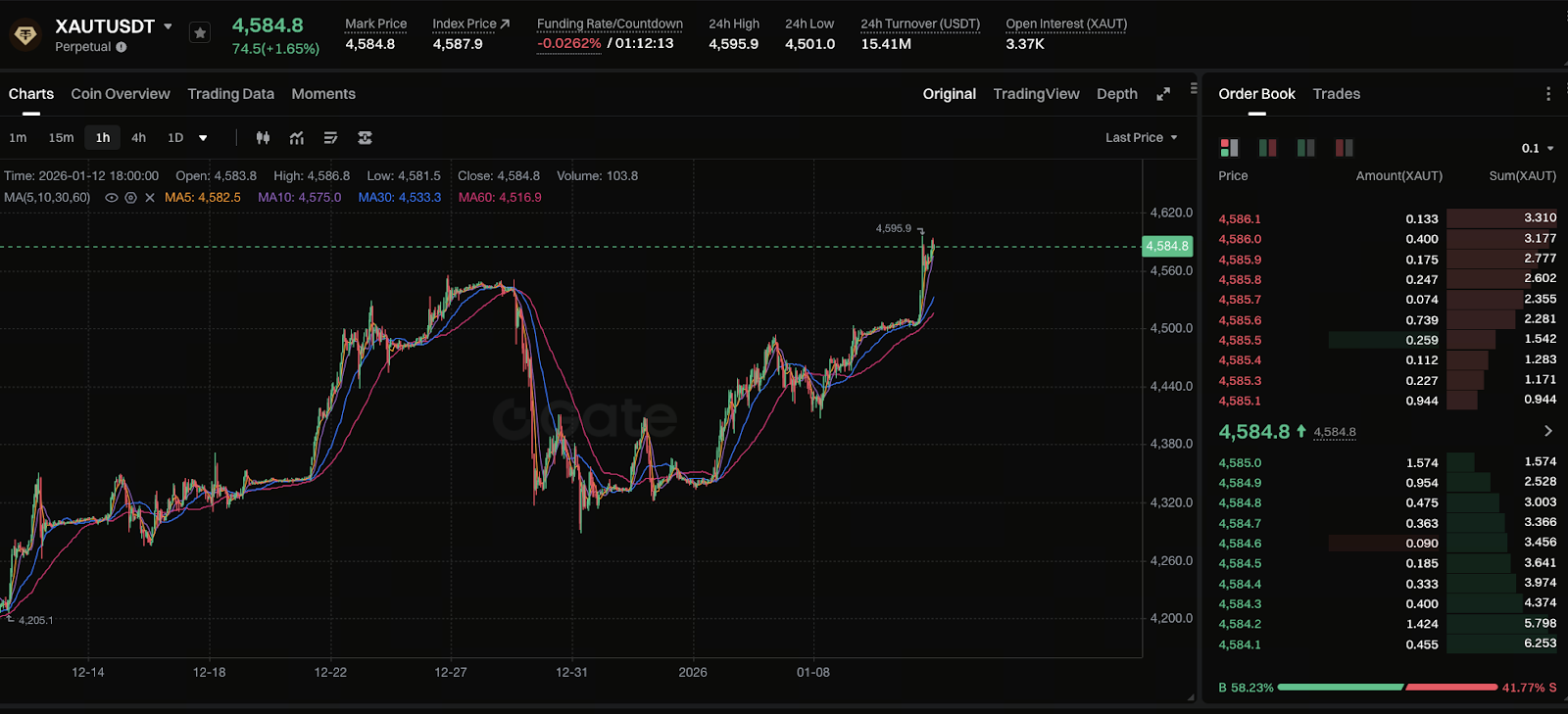
Chart: https://www.gate.com/futures/USDT/XAUT_USDT
Among various gold contract products, Gate’s XAUT_USDT perpetual contract stands out because its underlying asset is the Tether Gold (XAUt) token.
Key advantages include:
1. Strong Correlation with Real Gold Prices
XAUt is fully backed by physical gold at a 1:1 ratio, keeping the contract’s mark price closely aligned with actual gold price movements. This makes trend analysis more straightforward.
2. Flexible Trading and High Liquidity
Users trade directly with USDT, eliminating the need to buy XAUt spot. This boosts capital turnover efficiency.
3. Ideal for Short- and Medium-Term Trading Opportunities
Gold price action is often driven by macro events, such as:
- Interest rate decisions
- Global demand for safe-haven assets
- Central bank reserve management
Such events can trigger sudden volatility. Perpetual contracts enable users to quickly open or close positions to capitalize on these moves.
Advantages and Risks of Gold Contract Trading
Advantages:
Greater strategy flexibility
Gold contracts support trend trading, swing trading, and hedging strategies.
Improved capital efficiency
Investors with modest capital can access major gold trends, making it suitable for those who want long-term exposure to gold price movements.
Avoid storage and transfer costs associated with spot gold
Contracts focus solely on price movement, eliminating the need for physical gold storage, insurance, and delivery.
Risks:
Leverage amplifies volatility risk
High leverage offers greater potential returns but also increases the risk of rapid losses.
Beginners should use lower leverage.
Requires strong risk management skills
Contract trading is not simply “betting on price direction.” It requires:
- Setting stop-loss levels
- Controlling position sizes
- Identifying trend reversal points
Greater psychological pressure
Contract trading moves quickly. Investors must maintain discipline and emotional resilience.
How Beginners Can Develop Strategies Using Gold Contracts
If you’re new to gold contract trading, start with these steps:
1. Select a Clear Trading Timeframe
Short-term, intraday, medium-term, or long-term strategies each require distinct risk management approaches.
2. Begin with Low Leverage
This helps avoid unnecessary major losses due to market volatility.
3. Set Clear Stop-Loss Ranges
Gold price swings often coincide with macro events. Setting stop-losses protects your positions.
4. Combine Fundamental and Technical Analysis
Gold price trends are typically influenced by:
- Interest rate expectations
- US dollar trends
- Geopolitical risks
- Liquidity cycles
On the technical side, monitor:
- Trend lines
- Fibonacci retracement levels
- Moving averages
- Key support and resistance levels
Integrating both analyses leads to more robust strategies.
Conclusion: Future Trends in Gold Contract Trading
As digital asset trading platforms and traditional finance continue to converge, gold contract trading will further expand its impact:
- For traditional gold investors, contracts provide more flexible risk management tools.
- For crypto investors, they add a more stable safe-haven asset to their portfolios.
The global macro environment will continue to shape the gold market, and gold contract trading will remain a key channel for investors to participate in gold.
Share
Content


Related Articles

Gold Price Forecast for the Next Five Years: 2026–2030 Trend Outlook and Investment Implications, Could It Reach $6,000?

Crypto Future Profit Calculator: How to Calculate Your Potential Gains

Crypto Futures Calculator: Easily Estimate Your Profits & Risks

What is Oasis Network (ROSE)?

The $50M Crypto Scam Nobody Is Talking About