Babylon Labs Raises $15 Million Led by a16z Crypto, $BABY Jumps 15% on News
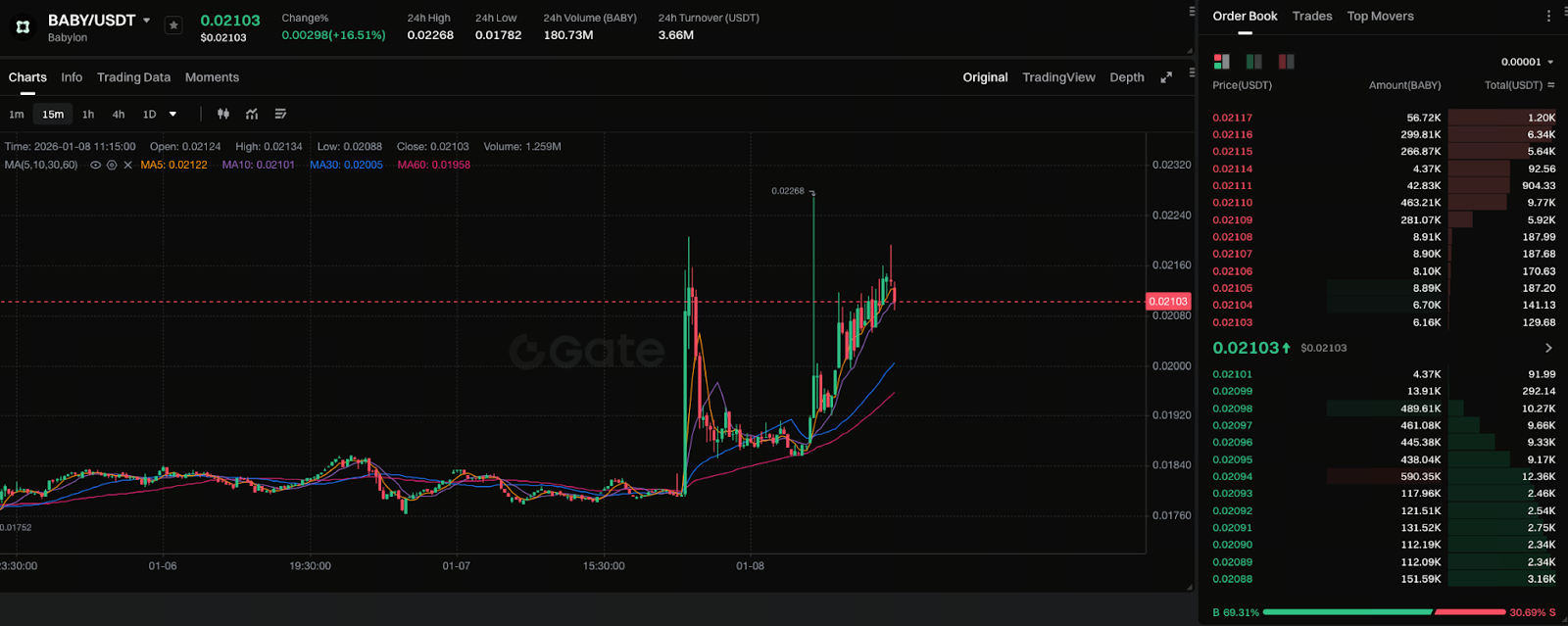
Image: https://www.gate.com/trade/BABY_USDT
On January 7, 2026, Babylon Labs announced it had secured $15 million in funding, with a16z Crypto (the Andreessen Horowitz crypto arm) leading the round. After the news broke, Babylon’s native BABY token rallied sharply in secondary markets, posting a roughly 15% gain in a short span. This major investment has drawn significant attention across the cryptocurrency industry.
Background: What Is Babylon?
Babylon is a Bitcoin staking protocol dedicated to bringing native Bitcoin (BTC) into decentralized finance. Unlike most current Bitcoin yield solutions, Babylon does not rely on centralized custodians or use wrapped BTC like wBTC.
Its key innovation is a trust-minimized infrastructure called BTCVaults. This technology allows BTC holders to lock their Bitcoin as on-chain collateral without giving up control of their private keys, unlocking broader participation in DeFi without compromising asset sovereignty.
a16z Crypto Leads $15 Million Round: Key Details
a16z Crypto led this round, with Babylon raising funds by selling its native BABY tokens. According to the official announcement, proceeds will be used to:
- Scale up the BTCVaults core infrastructure
- Accelerate adoption of native BTC collateral use cases
- Deepen integration with leading DeFi protocols and cross-chain ecosystems
Partners at a16z Crypto commented that this investment is both an endorsement of Babylon’s technology and a reflection of institutional optimism about Bitcoin’s long-term potential as on-chain collateral. As a market bellwether, a16z’s involvement often sets a strong example for others in the sector.
Why Did BABY Surge 15% in the Short Term?
The funding announcement quickly fueled bullish market sentiment. Multiple price trackers show BABY price jumped about 15% shortly after the news, briefly crossing the $0.02 threshold.
BTCC
This price action was driven by two main factors:
- Major venture capital participation significantly boosted market confidence
- Token-based fundraising led to expectations of direct institutional strategic holdings
However, it is important to note that single funding events often trigger short-term sentiment-driven moves, which can include speculative trading. Investors should be wary of chasing momentum. Investors should be wary of simply chasing momentum.
Technical Core: BTCVaults and Native Bitcoin Staking
Babylon’s BTCVaults technology allows users to lock BTC directly on the Bitcoin mainnet and provide cryptographic proof of collateral to external systems without any third-party custodians.
This design keeps Bitcoin on its own network rather than converting it into synthetic assets or wrapped tokens, fundamentally reducing systemic trust risks.
Compared to the popular wBTC model in today’s DeFi, BTCVaults offers several advantages:
- Preserves full ownership and control of BTC for users
- Improves the security and auditability of BTC as collateral
- Reduces dependence on centralized custodians
Market Impact: Can Bitcoin Become an Efficient Collateral Asset?
Today, a large share of BTC in the crypto market remains underutilized and illiquid. Traditional models make it difficult and risky for Bitcoin to enter DeFi, limiting its financial utility.
Babylon’s goal is to transform BTC from a “store of value” into a productive financial asset, enabling more efficient collateralization, lending, and cross-chain liquidity. This vision closely matches institutional expectations for Bitcoin as a foundational asset for on-chain credit and lending.
Risks and Outlook for BABY token in 2026
While Babylon’s technology is disruptive, its path forward faces several uncertainties:
- Security audit risks for smart contracts and cryptographic mechanisms
- Actual liquidity depth in BTC collateral markets
- Potential impacts of global regulatory changes on cross-chain and staking models
Moreover, short-term price reactions to funding news do not guarantee long-term value.
Looking ahead, if Babylon can achieve deep integration with leading DeFi protocols and scale native BTC collateralization, its ecosystem and network value could reach a new level with significant growth potential.







