The Market Is Accelerating, But Capital Remains Locked
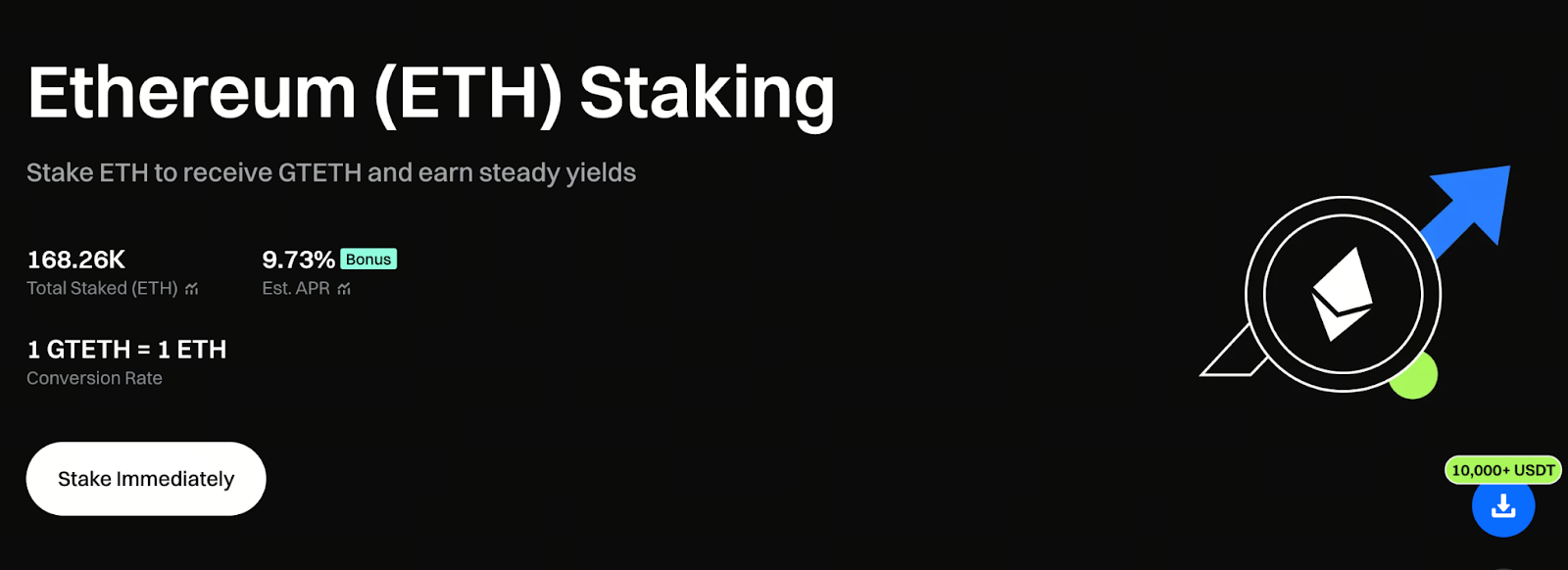
Since Ethereum transitioned to Proof of Stake (PoS), staking should have become the obvious choice for ETH holders. In reality, that’s not the case. It’s not that users don’t care about returns—it’s that as markets move faster and capital rotation and strategy shifts become routine, any mechanism that requires waiting is seen as an efficiency drag.
In this context, traditional ETH staking has become structurally outdated: it offers stable returns but locks up capital; it manages risk but sacrifices flexibility. For traders who prioritize operational agility, these trade-offs are no longer attractive.
The Real Issue Is Control, Not Yield
Most people hesitate to stake—not due to low rewards, but because once funds enter the staking process, their ability to adjust positions drops sharply. In practice, common pain points include:
- Fixed unlock schedules that make it hard to respond quickly to market reversals
- Fragmented reward calculation and distribution processes, making holistic asset tracking difficult
- Staked positions are passive and can’t be flexibly integrated into portfolio strategies
Over time, staking feels more like a long-term position left on the sidelines, rather than an asset that can actively participate in broader strategy deployment.
GTETH: Turning Staking from an Action into an Asset
GTETH’s design isn’t about teaching users more PoS technical details—it’s about transforming the very nature of staking. Users no longer need to worry about nodes, validators, or reward processes. The decision is simplified to a single step: whether to convert ETH into GTETH.
Once converted, staking is embedded within the asset itself. GTETH becomes an ETH-based asset that can be held, traded, and allocated, rather than a process requiring ongoing management. This allows staking to integrate seamlessly into everyday capital management.
Returns Are Reflected in Price, Not Claimed
Unlike models that require periodic reward claims, GTETH features a built-in yield structure. Returns from Ethereum PoS, plus additional GT incentives from Gate, are continuously reflected in GTETH’s value over time. For holders, the process is passive and uninterrupted—no clicks, no applications, just hold and the ETH value grows as yields accrue. All yield sources remain verifiable on-chain, ensuring transparency and traceability.
Liquidity No Longer Needs to Be Sacrificed
The defining difference between GTETH and traditional staking is its built-in liquidity. Holders can redeem GTETH for ETH at any time or trade directly on the market—no unlock periods, no waiting. This structure means yield and liquidity are no longer at odds, but coexist in a single asset. For the first time, staking doesn’t slow down operations—it keeps up with the market.
From Passive Yield to Strategic Allocation
With liquidity constraints removed, GTETH’s role evolves. It’s no longer just a staking substitute—it’s an ETH allocation unit that fits into overall asset management. Whether you need to quickly reduce exposure during heightened market risk or instantly adjust positions when opportunities arise, GTETH enables seamless transitions while preserving staking yields, ensuring staking is no longer isolated from your portfolio.
Transparent Return Structure, Quantifiable Efficiency
GTETH’s yield sources are straightforward, primarily coming from two components:
- Ethereum PoS staking yield: approximately 2.73% annualized
- Additional GT incentives from Gate: approximately 7% annualized
All accumulated returns are realized in a single step when redeeming for ETH, making the process intuitive and long-term efficiency easy to calculate.
Start staking ETH with Gate now to begin your on-chain yield journey: https://www.gate.com/staking/ETH?ch=ann46659
VIP Level Impacts Long-Term Compounding
GTETH’s fee structure is linked to Gate VIP levels, with a base fee of 6% and tiered discounts:
- VIP 5–7: 20% fee discount
- VIP 8–11: 40% fee discount
- VIP 12–14: 60% fee discount
Short-term differences may be subtle, but over the long term and with compounding, fee rates often become the decisive factor in final returns.
A Unique Position Among Mainstream LSTs
Most liquid staking tokens still serve as representations of locked positions, limiting use cases and strategic flexibility. GTETH is more like a daily asset management tool, with value that naturally tracks yield and allows free entry and exit from the market. Under this design, staking is no longer a static option but an ETH management approach that adapts in real time with trading strategies.
Summary
GTETH’s value doesn’t come from more complex technology, but from redefining staking’s role in your investment portfolio. It preserves the stable yield potential of PoS while removing the capital efficiency drag of lock-ups, allowing ETH staking to truly keep pace with the market. Now that PoS is standard for Ethereum, staking no longer needs to be a rigid long-term commitment—it can be a flexible configuration that balances liquidity and returns, aligned with modern Web3 asset management logic.







