1. Contract Trading: More Than Just Directional Calls
Many beginners approach contract trading by concentrating solely on whether to go long or short, missing a core principle: contract trading is an order execution system—not simply a directional wager.
On Gate, even when your market view is correct, using different order types can yield entirely different results. This is the source of contract trading’s complexity.
2. Order Types Available on Gate Contract Trading
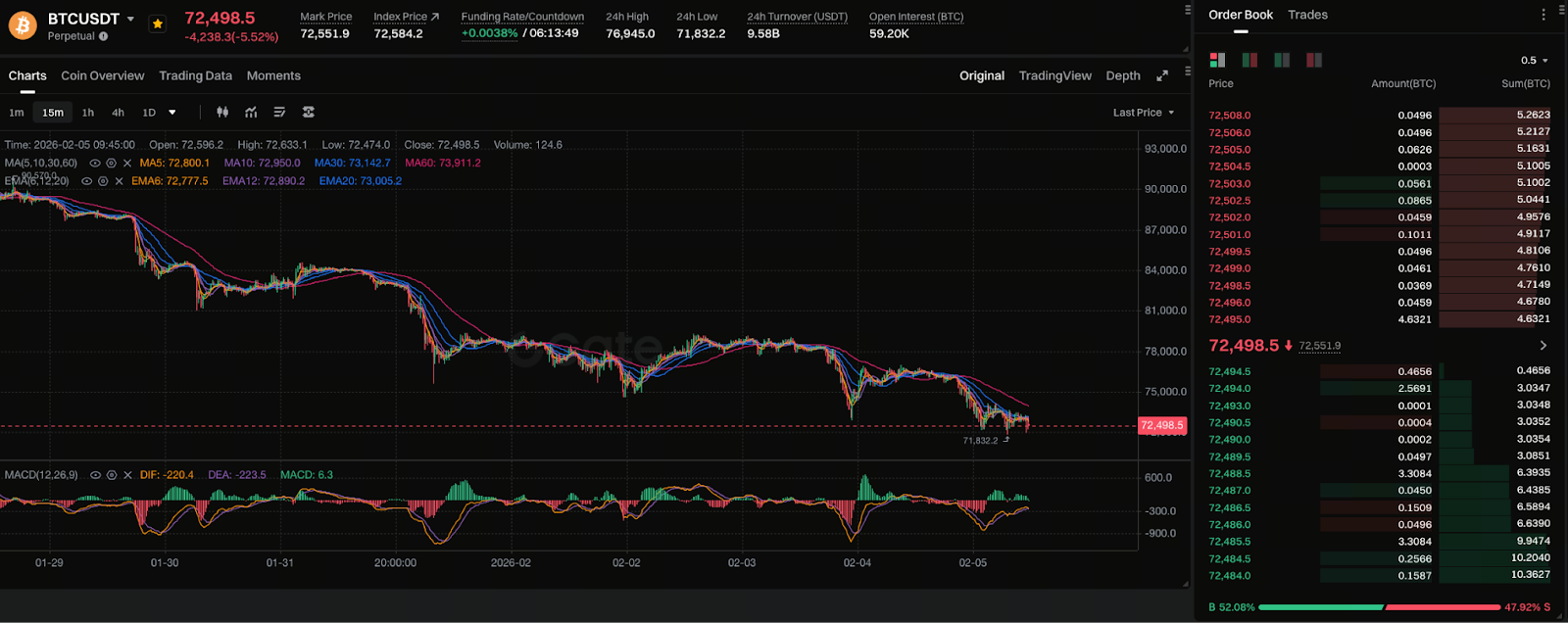
Image: https://www.gate.com/futures/USDT/BTC_USDT
The Gate contract trading module offers a variety of order and entrustment options, including:
- Market Order
- Limit Order
- Conditional Order (Triggered Entrustment)
- Take-Profit/Stop-Loss Entrustment
These features aren’t designed to complicate trading; they give users the right tools for execution in different market conditions.
3. Actual Differences Between Market Orders and Limit Orders
This is the most frequent source of confusion for contract trading newcomers.
Market Order
- Advantage: Executes instantly
- Disadvantage: Price is unpredictable and subject to slippage
Limit Order
- Advantage: Price control
- Disadvantage: May not fill
With Gate’s volatile markets, market orders are best for urgent stop-losses, while limit orders suit planned entries. Mixing the two is one of the most common mistakes in contract trading.
4. The Role of Conditional Orders and Planned Entrustment on Gate
Conditional orders are one of the most underrated tools in Gate’s contract trading suite.
The essential logic of a conditional order is:
- When price meets a preset condition
- The system automatically places the order
This lets traders execute strategies without constant monitoring, which is especially useful for:
- Breakout trades
- Pullback entries
- Pre-positioning ahead of risk events
For beginners who can’t watch the market all day, these features are more valuable than high leverage.
5. Slippage and Execution Mechanisms in Contract Trading
Slippage isn’t a platform “trap”—it’s a natural consequence of market liquidity.
On Gate’s contract system, slippage mainly occurs in:
- Market orders
- Trading pairs with low liquidity
- Periods of extreme volatility
Once you understand execution mechanics, you’ll see that many losses come from poor order execution, not incorrect market predictions.
That’s why Gate’s interface clearly shows order book depth and expected fill ranges, helping users assess risk in advance.
6. Practical Tips for Beginners Placing Orders on Gate Contracts
If you’re new to contract trading, follow these guidelines:
- Use limit orders to open positions whenever possible
- Reserve market orders for urgent stop-losses or fast exits
- Master conditional orders instead of chasing prices on impulse
- Avoid frequent trading in contracts with poor liquidity
When you focus on “how to execute” rather than just “getting the direction right,” contract trading becomes truly manageable.